PaintingProGuide is reader-supported. When you buy through links on this page we may earn an affiliate commission at no extra cost to you.
Mop brushes for painters do one thing better than any other brush: carry a large load of water or paint and release it softly. That makes them the tool for watercolor skies, smooth gradients in acrylic, soft glazes and, outside painting, pressing down gold leaf.
Mops vary more than their simple shape suggests. Natural goat hair holds the most water and feels softest. Blends of synthetic and weasel hair add spring and survive acrylic better. Fully synthetic mops are easiest to clean. Below are six sets across those types, and how to decide which suits your medium.
Quick answer: For watercolor, the Nogeqi Goat Hair Mop Set is the best value thanks to its ten sizes. Acrylic painters should start with the GACDR 1-Inch Oval Mops, whose blended hair holds shape better, while gilders and mixed-media artists will prefer the Sdanart or GACDR gilding sets.
Our Top Picks at a Glance
- Nogeqi Goat Hair Mop Brush Set (10 pc) — Best for watercolor washes on a budget
- GACDR 1-Inch Oval Mop Brush Set (6 pc) — Best for blending acrylic and watercolor
- Giantree Synthetic Oval Mop Brushes (9 pc) — Best for acrylic blending with easy cleanup
- Royal and Langnickel Camel Mop Brush Set (3 pc) — Best for a small, inexpensive starter mop set
- Sdanart Goat Hair Blend Mop Set (7 pc) — Best for gilding and soft glazing
- GACDR Goat Hair Gilding and Blending Mops (7 pc) — Best for gold leaf and metallic finishes
| Product | Best For | Key Spec | Key Strength | Price Tier |
|---|---|---|---|---|
| Nogeqi Goat Hair Mop Brush Set (10 pc) | Watercolor washes on a budget | 10 assorted sizes; natural goat hair | Range of sizes for washes and softening | $ |
| GACDR 1-Inch Oval Mop Brush Set (6 pc) | Blending acrylic and watercolor | 1 in oval; nylon and weasel hair blend | More spring than pure goat | $ |
| Giantree Synthetic Oval Mop Brushes (9 pc) | Acrylic blending with easy cleanup | 1.5 cm width; synthetic fibers; short handle | Synthetic durability in acrylic | $ |
| Royal and Langnickel Camel Mop Brush Set (3 pc) | A small, inexpensive starter mop set | 3 mops; 0.5 in | Trusted craft brand | $ |
| Sdanart Goat Hair Blend Mop Set (7 pc) | Gilding and soft glazing | 7 sizes; natural goat hair; nickel-plated ferrules | Sizes from small to large with tube sleeves | $ |
| GACDR Goat Hair Gilding and Blending Mops (7 pc) | Gold leaf and metallic finishes | 7 brushes; goat hair; birch handles | Inspected heads, double-crimped ferrules | $ |
How We Chose
These picks reflect Amazon listing details and specifications checked in October 2026, how well each brush’s hair, size and shape suit mop work, and how widely each product is reviewed by Amazon buyers. Where a listing was unclear or inconsistent, such as hair type or pack count, we point it out rather than guess.
What we looked at:
- Hair type: natural goat, blend or synthetic
- Head shape: round dome or oval
- Size range in the set
- Ferrule construction and shedding risk
- Fit with medium: watercolor, acrylic, gilding
- Value for the price tier
What a Mop Brush Does Best
Mops are not general-purpose brushes, and that is their strength. Use them for:
- Wetting paper evenly before a wet-in-wet wash
- Laying a flat or graded wash across a sky or background
- Softening a hard edge by stroking along it with a damp mop
- Blending two colors into a smooth gradient in acrylic
- Lifting excess water or paint with a squeezed-out mop
- Applying and burnishing gold leaf in gilding
They are poor at crisp edges, detail and scrubbing. Pair a mop with a pointed round and a flat, and you have the core of a watercolor kit.
Best Mop Brushes for Painters Reviewed
1. Nogeqi Goat Hair Mop Brush Set (10 pc) — Best for watercolor washes on a budget

A mop is a round, full-bodied brush with a domed head, and its job is to hold a lot of liquid and release it gently. Goat hair is a traditional, affordable fiber for mops because it is soft and absorbent. Nogeqi’s set gives you ten mops in assorted sizes with wooden handles and double-crimped aluminum ferrules.
Having several sizes lets you use the big mops for skies and backgrounds and the smaller ones for softening edges inside a shape. The listing names watercolor, oil and acrylic, but goat mops are at their best in fluid media where their capacity and softness matter.
Best suited for: Watercolorists who want several mop sizes for washes, glazes and soft edges without paying for squirrel hair.
Key features:
- Ten mop brushes in assorted sizes
- Natural goat hair
- Double-crimped aluminum ferrules
- Wooden handles
Pros:
- Lots of sizes for the price tier
- Soft, absorbent heads
- Useful for gilding and dusting too
Cons and limitations:
- Goat hair has little spring
- Some early shedding is typical
- Too soft for thick acrylic
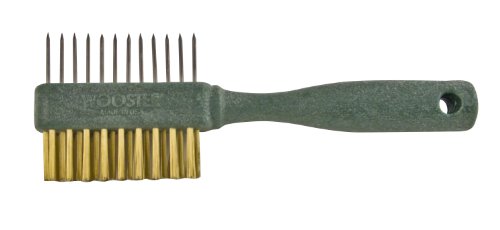
Buying consideration: Rinse and gently comb new goat mops before painting to clear loose hairs, then dry them flat so the dome keeps its shape.
2. GACDR 1-Inch Oval Mop Brush Set (6 pc) — Best for blending acrylic and watercolor

An oval mop has a flattened, rounded head that blends smoothly and still gives you a soft edge. GACDR makes this one from a mix of synthetic nylon and weasel hair, which adds snap compared with pure goat, on straight birch handles with double-crimped aluminum ferrules.
The blend makes these more versatile in acrylic, where pure natural hair can struggle. Six brushes of the same 1-inch size are useful in a classroom or if you like keeping separate mops for warm and cool colors.
Best suited for: Acrylic and watercolor painters who blend skies and gradients and want a mop with a bit more control.
Key features:
- Six 1-inch oval mop brushes
- Nylon and weasel hair blend
- Birch wood handles
- Aluminum double-crimped ferrules
Pros:
- Blended hair holds shape better in acrylic
- Oval head gives smooth gradients
- Low price tier
Cons and limitations:
- Only one size
- Less water capacity than pure natural mops
- Not a fine-detail brush
Buying consideration: If you mostly paint acrylic, this is the mop to start with; if you mostly paint watercolor washes, a pure natural hair mop carries more water.
3. Giantree Synthetic Oval Mop Brushes (9 pc) — Best for acrylic blending with easy cleanup

Giantree’s mops are fully synthetic, with man-made fibers chosen for softness and control when blending acrylic or watercolor. The listing gives a brush width of 1.5 cm and an overall length of 17.3 cm, with short plastic handles and metal double-crimped ferrules.
Synthetic mops clean up easily in water and tolerate acrylic better than natural hair. The short handle suits close tabletop work, such as blending on small canvases, rocks or craft projects, rather than standing at an easel.
Best suited for: Acrylic painters and crafters who blend on small surfaces and want brushes that survive acrylic.
Key features:
- Synthetic fiber oval heads
- 1.5 cm brush width
- Short plastic handles
- Double-crimped metal ferrules
Pros:
- Easy to clean
- Durable in acrylic
- Short handle gives control close up
Cons and limitations:
- Small width for large washes
- Lower water capacity than natural hair
- Pack count in title and listing differs; check before buying
Buying consideration: The title mentions 9 pieces while the description refers to 6 brushes; confirm the package contents shown on the listing.
4. Royal and Langnickel Camel Mop Brush Set (3 pc) — Best for a small, inexpensive starter mop set

Royal and Langnickel is a familiar name in craft and student brushes. This three-pack of mops carries the camel label in its title, though the material field in the listing says synthetic, so expect a soft craft-grade fiber rather than premium natural hair. The listed width is half an inch.
Small mops like these are handy for softening edges, dusting color into wet areas and blending in decorative painting. They are a low-cost way to find out whether a mop belongs in your kit.
Best suited for: Crafters, students and decorative painters who need a few small mops for softening and blending.
Key features:
- Three mop brushes
- Half-inch brush width
- Arts and crafts focus
Pros:
- Very low price tier
- Small size suits detail softening
- Recognizable brand
Cons and limitations:
- Hair type unclear from the listing
- Small mops cannot lay big washes
- Basic construction
Buying consideration: Buy these for small-scale softening and craft work; for full watercolor washes, choose a larger natural hair mop.
5. Sdanart Goat Hair Blend Mop Set (7 pc) — Best for gilding and soft glazing

Sdanart aims this set at gilding, toning and softening as well as painting. The seven brushes use natural goat hair with nickel-plated seamless ferrules and wooden handles, and the listing mentions protective tube sleeves.
For painters, a set like this covers soft glazing and blending in watercolor, gouache and oil glazes. For crafters, the same brushes press down gold leaf and remove excess flakes, a classic use for goat mops.
Best suited for: Painters who glaze and blend softly, and crafters who apply gold leaf or metallic waxes.
Key features:
- Seven goat hair mops
- Small to large size range
- Seamless nickel-plated ferrules
- Wooden handles with tube sleeves
Pros:
- Good size range
- Seamless ferrules resist loosening
- Doubles for gilding
Cons and limitations:
- Natural goat hair sheds a little when new
- Limited spring for control
- Not for heavy-body paint
Buying consideration: Keep one or two brushes from this set dedicated to gilding; leaf and adhesive residue are hard to fully remove before painting.
6. GACDR Goat Hair Gilding and Blending Mops (7 pc) — Best for gold leaf and metallic finishes

This GACDR set is listed first for gilding but also for blending and softening in painting. It uses natural goat hair with 100% birch handles and double-crimped aluminum ferrules, and the maker says each brush is inspected for shedding and contaminants before packing.
If you combine painting with gold leaf, rub-and-buff finishes or metallic accents, this set gives you soft mops sized for both. For pure watercolor washes, the Nogeqi set offers more sizes at a similar tier.
Best suited for: Mixed-media artists and crafters working with gold leaf, metallic finishes and soft blending.
Key features:
- Seven goat hair mops
- Birch wood handles
- Double-crimped aluminum ferrules
- Inspected before packing
Pros:
- Purpose-made for gilding
- Soft enough for delicate blending
- Sturdy ferrules
Cons and limitations:
- Fewer sizes for watercolor than the Nogeqi set
- Natural hair needs careful drying
- Limited use in acrylic
Buying consideration: For gold leaf, keep these brushes completely dry and clean; moisture makes leaf stick to the hair instead of the surface.
Three Mop Techniques Worth Practicing
Flat sky wash. Tilt the board slightly, load the mop fully and pull a horizontal stroke across the top of the paper. Reload and overlap the bead of paint that collects at the bottom of each stroke. Work quickly so the bead never dries, and finish by lifting the excess bead with a squeezed-out mop.
Softening an edge. Paint a shape with a round, then rinse the mop, squeeze it until barely damp and stroke once along the wet edge. The mop draws pigment outward and leaves a soft transition instead of a hard line. Too much water in the mop creates a bloom, so blot it first.
Acrylic gradient. Lay two colors side by side while wet, then use a clean, slightly damp oval mop in light crisscross strokes along the seam. Wipe the mop often on a rag. Acrylic dries fast, so work in sections no larger than you can blend in a minute or two.
Buying Guide: How to Choose a Mop Brush
Natural, blended or synthetic hair
Natural goat and squirrel hold the most water and feel softest, which is ideal for watercolor. Blends add spring and durability. Synthetic mops are best for acrylic, which can damage natural hair if it dries in the head.
If you paint both, buy one natural mop for watercolor and one synthetic or blend for acrylic.
Size relative to your paper
A mop should cover a large area in a few strokes. On quarter-sheet paper, a mop around half an inch to an inch works well; on half or full sheets, go bigger. Small mops are softening tools rather than wash brushes.
Round dome or oval
Round mops hold the most liquid and come to a soft point. Oval mops have a flatter profile that blends gradients smoothly and gives a little more edge control.
Ferrules and shedding
Double-crimped and seamless ferrules hold hair more securely. New natural mops often shed a few hairs; persistent shedding signals poor construction. Rinse and comb a new mop before the first painting.
Handle length
Short handles suit tabletop watercolor and craft work. Longer handles help at an easel and let you stand back. Most mops in this list have short to medium handles.
Set or single brush
Sets give you sizes to experiment with, which is useful if you are new to mops. Experienced painters often prefer one or two high-quality mops they use for everything.
Brush Care and Large-Brush Technique
Mops are big, soft brushes, and they need a different approach. Learn the basics in our guide on painting with large brushes. Natural hair mops last longer when you follow correct brush drying practice, and our tips on keeping paint brushes from shedding help with new goat hair sets.
Common Mistakes to Avoid
- Using a mop for crisp edges or detail
- Letting acrylic dry inside a natural hair mop
- Overloading the mop so it floods the paper
- Drying mops upright so water enters the ferrule
- Pressing hard, which flattens the dome permanently
- Skipping a pre-rinse on new goat hair brushes
FAQs
What is a mop brush used for in painting?
A mop brush lays large washes, wets paper, softens edges and blends colors. Its full, soft head holds a lot of liquid and releases it gently.
What is the best hair for a watercolor mop?
Squirrel is the traditional premium choice, and goat hair is the affordable alternative. Both hold far more water than synthetic fibers.
Can I use a mop brush with acrylic paint?
Yes, especially synthetic or blended mops. Clean them promptly, because acrylic that dries in the head is very hard to remove.
What size mop brush should I buy first?
For quarter-sheet watercolor paper, a mop around half an inch to one inch is a practical first size. Larger papers benefit from bigger mops.
Why does my new mop brush shed?
Natural goat hair often releases a few loose hairs when new. Rinse and comb it before use. Heavy, continuing shedding suggests a weak ferrule.
Is a mop brush the same as a gilding brush?
Gilding brushes are often goat hair mops, so the overlap is large. Keep separate brushes for gilding and painting to avoid contaminating either.
Final Recommendation
Watercolorists get the most value from the Nogeqi goat hair set, with sizes for washes and softening. Acrylic painters should lean toward the GACDR oval blend or the fully synthetic Giantree mops, which hold up better in fast-drying paint.
For gilding and soft glazing, the Sdanart and GACDR gilding sets are designed with leaf work in mind. The Royal and Langnickel three-pack is a low-cost way to try small mops before committing to a larger set.