

PaintingProGuide is reader-supported. When you buy through links on this page we may earn an affiliate commission at no extra cost to you.
A frame does two jobs for an oil painting. It protects vulnerable edges from knocks and fingerprints, and it sets the visual boundary that tells the eye where the picture begins. Choose well and a modest study looks like a gallery piece; choose poorly and even a strong painting looks unfinished. The best oil painting frames fit the support you painted on, suit the scale and mood of the work, and leave the paint surface free to breathe.
Below are six frames from current Amazon listings, grouped by the kind of oil painting they suit, followed by the measurements and framing rules that save you from the most common return: a frame that does not fit.
Quick answer: For stretched canvases, a floater frame like the MCS 16×20 Canvas Float Frame or Abtgt 12×16 Floating Frame gives a clean, modern look and swaps artwork without tools. For traditional landscapes and portraits, the FOLKOR solid wood ornate gold frames (8×10 and 24×36) give a classic finish. Glass-front frames such as the Golden State Art 11×14 are better for prints of your oils than for the original paintings.
Our Top Picks at a Glance
- MCS Canvas Float Frame, 16×20 — Best floater frame for standard stretched canvas
- Abtgt Canvas Floating Frame, 12×16 — Best floater for mid-size canvases
- FOLKOR 24×36 Ornate Gold Wood Frame — Best for large traditional oils
- FOLKOR 8×10 Solid Wood Gold Ornate Frame — Best for small studies and panels
- Golden State Art 11×14 Ornate Frame — Best for framing prints of your paintings
- ArtXO 6×6 Vintage Gold Frame — Best for tiny works on paper and mini prints
| Product | Best For | Key Spec | Key Strength | Price Tier |
|---|---|---|---|---|
| MCS Canvas Float Frame 16×20 | Stretched canvas up to 3/4 in deep | 17.75 x 21.75 in overall | Tool-free hook-and-loop mounting | $$ |
| Abtgt Floating Frame 12×16 | Mid-size stretched canvas | 0.9 in deep | 4 Velcro strips, sawtooth hangers | $$ |
| FOLKOR 24×36 Ornate | Large traditional oils | 2.4 in width, 3/8 in rabbet | Natural wood, embossed gold | $$$ |
| FOLKOR 8×10 Ornate | Small panels and studies | 2.4 in width, 3/8 in rabbet | Solid wood, finished frame | $$ |
| Golden State Art 11×14 | Prints, works on paper | Real glass, acid-free mat | Fits 8×10 with mat or 11×14 without | $$ |
| ArtXO 6×6 Vintage Gold | Mini works and prints | Solid wood, tempered glass, 2 mats | Three display sizes | $$ |
How We Chose
We did not frame paintings in these products ourselves. The picks are based on Amazon listing details and specifications checked in October 2026, how well each frame’s format, depth and mounting system suit oil paintings, and how widely each product is reviewed by Amazon buyers.
- Fit for oil supports: stretched canvas depth, panel thickness and rabbet depth where listed.
- Glass or no glass: oil paintings are traditionally framed without glazing, so open frames ranked higher for originals.
- Material: solid wood versus engineered wood or plastic.
- Mounting and hanging: how the artwork attaches and what hardware is included.
- Style: modern floaters versus ornate traditional profiles.
A multi-size pack of canvas boards also appeared in the search results. It is a painting surface, not a frame, so we left it out.
Floater Frame, Ornate Frame or Glass Frame?
Floater frames hold a stretched canvas from behind so it appears to hover inside the frame with a small gap all around. The painted canvas edges remain visible, which suits contemporary work and gallery-wrapped canvases. They are fast to fit and usually need no tools.
Ornate or traditional frames overlap the front edge of the painting slightly, holding it in a recess called the rabbet. Gold and carved profiles have framed oil landscapes and portraits for centuries because they echo warm tones and add a sense of value.
Glass-front frames are designed for photos, prints and works on paper. Original oil paintings are generally not framed under glass: glazing can trap moisture against the surface, reflections hide the brushwork, and the paint film should not touch the glass. If you want to frame a print of your oil painting, though, glass is ideal.
Best Oil Painting Frames Reviewed
1. MCS Canvas Float Frame, 16×20 — Best Floater for Standard Canvas

The MCS float frame holds one 16×20 inch stretched canvas up to 3/4 inch deep, with an overall size of 17.75 x 21.75 inches. The walnut woodgrain is a paper wrap over the frame, and the kit uses adhesive-backed hook and loop fasteners to attach the canvas, so you can change artwork without tools. Sawtooth hangers are pre-attached for vertical or horizontal hanging.
The 3/4 inch depth limit matters. Standard-profile stretched canvases often fit, but many gallery-wrapped canvases are 1.5 inches deep and will stand proud of the frame.
Best suited for: painters selling or displaying 16×20 oils on standard stretched canvas who want a clean, modern presentation.
Key features
- Holds one 16×20 in canvas up to 3/4 in deep
- 17.75 x 21.75 in overall
- Hook-and-loop mounting, no tools
- Pre-attached sawtooth hangers
Pros
- Quick to fit and swap
- Warm walnut tone suits many palettes
Cons
- Engineered wood with paper wrap, not solid wood
- Too shallow for deep gallery canvases
Buying consideration: Measure your canvas depth with a ruler before ordering. The frame is sized to the canvas, not to a mat or image area.
2. Abtgt Canvas Floating Frame, 12×16 — Best Mid-Size Floater
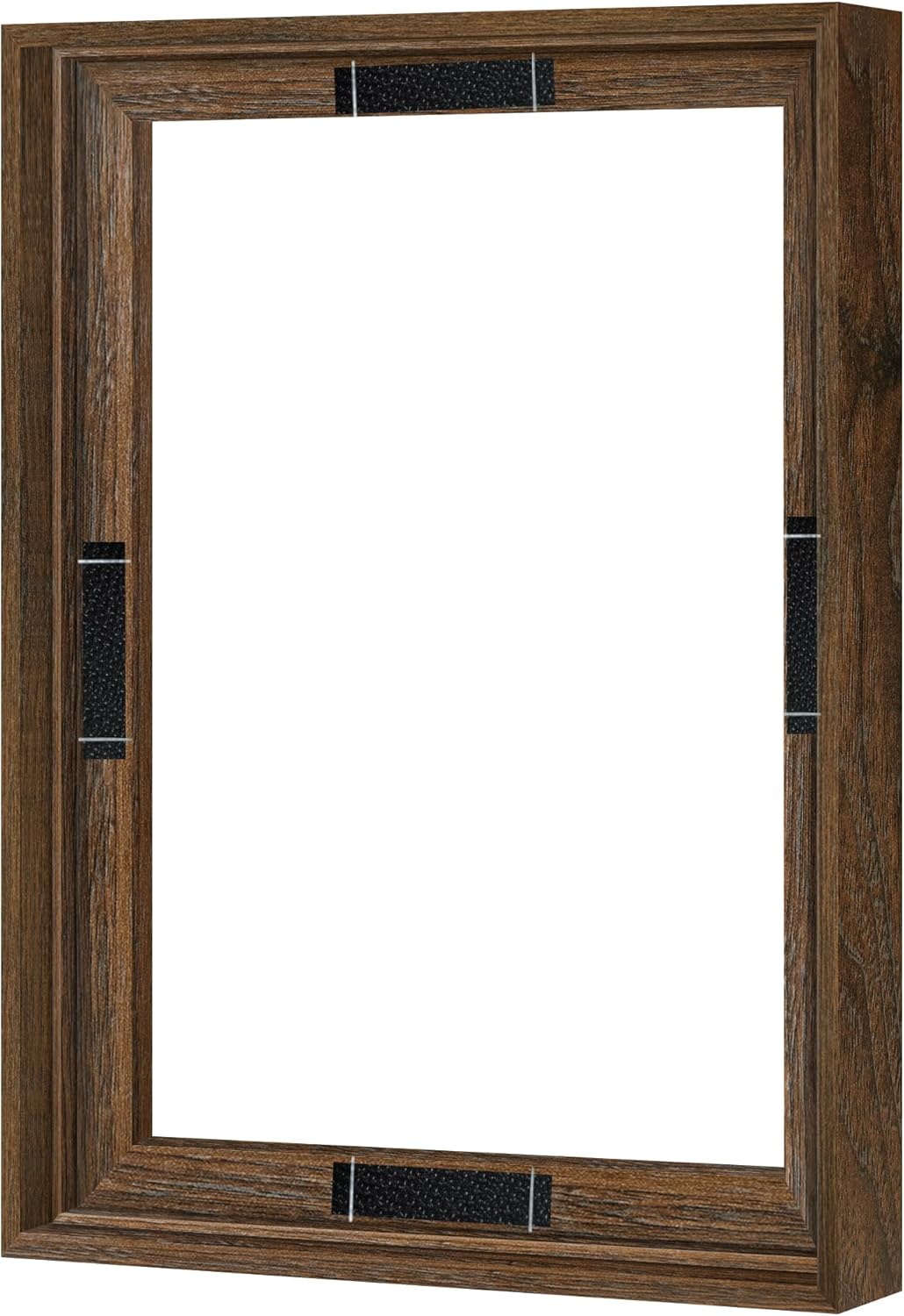
The Abtgt frame holds one 12×16 inch canvas painting with a listed depth of 0.9 inch. Four Velcro strips attach the canvas so you can change artwork without tools, and two black sawtooth hooks are pre-mounted for hanging either way. The frame is engineered wood with a wood-grain finish and ships individually boxed.
The slightly deeper 0.9 inch profile gives a bit more room than many budget floaters for standard canvases, but it is still not designed for deep gallery-wrap stretchers.
Best suited for: 12×16 oils, a popular plein-air and studio size, for home display or shows.
Key features
- Fits one 12×16 in canvas
- 0.9 in deep
- 4 Velcro strips, tool-free changes
- 2 sawtooth hooks included
Pros
- Easy artwork swaps between shows
- Clean brown frame suits landscapes
Cons
- Engineered wood
- Velcro mounting is less permanent than screws or offset clips
Buying consideration: Make sure the paint on the canvas edges is fully dry before pressing it into the frame, so the strips do not stick to tacky paint.
3. FOLKOR 24×36 Ornate Gold Wood Frame — Best for Large Traditional Oils
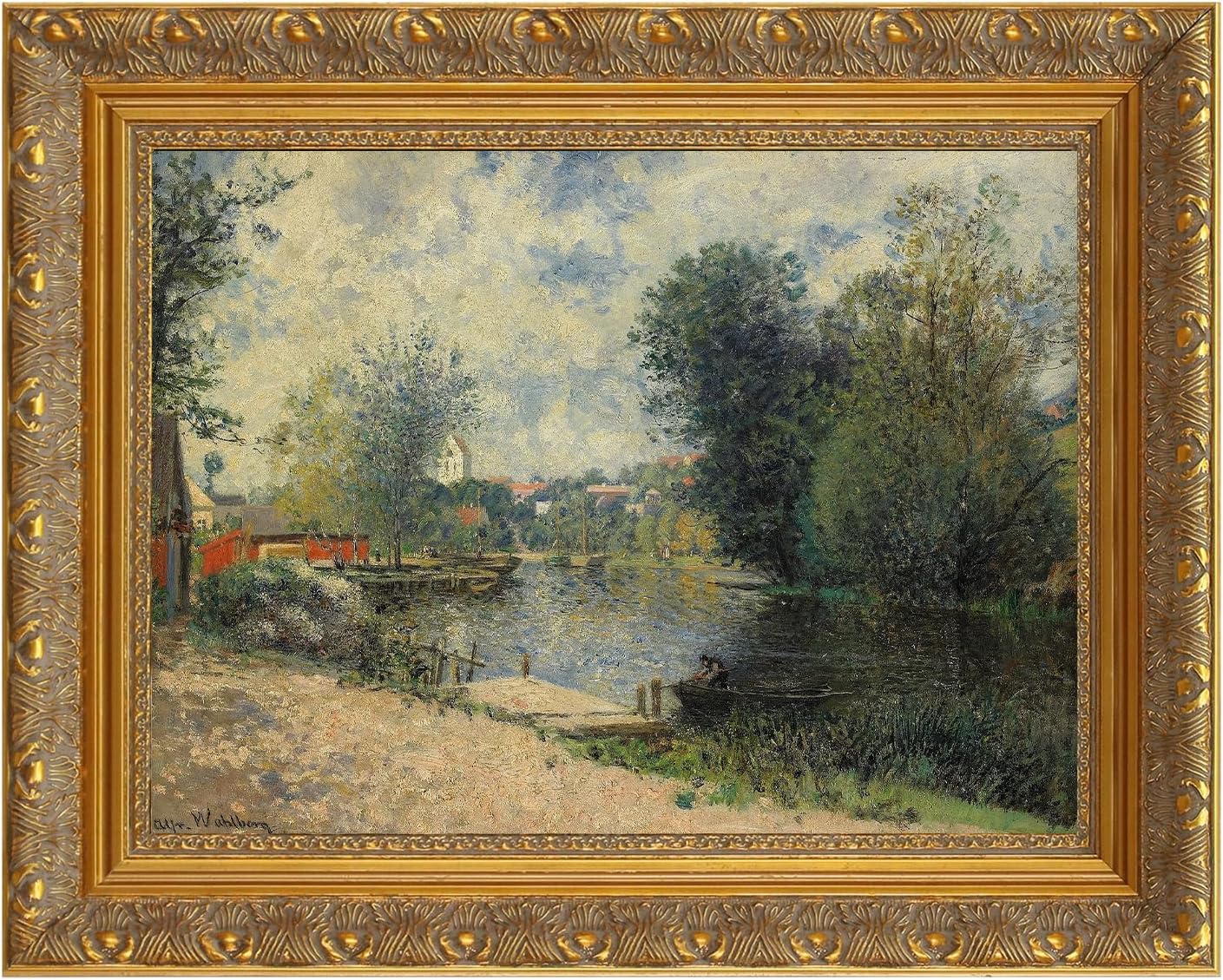
For a large landscape or portrait in the classical tradition, an ornate gold frame is still hard to beat. This FOLKOR frame is listed as sustainable natural wood with an embossed gold finish, a frame width of 2.4 inches and a rabbet depth of 3/8 inch. The listed size is based on the artwork size, so a 24×36 frame takes a 24×36 painting.
Assembly is needed, and the listing says all necessary parts are included. The 3/8 inch rabbet suits canvas panels, thin stretchers and works on board; a thicker stretched canvas will extend past the back, which is common with traditional frames and can be secured with offset clips.
Best suited for: large realist oils, landscapes and portraits that benefit from a formal, warm-toned surround.
Key features
- Natural wood construction
- 2.4 in frame width, embossed gold
- 3/8 in rabbet depth
- Assembly required, hardware included
Pros
- Solid wood rather than resin or plastic
- Classic look suits traditional work
Cons
- Shallow rabbet for deep canvases
- Assembly takes time
- Ornate style can overwhelm minimalist work
Buying consideration: At 24×36, weight matters. Use a hanging wire with D-rings and a wall anchor rated for the combined weight of frame and painting.
4. FOLKOR 8×10 Solid Wood Gold Ornate Frame — Best for Small Studies

Small oil studies on canvas panels and boards look surprisingly important in a wide gold frame. This FOLKOR 8×10 has the same 2.4 inch width and 3/8 inch rabbet as its larger sibling, in solid wood with a lacquered gold finish. Overall dimensions are listed as 14.8 x 12.8 inches, so the wide frame nearly doubles the presence of the piece on the wall.
Unlike the 24×36, this one arrives finished, so you only need to insert the artwork.
Best suited for: plein-air studies, small still lifes and panels like 8×10 canvas boards or gessoboard.
Key features
- Solid wood, lacquered gold
- 2.4 in width, 3/8 in rabbet
- 14.8 x 12.8 in overall
- Finished frame
Pros
- Makes small work look substantial
- Ideal depth for 1/8 in panels
Cons
- Thicker stretched 8×10 canvases will protrude at the back
- Traditional style only
Buying consideration: Many painters keep a set of matching 8×10 frames so studies can be swapped in and out for shows. A consistent frame makes a wall of small works look like a collection.
5. Golden State Art 11×14 Ornate Frame — Best for Prints of Your Paintings

Many oil painters sell giclée or photo prints of their originals. This Golden State Art frame suits that use well. The overall size is 12.87 x 15.91 inches with a 1.25 inch border, real glass front and an acid-free removable white mat. It fits an 8×10 print with the mat or an 11×14 print without; the mat opening is 7.5 x 9.5 inches to hold the print securely.
The frame is plastic with an antique green-gold finish, and it includes built-in hangers and rotating buttons on the backboard for quick changes.
Best suited for: framing prints, drawings and oil sketches on paper rather than original oil paintings on canvas.
Key features
- Real glass front
- Acid-free removable mat
- Fits 8×10 with mat or 11×14 without
- Built-in hangers, rotating buttons
Pros
- Clear glass shows prints sharply
- Mat gives a professional look
Cons
- Plastic frame
- Glass is not recommended over original oils
Buying consideration: If you sell prints with frames, the mat size matters: an 8×10 print sits behind a 7.5 x 9.5 inch opening, so leave a little margin around the image when printing.
6. ArtXO 6×6 Vintage Gold Frame — Best for Mini Works and Prints

Tiny oil sketches on oil paper, mini prints and art cards deserve framing too. The ArtXO 6×6 is solid wood with an embossed vintage gold finish, a tempered glass cover and a 3mm plywood backboard with turn-button locks. Two acid-free mats let you display 6×6 without a mat, 3.5×3.5 with one mat or 4.3×4.3 with the other.
It hangs either way, and the box includes wall nails and a screwdriver.
Best suited for: miniature works on paper, small prints and gifts.
Key features
- Solid wood, vintage gold
- Tempered glass
- 2 acid-free mats for 3 display sizes
- Hanging hardware included
Pros
- Solid wood at a small size
- Flexible mat options
Cons
- Glass-front, so not for originals on canvas
- Only for very small works
Buying consideration: If you frame an oil sketch on paper under glass, make sure it is completely dry and use the mat to keep the surface from touching the glass.
Buying Guide: How to Choose Oil Painting Frames
Measure the support, not the image
Frame sizes refer to the artwork that goes inside. Measure the full width and height of your canvas or panel. Many canvases vary by an eighth of an inch from their nominal size, so check before buying a tight floater.
Check depth: canvas profile versus rabbet or floater depth
Standard stretched canvases are roughly 5/8 to 3/4 inch deep. Gallery-wrapped canvases are often 1.5 inches. Panels are around 1/8 inch. Floater frames list the maximum canvas depth; traditional frames list rabbet depth. A canvas deeper than the rabbet will stick out at the back, which is acceptable for traditional frames if secured with offset clips but looks awkward in floaters.
Choose frame width for scale
Narrow frames suit small, contemporary pieces. Wider frames like the FOLKOR 2.4 inch profile add weight and presence, which works for both small studies and large traditional pieces. Very wide frames on medium canvases can feel heavy.
Match tone to the painting
Gold frames echo warm light and complement landscapes with ochres and siennas. Walnut and brown frames are quieter and suit both warm and cool palettes. Black floaters are crisp for high-contrast or modern work. Hold the painting against the frame color, or a swatch, before choosing.
Material and weight
Solid wood is durable and can be repaired. Engineered wood and paper-wrapped frames are lighter and cheaper. Plastic frames are fine for prints but less suited to heavy canvases.
Mounting and hanging hardware
Velcro and hook-and-loop systems are quick and tool-free. Offset clips and screws are more secure for permanent display or shipping. For larger works, replace sawtooth hangers with D-rings and picture wire.
When Is an Oil Painting Ready to Frame?
An oil painting can be framed once it is touch-dry, which may take days to weeks depending on paint thickness, mediums and climate. Final varnish is traditionally applied after the paint has cured for several months, so many painters frame a touch-dry painting, then remove it later to varnish. If you frame early, handle the painting by the stretcher, keep it away from direct heat and make sure nothing presses on the paint surface.
Planning a painting to frame? Our guides to painting fog in oils and painting grass in oil both produce atmospheric landscapes that look beautiful in warm gold frames.
Common Mistakes to Avoid
- Buying by canvas label size only. Measure the actual canvas; small variations prevent a tight fit.
- Ignoring depth. Gallery-wrapped canvases often will not fit shallow floaters.
- Putting original oils under glass. Glazing hides brushwork and can trap moisture.
- Framing tacky paint. Wait until the surface and edges are touch-dry.
- Using sawtooth hangers on heavy frames. Upgrade to D-rings and wire for large pieces.
- Choosing frame color in isolation. Judge the frame next to the painting, not on its own.
FAQs
Should oil paintings be framed with glass?
Generally no. Original oil paintings are usually framed without glass so the paint can breathe and the brushwork is visible. Glass frames are better for prints and works on paper.
What is a floater frame for canvas?
A floater frame holds a stretched canvas from the back, leaving a small gap between canvas and frame so the painting appears to float. The canvas edges remain visible.
How do I know what size frame my oil painting needs?
Measure the width and height of the canvas or panel itself. Frame sizes refer to the artwork size, so a 16×20 canvas needs a frame listed as 16×20.
Can a gallery-wrapped canvas go in a floater frame?
Only if the floater lists enough depth. The MCS frame takes canvases up to 3/4 inch deep and the Abtgt lists 0.9 inch, so 1.5 inch gallery wraps would protrude.
How long should oil paint dry before framing?
Wait until it is touch-dry, which can take days to weeks. Varnishing is usually done months later, so plan to remove the painting from the frame for that step.
What frame color is best for an oil landscape?
Gold is a classic choice for warm landscapes, while walnut or brown frames suit a wide range of palettes. Hold the painting next to the frame color before committing.
Final Recommendation
For original oils on standard stretched canvas, a floater frame is the fastest, cleanest choice: the MCS 16×20 and Abtgt 12×16 cover two of the most popular sizes. For traditional paintings and panels, the FOLKOR ornate gold frames in 8×10 and 24×36 give a classic gallery finish in real wood. Save glass-front frames like the Golden State Art 11×14 and ArtXO 6×6 for prints and small works on paper, and your oil paintings will look exactly as you intended.




One Comment