PaintingProGuide is reader-supported. When you buy through links on this page we may earn an affiliate commission at no extra cost to you.
Realism is less about owning more colors and more about controlling value, temperature and edges. The best oil paints for realism are well-pigmented, mix cleanly into believable neutrals, and include the earth colors that realist painters have relied on for centuries: ochres, siennas and umbers alongside a dependable white and blue.
That is good news for your budget. A focused, high-quality palette will take you further than a 48-tube set. Below we explain what to look for, then recommend the paint sets and instruction books from current Amazon listings that genuinely support realist work.
Quick answer: The ZenART Professional Oil Paint Set (Portrait Palette) is the best fit for realism: eight 50 ml tubes of earth colors plus ultramarine, modeled on Flemish and Renaissance palettes. Beginners who want a wider, cheaper color range for practice can start with the Ohuhu 24-color set. Pair either with Joseph Sheppard’s How to Paint Like the Old Masters to learn the layering methods realism depends on.
A note on this list: the current listings we reviewed included only two oil paint sets that suit realist work. We filled the remaining spots with instruction books, because technique matters as much as paint for this style.
What Makes an Oil Paint Good for Realism?
Strong earth pigments
Realistic skin, wood, stone and landscape all sit in the low-chroma range. Yellow ochre, burnt sienna, raw umber and burnt umber let you hit those colors directly instead of dulling bright hues with their complements every time. They also tend to be inexpensive, lightfast and opaque.
Reliable white and blue
White does most of the work in a realist painting because it controls value. A zinc-titanium blend or titanium white gives good opacity for lights. Ultramarine blue is the classic cool partner to the earths: mixed with burnt umber or burnt sienna, it creates rich darks that read more naturally than tube black.
Consistent, buttery body
Realist techniques such as blending soft edges on a cheek or gradating a sky need paint that moves smoothly under the brush. Paint that is stringy or too oily makes soft transitions harder.
Pigment load and lightfastness
Higher pigment load means mixtures keep their strength when tinted with white. Lightfastness matters because realist paintings are often meant to last, and fugitive pigments shift color over time.
A limited, mixable palette
Many realists work with six to ten colors. Fewer tubes force you to learn mixing, and mixtures made from a small palette harmonize naturally. The well-known Zorn palette, for example, uses just yellow ochre, a red, ivory black and white.
A Simple Realist Starter Palette
If you are building your own selection, this core set covers portraits, still life and landscape:
| Color | Role in realism |
|---|---|
| Titanium or zinc-titanium white | Value control, highlights, opaque lights |
| Yellow ochre | Warm lights, skin, sunlit earth |
| Burnt sienna | Warm mid-tones, shadows in skin, wood |
| Raw umber | Neutral darks, underpainting, toning grounds |
| Burnt umber | Warm darks, mixing with blue for near-black |
| Ultramarine blue | Cool shadows, skies, chromatic darks |
| A cool red (e.g. alizarin-type crimson) | Lips, flowers, warm shadow accents |
| A warm red (e.g. cadmium-type or vermilion hue) | Bright accents, skin warmth |
The ZenART Portrait Palette below covers most of the earth and blue roles in one box.
Our Top Picks at a Glance
- ZenART Professional Oil Paint Set, Portrait Palette — Best for realist portraits and figurative work
- Ohuhu Oil Paint Set, 24 Colors — Best for affordable practice studies
- How to Paint Like the Old Masters (Joseph Sheppard) — Best for learning classical layering methods
- Oil Painting Techniques and Materials (Harold Speed) — Best for understanding form, tone and materials
- The Oil Painting Course You’ve Always Wanted (Kathleen Lochen Staiger) — Best for structured, lesson-by-lesson learning
- The Field Guide to Landscape Painting in Oils (Scott Maier) — Best for realistic landscapes
| Product | Best For | Key Spec | Key Strength | Price Tier |
|---|---|---|---|---|
| ZenART Professional Oil Paint Set, Portrait Palette | Realist portraits and figurative work | 8 x 50 ml tubes: earths, ultramarine and white | Old Masters-inspired palette in large tubes | $$ |
| Ohuhu Oil Paint Set, 24 Colors | Affordable practice studies | 24 x 12 ml tubes, includes ochre, siennas and umber | Wide range at a low price tier | $$ |
| How to Paint Like the Old Masters (Joseph Sheppard) | Learning classical layering methods | Paperback technique book | Focuses on historic master approaches | $$ |
| Oil Painting Techniques and Materials (Harold Speed) | Understanding form, tone and materials | Dover Art Instruction paperback | Classic text on seeing and rendering tone | $$ |
| The Oil Painting Course You’ve Always Wanted (Kathleen Lochen Staiger) | Structured, lesson-by-lesson learning | Paperback guided-lesson course | Designed for beginners and experienced artists | $$ |
| The Field Guide to Landscape Painting in Oils (Scott Maier) | Realistic landscapes | Hardcover guide to techniques and planning | Focus on planning and principles outdoors | $$ |
How We Chose
These picks come from the Amazon listing details and specifications checked in October 2026. We have not painted with these products. We compared each set’s stated colors, tube size and formulation against the needs of realist painting described above, considered how widely each product is reviewed by Amazon buyers, and selected books based on their stated subject and approach.
Our criteria:
- Palette fit: earth colors, a dependable white and a mixing blue.
- Tube size: larger tubes of white and earths, which realists use fastest.
- Formulation claims: pigment load, consistency and stated non-toxic status.
- Learning value: books that teach layering, value and observation.
- Value for practice: realist skills take many studies, so affordability matters.
Best Oil Paints for Realism Reviewed
1. ZenART Professional Oil Paint Set, Portrait Palette — Best for realist portraits and figurative work

ZenART designed this set specifically around realism. The listing describes eight “Old Masters'” colors inspired by Flemish and Renaissance palettes: earth tones plus ultramarine blue and zinc-titanium white, in 50 ml (1.7 fl oz) tubes. Those are the exact pigments realist painters lean on for flesh, shadow and atmosphere.
The listing says the paint is highly loaded with pigment in linseed oil and has a soft, buttery consistency ready for alla prima (wet-on-wet) painting without extra mediums. It states single pigments are used where possible, and that colors are lightfast, non-toxic, vegan and conform to ASTM D4236.
Best suited for: Portrait and figure painters, still life realists, and anyone learning a limited-palette approach.
Key features:
- 8 large 50 ml tubes
- Earth colors, ultramarine and zinc-titanium white
- Stated buttery consistency for wet-on-wet
- Single-pigment colors where possible
Pros:
- Palette chosen for realistic skin tones and neutrals
- Big tubes match how fast realists use earths and white
- No duplicate colors across ZenART’s other palettes, so you can expand later
Cons and limitations:
- Few bright, high-chroma colors, so florals or vivid subjects need additions
- Only eight colors, which requires mixing confidence
Buying consideration: Buy an extra tube of white early. In realist work, white typically runs out several times faster than any other color.
2. Ohuhu Oil Paint Set, 24 Colors — Best for affordable practice studies
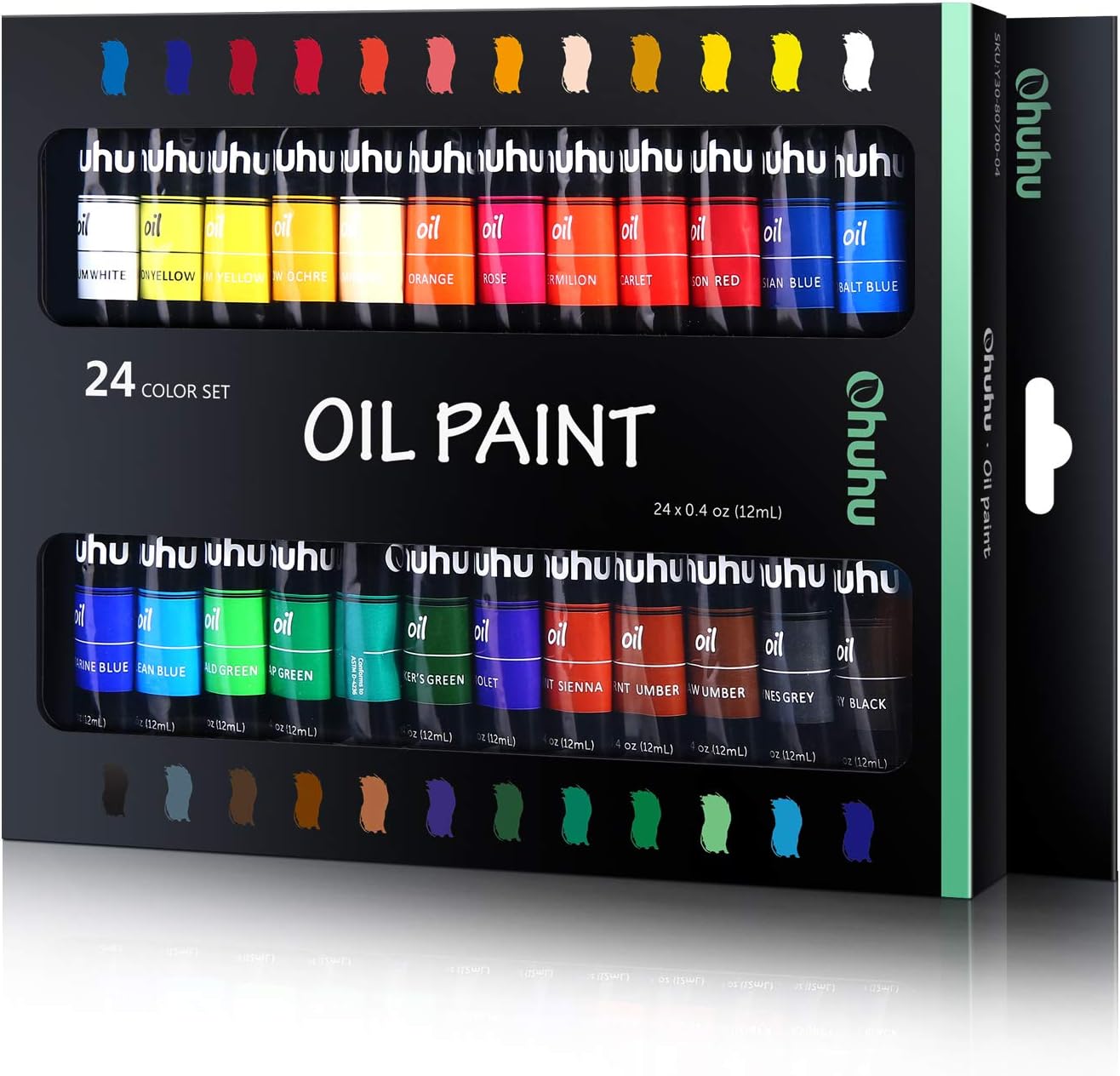
Realism takes a lot of practice studies, and the Ohuhu set makes that affordable. The listing includes titanium white, yellow ochre, burnt sienna, a flesh tint, several blues (Prussian, cobalt, ultramarine, cerulean), greens and reds in 12 ml tubes.
The key realist colors are there, which means you can practice value studies and limited-palette exercises without investing in professional tubes. The small 12 ml size, especially for white, is the main drawback; most painters will need a larger white tube quickly.
Best suited for: Beginners learning realism, sketchbook-style oil studies, and practice before upgrading.
Key features:
- 24 colors in 12 ml tubes
- Includes yellow ochre, burnt sienna and a range of blues
- Listed as non-toxic
- Portable set
Pros:
- Broad color selection for the price tier
- Contains core realist pigments
- Good for experimenting before committing to a palette
Cons and limitations:
- Small tubes, especially white
- Student-level set, so pigment strength may be lower than professional paints
Buying consideration: Pick out the earth colors, white and ultramarine and practice with those first. Learning a limited palette from a big set is one of the fastest ways to improve realism.
3. How to Paint Like the Old Masters (Joseph Sheppard) — Best for learning classical layering methods

Sheppard’s book is a well-known study of how historic painters built their images, which is the foundation many contemporary realists learn from. It is a natural companion to an Old Masters-style palette like the ZenART set.
For realism, the value lies in understanding layered approaches: underpainting, building form, and finishing with glazes and highlights, rather than trying to get everything right in one pass.
Best suited for: Intermediate painters ready to move beyond alla prima, and anyone curious about classical realism.
Key features:
- Technique-focused paperback
- Centered on historical master methods
- Pairs with an earth-color palette
Pros:
- Explains the “why” behind classical layering
- Useful long-term reference
- Low price tier compared with workshops
Cons and limitations:
- Classical methods are slower than direct painting
- Some techniques assume basic oil handling skills
Buying consideration: Read a chapter, then paint a small study using only that method. Books are most useful when paired with immediate practice.
4. Oil Painting Techniques and Materials (Harold Speed) — Best for understanding form, tone and materials

Harold Speed’s book is a long-standing art instruction classic, reissued by Dover. It is valued for its discussion of tone, form and how painters translate what they see into paint, which sits at the heart of realism.
It is text-heavy compared with modern step-by-step books, so it suits readers who like understanding principles rather than following a recipe.
Best suited for: Serious students of realism and painters who want theory as well as practice.
Key features:
- Classic oil painting instruction text
- Dover reprint edition
- Covers techniques and materials
Pros:
- Deep coverage of tone and observation
- Affordable reference
- Principles apply to any subject
Cons and limitations:
- Older writing style
- Fewer color illustrations than modern guides
Buying consideration: Treat this as a reference you return to as your skills grow, not a quick weekend read.
5. The Oil Painting Course You’ve Always Wanted (Kathleen Lochen Staiger) — Best for structured, lesson-by-lesson learning

As the title suggests, this book is structured as a course with guided lessons for both beginners and experienced artists. A sequenced approach suits realism well, since each skill (drawing, value, color, edges) builds on the last.
If you prefer having a teacher-led structure but cannot attend classes, a lesson-based book is the next best thing.
Best suited for: Self-taught painters who want a structured path into realistic oil painting.
Key features:
- Guided lessons
- Written for beginners and experienced painters
- Paperback format
Pros:
- Clear progression
- Good for self-study
- Complements a limited palette
Cons and limitations:
- Course structure can feel slow for experienced painters
- Book only, no video
Buying consideration: Work through lessons in order. Skipping ahead to color before value is a common reason realism stalls.
6. The Field Guide to Landscape Painting in Oils (Scott Maier) — Best for realistic landscapes

Realism is not only portraits. Scott Maier’s field guide focuses on techniques, planning and principles for capturing landscapes in oil. Landscape realism relies heavily on atmospheric perspective and value grouping, both skills that transfer to every other subject.
The hardcover format suits studio reference; for a pocket companion, the same author’s Little Book of Oil Painting Secrets also appears on Amazon.
Best suited for: Landscape and plein air painters working toward realistic results.
Key features:
- Hardcover reference
- Techniques, planning and principles
- Landscape-focused
Pros:
- Strong subject focus
- Covers planning, not only brushwork
- Useful for outdoor painters
Cons and limitations:
- Landscape-specific, so less useful for portrait realists
- Hardcover is less portable
Buying consideration: Use this book’s planning ideas with a limited earth palette. Landscapes painted with fewer colors often look more unified and believable.
Buying Guide: How to Choose Oil Paints for Realism
Prioritize earth colors and white
Before buying bright specialty colors, make sure you have the earths, a strong white and a mixing blue. These cover most realistic mixing needs and are usually the most affordable pigments.
Check tube size against usage
Realists use white and earth colors in quantity. Sets with 50 ml tubes or larger last much longer than 12 ml student tubes. If you buy a small set, plan to buy a separate large white.
Look at consistency
For soft blending and alla prima work, buttery paint is easier to handle. For glazing, you will add a medium, so a slightly stiffer paint is fine.
Student versus professional
Student paints often use more filler, which can weaken mixtures with white. They are perfect for studies. Professional paints give stronger tints and are worth it for finished pieces.
Consider drying time
Earth colors containing iron oxides and manganese, such as the umbers, are known to dry relatively quickly, which makes them good for underpaintings. Whites and some reds dry more slowly. Plan your layers so faster-drying colors go underneath.
Buy books that match your goal
Classical layering, alla prima portraiture and landscape realism each have their own literature. Pick one book focused on your subject rather than collecting general guides.
Safety and ventilation
Even with non-toxic paints, solvents used for thinning and cleaning need good ventilation. Low-odor solvents or solvent-free methods reduce exposure.
Learn the Technique Next
Paint quality only goes so far without practice. Our step-by-step guide to painting still life in oils is an ideal first realist exercise, and these tips for painting portraits with oil paints show how an earth palette handles skin tones. For a compact study, try painting a seashell in oil.
Common Mistakes to Avoid
- Buying a huge set of bright colors. Realism lives in subtle neutrals; vivid sets often go unused.
- Using tube black for all shadows. Mixed darks from blue and umber or sienna look more natural.
- Running out of white mid-painting. Buy it large.
- Skipping value studies. Color cannot rescue a painting with incorrect values.
- Blending everything. Realism needs a mix of soft, firm and hard edges.
- Painting fat under lean. Keep early layers leaner (less oil) than later ones to reduce cracking.
FAQs
What oil paint colors do I need for realism?
A strong white, yellow ochre, burnt sienna, raw or burnt umber and ultramarine blue cover most realistic mixing. Add a warm and cool red for skin and accents. Many realists work with fewer than ten colors.
Is professional oil paint necessary for realistic painting?
Not for learning. Student paints work well for studies and value practice. Professional paints give stronger tints and are worth upgrading to for finished work, especially for white and the earth colors you use most.
Why do realist painters use earth colors?
Earth colors are naturally low in chroma, which matches most real-world subjects like skin, wood and landscape. They are also generally lightfast, opaque and affordable, and they mix into harmonious neutrals.
Is the Zorn palette good for realism?
Yes, for portraits in particular. The Zorn palette of yellow ochre, a red, ivory black and white can produce a surprising range of skin tones and teaches strong value control, though it is limited for bright blues and greens.
Can I paint realism alla prima?
Yes. Many realist portraits and still lifes are painted wet-on-wet in one or a few sessions. Classical layered methods are another route; both rely on accurate drawing and values.
Which book is best for learning realistic oil painting?
For classical methods, How to Paint Like the Old Masters is a strong choice. For a structured self-study path, a lesson-based course book suits beginners, while Harold Speed’s text offers deeper theory on tone and form.
Final Recommendation
If you want one purchase that moves your realism forward, choose the ZenART Portrait Palette: its earth colors, ultramarine and large tubes match how realist painters actually work. Beginners who need lots of practice material can start with the Ohuhu 24-color set and use only its earths and blue. Then add one book matched to your goal: Sheppard for classical layering, Speed for theory, Staiger for a guided course, or Maier for landscapes.