
PaintingProGuide is reader-supported. When you buy through links on this page we may earn an affiliate commission at no extra cost to you.
Oil paint is thick, slow-drying and often mixed with solvent and oil, which puts brushes through more than any other medium. A good oil brush has to push buttery paint without splaying, hold a crisp edge, blend soft transitions when you want them, and survive daily cleaning in solvent or soap. The best paint brushes for oil painting are the shapes you will actually use, flats, brights, filberts, rounds and a liner, in bristles suited to how thickly you paint.
One honest note before the picks: traditional oil painters often rely on stiff natural hog bristle brushes for thick paint, and none of the six sets in this comparison are hog bristle. They are synthetic multi-media sets, plus a specialized natural ox-ear hair liner set. Synthetic brushes are excellent for smooth blending, thinner paint and glazing, and they are easier to clean. We explain where each excels, and when it is worth adding a few hog bristle brushes to your kit.
Quick answer: For most oil painters starting out, the Fuumuui 25-piece set gives the broadest useful range: nine shapes including a large wide flat, filberts and a rigger, plus a palette knife and roll. If you want more graduated sizes in the core shapes, the Nicpro 30-piece set includes eight flats, six rounds and six filberts in sizes up to 14. For long, fine lines such as branches, hair and rigging, add the ARTIFY ox ear hair long liner set.
Our Top Picks at a Glance
- Fuumuui 25 pc Paint Brush Set with Palette Knife — Best overall brush set for oil painting
- Nicpro 30 pc Paint Brush Set — Best graduated sizes in core oil shapes
- Fuumuui 26 pc High-Grade Series Brush Set — Best for landscape texture shapes
- ARTIFY Long Liner Brushes, Ox Ear Hair, 3 pc — Best liners for fine detail
- Golden Maple 25 pc Brush Set with Palette Knife — Best alternative all-round set
- KEVIN&SASA CRAFTS 24 pc Brush Set with Case — Best budget set
| Product | Best For | Key Spec | Key Strength | Price Tier |
|---|---|---|---|---|
| Fuumuui 25 pc | All-round oil kit | 24 brushes in 9 shapes + knife + roll | Includes large wide flat | $$ |
| Nicpro 30 pc | Size range in core shapes | 8 flats, 6 rounds, 6 filberts, plus angle, fan, dagger | Sizes up to 14 | $$ |
| Fuumuui 26 pc High-Grade | Landscapes and texture | Includes deerfoot, comb, mop, fan, feather | Specialty texture shapes | $$ |
| ARTIFY Liners | Branches, hair, rigging | 3 long liners, #1, #3, #5, ox ear hair | Natural hair, long strokes | $$ |
| Golden Maple 25 pc | General use | 25 nylon brushes + knife + roll | Secure ferrules per listing | $$ |
| KEVIN&SASA 24 pc | Budget, beginners | 24 brushes + canvas case | Lowest cost | $ |
How We Chose
We compared these brushes using their Amazon listing details and specifications, checked in October 2026, how well their shapes, sizes and bristle types suit oil painting, and how widely each is reviewed by Amazon buyers. We have not painted with these specific brushes; materials and construction details are from the listings.
- Shape coverage: flats, filberts, rounds and a liner at minimum.
- Size range: large brushes for blocking in as well as small for details.
- Bristle type: suitability for thick or thin oil paint.
- Construction: crimped ferrules and handles that hold up to solvent cleaning.
- Extras: palette knives and storage rolls.
Oil Brush Basics: Bristle Types and Shapes
Hog bristle
Stiff natural bristle with split, or flagged, tips that hold a lot of paint. It moves thick, buttery oil paint and leaves visible brush marks. The classic choice for blocking in and impasto.
Synthetic
Nylon or polyester filaments, from soft to firm. Smooth strokes, good for blending, thinner paint, glazing and details. Easier to clean and less affected by solvents than some natural hair.
Soft natural hair
Sable, squirrel and ox hair are soft and hold fluid paint well. In oil they are used mainly for glazes, fine details and liners.
Mixing bristle types
Most experienced oil painters own a mix: hog bristle for blocking in and textured passages, firm synthetics for general work, and a few soft brushes for blending and glazes. Starting with a synthetic set is sensible, because it covers the widest range of tasks while you learn which bristle feel you prefer.
Handle length
Traditional oil brushes have long handles so you can paint at arm’s length and see the whole canvas. Many multi-media sets, including those here, use shorter handles that suit table work. If you paint at an easel, holding the brush farther back on a short handle still helps, and you can add a few long-handled brushes later.
Shapes
- Flat: long square head for broad strokes and crisp edges.
- Bright: shorter flat, stiffer and more controllable for thick paint.
- Filbert: flat with a rounded tip, the most versatile oil shape for blending and organic forms.
- Round: pointed for lines and details.
- Liner or rigger: long, thin hair for continuous fine lines.
- Fan: for soft blending and textures like foliage and grass.
Best Paint Brushes for Oil Painting Reviewed
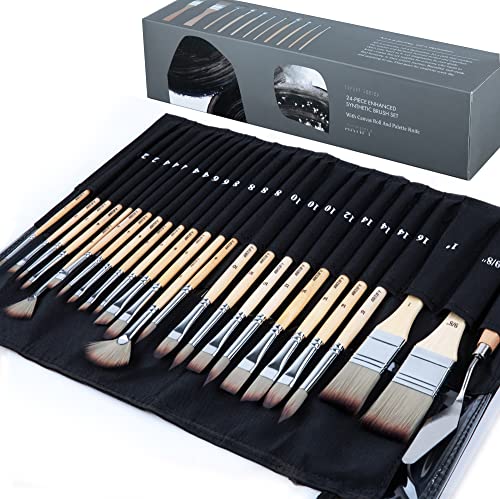
1. Fuumuui 25 pc Paint Brush Set with Palette Knife and Canvas Roll — Best for an all-round oil kit

Fuumuui’s set includes 24 synthetic brushes in nine shapes: large wide flat, flat, filbert, fan, dagger, cat’s tongue, round, angle and rigger, plus a palette knife and a waterproof canvas roll. The listing describes flagged synthetic bristles with high pigment capacity and birch handles.
For oil painting, the large wide flat is the brush many sets omit. It lets you tone a canvas and block in a composition quickly, which keeps early stages loose and correct. Flagged synthetic tips hold more paint than smooth synthetic tips.
Best suited for: Beginners and intermediate oil painters who want one set with every key shape.
Key features:
- 24 synthetic brushes in 9 shapes
- Large wide flat included
- Palette knife and waterproof roll
- Birch handles
Pros:
- Broad shape range
- Includes blocking-in brush
- Storage roll
Cons and limitations:
- Synthetic, not hog bristle, for thick impasto
- Short to medium handles
Buying consideration: Use the filberts for most of the painting. Save the rigger and round for final details.
2. Nicpro 30 pc Paint Brush Set — Best for graduated sizes in core shapes

Nicpro’s set focuses on the core oil shapes in many sizes: 8 flats (#6, #4, 14, 12, 8, 6, 4, 2), 6 rounds (14, 8, 6, 4, 2, 0), 6 filberts (14, 10, 8, 6, 4, 2), 3 angles (10, 6, 4), 3 fans (8, 6, 2) and daggers. The listing describes premium nylon with good elasticity, double-crimped aluminum ferrules, birch handles and an oil- and water-resistant nylon roll.
Graduated sizes matter in oil painting because you work from large to small. Having a filbert 14, 10 and 8 means you can step down as forms get smaller.
Best suited for: Painters who want a full range of sizes in flats, rounds and filberts.
Key features:
- 30 nylon brushes
- Flats, rounds and filberts up to size 14
- Double-crimped ferrules
- Oil- and water-resistant roll
Pros:
- Excellent size spread
- Durable ferrules
- Good roll
Cons and limitations:
- Nylon is softer for very thick paint
- Many brushes to keep clean
Buying consideration: Keep one set of brushes for light colors and another for darks to avoid muddy mixes.
3. Fuumuui 26 pc High-Grade Series Synthetic Brush Set — Best for landscape texture shapes

This Fuumuui set goes beyond the basics with specialty shapes: large wide flat, pointed, liner, flat, brights, slant, dagger, filbert, fan, feather, coattails, comb, deerfoot, mop and scraper. The listing describes soft synthetic bristles with good shape retention and double-crimped copper ferrules.
Landscape painters will find uses for the deerfoot, comb and fan in foliage, grass and texture, and the brights are well suited to controlled oil strokes.
Best suited for: Landscape painters and anyone who wants texture-making shapes.
Key features:
- 26 synthetic brushes
- Specialty shapes: deerfoot, comb, mop, feather
- Brights and filberts
- Double-crimped copper ferrules
Pros:
- Unique texture shapes
- Includes brights
- Portable roll
Cons and limitations:
- Specialty shapes can encourage gimmicky texture
- Soft bristles for thick paint
Buying consideration: Use texture brushes sparingly and vary pressure, or foliage starts to look stamped.
4. ARTIFY Long Liner Brushes, Ox Ear Hair, #1, #3, #5 — Best for fine lines

ARTIFY’s liners use imported natural ox ear hair, which holds a lot of paint for long, continuous strokes. The listing highlights a precise point that responds to pressure, gold-plated copper ferrules, FSC-certified birch handles and a protective case, in sizes #1, #3 and #5.
Thin your oil paint slightly with medium for liner work so it flows off the long hair, and you can pull a branch or strand of hair in a single stroke.
Best suited for: Adding branches, grass, hair, whiskers, rigging and signatures.
Key features:
- 3 long liners, #1, #3, #5
- Natural ox ear hair
- Gold-plated copper ferrules
- Protective case
Pros:
- Long, controlled lines
- Holds plenty of paint
- Quality construction
Cons and limitations:
- Specialized use
- Natural hair needs gentle cleaning
Buying consideration: Clean natural hair gently and reshape the point after each use.
5. Golden Maple 25 pc Paint Brush Set with Palette Knife — Best for general use

Golden Maple’s set includes 25 nylon brushes, a palette knife and a canvas case. The listing emphasizes glued, chrome-plated aluminum ferrules with rivets on the board brushes, and nylon chosen to minimize hair loss.
Best suited for: Painters who want an alternative all-round set with secure ferrules.
Key features:
- 25 nylon brushes
- Palette knife and canvas case
- Riveted board brushes
Pros:
- Secure ferrules
- Includes knife and case
Cons and limitations:
- Shape list less detailed in listing
- Synthetic for thick paint
Buying consideration: Check the shape list against the essentials before buying.
6. KEVIN&SASA CRAFTS 24 pc Brush Set with Canvas Case — Best for a budget start

This low-cost set includes 24 brushes: fan, bright, detail, round, mop and angle shapes, with a canvas case. The listing mentions watercolors and acrylics but says the brushes work with all paint types.
Best suited for: Beginners on the tightest budget and spare brushes for toning and rough work.
Key features:
- 24 brushes
- Fan, bright, detail, round, mop, angle
- Canvas case
Pros:
- Lowest cost
- Includes brights
- Case included
Cons and limitations:
- Limited material detail
- Not designed specifically for oil
Buying consideration: Use these for toning and underpainting and keep better brushes for final layers.
Buying Guide: How to Choose Oil Painting Brushes
Paint thickness
Thick, impasto paint: hog bristle or firm synthetic brights and flats. Thin layers, blending and glazing: soft synthetics.
Shapes first
Filberts, flats and a round cover most work. Add a liner and fan as needed.
Sizes
Own at least one large brush for blocking in. Many beginners paint too small for too long.
Handle length
Long handles let you stand back from the easel; short handles suit close detail and table work.
Construction
Crimped, tight ferrules and sealed handles resist solvent and frequent cleaning.
Upgrade path
Start with a synthetic set, then add a few quality hog bristle brushes in your favorite sizes.
Which Brush at Each Stage of an Oil Painting
| Stage | Brush | Why |
|---|---|---|
| Toning the canvas | Large wide flat or an inexpensive house-style brush | Covers the surface quickly with a thin wash |
| Drawing and underpainting | Small to medium round or filbert | Thin lines and simple value shapes |
| Blocking in | Large flat or filbert (size 10 to 14) | Big shapes, few strokes, fast coverage |
| Developing form | Medium filberts and brights (6 to 10) | Blend edges and model volume |
| Soft transitions | Clean soft synthetic flat or fan | Gently merge neighboring colors |
| Details and accents | Small round, liner | Highlights, eyes, branches, signatures |
Notice how much of a painting happens with big brushes. A common habit among beginners is switching to small brushes too early, which leads to fussy, overworked paintings. Try to stay with the largest brush that can do the job until the very end.
It also helps to dedicate brushes to value ranges. Keep one or two brushes for darks and others for lights during a session, so you are not constantly cleaning and accidentally graying your lightest passages with residue from shadow mixes.
When to Add Hog Bristle Brushes
If you find synthetic brushes splaying under thick paint, or you want visible, textured brushwork, add two or three hog bristle brights or filberts in medium sizes. Our hands-off reviews of established brands can help you compare: see the Da Vinci oil painting brush review and the Blick oil painting brush review.
Cleaning and Care
Oil brushes last longest when cleaned promptly. Wipe excess paint on a rag, rinse in odorless solvent, then wash with mild soap and lukewarm water and reshape. Our guides cover how to clean oil paint brushes without odor, cleaning without solvent and properly caring for oil painting brushes.
Common Mistakes to Avoid
- Painting everything with small brushes. Start big.
- Leaving brushes standing in solvent. Bent tips and loose ferrules follow.
- Letting paint dry in the ferrule. It splays the bristles permanently.
- Using soft brushes for heavy impasto. They collapse under thick paint.
- Mixing on the brush. Use a palette knife to keep brushes in shape.
- Buying a huge set and using three brushes. Notice which shapes you reach for and buy better versions of those.
FAQs
What brushes are best for oil painting?
Filberts, flats and rounds in a range of sizes, plus a liner. Hog bristle suits thick paint; synthetics suit blending and thin layers.
Are synthetic brushes good for oil painting?
Yes, especially for smooth blending, glazing and detail. Firm synthetics can also handle moderately thick paint.
What is a filbert brush used for?
A filbert is a flat brush with a rounded tip, ideal for blending and painting organic shapes.
How many brushes do I need for oil painting?
Six to eight well-chosen brushes are enough to start: a large flat, two or three filberts, a bright, a round and a liner.
Can I use the same brushes for acrylic and oil?
You can, but it is better to keep separate sets, since dried acrylic can stiffen bristles.
How do I stop oil brushes from splaying?
Clean thoroughly to the ferrule, reshape while damp and store flat or bristles up.
Final Recommendation
Start with the Fuumuui 25-piece set for the broadest useful shapes, or the Nicpro 30-piece set for graduated sizes in flats, rounds and filberts. Landscape painters can add the Fuumuui 26-piece High-Grade set for texture shapes. Add ARTIFY liners for fine lines. Golden Maple is a solid alternative all-round set, and KEVIN&SASA covers the tightest budgets. As your work thickens, supplement with a few hog bristle brushes, and clean every brush right after each session so it keeps its shape for years.




