
PaintingProGuide is reader-supported. When you buy through links on this page we may earn an affiliate commission at no extra cost to you.
Outdoor painting is hard on brushes. Rough cedar, weathered deck boards, brick and porch rails chew through bristles, the sun skins paint on the brush faster than indoors, and thick exterior stains and sealers demand a brush that holds a lot of material. The best paint brushes for outdoor use are wide, densely packed brushes with synthetic or blended bristles that work with both water-based and oil-based coatings, plus one or two angled sash brushes for trim and edges.
Quick answer: For a single kit that covers fences, rails, trim and outdoor furniture, the Pro Grade 5-Piece Paint Brush Set is the most complete option, including a 2 inch angle stubby for tight spots. For broad deck and fence staining, the Magimate 5 Inch Deck Stain Brush threads onto an extension pole, and the Bates 4 Inch Deck Stain Brush 2 Pack is a simpler pair for the same job.
One note before the list: these are brushes for exterior projects such as decks, fences, sheds, garden furniture and masonry. If you are a landscape painter looking for plein air artist brushes, see our related guides linked further down; artist brushes for outdoor easel work are a different tool.
Our Top Picks at a Glance
- Pro Grade 5-Piece Paint Brush Set — Best all-round outdoor kit with an angle stubby
- Magimate 5 Inch Deck Stain Brush — Best for decks and fences with a pole
- Bates Deck Stain Brush, 4 Inch, 2 Pack — Best simple pair for large wood surfaces
- Bates 6 Pack Natural Bristle Brushes — Best for oil-based exterior coatings
- Genixart 3 Inch Double Thick Chip Brush — Best for stain on fences and rough wood
- Wesquer 4 Inch Flat Limewash Brush, 2 Pack — Best for limewash on masonry
- Newkita Set of 3 Chip Brushes — Best disposable brushes for sealers and touch-ups
| Product | Best For | Key Spec | Key Strength | Price Tier |
|---|---|---|---|---|
| Pro Grade 5-Piece Set | Trim, rails, doors, siding | 1 in, 1.5 in, 2 in flats and angles plus 2 in angle stubby | Covers most outdoor tasks | $ |
| Magimate 5 in Deck Brush | Decks, fences, back-brushing | 5 in wide, 1 in thick, blended filament, threaded handle | Fits an extension pole | $ |
| Bates 4 in Deck Stain Brush | Large wood surfaces | 4 in wide, dense bristles, 2 pack | Spare brush for long jobs | $ |
| Bates 6 Pack Brushes | Oil-based paint and stain | 3 flat and 3 angled, natural bristles | Holds a lot of paint | $ |
| Genixart 3 in Chip Brush | Fence and rough wood stain | 3 in, double thick, synthetic tapered nylon | Thicker than a standard chip brush | $ |
| Wesquer 4 in Limewash Brush | Limewash on brick and stucco | 4 in flat, 2 pack | Wide flat for textured walls | $ |
| Newkita 3 Chip Brushes | Sealers, touch-ups | 3 sizes, synthetic bristles, wood handles | Cheap enough to discard | $ |
How We Chose
We did not use these brushes on our own decks or fences. The selections are based on the Amazon listing details and specifications checked in October 2026, how well each brush’s width, bristle type and handle design fit common outdoor jobs, and how widely each product is reviewed by Amazon buyers. Where a listing gives very little information, as with the Wesquer brush, we rely only on what its title states.
What we weighed:
- Bristle type versus coating: synthetic filaments for water-based latex and acrylic exterior paint; natural or blended bristles for oil-based stains and paints.
- Width against surface: 4 to 5 inch brushes for decks and fences; 1.5 to 2.5 inch angles for rails, trim and window frames.
- Paint capacity: thick, dense heads hold more stain and reduce trips to the can on hot days.
- Bristle retention: rough exterior wood pulls loose bristles out; listings that address shedding scored higher.
- Handle and reach: threaded handles that accept an extension pole save your back on deck floors.
- Cost per job: cheap chip brushes are fine for sealers you would rather not clean out of a good brush.
Best Paint Brushes for Outdoor Use Reviewed
1. Pro Grade 5-Piece Paint Brush Set — Best for an all-round outdoor kit

Pro Grade bundles five brushes: a 1 inch flat, 1.5 inch angle, 2 inch flat, 2 inch angle stubby and 2.5 inch angle. For exterior work, this spread covers most of what a house, shed or garden project throws at you. The flats handle doors, shelving, fences and wood siding; the angles cut in along trim and window frames.
The listing highlights two details that matter outdoors. First, bristles are locked with precision-set adhesive, which the maker says prevents bristle loss, important when you are dragging a brush across rough exterior wood. Second, the angle stubby has a short handle that fits tight spots such as the inside of railing balusters, behind downspouts and window sashes.
Best suited for: Homeowners painting trim, doors, railings, outdoor furniture and sheds who want one set for most jobs.
Key features:
- 5 brushes: 1 in flat, 1.5 in angle, 2 in flat, 2 in angle stubby, 2.5 in angle
- Adhesive-bonded bristles to resist shedding
- Suited to walls, trim and stain
- Stubby short-handle brush included
Pros:
- Wide range of sizes in one purchase
- Angle stubby for tight exterior spots
- Stated focus on bristle retention
- Works for paint and stain
Cons and limitations:
- No brush wider than 2.5 inches for big deck areas
- Bristle material not specified in detail
- Not a specialist deck tool
Buying consideration: Pair this set with one wide deck brush and you have a complete exterior kit.
2. Magimate 5 Inch Deck Stain Brush — Best for decks and fences with a pole

The Magimate brush is 5 inches wide and 1 inch thick, with soft synthetic filament blended with natural bristle. That blend is a practical choice outdoors: synthetic filament keeps its shape in water-based stains, while natural bristle carries oil-based products well.
The hollow threaded handle accepts a standard broom, mop or painter extension pole, so you can stain a deck floor standing up. The listing also describes it as working between planks, cracks and railings, and for back-brushing after spraying, which helps stain penetrate.
Best suited for: Anyone staining or sealing a deck, fence, porch floor or shed, especially with an extension pole.
Key features:
- 5 inch wide, 1 inch thick
- Synthetic filament blended with natural bristle
- Threaded hollow handle for poles
- For stain, sealer, paint and masonry
Pros:
- Pole-ready for floor work
- Large stain capacity
- Works on rough and smooth surfaces
- Good for back-brushing sprayed stain
Cons and limitations:
- Too wide for trim and spindles
- Pole sold separately
- Single brush
Buying consideration: Back-brushing sprayed or rolled stain into the grain is where a wide brush earns its keep. Keep a smaller angle brush for the rail tops.
3. Bates Deck Stain Brush, 4 Inch, 2 Pack — Best for large wood surfaces

Bates designed this pair specifically for staining decks and other large wood surfaces. Each 4 inch brush has densely packed bristles for smooth, even application of stain or sealant, and an ergonomic wooden handle.
Having two brushes is useful on long jobs. You can rotate them so one rests while you work, or keep one for stain and the other for a clear sealer coat.
Best suited for: Deck, fence and siding stainers who prefer working by hand rather than with a pole.
Key features:
- 4 inch wide, 2 pack
- Densely packed bristles
- Ergonomic wooden handles
- Designed for stain and sealant
Pros:
- Two brushes for the price of a single specialist brush
- Dense head holds plenty of stain
- Comfortable for long sessions
Cons and limitations:
- No pole thread mentioned
- Bristle material not specified
- Too wide for detail work
Buying consideration: Clean water-based stain out promptly; dried stain stiffens dense heads quickly in summer heat.
4. Bates 6 Pack Natural Bristle Brushes — Best for oil-based exterior coatings

This Bates set includes three flat brushes (1, 1.5 and 2 inch) and three angled brushes (1.5, 2 and 2.5 inch) with natural bristles. Bates states the bristles are designed to hold more paint and give a smoother finish with fewer streaks.
Natural bristle is the traditional choice for oil-based exterior stains, varnishes and enamels. It is generally not recommended for water-based latex, which can make natural bristles go limp, so match this set to oil products.
Best suited for: Painters using oil-based exterior stains, varnishes on outdoor furniture, or enamel on metal railings.
Key features:
- 6 brushes: 3 flat, 3 angled
- Natural bristles
- Lightweight wooden handles
- Reusable and easy to clean
Pros:
- Good size spread
- Natural bristle for oil-based products
- Angled and flat options
Cons and limitations:
- Natural bristle is a weaker match for water-based paint
- No wide deck size
- Bristle retention not addressed in listing
Buying consideration: Use mineral spirits or the solvent your stain recommends to clean these after oil-based work.
5. Genixart 3 Inch Double Thick Chip Brush — Best for fence stain and rough wood
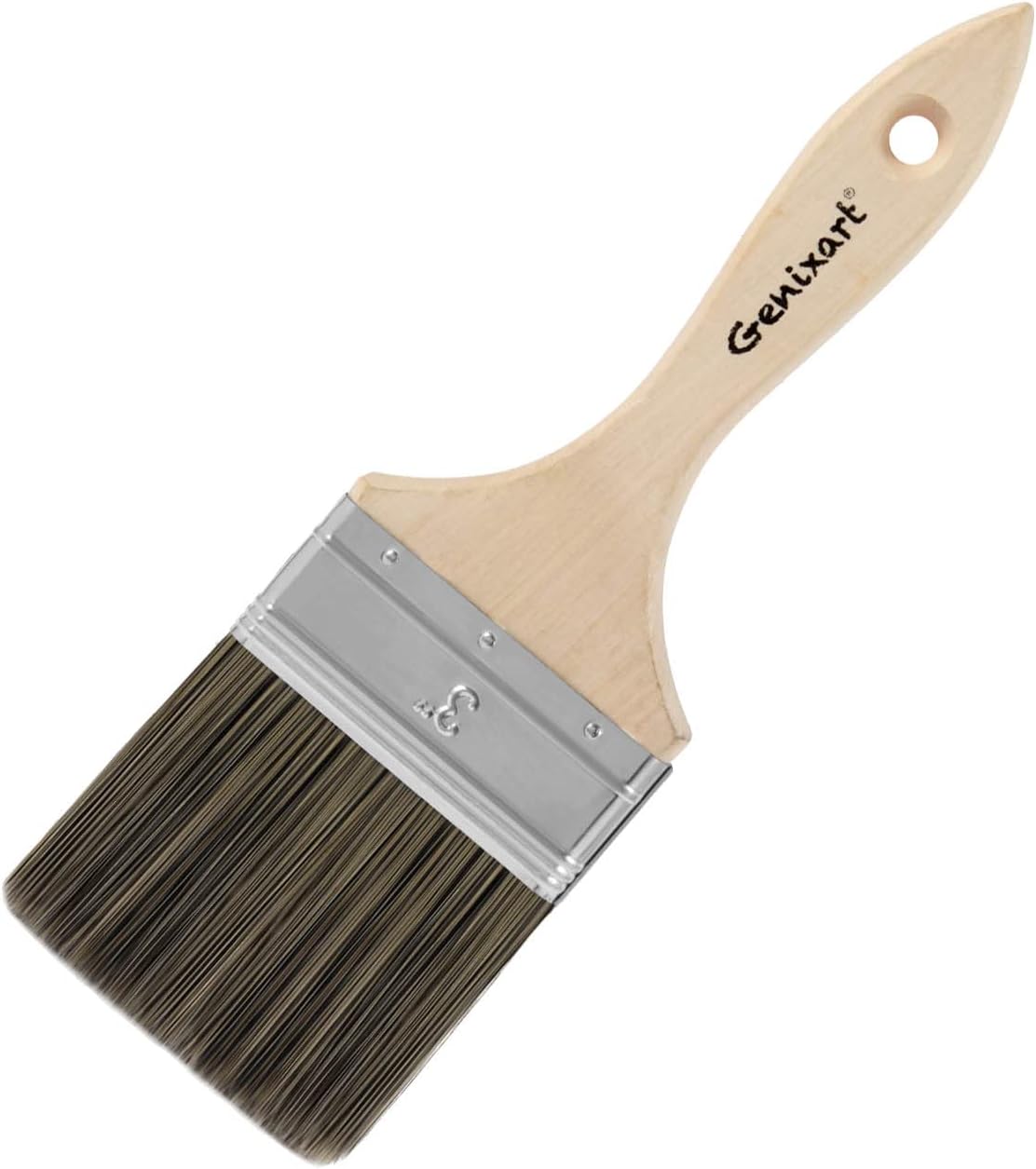
Genixart calls this a double thick chip brush, 3 inches wide, with soft synthetic bristles mixed with solid round tapered nylon filaments. The listing says it works with water-based and oil-based stains, paints and sealers, including latex and polyurethane.
The extra thickness lifts it above a standard thin chip brush. It holds more stain, which matters on picket fences and rough-sawn lumber that soak up product quickly.
Best suited for: Fence and outdoor furniture staining where a full deck brush is too large.
Key features:
- 3 inch wide, double thick
- Synthetic bristles with tapered nylon
- For water- and oil-based products
- Sanded wooden handle
Pros:
- Versatile across coatings
- Thicker head than typical chip brushes
- Good width for fence pickets
Cons and limitations:
- Single brush
- Not as fine for trim as an angled sash brush
Buying consideration: A 3 inch brush is the right width for most fence pickets: one pass per face.
6. Wesquer 4 Inch Flat Limewash Brush, 2 Pack — Best for limewash on masonry

The Wesquer listing provides very little detail beyond its title, which describes a professional flat limewash brush, 4 inches wide, sold as two pieces, for walls, decks, fences and interior or exterior house painting.
Limewash is applied in loose, crisscross strokes on brick, stucco and stone, and a wide flat brush is the conventional tool. Beyond that, we cannot confirm the bristle material or construction from the listing.
Best suited for: Homeowners applying limewash or masonry coatings to brick, block or stucco.
Key features:
- 4 inch flat brush
- 2 pack
- Marketed for limewash, walls, decks and fences
Pros:
- Wide flat suited to limewash technique
- Two brushes for long jobs
Cons and limitations:
- Listing gives almost no specifications
- Bristle type unknown
Buying consideration: Check the bristle type on the product page before buying, as limewash makers often recommend a specific brush style.
7. Newkita Set of 3 Chip Brushes — Best for disposable sealer and touch-up brushes

Newkita sells three chip brushes in different sizes with synthetic bristles and wooden handles. The listing says they work with most paints, stains, varnishes and gesso, and suit fences, decks, gates and cabinets. They wash out with soap and water while wet.
Chip brushes are the right tool for jobs where the coating would ruin a good brush: sealers, wood preservatives, rust treatments and glue.
Best suited for: Quick outdoor touch-ups, sealers and messy products you do not want in a quality brush.
Key features:
- 3 sizes
- Synthetic bristles
- Wooden handles
- Soap and water cleanup when wet
Pros:
- Very low cost
- Fine to throw away after harsh products
- Small sizes reach gaps
Cons and limitations:
- Not meant for a fine finish
- Thinner heads hold less paint
Buying consideration: Keep a few in the shed for quick jobs. They are not the brushes for visible finish coats.
Buying Guide: How to Choose Paint Brushes for Outdoor Use
Match bristle to coating
Synthetic nylon and polyester bristles keep their stiffness in water and are the default for exterior latex and acrylic paint. Natural bristle is traditionally used with oil-based stains, enamels and varnishes. Blended heads, like the Magimate, try to cover both.
Choose width by surface
Use 4 to 5 inches for deck boards, siding and fence panels; about 3 inches for pickets and outdoor furniture slats; and 1.5 to 2.5 inch angled brushes for trim, rails, window frames and doors. A short-handled stubby fits behind spindles and into corners.
Look at head thickness
A thick, dense head holds more stain, which reduces dipping and lap marks on a hot day. Thin chip brushes run dry quickly and suit small jobs only.
Think about reach
Threaded handles that accept an extension pole make deck floors and fence bottoms far easier on knees and back. Without one, plan on kneeling pads.
Plan for weather and timing
Sun and wind dry paint in the brush and on the surface. Paint shaded sides first and follow the shade around. Wrap brushes in plastic during breaks so the paint does not skin over.
Decide what is disposable
Preservatives, sealers and strippers can damage good brushes. Use inexpensive chip brushes for those and keep quality brushes for visible finish coats.
Cleaning and storage
Clean water-based products with warm soapy water and oil-based products with the solvent named on the can. Shake out, reshape the bristles and hang or lay flat to dry. Our related guide on drying paint brushes correctly covers this in more detail.
Related Brush Guides
Shedding is the most common complaint with cheap outdoor brushes, so read up on how to keep paint brushes from shedding before a big fence job. If you are working on a big surface and want smoother coverage, this guide on painting with large brushes explains loading, stroke direction and keeping a wet edge.
Common Mistakes to Avoid
- Using a natural bristle brush with water-based exterior paint, which makes the bristles soft and floppy.
- Staining a deck in full afternoon sun, which causes lap marks.
- Trying to cut in railings and trim with a 4 or 5 inch brush.
- Letting stain dry in the heel of the brush during a long break.
- Skipping back-brushing after spraying or rolling stain on rough wood.
- Using a good brush for sealers or preservatives instead of a cheap chip brush.
FAQs
What type of brush is best for exterior latex paint?
A synthetic nylon or polyester brush. Synthetic filaments hold their shape in water-based paint and spread it evenly.
What size brush should I use to stain a deck?
A 4 to 5 inch brush for the boards, ideally with a threaded handle for an extension pole, plus a 2 inch angled brush for rails and spindles.
Can I use the same brush for oil-based and water-based stain?
Blended brushes are marketed for both, but it is safer to dedicate one brush to each type and clean it thoroughly with the right cleaner.
Why does my brush leave bristles on the fence?
Rough wood pulls loose bristles. New brushes often shed a few; flick and comb the bristles before first use, and choose brushes that state bristle retention features.
Are chip brushes good for outdoor painting?
They are fine for sealers, preservatives, small touch-ups and rough surfaces, but they hold less paint and leave a coarser finish than a quality brush.
What brush is best for limewash on brick?
A wide flat brush, around 4 inches, used in loose crisscross strokes. Check the limewash maker recommendations for bristle type.
Final Recommendation
If you only buy one thing, get the Pro Grade 5-piece set: it covers trim, doors, railings and outdoor furniture, and its angle stubby solves the awkward spots. Add the Magimate 5 inch brush for decks and fences if you want to work from a pole, or the Bates 4 inch pair if you prefer hand work. Use the Bates natural bristle set with oil-based coatings, the Genixart 3 inch for fence pickets, the Wesquer flats for limewash, and keep the Newkita chip brushes for the jobs you would rather not clean up after.





One Comment