PaintingProGuide is reader-supported. When you buy through links on this page we may earn an affiliate commission at no extra cost to you.
“Painting wood” covers a wide range of projects: refinishing a dresser, painting a wooden sign, decorating wood slices and craft blanks, staining a picture frame, or varnishing a carved piece. The surface is the same, but the brush is not. Furniture and larger boards need 1 to 2.5 inch flat and angled brushes that lay paint or finish smoothly along the grain. Craft wood and signs need small artist flats and rounds for lettering and designs. Stains, varnishes and gesso work best with inexpensive chip brushes you do not mind retiring. The best paint brushes for wood are therefore a small mix from these three groups, chosen for the projects you actually do.
Quick answer: For furniture, cabinets and trim, the Purdy XL 3-pack is our top pick: 1, 1.5 and 2 inch brushes in Purdy’s nylon-polyester XL series for all paints and stains. For stains, varnish and oil-based finishes, the Magimate 5-piece set has long-handle angled and flat brushes with soft polyester filaments. For craft wood, signs and wood slices, the Amazon Basics 24-count artist brush set covers small flats, rounds and detail sizes.
Wood Projects and the Brushes They Need
Furniture and cabinets
Dressers, tables, chairs and cabinets are usually painted with 1.5 to 2.5 inch brushes, working along the grain in long strokes. An angled brush cuts into the corners of drawer fronts and panel doors; a flat brush handles tops and sides.
Trim, frames and moldings
Narrow profiles need 1 to 1.5 inch angled brushes that follow curves and edges without flooding detail.
Wood signs and lettering
Painted signs use small flat artist brushes for block letters and rounds for script. A clean, sharp edge is more important than speed.
Wood slices, ornaments and craft blanks
Small craft brushes in sizes from 2/0 to about 12 handle designs, dots and fine details on raw or sealed wood.
Stain and varnish
Stain is usually wiped on with a rag or applied with a brush and wiped back. Varnish and polyurethane need a smooth, soft brush and a light touch to avoid bubbles. Chip brushes are popular for stain and glue because they are cheap enough to throw away.
Primer and gesso
Primer and gesso go on with any reasonable flat brush. Using a cheaper brush keeps your good brushes for finish coats.
Our Top Picks at a Glance
- Purdy XL 3 Pack: 1″, 1.5″ and 2″ — Best overall brushes for painting wood furniture
- Magimate 5-Piece Angled and Flat Stain Brushes — Best for stain, varnish and oil-based finishes
- Pro Grade 5-Piece Brush Set — Best value set for furniture and trim
- Amazon Basics 24-Count Artist Brushes — Best for wood crafts and signs
- Alrhso 40-Piece Flat and Round Brushes — Best bulk craft brushes for wood slices
- Newkita 3-Piece Chip Brushes — Best disposable brushes for stain and gesso
- Bates 6-Pack Flat and Angled Brushes — Best budget set for oil-based primer
| Product | Best For | Key Spec | Key Strength | Price Tier |
|---|---|---|---|---|
| Purdy XL 3 Pack | Furniture, cabinets, trim | 1″ Dale, 1.5″ Glide, 2″ Sprig; nylon-polyester | Smooth finish coats | $$ |
| Magimate 5-Piece | Stain, varnish, oil-based | 3 long-handle angles 1.5–2.5″, flats 1″ and 2″; polyester | Soft filaments for finishes | $ |
| Pro Grade 5-Piece | Value furniture set | 1″ flat, 1.5″ angle, 2″ flat, 2″ angle stubby, 2.5″ angle | Five sizes cheaply | $ |
| Amazon Basics 24-Count | Crafts and signs | 24 artist brushes, polyester, container | Detail sizes | $ |
| Alrhso 40-Piece | Wood slices, classes | 20 flat + 20 round, nylon | Bulk craft brushes | $ |
| Newkita 3 Chip Brushes | Stain, gesso, glue | 3 chip brushes, synthetic | Cheap and disposable | $ |
| Bates 6-Pack | Oil-based primer | 3 flat, 3 angled, natural/synthetic blend | Lowest cost per brush | $ |
How We Chose
We made these picks from the Amazon listing details and specifications checked in October 2026, based on how well each brush’s width, shape and filament suit specific wood projects and finishes, and how widely each product is reviewed by Amazon buyers. We have not used these brushes on wood ourselves. Claims about shedding and finish are as each maker states them.
- Filament for the finish: synthetic for water-based paint, soft polyester or natural bristle for oil-based finishes.
- Width and shape matched to furniture, trim or crafts.
- Finish quality: brushes designed to leave fewer marks.
- Cost per brush for stain and glue work.
Best Paint Brushes for Wood Reviewed
1. Purdy XL 3 Pack: 1″, 1.5″ and 2″ — Best for furniture, cabinets and trim
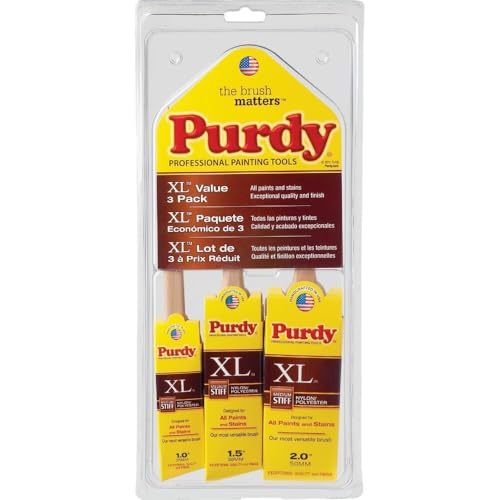
Purdy’s XL three-pack includes a 1 inch Dale, a 1.5 inch Glide and a 2 inch Sprig with nylon-polyester filament. Purdy describes the XL series as its most versatile, suited to all paints and stains and to interior and exterior work.
For furniture painting, these three widths cover nearly everything. The 2 inch handles tabletops and drawer fronts, the 1.5 inch cuts into panel edges and moldings, and the 1 inch reaches spindles and detail. A blended nylon-polyester filament lays water-based enamel down smoothly and holds its shape.
Furniture painters often say brush quality matters more on furniture than on walls, because people see furniture up close and in raking light where brush marks show.
Best suited for: Furniture flippers, cabinet painters and anyone painting visible wood surfaces.
Key features:
- 1″ Dale, 1.5″ Glide, 2″ Sprig
- Nylon-polyester blend
- For all paints and stains
- Interior and exterior
Pros:
- Smooth finish coats
- Three useful widths
- Professional series
Cons and limitations:
- Highest price tier here
- Not for tiny craft details
Buying consideration: Load the brush, lay paint along the grain, then tip off with a light stroke from one end to the other.
2. Magimate 5-Piece Angled and Flat Stain Brushes — Best for stain, varnish and oil-based finishes

Magimate’s set includes three long-handle angled brushes (1.5, 2 and 2.5 inch) and two flats (1 and 2 inch) with soft synthetic polyester filaments that the listing says do not lose hair. Magimate recommends them for varnish, oil-based and mixed coatings indoors and outdoors.
Varnish and polyurethane are unforgiving: stiff brushes leave ridges and loose hairs get sealed in permanently. Soft polyester filaments help finishes flow and level.
Long handles are comfortable when finishing larger surfaces like tabletops or doors.
Best suited for: Woodworkers and refinishers applying stain, varnish and oil-based enamel.
Key features:
- 3 long-handle angled brushes
- 2 flat brushes
- Soft synthetic polyester
- For varnish and oil-based coatings
Pros:
- Soft filaments for finishes
- Long handles
- Low price tier
Cons and limitations:
- Soft brushes are less suited to thick paint
Buying consideration: Avoid shaking varnish; stir it gently and brush slowly to reduce bubbles.
3. Pro Grade 5-Piece Brush Set — Best for value furniture and trim painting
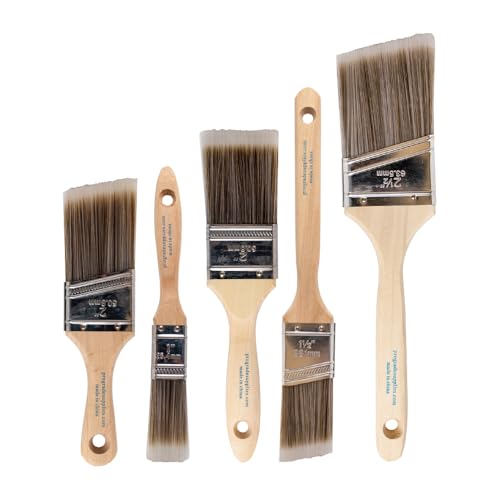
Pro Grade’s five-piece set includes a 1 inch flat, 1.5 inch angle, 2 inch flat, 2 inch angle stubby and 2.5 inch angle brush with SRT filaments and coated steel ferrules. The listing names furniture, shelving, doors and wood surfaces and says bristles are bonded to prevent loss.
It is an economical set for furniture projects, especially if you need several sizes. The angle stubby is handy inside cabinets and drawer openings.
Best suited for: Budget furniture painting and DIY wood projects.
Key features:
- 5 brushes
- Flats, angles and angle stubby
- SRT synthetic filaments
- Coated steel ferrule
Pros:
- Five sizes
- Stubby for tight spots
- Low price tier
Cons and limitations:
- Less refined than premium brushes
Buying consideration: Use these for primer and base coats, and a premium brush for the final coat.
4. Amazon Basics 24-Count Artist Brushes — Best for wood crafts and signs
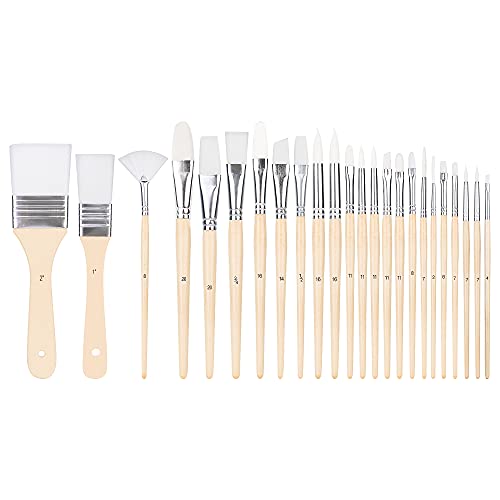
Amazon Basics’ set contains 24 artist brushes in various shapes and sizes, with polyester fiber sealed in aluminum ferrules and a carrying container. The listing says the bristles hold up to frequent use and will not fall out after washing.
Painted signs, wood slices, ornaments and decorative boxes need artist brushes rather than house-painting brushes. This set gives you flats for lettering and rounds for details.
Best suited for: Crafters painting signs, wood slices and decorative pieces.
Key features:
- 24 artist brushes
- Multiple shapes
- Polyester fiber
- Aluminum ferrules
- Storage container
Pros:
- Detail sizes
- Many shapes
- Storage included
Cons and limitations:
- Not for large furniture surfaces
Buying consideration: Seal raw wood first so paint does not bleed into the grain around letters.
5. Alrhso 40-Piece Flat and Round Brushes — Best for wood slices and classes

Alrhso’s bulk pack includes 20 flat-tip and 20 round-tip brushes with nylon bristles, aluminum ferrules and wooden handles. The listing describes them for canvas, crafts and model detailing.
Wood slice painting and craft classes go through brushes quickly. Forty small brushes give everyone a flat and a round.
Best suited for: Craft classes and batch wood-slice projects.
Key features:
- 40 brushes
- 20 flat, 20 round
- Nylon
- Aluminum ferrules
Pros:
- Bulk quantity
- Very low cost
Cons and limitations:
- Small sizes only
- Basic quality
Buying consideration: Use on sealed wood; raw wood can fray small brushes.
6. Newkita 3-Piece Chip Brushes — Best for stain, gesso and glue

Newkita’s three chip brushes come in different sizes with synthetic bristles and wooden handles. The listing says they work with most paints, stains, varnishes, acrylics and gesso, and should be washed while wet with soap and water.
Chip brushes are the sensible choice for jobs that ruin brushes: wood glue, stain that you wipe back, gesso and rough primer.
Best suited for: Woodworkers who need cheap brushes for stain, glue and gesso.
Key features:
- 3 chip brushes
- Synthetic bristles
- Wooden handles
Pros:
- Very low cost
- Disposable
- Multiple sizes
Cons and limitations:
- Not for smooth finish coats
Buying consideration: Pull any loose bristles before using on stain.
7. Bates 6-Pack Flat and Angled Brushes — Best for oil-based primer and budget work

Bates includes three flat (1, 1.5 and 2 inch) and three angled (1.5, 2 and 2.5 inch) brushes with natural bristles mixed with synthetic filaments. The listing says they work with oil-based paints and latex stains.
Natural bristle blends perform well with oil-based primers and finishes. At this price, they are good for rough work and priming.
Best suited for: Budget painters using oil-based primers and stains.
Key features:
- 6 brushes
- 3 flat, 3 angled
- Natural and synthetic blend
Pros:
- Lowest cost per brush
- Two shapes
Cons and limitations:
- Budget quality
- Natural bristle can go limp in water-based paint
Buying consideration: Keep them for oil-based products.
Preparing Wood for Paint
- Clean the surface to remove dirt, grease and wax.
- Sand lightly with medium then fine sandpaper, following the grain.
- Wipe away dust with a tack cloth or damp cloth.
- Apply a primer suited to the wood and paint; stain-blocking primers help with knotty or tannin-rich woods.
- Sand lightly between coats for the smoothest finish.
Getting a Smooth, Brush-Mark-Free Finish
Brush along the grain
Following the grain hides any slight brush texture in the natural pattern of the wood.
Do not overwork
Lay paint on, spread it, then tip off with a single light stroke. Going back over paint that has started to set leaves drag marks.
Use thin coats
Two or three thin coats look better than one thick coat and dry more evenly.
Consider a conditioner or extender
Paint conditioners slow drying and help paint level, which can reduce brush marks in warm rooms.
Sand between coats
A light pass with very fine sandpaper knocks down raised grain and dust nibs.
Choosing Paint for Wood Projects
The brush and the paint work as a pair. Water-based acrylic enamels are the most common choice for furniture today: low odor, quick drying and easy to clean, and they pair with synthetic brushes. Chalk-style paints give a matte, easily distressed finish and are often applied with softer or round brushes. Oil-based enamels level beautifully and are very durable but have more odor and need solvent cleanup, which suits natural bristle or soft polyester brushes. Craft acrylics are fine for signs and decorative pieces, usually sealed with a clear coat afterward. Whatever you choose, read the label for recommended applicator type and recoat times.
Buying Guide: How to Choose Brushes for Wood
Choose by project
House-painting style brushes for furniture and trim; artist brushes for crafts and signs; chip brushes for stain and glue. Most people who paint wood regularly end up owning a few of each.
Filament
Synthetic for water-based paint; soft polyester or natural bristle for oil-based finishes. Using natural bristle in water-based paint makes it swell and go floppy, which leaves streaks.
Width
1 to 2.5 inches for furniture; small artist sizes for crafts. A brush that is too wide for a narrow rail or molding floods the edges and causes drips.
Finish quality
Premium brushes leave fewer marks on visible surfaces.
Cost per use
Use disposable chip brushes for messy jobs like glue and wipe-on stain.
Care
Clean brushes promptly and store them flat or hanging. A good furniture brush cared for properly lasts for many projects and often performs better after it has been broken in.
Related Brush Guides
Keep good brushes working longer with our guides on preventing brush shedding and drying brushes correctly, and see how to paint with large brushes for bigger wood surfaces.
Common Mistakes to Avoid
- Skipping sanding and primer, so paint chips easily.
- Brushing across the grain.
- Using a stiff, cheap brush for the final coat of varnish.
- Overloading the brush and creating drips on edges.
- Using natural bristle in water-based paint.
- Painting in a dusty garage and sealing dust specks into the finish.
- Recoating before the previous coat is dry, which causes the brush to drag and lift paint.
FAQs
What brush is best for painting wood furniture?
A quality 1.5 to 2.5 inch synthetic brush, such as the Purdy XL series, for water-based enamels.
How do I avoid brush marks on painted wood?
Brush along the grain, use thin coats, avoid overworking and tip off each section.
What brush should I use for polyurethane?
A soft, high-quality brush; synthetic for water-based poly and natural bristle or soft polyester for oil-based.
Are chip brushes good for stain?
Yes, especially when you wipe stain back. They are cheap and disposable.
What brushes are best for painting wood signs?
Small artist flats for block letters and rounds for script and details.
Do I need to prime wood before painting?
Usually yes, especially on bare wood or knotty boards, for better adhesion and color.
Final Recommendation
For painted furniture and trim, the Purdy XL three-pack gives the smoothest finish coats, with the Pro Grade set as a value option. Use the Magimate five-piece set for varnish, stain and oil-based finishes. For crafts and signs, choose the Amazon Basics artist set, and the Alrhso pack for bulk wood-slice projects. Keep Newkita chip brushes for stain, gesso and glue, and the Bates six-pack for oil-based primers.