

PaintingProGuide is reader-supported. When you buy through links on this page we may earn an affiliate commission at no extra cost to you.
A clay sculpture is three-dimensional in a way a canvas never is. Paint has to reach into undercuts, follow curved surfaces and stay put on a material that may be porous, slightly flexible or very smooth, depending on the clay. The best paint for clay sculptures, for most people working with air-dry, polymer or bisque-fired clay, is a pigment-rich acrylic that covers in thin coats, can be thinned for washes and dries to a durable, water-resistant film once sealed.
Quick answer: For most clay sculptures, the Artkey 24-color acrylic set is the most well-rounded choice, with clay and ceramics among its recommended surfaces. For a bigger palette with lightfast pigments for display pieces, the Artbreezing 48-color set is a strong option. Want brushes and tools in the same box? The Fantastory 36-color kit includes 12 brushes, a palette knife and a sponge.
Below we compare seven acrylic sets for clay, explain which clays they suit, and cover priming, washes, dry brushing and sealing for figures, busts and small sculptures.
Our Top Picks at a Glance
- Artkey Acrylic Paint Set, 24 Colors — Best overall for clay sculptures
- Artbreezing 48 Colors Professional Acrylic Set — Best large palette for display sculpture
- Fantastory 36 Colors Acrylic Set with 12 Brushes — Best all-in-one kit with tools
- Shuttle Art Acrylic Paint Set, 15 x 12 ml Tubes — Best budget set for small figures
- Crafts 4 All Acrylic Paint Set, 24 x 12 ml — Best satin finish for ceramics and miniatures
- Apple Barrel Vibrant Spectrum Collection, 16 Colors — Best bright matte colors for kids’ clay projects
- GOTIDEAL Acrylic Paint Set, 18 Colors — Best starter kit with brushes
| Product | Best For | Key Spec | Key Strength | Price Tier |
|---|---|---|---|---|
| Artkey 24 | General clay work | 24 x 2 oz, semi-gloss | Clay and ceramics listed | $$ |
| Artbreezing 48 | Display sculpture | 48 x 22 ml, gloss | Lightfast, water-resistant per listing | $$ |
| Fantastory 36 | Complete kit | 36 x 60 ml, 12 brushes, knife, sponge | Tools included | $$ |
| Shuttle Art 15 tubes | Small figures | 15 x 12 ml, matte, 3 brushes | Lowest cost | $ |
| Crafts 4 All 24 | Miniatures | 24 x 12 ml, satin | Ceramic listed | $ |
| Apple Barrel 16 | Kids projects | 16 x 2 oz, matte | Bright colors | $$ |
| GOTIDEAL 18 | Beginners | 18 x 2 oz, matte, 10 brushes | Brushes included | $$ |
How We Chose
These recommendations draw on Amazon listing details and specifications checked in October 2026, how well each set suits painting sculpted clay (coverage, finish, thinnability and listed surfaces), and how widely each product is reviewed by Amazon buyers. We have not painted sculptures with these sets, so we report listing details and established practice for painting clay.
- Clay or ceramic named as a surface where possible.
- Pigment strength: coverage in thin coats that preserve sculpted detail.
- Range of colors: skin tones, earth colors and darks for shading.
- Finish: matte for natural looks, gloss or satin for glazed effects.
- Bottle or tube size relative to sculpture scale.
Best Paint for Clay Sculptures Reviewed
1. Artkey Acrylic Paint Set, 24 Colors — Best for general clay sculpture

Artkey lists canvas, wood, rock, clay, fabric and ceramics as recommended surfaces, which covers air-dry clay, bisque-fired pieces and mixed-media sculptures. The listing describes artist-quality paint that glides smoothly and gives strong coverage for both large areas and fine detail.
Twenty-four colors in 2 oz bottles is a practical balance: enough to mix skin tones and earth colors, and enough volume for medium-size sculptures. The semi-gloss finish gives a slight sheen that suits many figurative pieces.
Best suited for: Most clay sculptors, from figurines to busts.
Key features:
- 24 colors, 2 oz each
- Semi-gloss finish
- Clay and ceramics among listed surfaces
- Non-toxic, water-based, leak-resistant caps
Pros:
- Good coverage in thin coats
- Clay named as a surface
- Generous bottles
Cons and limitations:
- No brushes included
- Semi-gloss may need a matte sealer for natural looks
Buying consideration: Seal with a matte varnish if you want a stone or terracotta look.
2. Artbreezing 48 Colors Professional Acrylic Set — Best for display sculpture

For finished display pieces, color range and lightfastness matter. Artbreezing includes 48 colors in 22 ml containers, with a pigment-rich, smooth formula described as lightfast and water-resistant. The listing mentions canvas, wood and paper among surfaces, with a gloss finish.
Forty-eight colors cover subtle variations in skin, foliage and fabric without constant mixing, which helps keep colors consistent across a sculpture.
Best suited for: Sculptors painting detailed, display-quality work.
Key features:
- 48 colors, 22 ml each
- Gloss finish
- Lightfast and water-resistant per listing
Pros:
- Huge palette
- Lightfast claim suits display
- Smooth blending
Cons and limitations:
- Smaller containers
- Clay not named specifically
Buying consideration: Prime the clay first so the colors sit on top rather than soaking in.
3. Fantastory 36 Colors Acrylic Set with 12 Brushes — Best for an all-in-one kit

Fantastory includes 36 colors in 60 ml bottles with metallics, 12 brushes, a color chart, palette knife, mixing palette and sponge. The listing names wood, rock, clay, pumpkins, ceramics and fabric and mentions intricate miniatures.
Sculpture needs both large brushes for base coats and tiny ones for eyes and details, so having a brush range in the box is useful.
Best suited for: Beginners and hobbyists who want everything at once.
Key features:
- 36 colors, 60 ml
- Metallics included
- 12 brushes, palette, knife, sponge
- Non-toxic, fade-resistant
Pros:
- Complete kit
- Clay listed
- Large bottles
Cons and limitations:
- Kit brushes are general-purpose
- Finish details vary in listing
Buying consideration: Use the sponge to dab texture onto rocky or earthy sculpture bases.
4. Shuttle Art Acrylic Paint Set, 15 x 12 ml Tubes — Best for small figures on a budget

Small polymer or air-dry figures need very little paint. Shuttle Art’s 15 tubes of 12 ml each come with three brushes. The listing describes creamy, thick, rich pigment that dries quickly and is permanent, waterproof and fade-proof, for surfaces including ceramic, wood, fabric and clay, with a matte finish.
It is an inexpensive way to start painting small sculptures.
Best suited for: Tiny figurines, charms and kids’ projects.
Key features:
- 15 colors, 12 ml tubes
- Matte finish
- Clay among listed surfaces
- 3 brushes
Pros:
- Very low cost
- Thick pigment
- Compact
Cons and limitations:
- Small volume
- Limited colors
Buying consideration: Thin slightly for washes into recesses.
5. Crafts 4 All Acrylic Paint Set, 24 x 12 ml — Best for satin finish for ceramics and miniatures

Crafts 4 All offers 24 colors in 12 ml containers with three brushes. The listing mentions use as model art paint and ceramic paint, with surfaces including wood, ceramic, glass, fabric, canvas and paper, and a satin finish in the details.
Satin gives a soft sheen that suits glazed-look figurines.
Best suited for: Miniature sculpture and ceramic figurines.
Key features:
- 24 colors, 12 ml
- Satin finish
- Ceramic listed
- 3 brushes
Pros:
- Good color count for the price
- Satin finish
- Small sizes for minis
Cons and limitations:
- Small containers
- Few brushes
Buying consideration: Use a fine detail brush for eyes and patterns.
6. Apple Barrel Vibrant Spectrum Collection, 16 Colors — Best for kids’ clay projects
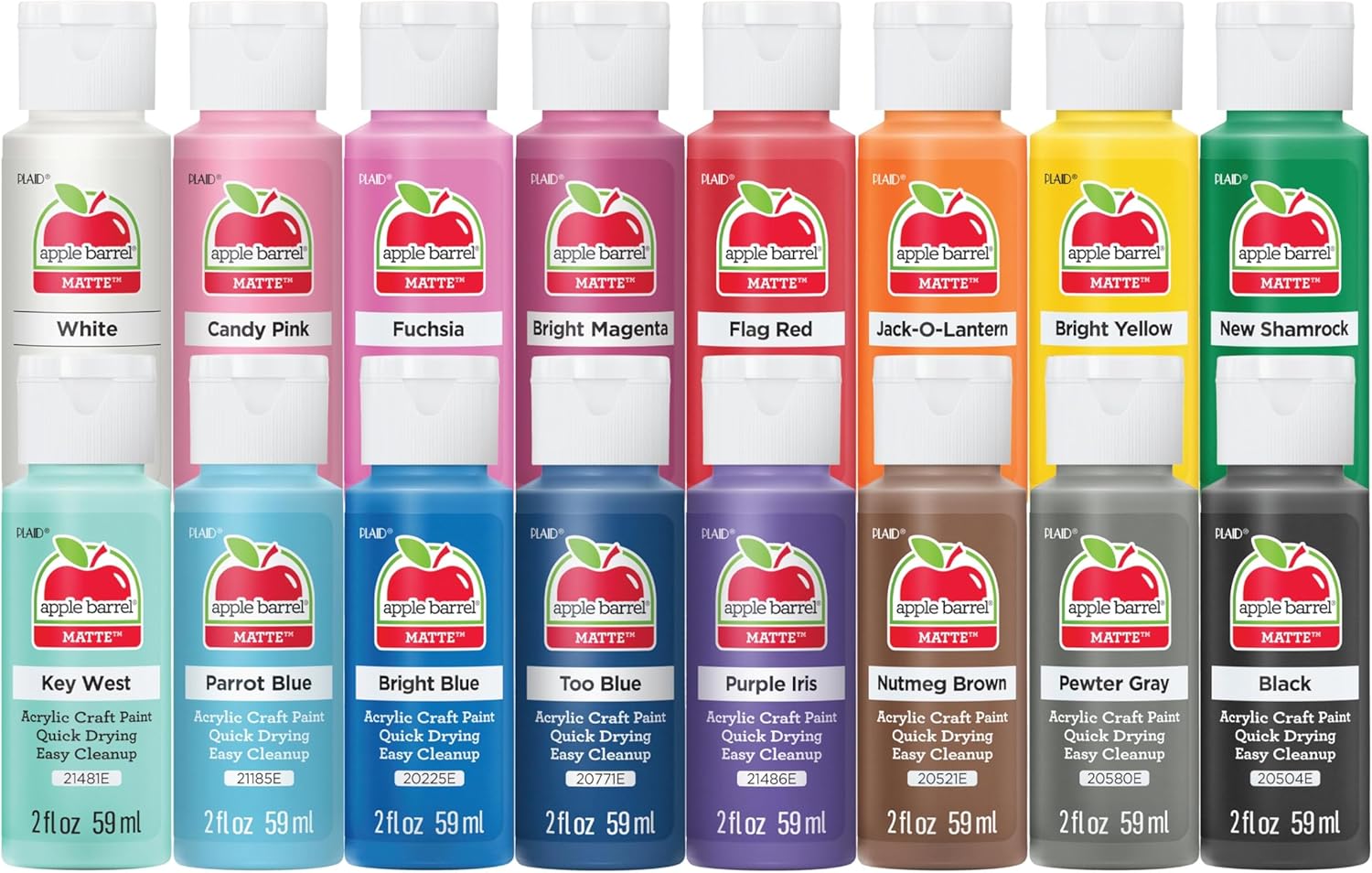
Apple Barrel’s Vibrant Spectrum set includes 16 bright, matte colors in 2 oz bottles. The listing names wood, Styrofoam, plaster, terra cotta and more, and says the paint can be brushed, stenciled and sponged. Cleanup is soap and water while wet.
Bright colors and easy cleanup make this a good choice for classroom and family clay projects.
Best suited for: Kids and classroom clay sculptures.
Key features:
- 16 colors, 2 oz each
- Matte finish
- Terra cotta and plaster listed
- Soap and water cleanup
Pros:
- Bright colors
- Easy cleanup
- Good bottle size
Cons and limitations:
- Craft-grade paint
- Needs sealing for durability
Buying consideration: Seal finished pieces with a clear acrylic sealer.
7. GOTIDEAL Acrylic Paint Set, 18 Colors — Best for beginners

GOTIDEAL provides 18 colors in 2 oz bottles with 10 brushes and a matte finish. The listing describes creamy, pigmented paint and names canvas, ceramic and wood among recommended surfaces.
A matte finish looks natural on clay, and ten brushes give beginners a range of sizes.
Best suited for: Beginners painting their first clay pieces.
Key features:
- 18 colors, 2 oz each
- Matte finish
- 10 brushes
- Ceramic listed
Pros:
- Brushes included
- Matte natural look
- Good value
Cons and limitations:
- Fewer colors
- Clay not named specifically
Buying consideration: Mix small batches of skin tones and keep them in a lidded container.
Which Clay Are You Painting?
Air-dry clay is porous and can soften if it gets wet. Let it dry completely, sand lightly, prime or base coat, paint with acrylic and seal all sides.
Polymer clay is baked hard and non-porous. Paint after baking with acrylic; a light sanding or primer helps adhesion on smooth surfaces. Test sealers on a scrap piece, as some can remain tacky on polymer clay.
Kiln-fired bisque is porous and takes acrylic well. Acrylic is for decorative pieces; for functional pottery, use ceramic glazes and firing instead.
Self-hardening or paper clay behaves like air-dry clay: dry fully, prime, paint and seal.
Painting Techniques for Sculpture
Prime first
A thin coat of white, gray or black acrylic, or a primer, gives an even base and stops porous clay from soaking up color. Gray is a good neutral for figures.
Base coat in thin layers
Apply main colors in two or three thin coats rather than one thick one. Thick paint fills in sculpted detail.
Washes for depth
A thinned dark color brushed over a dried base flows into recesses, adding shadow. Wipe excess off the high points.
Dry brushing for highlights
A nearly dry brush with a lighter color dragged over raised areas brings out texture in hair, fabric and stone.
Details last
Eyes, lips, patterns and metallic accents go on last with fine brushes.
A Simple Workflow for Painting a Figure
From a small dragon to a portrait bust or a garden animal, the same order of work keeps colors clean and detail crisp.
- Check the clay is fully dry or cured. Air-dry clay should feel room temperature, not cool, when fully dry.
- Sand rough spots with fine sandpaper or a sanding sponge and brush away the dust.
- Mount the piece on a cork, jar lid or block with removable putty so you can turn it without touching the paint.
- Prime in a thin coat, getting into every recess.
- Block in the largest color areas first: skin, clothing, fur or stone.
- Apply washes to add shadow, and let them dry completely.
- Dry brush highlights on raised areas, building from mid-tone to light.
- Paint the small details: eyes, lips, buttons, patterns.
- Tidy up edges where colors meet, using the base color and a fine brush.
- Seal in thin coats once everything is dry.
Color mixing tip: for natural-looking skin, start from a mix of white, a warm yellow and a little red, then adjust with a touch of brown for shadows rather than black, which can look gray and lifeless on sculpture.
Choosing Brushes for Sculpture
Sculpture painting uses more brush types than flat painting. A medium flat or filbert handles base coats on large areas. Small rounds in sizes 0 to 2 cover most detail, with a 5/0 or 10/0 for eyes. An old, stiff, slightly splayed brush is ideal for dry brushing because it deposits paint only on high points. A soft round with a good belly carries washes into recesses. Keep dry-brushing brushes separate from detail brushes, since dry brushing quickly wears hair.
Sealing Painted Clay Sculptures
Seal finished sculptures with a clear acrylic sealer or varnish, in matte, satin or gloss. Matte looks like stone or terracotta; gloss mimics a glazed ceramic. Seal the underside too, especially on air-dry clay. For outdoor display, choose a UV-resistant exterior sealer, though air-dry clay is generally best kept indoors.
For more on painting specific clays, read our guide to painting air-dry clay crafts, see ideas for DIY painted clay pots, or learn more about painting pottery at home.
Buying Guide: How to Choose Paint for Clay Sculptures
Acrylic is the most versatile choice
Water-based acrylic adheres to dried and fired clay, mixes easily and cleans up with water.
Look for strong pigment
High-pigment paint covers in thin coats, preserving sculpted detail.
Choose a palette for your subject
Figures need skin tones and earth colors; fantasy pieces may need metallics and brights.
Match size to scale
Small tubes suit miniatures; 2 oz bottles or larger suit busts and large sculptures.
Consider the finish
Matte reads natural; gloss reads glazed. You can adjust with sealer.
Indoor or outdoor display
Most painted clay sculptures are best kept indoors. If a piece will sit on a covered porch or in a garden, choose a clay suited to outdoor use, such as fired ceramic, and finish with an exterior-grade, UV-resistant sealer. Air-dry clay will eventually soften and crack if exposed to rain, however well it is painted.
Do not forget brushes
Detail brushes, a flat for base coats and an old stiff brush for dry brushing cover most needs.
Common Mistakes to Avoid
- Painting damp air-dry clay. Trapped moisture causes cracking and peeling.
- Thick coats. They obscure fine detail.
- Skipping primer on porous clay. Colors look patchy.
- Unsealed air-dry clay. It can absorb moisture and soften.
- Using acrylic on functional pottery. It is not food safe.
- Forgetting the base. Seal the bottom too.
FAQs
What paint is best for clay sculptures?
Acrylic paint is the best general choice for air-dry, polymer and bisque-fired clay sculptures. Prime, paint in thin coats and seal.
Do I need to seal acrylic paint on clay?
Yes, especially on air-dry clay. A clear sealer protects the paint and the clay from moisture and handling.
Can you paint polymer clay before or after baking?
Paint polymer clay after baking with acrylics. Some specialty paints can be baked, but standard acrylics should be applied after.
Is acrylic paint on clay waterproof?
Acrylic is water-resistant when dry, but clay underneath may not be. Seal all surfaces for better protection.
Can I use acrylic paint on pottery that holds food?
No. Acrylic paint is not food safe. Use ceramic glazes and kiln firing for functional pottery.
How do I add shading to a clay sculpture?
Use thin dark washes in recesses and dry brush lighter colors on raised areas, building up gradually.
Final Recommendation
For most clay sculptures, the Artkey 24-color set is the best all-rounder, with clay named among its surfaces. Choose Artbreezing’s 48 colors for display pieces that need a big, lightfast palette, or Fantastory’s kit if you want brushes and tools included.
For small figures, Shuttle Art and Crafts 4 All offer compact, affordable sets. Apple Barrel suits kids’ projects, and GOTIDEAL is a simple starter with brushes.




