Choosing the best metal palettes for metal painting helps mix colors easily and keeps your workspace clean. A good palette suits different paint types and lasts long.
metal palettes are popular among artists for their durability and smooth surface. They resist stains and clean quickly, making them ideal for watercolors, acrylics, and oils. Sizes and shapes vary—from round trays with multiple wells to larger rectangular trays—offering options for mixing several colors at once.
Some come with special coatings to prevent paint sticking and improve color mixing. Whether you paint small crafts or large art pieces, selecting the right metal palette improves your painting experience. This guide covers top metal palettes designed for artists who want practical, long-lasting tools for their creative work.
Why Choose Metal Palettes?
Metal palettes offer a range of benefits for artists, including durability, ease of cleaning, and versatility in use with various paint types.
Jkjf Round Paint Tray Palettes

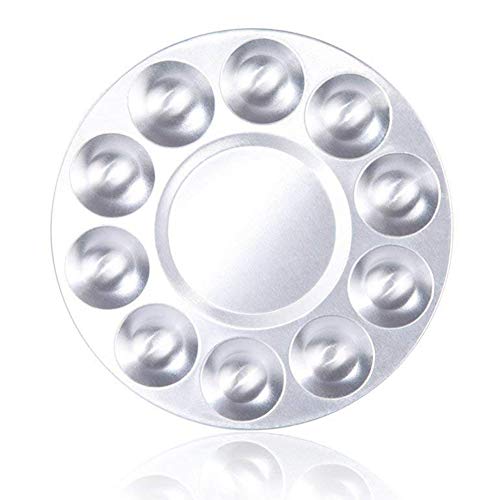
The JKJF 2 Pcs Round Paint Tray Palettes are ideal for professional artists, hobbyists, and DIY craft enthusiasts who require a durable and efficient solution for mixing watercolors and other paints. If you often work with multiple colors and need a reliable palette that keeps your paints organized and accessible, this item is perfect for you. Its compact and lightweight design also makes it suitable for artists on the go.
Pros:
- Made of sturdy metal material ensuring longevity and resistance to wear.
- Features 10 wells for easy separation and mixing of different colors.
- Compact and lightweight (0.154 pounds) for easy portability.
- Sleek silver color that complements any art studio setup.
- Suitable for various applications including watercolours, DIY crafts, and professional painting.
Cons:
- May be too small for artists working with large quantities of paint.
- Metal surface may require careful cleaning to avoid rust over time.
The JKJF Round Paint Tray Palettes come in a practical round shape with 10 individual wells, allowing artists to easily organize and mix multiple paint colors without cross-contamination. The metal construction not only adds durability but also provides a smooth surface that is easy to clean after use. This ensures that your paints remain vibrant and uncontaminated during your creative process.
Additionally, the lightweight and compact design of these palettes make them highly portable, perfect for artists who like to paint outdoors or travel with their art supplies. The silver finish adds a professional look, while the practical well size accommodates varying paint amounts, making it suitable for both detailed work and broader strokes. Overall, these paint trays enhance the painting experience by combining functionality with convenience.
To buy this product, click here.
Top Picks for Best Metal Palettes
Explore our curated list of the best metal palettes that offer durability and versatility for artists of all levels.
12pcs Makeup Palette Stainless Steel Small Round Paint Tray
Painting on Metal: What the Surface Demands
Metal is non porous, so paint has nothing to grip. Every successful metal paint job is really a preparation job: degrease with isopropyl alcohol or a dedicated degreaser, abrade the surface with a scuff pad or fine abrasive to give a key, then prime with a product made for metal. On bare steel that means a rust inhibiting or self etching primer; on aluminium and galvanised surfaces it means an etch primer, because ordinary primer peels off galvanising in sheets. Skip any of this and the paint will look perfect for a month and then lift at the first knock.
The palette question follows from the mediums. Metal work usually means enamels, oil based paints, acrylics formulated for non porous surfaces, or two part products, and several of those attack ordinary plastic palettes. Solvent based enamels will soften and craze a cheap acrylic sheet palette within a session.
Choosing a Palette for Metal Painting
Solvent resistance first
Glass, glazed porcelain and stainless steel are unaffected by mineral spirits, xylene and the thinners used with enamels. Polypropylene tolerates most solvents; polystyrene and acrylic sheet do not. If the palette is not described as solvent resistant, assume it is not.
A non absorbent, scrapeable surface
Enamels and oil based paints skin over and must be scraped rather than washed. A flat glass or steel sheet lets you take yesterday paint off with a blade in one pass. Textured or matte plastic holds the residue and builds up.
Small wells for mixing precise tones
Metal painting, whether on models, signage or restored hardware, usually involves matching an existing colour. Small separate wells let you keep several attempts side by side and compare them against the object. A single large field encourages you to lose the mix you nearly had.
Airtight storage
Enamel skins quickly once thinned. An airtight palette, or simply decanting a mix into a small jar with a screw lid, means a matched colour survives until the next session instead of being remixed from scratch.
A wet palette is the wrong tool here
Stay wet palettes work by keeping water based paint hydrated through damp paper. With enamels and oil based products they do nothing useful, and the moisture is actively unhelpful on a job where water is the enemy.
Finishing and Protecting Painted Metal
Let each coat cure rather than just dry. Enamels are touch dry in hours and hard in days, and handling a soft film leaves fingerprints in the surface permanently. Thin coats build a harder film than one thick coat, which stays soft underneath and dents.
For anything outdoors or handled, a clear topcoat makes a real difference, and it must be compatible with what is underneath: acrylic clear over acrylic paint, and a solvent based clear only over a fully cured solvent based colour. Applying a strong solvent clear over a young acrylic film will wrinkle it. When in doubt, test on the underside first.
Frequently Asked Questions
What palette works best for painting metal?
Glass, glazed porcelain or stainless steel. Metal painting usually involves enamels and solvent based products, which soften and craze ordinary plastic palettes.
Do I need to prime metal before painting?
Yes. Degrease, abrade to give a key, then use a primer made for the metal: a rust inhibiting or self etching primer on steel, and an etch primer on aluminium or galvanised surfaces.
Can I use a stay wet palette for enamel paint?
No. Stay wet palettes hydrate water based paint through damp paper, which does nothing for enamels and introduces moisture on a job where water causes problems.
Why is my paint peeling off metal?
Almost always inadequate preparation: grease left on the surface, no abrasion to give a key, or the wrong primer. Galvanised metal in particular sheds ordinary primer and needs an etch primer.