PaintingProGuide is reader-supported. When you buy through links on this page we may earn an affiliate commission at no extra cost to you.
Acrylic paint has one annoying habit: it dries into a plastic skin that bonds to most palettes. Silicone is the exception. Dried acrylic does not grip it well, so instead of scrubbing you flex the palette and peel the paint off in sheets. That single property is why a silicone palette for acrylics has become a popular swap for plastic trays and paper pads.
The catch is that “silicone palette” covers very different products, from a 17×13 inch craft mat with a removable cup to a lidded 8-well mixing box that fits in a pocket. This guide sorts them by how you paint, and includes two non-silicone options that solve the other acrylic problem: paint drying too fast.
Quick answer: The best silicone palette for acrylics for most painters is the Svartur 17×13 silicone painting mat, which combines a large peel-clean surface with raised edges, a removable paint well and a water cup. For small mixes you want to save between sessions, the lidded BIGEBO silicone palette is the better fit, and the EXCEART 6-well mini palette is the simplest pocket option.
Our Top Picks at a Glance
- Svartur Silicone Painting Mat with Cup and Palette, 17×13 — Best overall silicone palette for acrylics
- BIGEBO Silicone Palette with Lid — Best for saving small mixes
- EXCEART Silicone 6-Well Mini Palette — Best compact palette
- Bitray 15-Well Airtight Palette with Silicone Seal — Best for travel and storage
- Kreapa Stay-Wet Palette — Best for keeping acrylics workable
- Tamaki 2-Pack Clear Acrylic Palettes — Best rigid non-silicone alternative
| Product | Best For | Key Spec | Key Strength | Price Tier |
|---|---|---|---|---|
| Svartur Silicone Mat | Studio and craft table | 17×13 in, raised edges, cup + well | Large peel-clean surface | $$ |
| BIGEBO Silicone Palette | Small saved mixes | 4.8×2.7 in, 8 wells (about 10 ml each), lid | All-silicone with lid | $ |
| EXCEART 6-Well Mini | Portable mixing | 3.74×2.56 in, 6 wells | Flexible, pocket-sized | $ |
| Bitray Airtight Palette | Travel, storing paint | 4.3×2.4 in, 15 removable wells | Silicone seal lid | $ |
| Kreapa Stay-Wet Palette | Slow drying for acrylics | 8.8×6.6 in, 2 sponges, 100 papers | Keeps paint moist | $ |
| Tamaki Clear Palettes | Rigid handheld mixing | 2 x 11.8×7.9 in, thumb hole | Transparent, two shapes | $ |
How We Chose
We have not used these palettes ourselves. Picks are based on the Amazon listing details and specifications checked in October 2026, how well each product’s material, size and design fit acrylic painting specifically, and how widely each product is reviewed by Amazon buyers.
The criteria we used:
- Silicone content: fully silicone surfaces rank above plastic or ceramic for peel-off cleanup.
- Mixing area: acrylic painters need room for batches, not just tiny dots of color.
- Drying control: lids, seals and wet-palette systems matter because acrylic dries quickly in open air.
- Portability and footprint: desk mats suit studios; small lidded boxes suit travel and miniatures.
- Fit for acrylic: we dropped products aimed mainly at makeup and included two non-silicone palettes only where they solve a real acrylic problem.
Why Silicone Works So Well With Acrylic Paint
Acrylic paint is pigment suspended in an acrylic polymer emulsion. As water evaporates, the polymer particles fuse into a flexible film that sticks firmly to porous or slightly rough surfaces like wood, paper and many plastics. Silicone has very low surface energy, so the dried film has little to hold onto. Bend the palette and the paint lifts.
That makes silicone a good match for acrylic pours, resin-adjacent craft work and anyone tired of soaking plastic trays. The trade-offs: silicone is flexible, so small palettes can wobble when you mix firmly with a knife, and very light silicone can stain slightly with strong pigments like phthalo blue. It also does nothing to slow drying, which is why wet palettes still have a place.
Best Silicone Palettes for Acrylics Reviewed
1. Svartur Silicone Painting Mat with Cup and Palette, 17×13 — Best Overall Silicone Palette for Acrylics

Svartur’s mat is a palette and a table protector in one. The listing describes a 17×13 inch extra-thick silicone mat with raised edges to contain spills, a detachable painting well, a removable water cup, multiple wells of different sizes and an imperial ruler along the edge. It is listed as dishwasher-friendly, and dried paint can be wiped or soaked off.
For acrylics, the big open field is the real benefit. You can squeeze out paint and mix directly on the mat, let leftovers dry, and peel them off later. The raised edge also stops runny fluid acrylic or pouring medium from reaching the table.
Best suited for: Acrylic painters with a dedicated desk or table, pour painters, crafters who also use resin or clay, and kids’ painting stations.
Key features:
- 17 x 13 inch thick silicone mat
- Raised edges to contain spills
- Detachable paint well and removable cup
- Built-in imperial ruler
- Dishwasher-friendly per listing
Pros:
- Largest silicone mixing area in this roundup
- Protects the table while acting as a palette
- Water cup is always within reach
Cons and limitations:
- Too big to hold in one hand
- White surface may stain with strong pigments over time
- No lid, so wet mixes still dry between sessions
Buying consideration: If you paint at the same table each time, this is the most useful silicone palette you can buy. Travelers should look at the smaller lidded options.
2. BIGEBO Silicone Palette with Lid — Best for Saving Small Mixes

BIGEBO’s palette is made entirely of silicone and comes with a black lid. It measures 4.8 x 2.7 x 0.9 inches with eight wells that hold about 10 ml each, per the listing. The brand markets it to UV resin crafters, but the features carry over to acrylic: let leftover paint dry and peel it away, or close the lid to slow drying between short breaks.
Ten milliliters per well is enough for a custom-mixed color you want to match later, such as a skin tone, a sky blue or a brand color for a lettering project.
Best suited for: Miniature painters, detail painters, and anyone who mixes small custom colors they need to reuse.
Key features:
- All-silicone construction
- 8 wells, approximately 10 ml each
- 4.8 x 2.7 x 0.9 inches
- Lid to help keep stored liquid from drying
Pros:
- Lid helps preserve mixes between sessions
- Fully silicone for peel-off cleanup
- Deep wells for custom colors
Cons and limitations:
- Small overall footprint for large paintings
- Lid is not described as fully airtight
- Marketed for resin, so paint-specific details are limited
Buying consideration: Use it alongside a larger mixing surface: mix on a mat, then store the colors you need again in the wells.
3. EXCEART Silicone 6-Well Mini Palette — Best Compact Palette
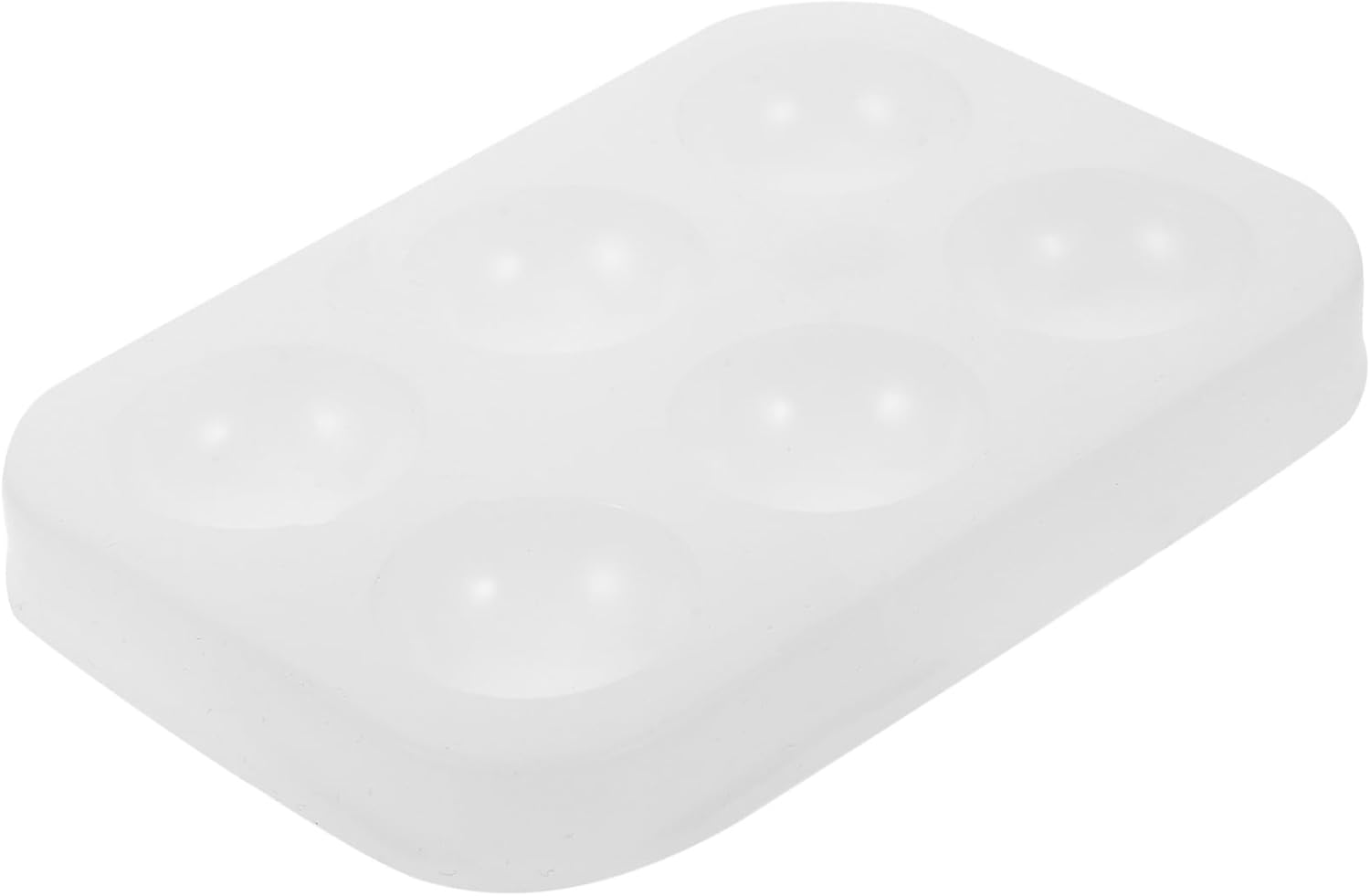
At roughly 3.74 x 2.56 inches, the EXCEART palette is barely bigger than a playing card. It has six flexible silicone wells and is listed for acrylic, watercolor and oil. The brand emphasizes easy cleaning and repeated use without losing shape.
Six wells is enough for a limited acrylic palette: a warm and cool of each primary, or a set of mixed colors for a small project. Its size makes it handy for sketchbook painting, craft work at a kitchen table or touch-up work on models.
Best suited for: Sketchbook painters, students, crafters and anyone who needs a small palette that fits in a pencil case.
Key features:
- 6 silicone wells
- About 3.74 x 2.56 inches
- Flexible, reusable material
- Listed for acrylic, watercolor and oil
Pros:
- Very portable
- Peel-off cleanup for dried acrylic
- Inexpensive way to try silicone
Cons and limitations:
- Tiny mixing area
- No lid
- Listing material shows acrylic plus silicone, so check which parts are silicone
Buying consideration: A good first silicone palette if you are unsure whether you like the material. For real mixing space, step up to a mat.
4. Bitray 15-Well Airtight Palette with Silicone Seal — Best for Travel and Storage

Bitray takes a different approach: the box itself is plastic, but a removable silicone seal makes the lid airtight. It measures 4.3 x 2.4 x 0.62 inches with 15 removable wells, so you can rearrange or wash individual wells. The listing says the seal keeps paint moist for days between sessions.
For acrylics that matters more than peel-off cleanup. Squeeze small amounts into the wells, close the lid, and colors stay usable for your next session. The brand notes not to wash the silicone seal in hot water.
Best suited for: Plein air acrylic painters, travel sketchers, and anyone who wants to keep small amounts of paint ready to use.
Key features:
- 15 removable wells
- 4.3 x 2.4 x 0.62 inch box
- Removable silicone seal for an airtight closure
- Listed for watercolor, oil, gouache and acrylic
Pros:
- Airtight seal slows acrylic drying significantly
- Wells lift out for cleaning
- Pocket-sized
Cons and limitations:
- Wells are plastic, not silicone
- Very small mixing area
- Seal needs gentle washing to stay effective
Buying consideration: Pick this when keeping paint usable matters more than the peel-off benefit of an all-silicone palette.
5. Kreapa Stay-Wet Palette for Acrylic Painting — Best for Keeping Acrylics Workable

A stay-wet palette solves acrylic’s biggest problem directly. Kreapa’s kit includes an 8.8 x 6.6 inch box, two gray sponges and 100 sheets of hydro paper. You soak the sponge, lay the paper on top, and paint sits on a constantly moist surface. The listing says the sponge and box are reusable; only the paper is replaced.
The listed material includes silicone alongside plastic, but treat this as a wet palette rather than a peel-off silicone surface. Many acrylic painters pair one with a silicone mat: mix on the wet palette, use the mat for spills, water and pouring.
Best suited for: Miniature and model painters, acrylic painters who work slowly in thin layers, and anyone who loses half their paint to drying.
Key features:
- 8.8 x 6.6 inch lidded box
- 2 reusable sponges
- 100 sheets of hydro paper
- Storage and moistening instructions included
Pros:
- Keeps acrylic workable far longer than an open palette
- Large paper supply included
- Portable lidded design
Cons and limitations:
- Not a peel-off silicone surface
- Requires refilling water and replacing paper
- Paint becomes thinner on the moist paper, which not everyone likes
Buying consideration: If your main complaint is paint drying, buy this first. If it is cleanup, buy a silicone mat. Many painters end up with both.
6. Tamaki 2-Pack Clear Acrylic Paint Palettes with Thumb Hole — Best Rigid Non-Silicone Alternative

Some painters find silicone too floppy for knife mixing or for holding at an easel. Tamaki’s pack gives two rigid, transparent palettes, one rectangular and one oval, each 11.8 x 7.9 inches with a thumb hole. They are made of acrylic plastic, not silicone, so dried paint will not peel as easily.
The upside is a flat, stiff surface you can hold for hours and see through. Some painters place a gray or white sheet underneath to judge color. Remove the protective film from both sides before first use, as the listing notes.
Best suited for: Painters who mix with a knife, stand at an easel, or prefer a rigid handheld palette.
Key features:
- 2 palettes, 11.8 x 7.9 inches each
- Rectangular and oval shapes
- Thumb hole for handheld use
- Transparent acrylic, reusable
Pros:
- Rigid surface for knife mixing
- Large mixing area at a low price
- Two shapes in one pack
Cons and limitations:
- Not silicone, so dried acrylic must be scraped or soaked
- Can scratch with metal knives over time
- Clear surface can make color judgment harder without a backing
Buying consideration: Choose this if silicone feels too soft for your workflow. Scrape dried acrylic with a plastic scraper to avoid scratches.
Buying Guide: How to Choose a Silicone Palette for Acrylics
Use these points to match a palette to your painting habits rather than buying the biggest or cheapest.
Mat, Well Tray or Lidded Box
A large silicone mat suits studio painters who mix big batches and want spill protection. Small well trays suit detail work and limited palettes. Lidded boxes suit painters who want to keep small mixes for the next session. Decide which job comes first.
True Silicone Versus Silicone Parts
Some listings mention silicone because of a seal or a single component. If peel-off cleanup is why you are buying, look for products described as made entirely of silicone, like the Svartur mat or the BIGEBO palette.
Mixing Space
Acrylic dries fast, so painters often mix larger batches at once. If you paint canvases larger than about 11×14 inches, a palette smaller than a sheet of printer paper will feel cramped.
Drying Control
Silicone does not slow drying. If your acrylic skins over before you use it, add a lid, an airtight seal or a stay-wet palette to the setup. Misting with water and using a retarder medium also help.
Stability and Rigidity
Thin silicone can flex or slide when you push paint around with a knife. Thicker mats grip the table better. If you hold your palette in one hand, a rigid acrylic or wooden palette is easier to manage.
Color and Staining
White or clear silicone shows true color but may tint over time with strong pigments. Light staining does not affect performance. Clean while paint is still wet if you want the palette to stay bright.
Heat and Cleaning Instructions
Follow each listing’s care notes. The Svartur mat is described as dishwasher-friendly, while the Bitray seal should not be washed in hot water. Avoid harsh solvents on silicone; soap, water and peeling are all acrylic needs.
Related Palette Guides
If keeping paint wet is the bigger issue than cleanup, start with what a wet palette is and when to use one, then try building your own with our guide on how to make a DIY wet palette for acrylics. Both pair well with a silicone mat for spills and water.
Common Mistakes to Avoid
- Expecting silicone to keep acrylics wet; it only makes dried paint easier to remove.
- Buying a tiny silicone tray for large canvases and running out of mixing room.
- Scrubbing silicone with abrasive pads, which can roughen the surface and make paint stick.
- Pouring acrylic rinse water down the drain in large amounts; let solids settle and dispose of them with the trash.
- Using metal palette knives aggressively on thin silicone, which can cut it.
- Assuming every “silicone” listing is fully silicone without checking the material details.
FAQs
Does acrylic paint stick to silicone?
Not strongly. Dried acrylic forms a flexible film that bonds poorly to silicone, so you can usually peel it off by bending the palette. Very thin dried layers may need a quick rinse and rub.
Is a silicone palette better than a plastic palette for acrylics?
For cleanup, yes. Dried acrylic peels off silicone but often bonds to plastic. Plastic palettes are more rigid and cheaper, which suits knife mixing and handheld use.
Can a silicone palette keep acrylic paint wet?
Only if it has a lid or seal, and even then it slows drying rather than stopping it. For long sessions, a stay-wet palette with a sponge and membrane paper works far better.
Can I use a silicone palette for oil paint too?
Yes. Silicone tolerates oil paint, though oils do not dry quickly, so you clean them with a rag and solvent-free cleaner rather than peeling. Peel-off cleanup is mainly an acrylic benefit.
How do I clean dried acrylic off a silicone palette?
Let the paint dry fully, then flex the palette and peel. Soak stubborn spots in warm soapy water for a few minutes, then rub with your fingers or a soft brush.
Will silicone palettes stain?
Light-colored silicone can pick up a faint tint from strong pigments such as phthalo blue or quinacridone magenta. The staining is cosmetic and does not affect how paint mixes.
Final Recommendation
For a fixed painting spot, the Svartur silicone mat is the strongest all-round choice: big, contained and easy to peel clean. If you mix small custom colors you want to reuse, add the lidded BIGEBO palette; if you just want a pocket-sized silicone tray, the EXCEART mini costs little to try.
When drying speed is the real frustration, the Kreapa stay-wet palette or the airtight Bitray box will help more than any silicone tray. And if you prefer a stiff palette you can hold at the easel, the Tamaki clear palettes are a sensible non-silicone option.