PaintingProGuide is reader-supported. When you buy through links on this page we may earn an affiliate commission at no extra cost to you.
Blick stretched canvas is the house-brand canvas sold by Blick Art Materials, offered in several grades from economical classroom packs to heavier professional stretches. People search for it because store-brand canvas often undercuts big names, and canvas is something painters go through fast. If you shop on Amazon, though, you will not find it: no Blick canvas showed up in the Amazon listings we checked in October 2026, since Blick sells its own canvas mainly through its stores and website.
What follows is a guide to judging any stretched canvas on the details that actually matter, from fabric weight to stretcher bars, and a review of six Amazon canvases that compete with Blick’s range for the same painters.
Quick answer: For a single quality canvas on Amazon, the Winsor & Newton Classic Cotton Canvas (16×20) stands out with kiln-dried bars, hand stretching and wooden keys. For big work, the milo 30×40 four-pack with a 1.5-inch profile and 11 oz cotton is the heavy-duty option. For practice in bulk, the FIXSMITH 11×14 eight-pack is the value pick.
Our Top Picks at a Glance
- Winsor & Newton Classic Cotton Canvas, 16×20 — Best single canvas for finished work
- milo Stretched Artist Canvas, 30×40, 4-pack, 1.5″ profile — Best for large, gallery-depth paintings
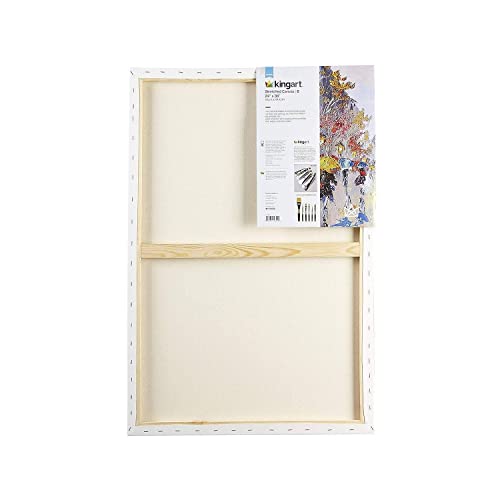
- KINGART Stretched Canvas, 24×36, 2-pack — Best for statement-size acrylic and oil on a budget
- PAINT A DREAM Stretched Canvas, 24×36, 2-pack — Best for a sturdier large frame with mortise-and-tenon joints
- FIXSMITH Stretched Canvas, 11×14, 8-pack — Best value for practice and studies
- GOTIDEAL 14-Piece Multi-Size Canvas Pack — Best for classes and trying different sizes
| Product | Best For | Key Spec | Key Strength | Price Tier |
|---|---|---|---|---|
| Winsor & Newton Classic Cotton | Finished work | 16×20; kiln-dried bars; keys included | Hand stretched, tailored corners | $$ |
| milo 30×40 4-pack | Large gallery-depth work | 11 oz cotton; 1.5 in profile | Heavier canvas, deep frame | $$$ |
| KINGART 24×36 2-pack | Statement size on a budget | Triple gesso; 5/8 in profile; pine bars | Large size, low cost | $$ |
| PAINT A DREAM 24×36 2-pack | Sturdier large frame | 280 GSM; 12 oz primer; 2/3 in profile | Mortise-and-tenon joints | $$$ |
| FIXSMITH 11×14 8-pack | Practice in bulk | Triple primed; 5/8 in profile | Eight canvases per pack | $$ |
| GOTIDEAL 14-piece | Mixed sizes | 4×4 to 11×14 | Many sizes for classes | $$ |
How We Chose
We have not painted on these canvases. The picks come from the Amazon listing details and specifications checked in October 2026, how well each canvas’s fabric, priming, frame and size fit the needs of someone shopping for Blick-style canvas, and how widely each product is reviewed by Amazon buyers.
- Fabric: cotton weight and grain, where listed.
- Priming: number of gesso coats and acid-free claims.
- Stretcher bars: wood type, profile depth and joint construction.
- Stretch quality: back stapling, corners and whether keys are included.
- Value: size, pack count and fit for practice versus finished work.
Blick Stretched Canvas Review: What to Check on Any Canvas
Store-brand canvas, including Blick’s, usually comes in tiers: economy packs for practice and classrooms, and heavier, better-built canvases for finished work. To compare any of them, look at these details instead of the logo.
- Fabric weight: heavier cotton, such as 10 to 12 oz, feels firmer and is more durable at large sizes than light canvas.
- Priming: two or three coats of acid-free acrylic gesso give a smoother, less absorbent surface.
- Profile depth: 5/8 to 3/4 inch is standard and suits framing. 1.5 inch “gallery” profiles look finished on the wall without a frame.
- Back stapling: staples on the back leave clean sides for painting the edges.
- Keys: small wooden wedges let you re-tighten a canvas that sags over time.
- Bar quality: kiln-dried or well-joined wood resists warping, especially at large sizes.
Is Store-Brand Canvas Worth Buying?
Often, yes. Canvas is a commodity product at the practice end: cotton duck, acrylic gesso, pine bars and staples. Retailer brands like Blick’s compete on price for exactly that kind of canvas, and for studies and classwork the difference between brands is often small.
Differences grow at the top of the range and at large sizes. That is where fabric weight, bar quality, corner joinery and keys start to matter, because a big canvas that sags, twists or dents is hard to fix. When you move into finished work, compare construction details carefully rather than assuming a store brand and a name brand are interchangeable, or that the more expensive option is automatically better.
A practical approach many painters use is to buy economy packs in bulk for practice and pay more only for the canvases that will carry finished paintings.
Best Blick Stretched Canvas Alternatives Reviewed
1. Winsor & Newton Classic Cotton Canvas, 16×20 — Best Single Canvas for Finished Work

This listing reads like a checklist of what good stretched canvas should have. Warp-resistant, kiln-dried solid wood stretcher bars. A highly pigmented titanium dioxide gesso primer. Hand stretching for best tension with tailored corners. Back stapling with folded, uncut corners. And wooden keys included so you can tighten the canvas later.
Those keys are the detail that separates this from most budget canvases. Cotton canvas can slacken with humidity changes, and keys let you correct that without restretching. The item weight is listed as 1.32 pounds for a single 16×20 canvas.
Best suited for: painters producing finished pieces who want a reliable, well-made single canvas.
Key features:
- Kiln-dried solid wood bars, warp resistant
- Titanium dioxide gesso primer
- Hand stretched, tailored and folded corners, back stapled
- Wooden keys included
Pros:
- Keys allow re-tensioning over time
- Folded corners look neat on unframed edges
- Well-documented construction
Cons and limitations:
- Single canvas, so higher cost per piece than packs
- Profile depth not stated in the listing
Buying consideration: keep these for paintings you intend to show or sell; use packs for practice.
2. milo Stretched Artist Canvas, 30×40, 4-Pack — Best for Large, Gallery-Depth Paintings

milo builds this for big work. The canvas is 100% cotton, triple primed with gesso to a medium texture, and described as a heavier 11 oz weight that is more durable at large sizes. It is stretched over 1.5-inch pine frames, back stapled for a clean finish. The listing names acrylic, oil, wet media and acrylic pouring, with watercolor, gouache, tempera, pencils and pastels also possible. milo describes itself as a US-based, American-owned company with a satisfaction guarantee. The four-pack weighs 22 pounds.
Best suited for: painters making large statement pieces they want to hang without framing.
- Four 30×40 canvases
- 11 oz cotton, triple primed
- 1.5-inch deep pine frame, back stapled
Pros:
- Heavier canvas for large sizes
- Gallery profile looks finished on the wall
Cons and limitations:
- Highest price tier on this page
- Large, heavy package to store
Buying consideration: worth it when you know you will use all four; large canvases take up real space.
3. KINGART Stretched Canvas, 24×36, 2-Pack — Best Statement Size on a Budget

KINGART’s two 24×36 canvases are 100% cotton with a medium grain, triple gesso primed and acid-free. The pine stretcher bars are back stapled with a tight stretch, and the profile is 5/8 inch. The listing names acrylic, oil, pouring and mixed media.
Best suited for: painters wanting large canvases for wall art without a big outlay.
- Two 24×36 canvases
- Triple gesso, acid-free, medium grain
- Pine bars, back stapled, 5/8-inch profile
Pros:
- Large size at a modest cost
- Back stapled for clean edges
Cons and limitations:
- Fabric weight not stated
- 5/8-inch profile usually looks better framed
Buying consideration: good for decor and practice at scale.
4. PAINT A DREAM Stretched Canvas, 24×36, 2-Pack — Best for a Sturdier Large Frame

PAINT A DREAM focuses on frame strength. The wood frame is joined with mortise-and-tenon joints and treated to resist moisture and deformation. The canvas is 100% cotton at 280 GSM, pre-coated with acid-free acrylic gesso with a primer weight of 12 oz, and triple primed per the title, with a 2/3-inch profile. It is listed for acrylic, oil, tempera and watercolor.
Best suited for: painters who want a large budget canvas with stronger corner joints.
- Two 24×36 canvases
- 280 GSM cotton, 12 oz primer
- Mortise-and-tenon frame joints
Pros:
- Joinery detail helps large frames stay square
- Clear fabric weight in the listing
Cons and limitations:
- Slightly higher cost than similar 24×36 packs
- Profile still standard depth
Buying consideration: a sensible step up from the cheapest large canvases.
5. FIXSMITH Stretched Canvas, 11×14, 8-Pack — Best Value for Practice

FIXSMITH’s eight 11×14 canvases are 100% cotton, described as unrinsed by alkaline chemicals to keep natural tone and fiber flexibility. Each is triple primed with 8 oz of acid-free acrylic gesso over 4 oz unprimed cotton, stretched and stapled over pine bars with a 5/8-inch profile. The listing names oil, acrylic and other media.
Best suited for: students and daily painters who go through canvases quickly.
- Eight 11×14 canvases
- Triple primed; 4 oz unprimed cotton
- Pine bars, 5/8-inch profile
Pros:
- Low cost per canvas
- Standard size easy to frame
Cons and limitations:
- Light 4 oz base fabric
- Better for practice than finished work
Buying consideration: ideal for building a daily painting habit.
6. GOTIDEAL 14-Piece Multi-Size Canvas Pack — Best for Classes and Mixed Sizes

GOTIDEAL’s pack gives 14 stretched canvases in sizes from 4×4 to 11×14: two each of 4×4, 5×7, 8×10 and 11×14, plus four more 5×7. They are 100% cotton with medium grain, pre-coated with acid-free acrylic gesso and nailed firmly to wood frames.
Best suited for: art classes, parties and painters who want to try different formats.
- 14 canvases from 4×4 to 11×14
- Cotton, acid-free gesso
- Mixed sizes in one pack
Pros:
- Variety for experimenting with composition
- Small sizes are perfect for quick studies
Cons and limitations:
- Small sizes limit serious work
- Priming coats not specified
Buying consideration: great for groups and gifts.
Buying Guide: How to Choose Stretched Canvas
Practice versus finished work
Buy cheap multi-packs for practice and better single canvases for finished work. Mixing the two prevents waste and keeps good canvases for paintings that deserve them.
Fabric weight
Heavier canvas resists denting and sagging, especially at larger sizes. Where listed, look for weight in ounces or GSM. Lighter fabric is fine for small sizes.
Priming and texture
Triple-primed canvas is smoother and less absorbent. Medium grain suits most painting styles. Very smooth surfaces suit detailed work; heavier texture suits expressive painting.
Profile depth
Standard 5/8 to 3/4-inch profiles are made for framing. Deep 1.5-inch profiles can hang unframed with painted edges.
Frame construction
Kiln-dried wood and solid corner joints resist warping. Large canvases benefit most from sturdier frames or cross braces.
Re-tensioning
Keys let you tighten a canvas that loosens. Without them, a sagging canvas can sometimes be tightened by lightly misting the back with water, but keys are more reliable.
Matching Canvas Size to the Painting
Size affects how long a painting takes, how much paint it uses and how it will be displayed. This general guide helps you pick sizes when comparing packs.
| Size Range | Typical Use | Time and Paint | Display |
|---|---|---|---|
| 4×4 to 8×10 | Studies, color tests, gifts | Quick, little paint | Shelves, small frames, groupings |
| 11×14 to 16×20 | Daily painting, finished small works | One to a few sessions | Standard frames, gallery walls |
| 18×24 to 24×36 | Statement pieces, wall art | Several sessions, more paint | Above sofas and beds |
| 30×40 and larger | Major works, commissions | Many sessions, large brushes | Feature walls; deep profile hangs unframed |
If you are new to large canvases, start at 18×24 before jumping to 30×40. The jump in paint use and brush size is bigger than most people expect.
Preparing a New Stretched Canvas
Most canvases, including every one on this page, arrive pre-primed and ready to paint. A few quick steps can still improve results.
- Check the tension. Press gently in the center. It should feel taut like a drum. If it is loose and has keys, tap them in lightly.
- Inspect the surface. Look for bumps, lint or uneven primer. A light sanding with fine sandpaper smooths the surface for detailed work.
- Add a coat of gesso if you want a smoother surface. Budget canvases with lighter priming benefit from one more thin coat, sanded lightly when dry.
- Tone the canvas. A thin wash of a neutral or warm color removes the glare of bright white and helps you judge values.
- Plan the edges. On deep-profile canvases like the milo, decide whether to paint the sides to continue the image or keep them a solid color.
Storing Blank and Finished Canvases
Store blank canvases upright in a dry room, ideally in their packaging, with nothing pressing against the face. Stacking them flat with heavy objects on top can dent the fabric. For finished paintings, store upright with cardboard between them, face to face is acceptable only when fully dry and protected by a sheet of glassine or similar paper. Keep canvases away from radiators, damp basements and direct sunlight, since heat and humidity swings loosen tension and can warp bars.
Panels or Stretched Canvas?
Not sure which support to buy? Our guide to canvas panels vs stretched canvas compares the two for different painting styles. And if accidents happen, here is how to fix a ripped canvas painting.
Common Mistakes to Avoid
- Using premium canvas for every practice piece. It makes painting feel precious and costs more.
- Buying thin canvas for large paintings. Light fabric at 30×40 sags more easily.
- Leaning canvases against sharp objects. Corners of other frames can dent or puncture canvas.
- Pressing hard while painting. Stretched canvas gives; heavy pressure can stretch or dent it.
- Storing canvas in damp spaces. Humidity changes loosen tension and can warp bars.
- Ignoring profile depth. Gallery-depth canvases need different frames than standard ones.
FAQs
Can I buy Blick stretched canvas on Amazon?
In our October 2026 check, no Blick canvas appeared in the Amazon listings. Blick sells its own canvas mainly through its stores and website.
What is the best Amazon alternative to Blick stretched canvas?
For a single quality canvas, the Winsor & Newton Classic Cotton Canvas. For large work, the milo 30×40 four-pack. For practice, the FIXSMITH eight-pack.
What does triple primed canvas mean?
It means the canvas has three coats of gesso, which gives a smoother, more sealed surface that absorbs less paint.
What is a gallery-wrapped or deep-profile canvas?
A canvas stretched over deeper bars, usually around 1.5 inches, with clean sides that can be painted and hung without a frame.
Why do stretched canvases sag?
Cotton fabric responds to humidity and can loosen over time. Canvases with keys, like the Winsor & Newton, can be tightened by tapping the keys gently into the corners.
Can I use oil paint on these canvases?
Yes. All six listings mention oil among suitable media, since acrylic gesso grounds accept both oil and acrylic.
Final Recommendation
If you can buy Blick stretched canvas directly, judge it by fabric weight, priming, profile and frame quality. On Amazon, the Winsor & Newton Classic Cotton Canvas is the best single canvas for finished work, and the milo 30×40 four-pack is the choice for large gallery-depth pieces.
For budget statement sizes, pick KINGART or the sturdier PAINT A DREAM frames. For practice, FIXSMITH’s eight-pack offers the most value, and GOTIDEAL’s mixed pack is ideal for classes and experiments.