
PaintingProGuide is reader-supported. When you buy through links on this page we may earn an affiliate commission at no extra cost to you.
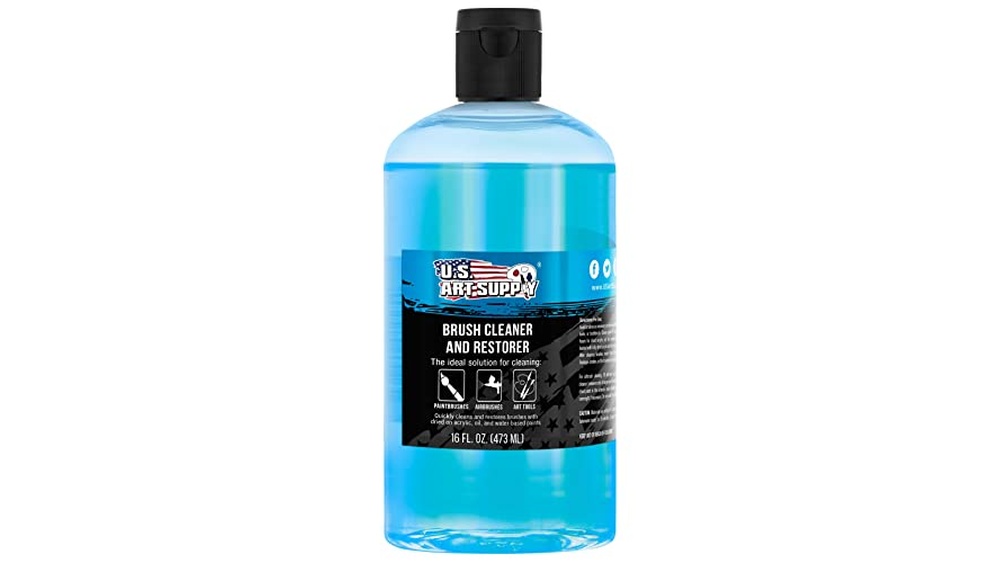
Quick answer: For rescuing brushes with dried-on acrylic, oil or gouache, the U.S. Art Supply Brush Cleaner and Restorer (16 oz) is the most capable brush cleaner for paint brushes in this list because you can soak brushes in it for hours. For everyday cleaning and conditioning after each session, General’s The Masters Brush Cleaner and Preserver is the classic choice. If you mostly paint with watercolor or acrylic and want faster water changes, a gravity-fed rinser such as the JEChrochen Art Rinse station saves trips to the sink.
Brush cleaners come in three very different forms, and buying the wrong one is the most common reason people say “brush cleaner doesn’t work.” Liquid restorers are solvent-style soaks that soften paint that has already dried. Solid soap cleaners such as The Masters are for washing and conditioning bristles while paint is still workable. Rinse stations and brush basins are hardware, not chemistry; they just make rinsing with water easier.
The right brush cleaner for paint brushes depends on your medium, how often your brushes get away from you and whether you use precious natural hair like sable. This guide compares the main options for artists, explains what each one can and cannot do, and covers the cleaning routine that prevents most damage in the first place.
Our Top Picks at a Glance
- U.S. Art Supply Brush Cleaner and Restorer, 16 oz — Best for reviving brushes with dried paint
- General’s The Masters Brush Cleaner and Preserver, 2.5 oz — Best everyday cleaning and conditioning
- JEChrochen Art Rinse Brush Cleaner station — Best water-recycling rinse station
- WZWXXQ Water Circulation Brush Rinser — Best budget rinser for small desks
- MyLifeUNIT Brush Cleaner with Palette — Best basin, holder and palette combo
| Product | Best For | Key Spec | Key Strength | Price Tier |
|---|---|---|---|---|
| U.S. Art Supply Restorer | Dried acrylic, oil, gouache, ink | 16 oz liquid soak | Softens hardened paint; also for airbrushes | $$ |
| General’s The Masters | Daily wash and condition | 2.5 oz solid cleaner | Safe for sable, bristle and synthetic | $ |
| JEChrochen Art Rinse | Studio and classroom rinsing | 450 ml fresh-water bottle | One-press dirty water flush | $$ |
| WZWXXQ Rinser | Compact rinse station | 250 ml bottle, ABS plastic | Pre-assembled | $ |
| MyLifeUNIT Basin | Rinse, hold and mix | 3 compartments with lid and palette | Portable all-in-one | $$ |
How We Chose
These recommendations are based on the Amazon listing details and specifications checked in October 2026, how well each product suits artist brushes (rather than house-painting tools), and how widely each product has been reviewed by Amazon buyers. We did not use these cleaners ourselves; the guidance on technique reflects standard, well-established brush-care practice.
- Medium compatibility: does the product handle acrylic, oil, watercolor and gouache, and does it say so?
- Bristle safety: listings that state safety for natural hair such as Kolinsky sable ranked higher.
- Job type: restoring dried paint versus routine washing versus rinsing.
- Practicality: bottle size, ease of use and whether the product suits a home studio or classroom.
We left out heavy-duty cleaners aimed at house-painting brushes and rollers, because they are formulated for latex and oil-based wall paints rather than fine artist brushes.
Best Brush Cleaner for Paint Brushes Reviewed
1. U.S. Art Supply Brush Cleaner and Restorer (16 oz) — Best for reviving brushes with dried paint

This is a liquid soak designed for the brushes you thought were ruined. The listing says it restores brushes with dried-on acrylic, oil, gouache, inks and water-based paints, and that it also cleans airbrushes and other art tools. Directions are simple: soak as needed, then remove the softened residue with a wipe, palette knife or old toothbrush.
Timing depends on how badly the paint has set. The listing gives a range of minutes to hours, and for airbrush parts it suggests an overnight soak if necessary. A 16-ounce bottle is large enough to fill a jar deep enough to cover the ferrule, which is where dried acrylic usually hides.
Use it as a rescue product, not a daily wash. After restoring a brush, wash it with soap and water and reshape the tip so the bristles dry straight.
Best suited for: painters who occasionally leave acrylic to dry in a brush, airbrush users and anyone reviving a box of neglected brushes.
Key features:
- 16 oz bottle
- Restores brushes with dried acrylic, oil, gouache, ink and water-based paint
- Also cleans airbrushes and art tools
- Soak-and-wipe method
Pros:
- Handles fully dried paint, not just wet
- Large bottle for deep soaking
- Works across most artist media
- Doubles as an airbrush cleaner
Cons and limitations:
- Overkill for routine end-of-session washing
- Soaking for long periods can loosen glue in cheap ferrules
- Needs a lidded jar to avoid evaporation and spills
Buying consideration: Suspend brushes in the jar with a clip or brush holder so the tips are not crushed against the bottom while they soak.
2. General’s The Masters Brush Cleaner and Preserver (2.5 oz) — Best for everyday cleaning and conditioning

The Masters is a solid, soap-like cleaner made by General Pencil Company. You wet the brush, swirl it on the cake, work up a lather in your palm and rinse. The listing says it removes oils, acrylics, watercolors, stains and varnishes, and that it is suitable for sable, bristle and synthetic brushes.
The selling point is the one-step clean and condition. Many artists keep a tub beside the sink and use it after every session, then shape the wet bristles with a little of the soap left in to dry the tip into a point. General’s also sells a smaller 1-ounce size; the 2.5-ounce tub lasts much longer for regular painters.
The companion 1 oz listing adds that it is made in the USA to ACMI AP non-toxic standards and that it is non-abrasive, which matters for expensive natural-hair brushes.
Best suited for: daily cleaning after oil, acrylic or watercolor sessions, and anyone with sable or other natural-hair brushes.
Key features:
- 2.5 oz solid cleaner
- Removes oils, acrylics, watercolor, stains and varnishes
- For sable, bristle and synthetic brushes
- One-step clean and condition
Pros:
- Gentle enough for fine natural hair
- Conditions as it cleans
- Long-lasting cake
- Easy to travel with
Cons and limitations:
- Slower than a liquid soak on fully hardened paint
- Needs running water nearby
- Small tub for classroom use
Buying consideration: For oil painters, wipe excess paint and rinse in odorless mineral spirits first, then finish with The Masters to remove the last oily residue.
3. JEChrochen Art Rinse Brush Cleaner Station — Best for a water-recycling rinse station

Rinse stations solve a different problem: muddy rinse water. The JEChrochen unit holds a 450 ml freshwater bottle on top. Press the switch and dirty water flushes away while clean water flows down from the tank, and the listing estimates about 30 washes per fill.
It combines a brush cleaner, holder and tray in one plastic station and is designed for small to medium brushes. The listing mentions oils, acrylics, watercolors, varnish and glazes, but in practice water-only rinsing suits watercolor, gouache and acrylic; oils still need solvent or soap.
Best suited for: watercolor and acrylic painters, classrooms and anyone without a sink near their table.
Key features:
- 3-in-1 cleaner, holder and tray
- 450 ml freshwater bottle, about 30 washes
- One-touch water change
- Stain-resistant plastic with rounded edges
Pros:
- Keeps rinse water clean so colors stay bright
- Fewer trips to the sink
- Organizes brushes on the table
Cons and limitations:
- Water alone will not clean oil paint
- Best with small to medium brushes only
- Dirty-water tank still needs emptying
Buying consideration: Empty the dirty-water reservoir after each session; acrylic sediment dries into a crust that is hard to remove later.
4. WZWXXQ Water Circulation Brush Rinser — Best for a budget rinser for small desks

The WZWXXQ rinser uses the same circulation idea in a smaller, pre-assembled package. Its bottle holds 250 ml, and the listing says that gives about 30 rinses before a refill. You fill the bottle, place the storage tank on top, flip it 180 degrees and set it on a level surface.
It is made from ABS plastic and is light enough to move around. The smaller footprint suits a crowded desk or a watercolor travel setup in a hotel room.
Best suited for: beginners, kids and watercolor painters working at a small desk.
Key features:
- Water circulation design
- 250 ml water bottle
- Pre-assembled
- ABS plastic
Pros:
- Lowest-cost rinse station here
- Compact
- No assembly
Cons and limitations:
- Must sit on a flat surface or it may leak
- Smaller water supply
- Not for oil paint cleaning
Buying consideration: Follow the flip-and-place instructions exactly the first time; most leak complaints with this style come from tilting it.
5. MyLifeUNIT Brush Cleaner with Palette — Best for a basin, holder and palette combo

This is a simple brush wash basin with three compartments, a lid that doubles as a paint palette and slots to hold brushes. It measures about 5.3 x 8.9 x 4.5 inches and weighs around 10.5 ounces.
There are no pumps or valves; you fill it with water and rinse as you would in a jar, but with separate compartments for dirty and clean water and a lid for transport.
Best suited for: decorative painters, classes and plein-air watercolorists who want everything in one box.
Key features:
- Three compartments
- Lid and paint palette
- Brush holding slots
- About 5.3 x 8.9 x 4.5 in, 10.5 oz
Pros:
- Portable and lidded
- Separate clean and dirty water
- Palette built in
Cons and limitations:
- Manual water changes
- Plastic palette surface stains with some pigments
Buying consideration: Use the left compartment for first rinse and the right for a final clean rinse to keep colors from getting muddy.
Buying Guide: How to Choose a Brush Cleaner for Paint Brushes
Match the cleaner to your medium
Watercolor and gouache rinse out with water and a little mild soap. Acrylic must be rinsed before it dries; once cured it is plastic and needs a restorer. Oil paint needs a solvent such as odorless mineral spirits or a brush soap, followed by washing.
Restore or maintain?
Liquid restorers are for fixing problems. Solid soap cleaners are for routine care. Most painters benefit from owning one of each.
Bristle type
Kolinsky sable, squirrel and other natural hairs are delicate. Choose cleaners that state they are safe for natural hair and avoid harsh scrubbing. Synthetic brushes tolerate more aggressive cleaning.
Ventilation and safety
Solvent-based cleaners need airflow and lidded containers. Check the label for non-toxic certifications such as ACMI AP if you paint in a small room or with children.
Volume and setup
A classroom or busy studio goes through cleaner quickly; larger bottles and rinse stations make sense. A hobby painter can do well with a small tub and a jar.
Avoid house-painting products for fine brushes
Cleaners formulated for latex wall paint and rollers are designed for different tools and residues. For artist brushes, stay with products labelled for artist paints.
Brush Cleaning Routine by Medium
Watercolor and gouache
- Rinse in clean water between colors, swirling gently rather than pressing on the jar bottom.
- At the end of the session, rinse until the water runs clear.
- Every few sessions, or after staining pigments such as phthalo blue, wash lightly with a brush soap.
- Squeeze out water with a paper towel, reshape the tip and dry flat or tip-down.
Acrylic
- Keep brushes wet while painting; lay them flat in a shallow tray of water rather than standing them in a jar.
- Wipe excess paint on a paper towel before rinsing so less pigment goes down the drain.
- Wash with a brush soap, working lather into the base of the bristles near the ferrule.
- Rinse, reshape and dry. If any paint has started to set, treat it with a restorer before it fully cures.
Oil
- Wipe the brush thoroughly on a rag or paper towel.
- Rinse in a lidded jar of odorless mineral spirits or use a solvent-free brush soap, depending on your studio setup.
- Wash with soap and lukewarm water to remove the last oil and solvent residue.
- Reshape and dry flat. Dispose of solvent-soaked rags safely, as oil-soaked rags can self-heat.
Restoring a hardened brush
Soak only the bristles in a restorer, suspended so they do not touch the bottom. Check every 30 minutes, combing softened paint out from the ferrule toward the tip. Once the bristles move freely, wash with soap, rinse and reshape. If the brush still splays, it may be best retired to texture work or dry brushing rather than thrown away.
Learn the Full Cleaning Routine
The product is only half the job. Our guide on how to use paint brush cleaner walks through soaking times, reshaping and drying step by step. If bristles are already falling out, read our tips on how to keep paint brushes from shedding, and see how to use a liner brush for detail work for the brush that most needs careful cleaning to hold its point.
Common Mistakes to Avoid
- Letting acrylic dry in the ferrule; rinse every few minutes during long sessions.
- Standing brushes on their tips in a jar, which bends the bristles permanently.
- Using hot water, which can expand the ferrule and loosen the glue.
- Soaking natural-hair brushes in restorer overnight when a short soak would do.
- Drying brushes upright with the tip up, which lets water run into the ferrule.
- Using house-painting brush cleaners on fine watercolor brushes.
FAQs
What is the best brush cleaner for acrylic paint brushes?
For routine cleaning, rinse in water as you paint and wash with a brush soap like The Masters at the end. If acrylic has already dried in the bristles, a liquid restorer such as U.S. Art Supply Brush Cleaner and Restorer is the better tool.
Can brush cleaner save a brush with dried paint?
Often, yes. A soak in a restorer can soften dried acrylic or oil so you can work it out with a comb or old toothbrush. Brushes with paint dried deep in the ferrule for months may not fully recover their shape.
Is The Masters brush cleaner safe for sable brushes?
Yes. The listing states it is for sable, bristle and synthetic brushes, and the 1 oz version notes it is non-abrasive and safe for Kolinsky sable.
Do I need a brush cleaner for watercolor?
Not usually. Clean water rinses watercolor out, and an occasional wash with a mild brush soap removes staining pigments and keeps the hair supple.
How long should I soak brushes in cleaner?
For dried paint, start with 30 minutes to an hour and check. Heavily caked brushes may need several hours. Always suspend brushes so the tips do not press on the bottom.
Can I use dish soap instead of brush cleaner?
Mild dish soap works for routine washing of synthetic brushes. It does not condition natural hair, and it will not soften dried acrylic.
Final Recommendation
Keep two products on hand. Buy the U.S. Art Supply Brush Cleaner and Restorer for the inevitable brush that dries with acrylic in it, and a tub of The Masters Brush Cleaner and Preserver for routine washing and conditioning, especially if you own natural-hair brushes. If you paint watercolor or acrylic away from a sink, add the JEChrochen rinse station, or the smaller WZWXXQ for a tight desk. The MyLifeUNIT basin is the simplest choice for classes and outdoor painting where you want water, brushes and palette in one box.



One Comment