
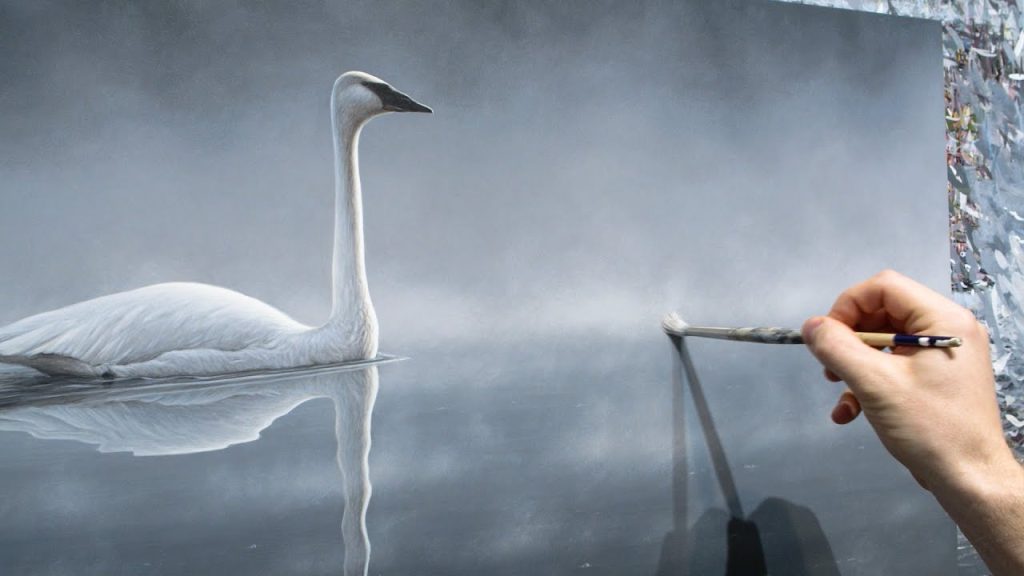
A palette of acrylic paint can go from creamy to rubbery in the time it takes to answer a text. That fast drying is the reason so many painters keep a spray bottle within reach, and the reason people ask whether it is actually safe to mist acrylic paint with water or whether it quietly ruins the paint film.
Quick answer: Yes, you can mist acrylic paint with water. A fine, light mist on your palette or on wet paint slows drying and keeps colors blendable for longer, because acrylic is water-based until it cures. The catch is quantity: a light film of droplets helps, while heavy spraying dilutes the binder, causes runs and blooms, and can leave a weak, chalky layer on non-absorbent surfaces. Misting does nothing to paint that has already dried.
This guide explains what water actually does to acrylic at each stage of drying, how to set up and use a mister properly, when misting is the wrong tool, and how it compares to mediums and retarders. If you are still choosing paint, the formulation matters more than you might think, since heavy-body, student and fluid acrylics all react to water a little differently. Our guide to the acrylic paint brands worth buying covers that side of the decision.
Why Painters Mist Acrylic Paint With Water
Acrylic paint is pigment suspended in an acrylic polymer emulsion. Water is the carrier that keeps those tiny polymer particles apart. As the water evaporates, the particles crowd together and fuse into a flexible plastic film that traps the pigment. Once that fusion happens, the film no longer re-dissolves in water.
Misting works by slowing that evaporation. A thin layer of moisture on the surface of the paint raises the local humidity and replaces some of the water that is leaving. You buy time, usually somewhere between a few extra minutes and much longer on a covered palette, depending on room temperature, airflow and how thickly the paint is laid down.
The main reasons artists reach for a spray bottle:
- Keeping palette paint usable during a long session, especially in dry or air-conditioned rooms.
- Extending blending time on the canvas for skies, gradients and soft edges.
- Pre-wetting paper or canvas so that thin washes spread and bleed in a watercolor-like way.
- Creating texture effects such as blooms, speckles and controlled drips in fluid paint.
- Re-moistening a stay-wet palette between sessions.
Is Acrylic Paint Water Based?
Yes. Artist and craft acrylics are water-based emulsions, which is why brushes clean up with soap and water and why water thins the paint while it is wet. The water is not a permanent ingredient, though. It is there to keep the paint liquid, and it leaves as the paint dries.
That distinction matters when you mist. Adding water to wet acrylic simply returns it to a slightly earlier, wetter state. Adding water to cured acrylic sits on top of a plastic film and beads or runs off. There is no in-between magic that reactivates dried acrylic the way water reactivates dried watercolor or gouache.
Is Acrylic Paint Water Soluble?
Only while it is wet. Fresh acrylic is fully water-soluble, and even paint that has started to skin over can often be loosened with a mist and a brush if you catch it early. Once the film has coalesced, typically within minutes for thin layers and longer for thick impasto, it becomes water-resistant.
Thick paint can be deceptive. The surface may feel dry while the interior is still soft, so a heavy mist on half-dry impasto can soften the skin, wrinkle it, or lift it when you drag a brush across. Light mist is safer on thick passages, and it is better to leave nearly dry areas alone.
What Happens at Each Drying Stage
| Paint stage | What a light mist does | What heavy spraying does |
|---|---|---|
| Fresh and wet | Slows drying, keeps edges soft, improves blending | Thins paint, causes runs, may separate pigment |
| Tacky / skinning | Can loosen the surface for a short time | Wrinkles or lifts the skin, leaves blotches |
| Touch-dry, still curing | Little effect; beads on the surface | Possible clouding or water marks in rare cases |
| Fully cured | No effect | No effect beyond surface water |
How to Mist Acrylic Paint With Water: Step by Step
The goal is a fine, even veil of droplets, not a shower. Here is a method that works for most palette and canvas situations.
- Choose a fine-mist sprayer. Look for a bottle with an adjustable nozzle that produces a cloud rather than a jet. Continuous-spray “trigger mist” bottles sold for plants or hair work well because they give a long, even burst. A coarse garden sprayer is too heavy.
- Fill it with clean, room-temperature water. Tap water is fine for most people. If your water is very hard, distilled water may help avoid faint mineral residue on dark glazes, though this is a minor issue for most.
- Test on scrap first. Spray at a piece of paper towel to check the pattern. You want tiny, separate droplets.
- Hold the bottle 10 to 14 inches away. Closer than that and droplets merge into puddles. Farther and much of the mist drifts away.
- Spray above the target and let the mist fall. Aiming slightly over the palette or canvas lets the cloud settle evenly instead of blasting one spot.
- Use one or two short pumps, then wait. Check the paint after a few seconds. It should look dewy, not glossy-wet with pooled water.
- Repeat only when the sheen fades. In a dry room this might be every 5 to 10 minutes. In a humid room you may barely need to mist at all.
Misting the Palette vs. Misting the Canvas
The palette tolerates more water than the painting. Piles of paint on a palette are relatively thick, and the extra surface moisture mostly keeps their outer skin from forming. You can mist palette paint fairly freely and simply stir any watery puddles back in with a palette knife.
The canvas is less forgiving. Every drop that lands on the painting becomes part of the paint film or leaves a mark. On canvas, mist lightly, mist from farther away, and avoid areas you have already finished. For precise work, some painters mist only the palette and never spray the painting itself.
How Much Water Is Too Much?
This is where most problems come from. Acrylic binder holds pigment to the surface. Dilute it far enough and there may not be enough binder left to form a continuous film, especially on a non-absorbent ground such as sealed gesso, plastic, glass or a previous acrylic layer.
Paint manufacturers have long advised caution here. A commonly cited guideline is to keep added water to roughly 30 percent or less of the paint volume when painting on non-absorbent surfaces, while absorbent surfaces such as raw paper or unprimed fabric can usually take more, because the substrate soaks up the pigment and binder together. Brands vary, so check the technical notes for the paint you use.
Misting rarely reaches those levels if you use a fine mist and a light hand. Problems arise when misting turns into drenching, or when a painter mists repeatedly while also thinning heavily with a wet brush. Signs that you have gone too far include:
- Paint that looks streaky or patchy once dry.
- A chalky or powdery surface that rubs off on a fingertip.
- Pigment that collects in the low spots of the canvas weave.
- Later layers that lift the earlier one when brushed over.
Acrylic Medium vs Water
Water and acrylic mediums both thin paint and both can change open time, but they work differently. Water dilutes everything, including the binder. A medium adds more binder along with the extra fluidity, so the paint film stays strong even when it becomes very thin.
| Option | Effect on flow | Effect on drying time | Effect on film strength | Best use |
|---|---|---|---|---|
| Water (mist) | Slight surface loosening | Short extension | Fine in small amounts | Keeping palette and edges workable |
| Water (mixed in) | Thins considerably | Often shortens on thin layers | Weakens past a point | Washes, stains, underpainting |
| Glazing / fluid medium | Thins while keeping body | Slight extension | Maintained | Transparent glazes |
| Retarder | Minimal change | Significant extension | Fine at recommended dose | Wet blending, portraits |
| Slow-drying (“open”) acrylics | Normal | Much longer by design | Maintained | Long blending sessions |
A practical approach many painters use: mist for short-term convenience, mix in a retarder or glazing medium when you need dependable extra working time, and switch to a slow-drying acrylic line when your style relies on long, soft blends. Fluid acrylics already behave more like ink, so they need even less water; a closer look at that format is in our Daler-Rowney fluid acrylic review.
Can You Thin Acrylic Paint With Water?
Yes, and it is the simplest way to make washes, stains and loose underpaintings. Misting is a gentle form of thinning. Mixing water directly into the paint is a stronger one. The two approaches suit different jobs.
How to Thin Acrylic Paint With Water Without Weakening It
- Start with a measured amount of paint on the palette, such as a pea-sized blob.
- Add water a few drops at a time with a pipette or the tip of a wet brush, and mix completely before adding more.
- Stop at the consistency you need. Light cream for general painting, heavy cream for detail, milk for a transparent wash.
- Use extra-thin washes on absorbent grounds, such as watercolor paper or a toothy, lightly sized surface, where they hold up best.
- Switch to a medium when you want glaze-thin paint over a sealed or previously painted surface.
Creative Effects You Can Get by Misting
Spraying water is not only about slowing drying. It is also a mark-making tool, particularly with fluid acrylics and acrylic inks.
- Soft blooms. Mist a wet wash and the droplets push pigment outward into soft, flower-like shapes. Works best with thin paint on paper.
- Speckled texture. A coarse spray on a semi-wet passage leaves tiny lighter dots, useful for sea spray, snow, or lichen on rocks.
- Controlled drips. Mist the top of a wet passage and tilt the support so the paint runs downward in vertical drips.
- Atmospheric skies. Pre-mist a primed canvas lightly, then lay in sky colors. The moisture helps them melt into each other.
- Wet-in-wet florals. Mist paper, drop in thinned paint or ink, and let it spread.
Acrylic inks are especially responsive to these techniques because they are already very fluid and pigment-dense; our Daler-Rowney acrylic ink review goes into how that kind of paint moves on wet paper.
How to Paint Water With Acrylics Using a Mister
Plenty of people searching for misting are really after a related skill: painting water itself. A spray bottle helps here because water scenes rely on soft transitions and crisp highlights side by side.
- Block in the darkest water tone first, often a mix of ultramarine, a touch of burnt umber and a green.
- Mist lightly and lay mid-tones into the wet base with horizontal strokes so the colors fuse softly.
- Mirror the sky in lighter bands while the paint is still workable, again with gentle misting to keep edges soft.
- Let it dry completely before adding sparkle.
- Add crisp highlights last with thick, unmisted titanium white so the edges stay sharp.
How to Paint Water With Acrylics for Beginners
Keep it simple: three values (dark, middle, light), horizontal strokes only, and a mist only on the middle stage. Most beginner water looks stiff because every stroke has a hard edge. A light mist during the blending stage fixes much of that, while unmisted highlights keep the sparkle.
Common Misting Mistakes and How to Fix Them
| Problem | Likely cause | Fix |
|---|---|---|
| Dots or rings on the dried painting | Large droplets landing on semi-dry paint | Spray from farther away; use a finer nozzle; glaze over the marks once dry |
| Paint running down the canvas | Too much water on a vertical easel | Lay the canvas flat for misting, or mist the palette only |
| Chalky, dusty patches | Binder diluted too far | Seal with a clear acrylic medium, then repaint the area |
| Mold on a stay-wet palette | Damp sponge left closed for days | Rinse the sponge and membrane regularly; replace the water often |
| No improvement in working time | Very dry or windy room | Reduce airflow from fans and vents; add a retarder |
Misting Tips by Skill Level
Beginners
Mist only the palette at first. Learn how fast your paint dries in your room before you start spraying the canvas. Keep a paper towel nearby to blot any accidental puddles immediately.
Intermediate Painters
Try pre-misting the canvas before a large sky or background gradient, and experiment with blooms on paper. Start mixing a small amount of retarder into paints you want to blend, and use misting as a top-up.
Advanced Painters
Use misting deliberately as a texture tool and combine it with fluid paints and inks. Consider a dedicated stay-wet palette for multi-day work, and pay attention to how different brands’ binders tolerate water; some heavy-body paints stay workable longer than student-grade paint with lower binder content.
Water-Based Varnish for Acrylic Paint
Once the painting is finished and fully cured, many painters protect it with a varnish. Water-based acrylic varnishes are common for acrylic work because they clean up with water and are compatible with the paint film. Some painters apply an isolation coat first, which is a clear, non-removable layer of acrylic medium, and then a removable varnish over it. Never varnish over paint that is still curing, and never mist a freshly varnished surface.
FAQs
Can you thin acrylic paint with water?
Yes. Water thins acrylic paint while it is wet and is the easiest way to create washes. On non-absorbent surfaces, keep the added water moderate, often cited as around 30 percent or less, and switch to a glazing or fluid medium when you need very thin paint with a strong film.
Does misting acrylic paint change the color?
A light mist does not change the hue. Heavy water can make paint look more transparent and slightly lighter once dry because the pigment is spread thinner. Acrylics also tend to dry a little darker than they look wet, which is unrelated to misting.
Can you mist dried acrylic paint to reactivate it?
No. Once acrylic has cured into a film, water will not re-dissolve it. If palette paint has dried, scrape it off and squeeze out fresh paint. Some painters peel dried palette skins and reuse them as collage material.
Can you use a water brush pen for acrylic?
You can fill a water brush pen with clean water to soften and blend wet acrylic, much like misting with more precision. Rinse it thoroughly right after use. Filling the barrel with thinned acrylic is risky because paint can dry inside the reservoir and clog it permanently.
Is misting better than using a retarder?
They solve slightly different problems. Misting gives a quick, short-term boost and costs nothing. A retarder gives longer, more predictable working time and does not dilute the binder. Many painters use both: retarder in the mix, a mist as needed.
How often should I mist my acrylic palette?
Mist whenever the paint loses its sheen and starts to skin. That might be every 5 to 10 minutes in a dry, air-conditioned room, or much less often in humid weather. Covering the palette between uses cuts down how often you need to mist.
Final Thoughts
Misting acrylic paint with water is safe and genuinely useful as long as you treat it as a fine veil rather than a soak. Use it to keep palette paint creamy, to soften edges while blending, and to create blooms and speckles on purpose. When you need serious extra working time, a retarder or slow-drying acrylic will serve you better than more water.
The paint itself also shapes the experience. Higher-binder artist paints tend to hold up better to misting and thinning than budget paint does. If you want help picking a line that suits your style and budget, start with our comparison of top acrylic paint brands for every skill level.




