Daler-Rowney Cryla delivers rich color, strong body, and lasting performance.
If you’ve ever fought with streaky acrylics, chalky mixes, or colors that lose their punch as they dry, you know how fast a painting session can stall. I’ve been there. That is why artists like me look for heavy-body paints that hold a brush mark, stay true when dry, and mix without turning to mud. In this Daler-Rowney Cryla review, I put a few core colors and useful companions to work and share how they behave on real surfaces, not just in theory. You’ll see who they suit, what they do best, and what to watch for before you buy.

Daler-Rowney Cryla 75 ml Tube…
Cryla has pioneered the use of artists’ acrylics in Europe since 1963

Daler-Rowney Cryla Acrylic 75 ml…
Brand : DR Made in United Kingdom Dr cayla 75 ml raw umber

Daler Rowney System3 59ML PROCESS…
SYSTEM3 59ML PROCESS BLACK Our products touch the lives of artists in every step of their artistic journey, from early childhood drawings to abstract canvases to adorn walls We endeavour…
Cryla Acrylic 75ml – Mars Black

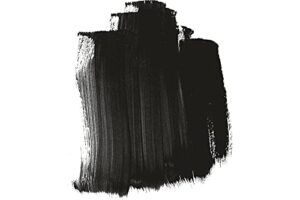
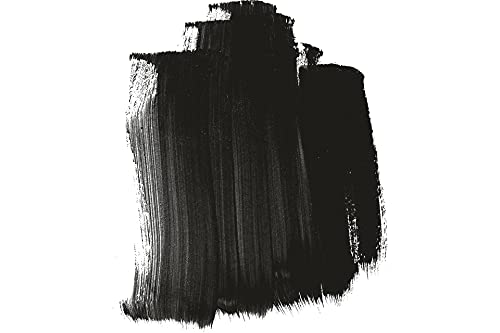
Mars Black is a studio workhorse, and the Cryla take on it shows why this line earns trust. The body is dense and buttery. It comes out of the tube ready to cover a ground or carve a crisp edge. It dries fast enough for layered work yet gives you a short open time to blend shadows.
The color reads deep and neutral with slightly warm lean. It is not as glassy-dark as carbon black, but it is kinder in mixes. Opaque coverage is strong in a single pass on primed board. I like how it keeps knife ridges and brush hairs visible when I want texture to tell the story.
Pros:
- Heavy-body feel that holds bold impasto and knife marks
- Opaque coverage that blocks in shapes fast
- Neutral-warm black that tints without killing color
- Short but usable open time for blending edges
- Low shift from wet to dry, so values stay predictable
- Great for grisaille and underpainting bases
- Plays well with gels and texture pastes
- Excellent lightfastness expected for long-term work
Cons:
- Darker mixes can get heavy if you overdo the load
- Dries fast on a hot day without retarder
- Not as jet-black as carbon black for ultra-deep fields
My Recommendation
If you need a reliable, opaque black that handles like a true pro paint, this Cryla Mars Black should be on your palette. In my Daler-Rowney Cryla review testing, it nailed block-ins, tight edges, and smooth shadow glazes with a touch of medium. It suits portraitists, landscape painters, and abstract artists who want control and repeatable results. The value is strong, and availability is steady.
| Best for | Why |
|---|---|
| Underpainting and tonal studies | Opaque coverage and stable value from wet to dry |
| Impasto textures | Heavy body holds knife and brush ridges |
| Neutral mixing black | Warmer, friendlier undertone that avoids dead mixes |
Cryla Acrylic 75ml – Raw Umber
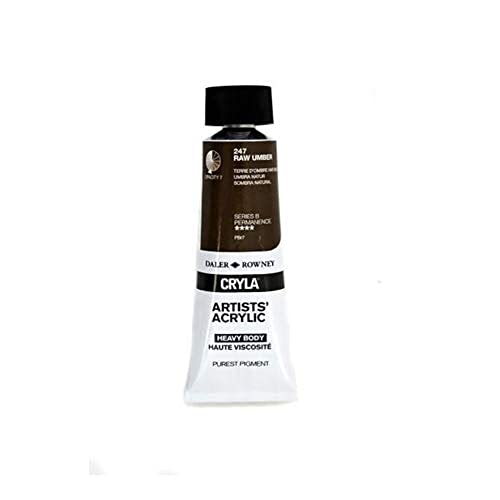
Raw Umber is a backbone earth, and Cryla’s version is rich and honest. It has a deep, cool-brown bias that builds form without stealing the scene. Out of the tube, it feels creamy and exact. On canvas, a light touch gives soft glazes, while a firm stroke lays down crisp planes.
I reach for this Cryla Raw Umber to set mid-values, skin shadows, and tree bark. Its opacity sits in the mid range, so it covers but still breathes. When mixed with white, you get smooth grays that do not go chalky. The dry-down is consistent, which keeps value plans clean.
Pros:
- Natural, cool-leaning earth that reads true in light and shadow
- Smooth body for glazes, scumbles, and clean edges
- Excellent for portraits, plein air, and tonal blocks
- Mixes with white into calm, stable neutrals
- Low wet-to-dry shift for predictable planning
- High lightfastness typical for umbers in artist lines
- Works as a grounding color without overpowering
- Plays nicely with Mars Black for fast value mapping
Cons:
- Not ideal when you need a warm earth; add Yellow Ochre or Burnt Sienna
- Can dull brights if used too heavy in mixes
- Average opacity may need a second pass on stark white grounds
My Recommendation
This is a must-have earth if you like control and calm color design. In my Daler-Rowney Cryla review workups, the Raw Umber made skin shadows and wood grains easy to place. It is best for artists who value tonal discipline and subtle layers. Price-to-performance is strong, and tube size will last for many studies.
| Best for | Why |
|---|---|
| Portrait shadows | Cool, stable earth that avoids muddy skin tones |
| Tonal underlayers | Predictable dry-down; easy to glaze over |
| Landscape structure | Natural bark, soil, and stone without harshness |
System3 Acrylic 59ml – Process Black

System3 sits below Cryla in Daler-Rowney’s range, but it has a clear role. Process Black is a cleaner, cooler black built for graphic mixes and design work. The body is medium, so it flows more than Cryla. That makes it friendly for flat coats, lettering, and quick studies.
Do not treat this like the Cryla Mars Black. It is less opaque and not meant for heavy impasto. It shines when you need line, print, or a CMYK-style mix with Process Cyan, Magenta, and Yellow. I use it for block prints and fluid layers where a pro heavy-body would be too stiff.
Pros:
- Budget-friendly choice for studies and design tasks
- Medium body flows well for flat planes and line work
- Excellent for CMYK mixing and screen/relief printing
- Fast clean-up and easy handling for beginners
- Good companion to Cryla when you want softer layers
- Dries even and smooth with minimal brush marks
- Plays well with acrylic inks and fluid mediums
- Ideal for classroom, workshop, and sketchbook use
Cons:
- Less opaque than a heavy-body black
- Not suited to high impasto or thick texture
- Color depth less rich than pro-grade Cryla
My Recommendation
If you want a clean, cool black for design, lettering, or print, this is a smart add. In the broader Daler-Rowney Cryla review context, I treat System3 Process Black as a flexible tool, not a direct Cryla swap. It is best for students, illustrators, and printmakers who value flow and flat finishes. It offers strong value and is easy to find.
| Best for | Why |
|---|---|
| Graphic and CMYK mixes | Cool tone plays nicely with process primaries |
| Lettering and flat planes | Medium body lays even, smooth coats |
| Printmaking trials | Flows well for screens and relief pulls |
Daler-Rowney White (0 Count)

A strong white is the anchor of many palettes. This Daler-Rowney White brings clean, bright coverage for highlights and mixes. It pairs well with Cryla colors due to its consistent body and quick set. It gives you snap for light accents without sinking your chroma.
Use it to open skin tones, cool a warm mix, or pull a final sparkle. It spreads even and keeps edges crisp on primed paper or canvas. In mixes with Raw Umber or Mars Black, it stays stable and avoids a chalky look. It is a flexible studio white that does the job day after day.
Pros:
- Bright, clean white for mixing and highlights
- Consistent body that pairs with heavy-body paints
- Low chalkiness when cut into earths and blacks
- Good coverage for correcting edges and shapes
- Fast to set, so layers move quickly
- Works well on primed paper, canvas, and board
- Reliable staple when building a compact kit
- Plays nicely with glazing mediums for soft tints
Cons:
- May dry a touch warmer or cooler than expected depending on ground
- Can thicken on the palette under hot lights
- Some artists may prefer an extra-opaque titanium-only white
My Recommendation
If your palette needs a reliable white that mixes clean, this is a smart pick. In my Daler-Rowney Cryla review sessions, I found it lifted highlights fast without deadening color. It is best for painters who layer, correct edges, and fine-tune value on the fly. Stock it as a core color; it earns its space in the kit.
| Best for | Why |
|---|---|
| Mixing cleaner tints | Bright base that keeps mixes lively |
| Edge corrections | Solid opacity and quick set for sharp fixes |
| Final highlights | High visibility without chalky residue |
Einfach Acrylic Pad A4 – 115 lb
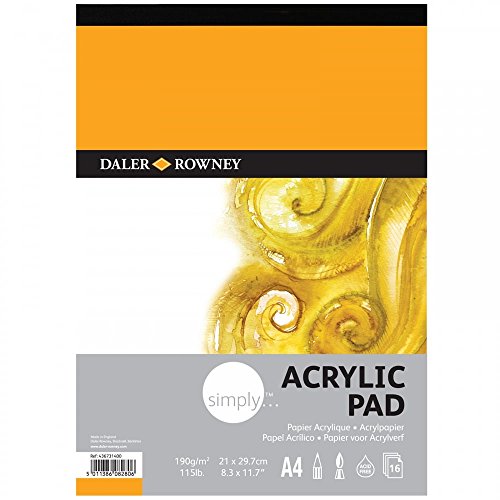
A good surface makes testing acrylics simple. This A4, 115 lb acrylic pad takes heavy-body paint with light warp. The tooth grips Cryla well, so strokes stay sharp and textures pop. Pages tear out clean for framing or tracking studies over time.
I like it for travel kits, classes, and daily value drills. It accepts light knife work, scumbles, and glazes without pilling. Tape pulls clean with minimal lift if you prep with a gentle touch. It is a practical match for anyone exploring Cryla layers before committing to canvas.
Pros:
- Toothy surface that holds heavy-body strokes
- Manages light impasto without heavy buckling
- Clean tear-out for quick presentation
- Great size for studio warm-ups and travel
- Good for glazing and scumbling practice
- Works with brushes and light knife techniques
- Budget-friendly way to test color mixes
- Pairs well with Cryla for texture studies
Cons:
- Not as robust as canvas for thick palette-knife builds
- Edges may cockle with heavy water loads
- Limited size (A4) for large compositions
My Recommendation
If you want an easy, affordable surface to trial Cryla colors and textures, start here. My Daler-Rowney Cryla review notes show this pad is strong for drills, travel, and fast composition maps. It is best for students, sketchers, and pros who want a daily practice pad. Keep a pad on hand; it keeps you painting when time is tight.
| Best for | Why |
|---|---|
| Daily exercises | Convenient size and forgiving tooth |
| Color and value tests | Surface shows how Cryla really behaves |
| Travel and classes | Lightweight, clean tear-out, easy to carry |
FAQs Of Daler-Rowney Cryla review
Is Daler-Rowney Cryla professional grade?
Yes. Cryla is a heavy-body, artist-grade acrylic with a high pigment load and strong lightfastness. It is built for serious studio work.
How does Cryla dry compared to what I see wet?
It shows a low wet-to-dry shift. Values stay close, which helps planning. Expect a satin to matte lean unless you add gloss mediums.
Can I thin Cryla with water, or should I use mediums?
You can thin with small amounts of water for washes. For best film strength and clarity, use acrylic mediums like glazing liquid or gel.
What is the difference between Cryla and System3?
Cryla is heavy-body and more pigment-dense. System3 is medium-body and budget-friendly. Use Cryla for impasto and pro work; System3 for studies and design.
Are Cryla colors lightfast enough for selling work?
Yes. Core Cryla colors have strong lightfast ratings suitable for archival pieces. Always check each color’s rating on the tube.
Final Verdict: Which Should You Buy?
For a deep, reliable workhorse, Cryla Mars Black is the standout. It covers fast, mixes well, and holds texture. Raw Umber is my next pick for calm shadow control.
This Daler-Rowney Cryla review shows why heavy-body paints matter. If you want pro results with simple handling, start with Mars Black, then add Raw Umber and a solid White.