
Quick answer: The best daycare easy crafts for 1 year olds are short, sensory, and process-based: paint-in-a-bag, contact-paper collages, taste-safe finger painting, sticker art, and stamping with large sponges. Plan for 5 to 10 minutes of attention, use only non-toxic materials labeled for the child’s age, avoid anything small enough to fit through a toilet-paper tube, and supervise one-on-one or in very small groups.
One-year-olds do not make crafts the way preschoolers do. They squish, smear, pat, and taste, and that is the point. Daycare easy crafts for 1 year olds succeed when the activity is about the feeling of paint and texture rather than a finished product to send home, and when the setup is designed so a classroom of toddlers can participate safely without the room turning into a cleanup emergency.
This guide covers what 12- to 24-month-olds can realistically do, a set of simple activities that early childhood teachers commonly use, how to set up a low-mess station, and what to look for when choosing paints and kits. For a broader look at paint sets suited to group crafting, our roundup of the best craft paint sets for DIY projects compares options in more detail.
What 1-Year-Olds Can Actually Do With Art Materials
Knowing typical development at this age keeps expectations realistic and helps you choose activities that feel good to toddlers rather than frustrating.
| Age range | Typical art skills | Good activity types |
|---|---|---|
| 12–15 months | Palmar (whole-fist) grasp, patting, slapping, exploring by mouth | Sealed sensory bags, contact paper, finger painting with taste-safe paint |
| 15–18 months | Can hold a chunky crayon in a fist, makes random marks, enjoys cause and effect | Chunky crayons, large stampers, sticker peeling with help |
| 18–24 months | Scribbles with more control, begins to imitate, can use a large brush | Large-handle brushes, dot markers, simple stamping and tearing paper |
Children develop at different rates, so treat these ranges as a loose guide. The common thread is that toddlers at this age learn through their hands and mouths, which shapes every choice below.
Safety Rules Before Any Toddler Craft
Safety comes before creativity with this age group. Most daycare programs follow licensing rules that cover art materials, so check yours first. General guidelines include:
- Choking hazards: Skip pom-poms, googly eyes, beads, buttons, dry pasta, and small pieces of paper that can be balled up. A common household test is whether an item fits through a toilet-paper tube; if it does, it is too small for this age.
- Non-toxic labeling: In the US, look for art materials labeled as conforming to ASTM D-4236 and carrying a non-toxic seal such as the ACMI AP (Approved Product) seal. Non-toxic does not mean edible, so still discourage eating paint.
- Age grading on the package: Many paint kits and crayons are labeled 3+. Products specifically marked for 12 months or 18 months and up are designed with this age in mind.
- Allergies: Homemade “taste-safe” paints often use flour, yogurt, or food coloring. Check each child’s allergy information before using anything food-based, particularly wheat or dairy.
- Supervision ratio: Run crafts with one to three toddlers at a time per adult, not the whole room at once.
- No strings or long ribbons that could wrap around a neck or finger.
10 Daycare Easy Crafts for 1 Year Olds
Each activity lists the mess level and roughly how long a typical toddler engages. Keep sessions short; ending while children are still interested is better than pushing past their attention.
1. Paint in a Bag (Mess level: none)
Squeeze two or three colors of non-toxic paint into a heavy-duty zip-top freezer bag, add a piece of cardstock if you want a keepsake, seal it, and tape all four edges to a table or low window with strong tape. Toddlers press and squish the colors together. Check the seal often and replace the bag if it gets chewed. Engagement: 5–10 minutes.
2. Contact Paper Collage (Mess level: none)
Tape a sheet of clear contact paper sticky-side out to a wall or table. Offer large pieces of tissue paper, fabric scraps, or big paper shapes, too large to swallow. Toddlers love the sticking and pulling. Cover with a second sheet to seal it when done. Engagement: 5–15 minutes.
3. Taste-Safe Finger Painting (Mess level: high)
Mix plain yogurt or a simple flour-and-water paste with a few drops of food coloring. Paint on a high-chair tray or a large sheet of paper taped to the floor. Because it is food-based, accidental tastes are less concerning, but confirm there are no dairy or wheat allergies first. Engagement: 10 minutes.
4. Chunky Crayon Scribbles (Mess level: low)
Tape a large sheet of paper to the table so it cannot slide. Offer two or three jumbo or egg-shaped crayons designed for small fists. Scribbling builds hand strength and is a natural first step toward drawing. Engagement: 3–8 minutes.
5. Sponge Stamping (Mess level: medium)
Cut kitchen sponges into large shapes, at least the size of an adult palm, and offer a shallow tray with a thin layer of washable paint. Toddlers pat the sponge into paint and onto paper. Large handles or clothespins clipped to the sponge help, though clothespins need close supervision. Engagement: 5–10 minutes.
6. Bubble Wrap Stomping (Mess level: medium)
Tape bubble wrap to the floor, roll paint onto it, and press paper on top for a print. Older one-year-olds also enjoy pressing their hands on painted bubble wrap. See our step-by-step guide to bubble wrap painting crafts for kids for setup variations. Engagement: 5–10 minutes.
7. Handprint and Footprint Keepsakes (Mess level: medium, adult-led)
Brush a thin layer of washable paint onto the child’s palm and press it onto cardstock. Have wet wipes ready before you start. These make popular parent gifts. Keep the session very short, as many toddlers dislike having their hands held still. Engagement: 2–3 minutes.
8. Dot Marker Art (Mess level: low, 18 months+)
Dot markers with large, chunky bodies are easy for toddlers to grip and stamp. Draw large circles on paper and let children dab inside or anywhere they like. Cap the markers between uses so they do not dry out. Engagement: 5–10 minutes.
9. Ice Cube Painting (Mess level: medium)
Freeze water with a few drops of washable watercolor or food coloring in an ice cube tray, with a craft stick in each cube as a handle. As the cube melts on paper, it leaves color. The cold sensation adds a new sensory element. Use cubes large enough not to be a choking risk and supervise closely. Engagement: 5–10 minutes.
10. Torn Paper Tearing (Mess level: low, 18 months+)
Offer strips of construction paper or old magazines for toddlers to tear. Tearing builds fine-motor strength. An adult can glue the pieces onto a big paper shape afterward. Keep pieces large and collect them promptly. Engagement: 5 minutes.
Finger Paint Kit for 1 Year Old: What to Look For
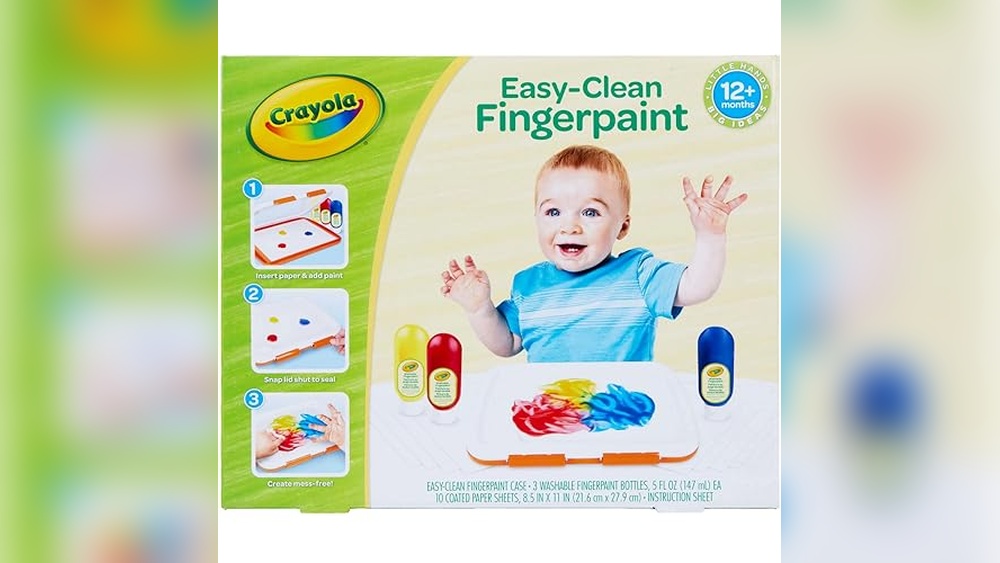
If you would rather buy than make paint, finger paint kits marketed for toddlers vary considerably. Without endorsing particular products, these are the features worth checking on any kit:
| Feature | Why it matters for daycare |
|---|---|
| Age rating of 12 months or 18 months+ | Indicates the manufacturer designed it for young toddlers rather than preschoolers |
| Non-toxic certification (ASTM D-4236, AP seal) | Standard US labeling for art materials safe for children’s use |
| Washable formula | Comes out of clothes and skin with soap and water, which matters with multiple children |
| Squeeze bottles or wide-mouth tubs | Easier for adults to portion small amounts; less waste |
| Thick consistency | Stays on paper rather than running, which suits whole-hand painting |
| Limited color count | Three to six colors is plenty and keeps setup quick |
Daycares often prefer larger bottles or multi-packs over small individual kits because they last longer across a classroom.
Crayola for 1 Year Old and Other Brand Questions
Parents and teachers often search for specific brands for toddlers. Most major crayon and paint brands sell a “toddler” or “my first” line with chunkier shapes and washable formulas. Standard crayons, markers, and paint sets from the same brands are usually labeled for ages 3 and up. When choosing, look at the age grading on the specific package rather than the brand name. Choose jumbo crayons, palm-grip shapes, or egg-shaped crayons for children under 2.
How to Set Up a Low-Mess Toddler Art Station
Mess is unavoidable with this age, but a few setup choices keep it contained and make cleanup fast between groups.
- Cover the floor and table. A shower curtain liner or vinyl tablecloth taped down works well and wipes clean.
- Undress or cover. Use smocks or long-sleeved bibs. Many teachers simply paint with toddlers in a diaper and T-shirt and change shirts afterward.
- Portion paint small. Put a tablespoon or two of paint on a tray at a time. Refill rather than offering a full container.
- Tape the paper down. Paper that slides frustrates toddlers and spreads paint off the edge.
- Prepare cleanup first. Have wet wipes, a basin of warm soapy water, and towels within arm’s reach before the first child sits down.
- Use a drying rack or clothesline. Label each artwork with the child’s name on the back before painting so you do not mix them up.
- Rotate small groups. Bring two or three toddlers at a time while others do a quiet activity elsewhere.
Art Apron for Toddlers 1-3 Years: Is It Worth It?
Many daycares use art aprons or smocks to protect clothes. For one-year-olds, the most practical styles are long-sleeved, waterproof bibs that cover the arms and close with a hook-and-loop strip at the back of the neck. Tie-back aprons tend to slip around on wiggly toddlers. Waterproof fabric wipes clean between children, which saves laundry. Some programs skip aprons and keep spare clothes for every child instead; both approaches work if they fit your classroom routine.
Common Mistakes With Toddler Crafts
- Planning a product-based craft. Projects like “make a paper plate lion” are really adult crafts at this age. Focus on the process.
- Too many choices. Two or three colors are plenty. Ten colors become brown quickly and overwhelm toddlers.
- Running sessions too long. If a toddler walks away after three minutes, that is a complete session.
- Assuming “non-toxic” means safe to eat. Non-toxic labeling means the material is not expected to cause harm in normal use, not that it is food.
- Using adult materials. Glitter, permanent markers, and craft glue that dries hard are not suited for children under 2.
Weekly Craft Plan for a Toddler Room
Rotating activities keeps interest high without requiring new supplies every day. A simple five-day plan might look like this:
| Day | Activity | Main skill |
|---|---|---|
| Monday | Paint in a bag | Cause and effect, color exploration |
| Tuesday | Contact paper collage | Grasping, sticking, releasing |
| Wednesday | Chunky crayon scribbles | Hand strength, early mark-making |
| Thursday | Sponge stamping | Hand-eye coordination |
| Friday | Taste-safe finger painting | Sensory exploration |
FAQs
What crafts can a 1 year old do at daycare?
Good options include paint in a sealed bag, contact paper collages, chunky crayon scribbling, large sponge stamping, and taste-safe finger painting. Keep activities short and focused on sensory exploration.
Is finger paint safe for 1 year olds?
Finger paint labeled non-toxic and age-graded for toddlers is designed for this age, but children should still be supervised and discouraged from eating it. Homemade food-based paints are another option if allergies are checked.
How long should a toddler art activity last?
Most one-year-olds engage for about 5 to 10 minutes. Let the child decide when they are finished rather than extending the activity.
What is the least messy art activity for toddlers?
Paint in a sealed, taped-down freezer bag and contact paper collages create almost no mess and still provide rich sensory experience.
Do I need a finger paint kit for 1 year old children, or can I make paint?
Either works. Store-bought washable toddler paints are convenient and consistent. Homemade yogurt or flour-based paints are cheap and taste-safe but spoil quickly and must be checked against allergies.
What age can toddlers start using crayons?
Many children begin scribbling with chunky crayons around 12 to 18 months. Choose jumbo or palm-grip crayons labeled for toddlers, and supervise because crayons can break into small pieces.
Final Thoughts
The most successful toddler art happens when adults let go of the finished product and focus on safe, sensory experiences. Start with mess-free options like paint bags and contact paper, then build up to finger painting and stamping once your setup and cleanup routine are smooth. When you are stocking up on washable, non-toxic paints for a classroom, our comparison of the top craft paint sets for home and group projects can help you choose a set that fits your budget and age group.


5 Comments