Bubble wrap usually ends up popped and tossed, but it’s one of the best free art tools you can hand a child. Pressed into paint and onto paper, those tiny air pockets print a neat pattern of dots that instantly looks like honeycomb, fish scales, corn kernels or snakeskin. Kids love the squishy texture, and the results look impressive even when little hands aren’t precise. Here’s how to do bubble wrap painting crafts step by step, with age-by-age ideas, setup tips and ten projects to try.
Quick answer: To do bubble wrap painting crafts, cut a piece of bubble wrap, brush or dab a thin, even coat of washable paint onto the bubble side, then press it face down onto paper and peel it off to reveal a dotted print. You can also wrap bubble wrap around a cardboard tube or rolling pin to roll patterns, or tape it to shoes for stomp painting. Thicker paper, washable tempera or acrylic craft paint, and a light hand with paint give the clearest prints.
Most bubble wrap crafts need only a few colors and a sheet of paper, but vivid, well-pigmented paint makes the dots pop. Our guide to the best craft paint sets for kids’ and DIY projects can help if you’re stocking a craft shelf.
Why Bubble Wrap Painting Works So Well for Kids
Bubble wrap printing is a form of relief printing: the raised bubbles hold paint and transfer it, while the flat spaces between them don’t. That simple mechanism gives kids a satisfying “reveal” every time they peel the plastic away. It also helps develop:
- Fine motor skills: pressing, smoothing and peeling build hand strength and control.
- Sensory exploration: the texture of the bubbles and the feel of paint are engaging for many children.
- Pattern recognition: kids notice how the dot grid repeats and how bubble size changes the look.
- Cause and effect: more paint makes blobs, less paint makes crisp dots, and they learn by doing.
Materials You’ll Need
- Bubble wrap: small bubbles (about 3/16 inch) make fine textures; large bubbles (about 1/2 inch) make bold dots that are easier for toddlers.
- Paint: washable tempera for young children, or acrylic craft paint for brighter, permanent results on older kids’ projects.
- Paper: cardstock, construction paper or watercolor paper. Thin printer paper wrinkles and tears under wet paint.
- Applicators: foam brushes, wide flat brushes or small foam rollers.
- Paint tray: a paper plate, a baking sheet or a plastic lid.
- Scissors and tape.
- Cardboard tubes, a rolling pin or a cup for rolling methods.
- Cover-ups: a smock or old shirt, a plastic tablecloth and wet wipes.
- Extras for decorating: googly eyes, markers, glue sticks and construction paper scraps.
Choosing the Right Paint
| Paint type | Best for | Pros | Cons |
|---|---|---|---|
| Washable tempera | Toddlers and preschoolers | Cleans up with water from skin and most fabrics | Can crack if applied thickly; colors are softer |
| Acrylic craft paint | Ages 6 and up, keepsake projects | Bright, durable colors; prints crisply | Permanent on clothes once dry; needs supervision |
| Finger paint | Very young children | Thick and easy to spread | Often too thick for crisp dots |
| Fabric paint | Printing on tote bags or T-shirts | Stays flexible on fabric and can be washable after setting | Requires following heat-set or curing instructions |
If the paint is very thick, add a few drops of water and stir. It should spread smoothly like a thick milkshake, not drip like juice.
How to Do Bubble Wrap Painting Crafts: Basic Steps
- Set up your space. Cover the table, put on smocks and lay out paper. Pour a small amount of each paint color onto a plate.
- Cut the bubble wrap. Cut a piece a bit smaller than your paper, or cut it into shapes like circles, hearts or fish.
- Apply paint to the bubbles. With a foam brush or roller, coat the bubble side with a thin, even layer. Blend two or three colors side by side for a rainbow effect.
- Press. Flip the bubble wrap paint side down onto the paper. Smooth it with flat hands, pressing gently over every area.
- Peel. Lift one corner and peel the bubble wrap away slowly to reveal the print.
- Repeat or layer. Reapply paint and print again, overlapping colors once the first layer is dry for a layered look.
- Dry. Lay prints flat. Tempera usually dries within about 30 minutes, though thicker layers take longer.
Three More Bubble Wrap Techniques
The Rolling Method
Wrap bubble wrap around a cardboard paper towel tube, a rolling pin or a plastic cup and secure it with tape. Roll it through paint, then across the paper. This creates long, continuous patterns perfect for borders, roads, snakes and backgrounds.
Bubble Wrap Stomping
Tape bubble wrap around children’s feet or old shoes, step into a tray of washable paint and walk across a long roll of paper. It’s messy and best done outdoors, but it’s unforgettable for preschoolers and makes great textured backgrounds.
Bubble Wrap Mitt or Stamp
Wrap bubble wrap around a block of wood, a sponge or a child’s hand (with a plastic glove underneath) and use it like a stamp. Small stamps give more control for adding texture to specific areas of a drawing.
Ten Bubble Wrap Painting Crafts for Kids
1. Honeycomb and Bees
Print a large yellow and orange bubble wrap pattern. Once dry, add hexagon outlines with a marker if desired, then glue on bees made from yellow paper circles with black stripes and white paper wings. Great for spring themes and learning about pollinators.
2. Rainbow Fish
Cut bubble wrap into a fish shape, paint it in stripes of blue, green, purple and pink, and press. The dots look just like scales. Add a googly eye and a fin cut from paper.
3. Corn on the Cob
Paint an oval of bubble wrap yellow with spots of orange, print it onto paper and add green paper husks on each side. A good fall or harvest craft.
4. Slithering Snake
Use the rolling method with green and yellow paint to roll a long, wavy line across paper. Cut it out, add a red forked tongue and two eyes.
5. Turtle Shell
Print a green and brown circle with bubble wrap, then add a paper head, legs and tail to form a turtle. Kids can count the “spots” on the shell for a math connection.
6. Bunch of Grapes
Use large-bubble wrap cut into a triangle and paint it purple. Print it, then add a brown stem and a green leaf. Big bubbles look like individual grapes.
7. Snowy Night Sky
On dark blue or black paper, print white bubble wrap patterns to look like falling snow. Add paper cutout trees, houses or a snowman in the foreground.
8. Bumpy Pumpkins
Print orange bubble wrap circles, then add green stems and leaves. Older kids can add jack-o’-lantern faces with black paper.
9. Bubble Wrap Flowers
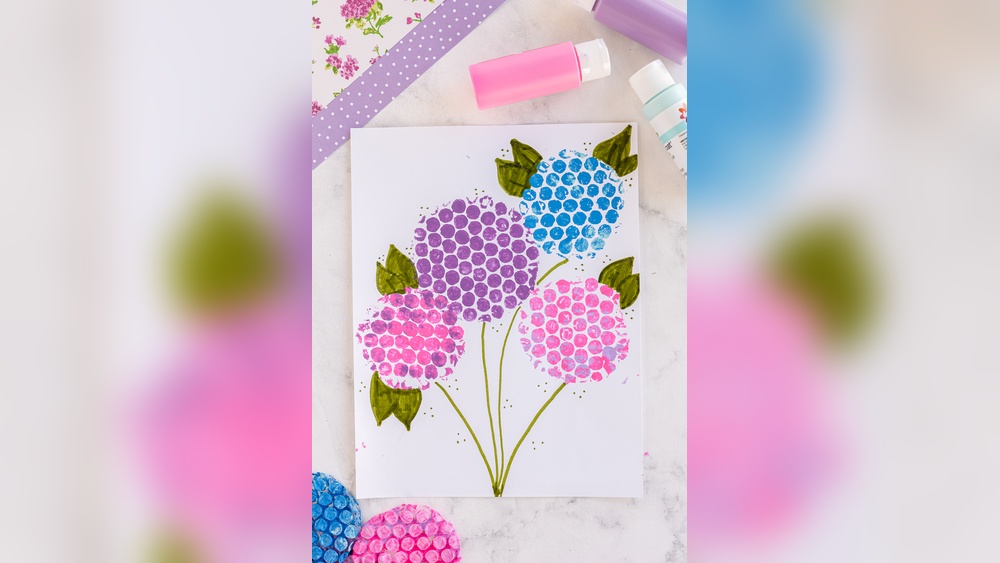
Cut small circles of bubble wrap to print flower centers, then add petals with fingerprints or paintbrushes. Combine with sponge-printed leaves; our guide to sponge painting crafts pairs perfectly with this project.
10. Abstract Texture Art
Older kids can create layered abstract prints by printing two or three colors at different angles, letting each layer dry first. Add contrasting lines with paint markers once dry for a gallery-worthy piece.
Bubble Wrap Crafts by Age
| Age | Best projects | Tips |
|---|---|---|
| 2 to 3 years | Stomp painting, big-bubble prints, finger-painting on bubbles | Use washable paint, large bubbles and one or two colors at a time |
| 4 to 5 years | Fish, grapes, pumpkins, snowy night | Pre-cut shapes; let them choose colors and press |
| 6 to 8 years | Honeycomb bees, turtles, snakes with rolling tubes | Encourage cutting their own shapes and adding details |
| 9 and up | Layered abstracts, fabric printing, greeting cards | Introduce acrylic craft paint and planning designs |
Tips for Crisp, Clear Prints
- Use less paint than you think. Too much paint fills the gaps between bubbles and creates blobs.
- Apply paint with a roller or foam brush. These give a thin, even layer better than a bristle brush.
- Press evenly. Smooth from the center out with flat hands. Avoid sliding the wrap, which smears the dots.
- Use thicker paper. Cardstock or watercolor paper resists buckling and absorbs paint evenly.
- Print onto dry paint for layers. Printing onto wet paint blends colors, which can be fun but blurs the pattern.
- Try both sides. The flat side of bubble wrap creates a softer, mottled texture.
Common Mistakes and Easy Fixes
- Blobby prints: wipe excess paint off the bubble wrap with a paper towel and try again.
- Faint prints: paint may have dried on the wrap. Work faster or add a few drops of water to the paint.
- Torn or wrinkled paper: switch to cardstock or reduce water in the paint.
- Muddy colors: keep colors in separate sections, or let the first print dry before adding another color.
- Bubble wrap sliding: hold one edge down with one hand while smoothing with the other.
Safety and Cleanup
Bubble wrap is plastic and can be a suffocation hazard for very young children, so always supervise toddlers closely and store it out of reach when the activity is over. Choose paints labeled non-toxic and suitable for children’s use. Wash bubble wrap pieces in warm, soapy water if you want to reuse them, or let paint dry and recycle according to local guidelines. Washable paints usually come out of clothes with cold water if treated promptly; acrylic should be rinsed before it dries.
Ways to Extend the Activity
- Science tie-in: talk about why bees build hexagons or how fish scales protect fish.
- Math tie-in: count rows of dots, compare bubble sizes or estimate how many dots are in a print.
- Gift making: fold prints into greeting cards, wrapping paper or bookmarks.
- Mixed techniques: combine with other kid-friendly methods like scratch art painting for a multi-day art week.
Setting Up a Low-Stress Painting Station
A little preparation keeps bubble wrap painting fun for adults as well as kids.
- Cover a large area. A plastic tablecloth or an old shower curtain catches drips and wipes clean.
- Pre-cut everything. Have bubble wrap shapes and paper ready before paint comes out, since little artists lose patience while waiting.
- Use shallow trays. A thin pool of paint on a plate is easier to control than a deep cup.
- Give each color its own applicator. Separate foam brushes keep colors from turning brown.
- Prepare a drying zone. A baking rack, a clothesline with clips or a clear floor area keeps wet prints safe.
- Keep wipes within reach. Quick cleanup of hands prevents paint from spreading to clean paper.
Plan for 30 to 45 minutes of active painting with preschoolers, and longer with older kids who are building detailed projects.
FAQs
What paint works best for bubble wrap painting?
Washable tempera is ideal for young kids because it cleans up easily. Acrylic craft paint gives brighter, more permanent results for older children and keepsake projects.
What age is bubble wrap painting good for?
Children as young as two can enjoy it with close supervision and large bubbles. Older kids can try more detailed shapes, rolling methods and layered designs.
Why are my bubble wrap prints blurry?
Usually too much paint or sliding the wrap while pressing. Apply a thin coat with a roller and press straight down without moving the plastic.
Can you do bubble wrap painting on fabric?
Yes. Use fabric paint or acrylic mixed with a fabric medium, place cardboard inside the shirt or bag, and follow the paint’s heat-setting or curing instructions.
Can bubble wrap be reused for painting?
Yes. Rinse it in warm, soapy water before the paint dries, then let it air dry. Acrylic is harder to remove once it has dried.
What paper is best for bubble wrap prints?
Cardstock, construction paper or watercolor paper. They’re sturdy enough to handle wet paint without tearing or curling much.
Final Thoughts
Bubble wrap painting crafts turn packing material into a texture tool that kids of all ages can master quickly. Keep the paint thin, the paper sturdy and the projects playful, and you’ll end up with bees, fish, snakes and snowy skies worth displaying. When you’re ready to add brighter colors to your craft corner, explore our picks for the top craft paint sets for family art time.