
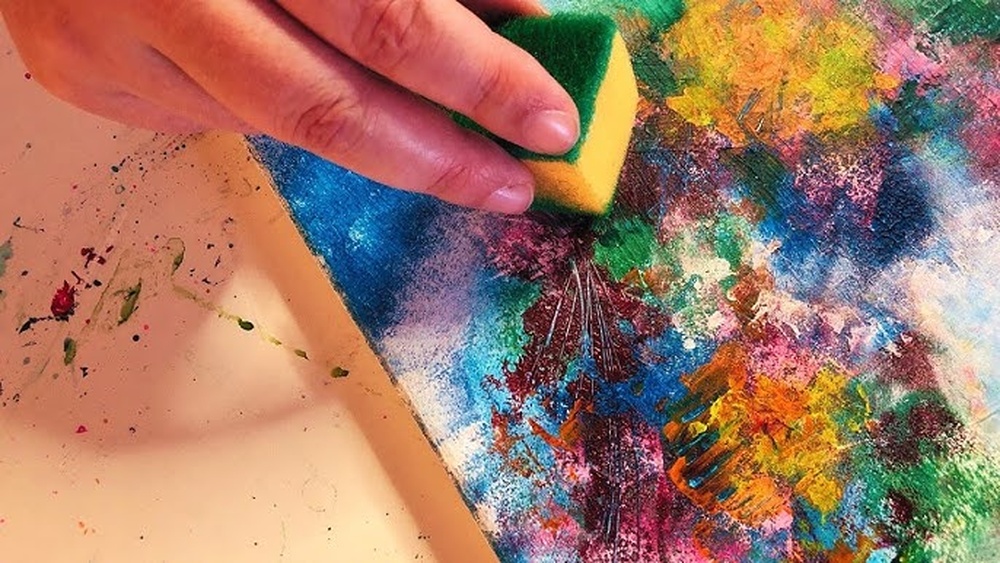
Quick answer: Popular painting ideas using sponge techniques include sponged sunset skies, foliage and tree canopies, ocean foam and waves, galaxy and night skies, textured abstract backgrounds, stamped geometric shapes, sponge-printed flowers and snowy winter scenes. Use a damp (not wet) natural sea sponge for organic textures and a cut kitchen or makeup sponge for clean shapes, load lightly, blot once on scrap paper, and build color in layers from dark to light.
A sponge is one of the cheapest painting tools you can buy, and one of the most versatile. It creates texture a brush cannot easily imitate: leafy masses, sea spray, stone, stars and soft gradients. It is also forgiving, which makes it a favorite for beginners, kids and anyone who wants quick, satisfying results.
This guide explains the main sponge types and techniques, then walks through sixteen project ideas with tips for each. Sponge work is just one of many approaches worth adding to your skill set; our overview of the best painting techniques covers other methods that pair well with it.
Sponge Types and What Each Does
| Sponge | Texture | Best for |
|---|---|---|
| Natural sea sponge | Irregular, organic holes | Foliage, clouds, stone, sea foam |
| Synthetic kitchen sponge | Even, fine texture | Backgrounds, cut shapes, stamps |
| Makeup wedge | Smooth, dense | Soft blending, gradients, stencil work |
| Foam pouncer (round, on a stick) | Clean circles | Polka dots, flower centers, bubbles |
| Sponge brush (foam brush) | Smooth, flat strokes | Even base coats, sharp edges |
| Torn sponge pieces | Random, jagged edges | Rocks, bark, rough textures |
Core Sponge Painting Techniques
Dabbing (stippling)
Press the sponge straight down and lift straight up. Rotate your wrist between dabs so the pattern does not repeat. This is the basic technique for foliage, clouds and texture.
Dragging
Pull the sponge across the surface lightly for streaky effects such as grass, wood grain or rain.
Blending
Use a makeup sponge to blend two wet colors with small circular or bouncing motions. Ideal for skies and soft gradients.
Stamping
Cut a synthetic sponge into a shape (heart, star, square, leaf), load it with paint and press it onto the surface.
Lifting
Press a clean, damp sponge into wet paint, especially watercolor, to lift color and create soft light areas, such as clouds or highlights.
Layering
Sponge darker colors first, let them dry slightly, then sponge lighter colors on top. Layering creates depth in foliage and stone.
Loading the Sponge Correctly
- Dampen the sponge with water and wring it out completely. A damp sponge absorbs and releases paint more evenly than a dry one.
- Pour a small amount of paint onto a palette or plate.
- Dab the sponge into the paint lightly; do not soak it.
- Blot once on scrap paper or a paper towel to remove excess.
- Test on scrap before touching your painting.
Too much paint fills the sponge’s holes and leaves flat blobs instead of texture. Too much water makes the paint run.
16 Painting Ideas Using Sponge Techniques
Landscapes and nature
1. Sponged sunset sky. Blend yellow, orange, pink and purple with a makeup sponge in horizontal bands. Add a dark silhouette of trees or hills with a brush.
2. Tree canopy and foliage. Paint trunks and branches with a brush, then dab foliage with a natural sponge in dark green first, mid-green next and a touch of yellow-green on the sunlit side. This is one of the most useful sponge skills for landscape painters.
3. Autumn trees. The same method as above, but with burnt sienna, orange, red and gold. Sponge a few loose dabs on the ground beneath for fallen leaves.
4. Ocean waves and sea foam. Paint the water with a brush, then dab white with a natural sponge along wave crests and where waves meet the shore. Keep the foam irregular.
5. Snowy winter scene. On a blue or gray background, dab white for snow-covered trees and ground. A light flick of white from a toothbrush finishes falling snow.
6. Rocky cliffs or stone walls. Torn sponge pieces dabbed in gray, brown and ochre build convincing rock texture. Add dark cracks with a fine brush afterward.
Sky and space
7. Galaxy painting. Start with a black or deep navy background. Sponge patches of purple, magenta, teal and blue, blending edges softly. Add white sponged clouds of stars and flick tiny white specks for distant stars.
8. Cloudy sky. Dab white with a natural sponge onto a blue background, keeping cloud bottoms flatter and tops puffier. Add a light gray on the underside for volume.
9. Northern lights. Drag a makeup sponge upward in vertical streaks of green and purple over a dark sky, then add a silhouetted pine forest at the bottom.
Abstract and decorative
10. Textured abstract background. Sponge three or four colors in overlapping layers, letting each partly dry. The result works as a finished abstract or as a background for other painting.
11. Geometric stamp pattern. Cut kitchen sponges into triangles, squares or hexagons and stamp a repeating pattern. It is a great project for wrapping paper or wall art.
12. Ombre canvas. Blend from dark to light across the canvas with a makeup sponge for a smooth gradient that makes an excellent modern piece on its own.
13. Faux marble or stone finish. Sponge a base color, then lightly dab a second, lighter color and add thin veins with a fine brush or feather. It works on canvas, frames and small furniture.
Abstract sponge work combines well with other process techniques. For more ideas, our guide to DIY abstract art techniques covers pouring, scraping and layering methods that pair with sponged textures.
Kids and craft projects
14. Sponge-stamped flowers. Cut circles and petal shapes from sponges and stamp a bouquet. Use a round pouncer for flower centers.
15. Hot air balloons. Stamp oval balloon shapes with a cut sponge, then add baskets and strings with a marker.
16. Upcycled pots and jars. Sponge-paint terracotta pots or glass jars with textured patterns. Seal them if they will be used outdoors.
Step-by-Step: Sponged Tree in a Landscape
- Paint the background. A sky gradient and distant hills using a brush or makeup sponge. Let it dry.
- Paint the trunk and main branches with a small round brush in a dark brown.
- Tear a natural sponge to get an irregular edge.
- Dab the darkest green where the foliage is in shadow, usually the lower and inner parts of the canopy.
- Add a mid-green across most of the canopy, leaving some dark areas visible.
- Add a light yellow-green on the side facing the light, sparingly.
- Leave sky holes. Small gaps between clumps make the tree look natural.
- Add a shadow on the ground beneath with a dragged sponge in a dark green.
Sponge Techniques by Medium
| Medium | How sponges behave | Tips |
|---|---|---|
| Acrylic | Holds texture well; dries quickly | Work in small areas; keep the sponge damp so paint does not dry in it |
| Watercolor | Great for lifting and soft textures | Use lightly to avoid damaging paper; lift while the wash is still damp |
| Gouache | Opaque, matte texture | Thin slightly; it can become chalky if too thick |
| Oil | Slow drying, soft blending | Use natural sponges and clean with appropriate solvent or oil and soap |
| Wall paint (latex) | Decorative finishes on walls and furniture | Practice on a board; work in sections to keep edges consistent |
Cleaning and Caring for Sponges
- Rinse acrylic out immediately in warm water; dried acrylic stiffens the sponge permanently.
- Squeeze, do not twist, natural sponges, which can tear.
- Wash with mild soap, rinse thoroughly and let air dry fully before storing.
- Keep separate sponges for light and dark colors if possible.
- Replace sponges that become stiff or crumbly.
Sponge Painting Projects by Skill Level
Not sure where to begin? Use this progression. Each level adds one new skill on top of the last.
- Beginner: Stamped flowers, polka dots with a pouncer, and a simple cloudy sky. These teach loading and pressure.
- Developing: Sunset gradients and a single sponged tree. These add blending and layering values.
- Intermediate: Ocean waves with foam, galaxy paintings and rock textures. These combine sponge and brush work and require planning the order of layers.
- Advanced: Full landscapes where sponged foliage, dragged grass and lifted clouds coexist with smooth brushed areas, or faux finishes on furniture that need consistent texture over a large surface.
Combining Sponges With Other Tools
The most convincing paintings rarely rely on one tool. Sponge texture looks best when it contrasts with something smoother or sharper.
- Sponge plus round brush: Sponge the foliage mass, then paint a few individual leaves and twigs at the edges with a small round brush. The detail convinces the eye that the whole canopy is detailed.
- Sponge plus palette knife: Sponge stone texture, then scrape a few sharp edges and cracks with a knife for crisp planes.
- Sponge plus masking tape: Tape off geometric areas and sponge inside them. When the tape comes off, the textured shapes have perfectly clean edges.
- Sponge plus stencils: Dab paint through a stencil with a makeup wedge for soft, controlled shapes without bleeding.
- Sponge plus splatter: A toothbrush flick over sponged foliage or galaxy areas adds fine detail at a smaller scale than any sponge can.
Sponge Finishes on Walls and Furniture
Decorative sponge finishes were popular on interior walls for decades and are now more often used on smaller pieces such as accent panels, picture frames and side tables.
- Apply a solid base coat and let it dry fully.
- Mix a glaze by combining the second color with a glazing medium, following the product directions. Glaze stays workable longer than straight paint.
- Dab with a natural sponge in loose, overlapping clusters, rotating your hand constantly.
- Step back every few minutes to check for repeating patterns or heavy spots.
- Seal furniture with a clear water-based topcoat once dry.
Practice on a large piece of primed cardboard first. The texture changes noticeably with pressure, and a test board lets you settle on a look before committing.
Common Mistakes
- Overloading the sponge. Flat blobs replace texture. Always blot first.
- Repeating the same dab. Rotate your wrist and vary pressure to avoid a stamped pattern.
- Sponging everything. Combine sponge textures with smooth brush areas for contrast.
- Skipping value layers. One color of foliage looks flat. Work dark, mid and light.
- Using a dry sponge. A damp sponge releases paint more evenly.
Sponge painting is also a great way to give new life to old objects; our guide on upcycling old items with creative painting techniques shows sponged finishes on furniture and decor.
FAQs
What kind of sponge is best for painting?
Natural sea sponges create the most organic textures for foliage, clouds and stone. Synthetic kitchen sponges are best for cut shapes and stamps, and makeup sponges are ideal for smooth blending.
Should a sponge be wet or dry for painting?
Damp. Wet the sponge, then wring it out completely. A damp sponge picks up and releases paint more evenly than a dry one, while a soaking wet sponge makes paint run.
What can I paint with a sponge as a beginner?
Sunset skies, clouds, trees, galaxy scenes, sea foam and simple stamped flowers are all easy beginner projects that look impressive.
Can you sponge paint with watercolor?
Yes. Sponges work well for applying soft textures and especially for lifting color from damp washes to create clouds and highlights. Use gentle pressure to protect the paper.
How do you sponge paint trees?
Paint the trunk with a brush, then dab foliage with a natural sponge, starting with a dark green, adding a mid-green and finishing with light green on the sunlit side. Leave small gaps for sky.
What are good abstract painting techniques and ideas using sponges?
Layered textured backgrounds, ombre gradients, faux marble, and overlapping stamped shapes are all strong abstract options. Combining sponged areas with scraped or poured sections adds even more variety.
Final Thoughts
Sponges give you texture fast, and with a few rules (damp sponge, light load, blot first, layer dark to light) they produce results that look far more advanced than the effort involved. Try three projects from this list in different mediums to see how the textures change. When you are ready to combine sponge work with brush, knife and pouring methods, our guide to painting techniques every artist should try is a good next stop.


One Comment