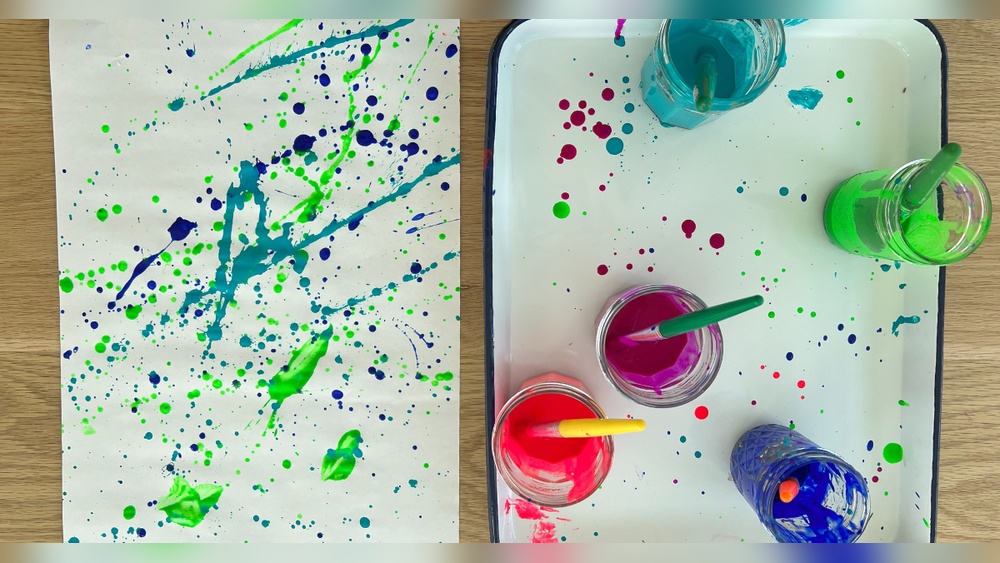
Quick answer: To do splatter painting with kids, thin washable tempera with water until it is like milk, lay a large sheet of paper on the ground or inside a big cardboard box, and let kids flick, tap or shake paint from a loaded brush onto the paper. A toothbrush gives a fine spray, a big brush tapped against a stick gives bold drops, and stencils or tape can keep shapes clean. Outdoors or a fully covered area works best because splatters travel.
Splatter painting is pure energy. Kids get to fling paint on purpose, and the result looks lively and bold no matter their age or skill. It is also a technique with a real art history; painters such as Jackson Pollock became known in the mid-20th century for dripping and pouring paint across large canvases on the floor.
This guide explains how to do splatter painting for kids without paint ending up on the ceiling: how to thin paint correctly, five splatter tools and the marks they make, ways to contain the mess, project ideas with stencils and tape, and age-by-age tips. For paint suited to this kind of energetic project, see our guide to the best paints for kids, which compares washable, nontoxic options.
Where to Do Splatter Painting
The location decides how much cleanup you face. In order of easiest to hardest:
- Outdoors on grass: Lay paper on the lawn and weigh the corners with rocks. Stray splatters on grass usually wash away with the hose or the next rain when using washable paint.
- Driveway or patio: Works well, but cover the area beyond the paper with a drop cloth; porous concrete may hold color.
- Splatter box indoors: A large cardboard box (an appliance box is ideal) on its side, with paper taped inside the back and floor. Kids splatter into the box.
- Bathtub: Tape paper inside an empty tub and splatter away. Rinse the tub right after.
- Indoor table: Possible with a large drop cloth on the floor and walls nearby covered, but expect to clean further than you think.
Supplies
- Washable tempera in 3 to 5 bright colors
- Water and cups for thinning
- Splatter tools: old toothbrushes, large round brushes, flat brushes, a craft stick, a pipette or squeeze bottle
- Paper: large sheets of heavy paper, poster board or a roll of butcher paper. A canvas panel works for keepsakes.
- Cover-ups: old clothes or a full-length smock, plus closed-toe shoes outside
- Drop cloths or old shower curtains
- Optional: stencils, painter’s tape, leaves, stickers, safety glasses for older kids
Getting the Paint Consistency Right
Paint thickness controls everything in splatter art. Too thick and it clings to the brush; too thin and it leaves pale, watery dots.
| Consistency | Ratio (tempera : water) | Result |
|---|---|---|
| Thick (straight from bottle) | 1 : 0 | Big blobs; hard to flick |
| Cream | 2 : 1 | Bold drops and dashes; good for tap method |
| Milk | 1 : 1 | Best all-round splatter; fine and medium dots |
| Watery | 1 : 2 | Fine mist from toothbrush; pale color |
Mix each color in its own cup. Test by dipping a brush and flicking it over scrap paper; adjust with a splash of water or paint as needed.
How to Do Splatter Painting for Kids: Step by Step
- Dress for mess. Old clothes, hair tied back, closed shoes. Children may want safety glasses for the flick methods; at minimum, teach them to flick away from faces.
- Set up the paper. Lay it flat on the ground or in the splatter box. Tape or weigh down the corners.
- Prepare the paint. Thin each color in a cup and give each color its own tool.
- Demonstrate one method. Show a single technique, such as tapping a loaded brush against a stick, before handing over tools.
- Splatter from above. Stand over the paper and splatter downward. Holding the tool about 12 to 18 inches above the paper keeps drops on target.
- Layer colors. Start with lighter colors and add darker ones on top. Let a layer sit for a minute between colors if you want distinct dots rather than blends.
- Stop before it’s muddy. Three to four layers usually look best. More layers tend to turn into brown.
- Dry flat. Splatter paintings with thin paint usually dry within 30 to 60 minutes. Puddled areas take longer.
Splatter Techniques and the Marks They Make
Toothbrush flick
Dip an old toothbrush in thin paint, hold it bristles down over the paper and run a thumb or craft stick across the bristles toward you. The bristles spring back and throw a fine spray away from you. Best for stars, snow and soft speckled backgrounds.
Brush tap
Load a large round brush with cream-consistency paint. Hold a stick, ruler or second brush handle over the paper and tap the loaded brush against it. Drops of different sizes fall onto the paper. This is the most controllable method for children.
Wrist flick
Load a brush and flick the wrist sharply downward toward the paper. Produces streaks and long splashes. Needs space and works best outdoors.
Drip and drizzle
Let paint drip off a brush or stick while moving it across the paper, making lines and dribbles. This is the closest method to Pollock-style drip painting.
Squeeze and pipette
Use a pipette or squeeze bottle to squirt or drop paint from a height. Bigger drops make starburst splats when they land.
Splatter Painting Project Ideas
Stencil silhouettes
Place a paper stencil or cutout shape, such as a star, heart, butterfly or dinosaur, on the paper and splatter around it. Lift the stencil to reveal a clean shape outlined by splatters. Dinosaur silhouettes are a favorite; children can use the shapes from our dinosaur painting guide for kids as templates.
Leaf silhouettes
Arrange flat leaves on paper, splatter with fall colors, and remove the leaves. The leaf shapes stay white. This pairs naturally with leaf print painting for a nature-themed session.
Tape name art
Spell a child’s name in painter’s tape, splatter over the whole page, let dry and peel. The name appears in clean white letters.
Galaxy painting
On black paper, splatter white paint with a toothbrush for stars, then add a few larger dots of yellow and pale blue. Add round planet shapes with a sponge.
Fireworks
Drip a large drop of paint onto black paper and blow it outward with a straw, then splatter small dots of gold or white around it.
Splatter canvas keepsake
Use a small canvas panel and a limited color palette that matches a child’s room. These often look like finished modern art pieces.
Splatter T-shirts
For older kids, splatter fabric paint (or acrylic mixed with fabric medium) onto a plain cotton shirt with cardboard inside. Heat set according to the paint instructions.
Watercolor Painting Tips for Kids Who Want a Softer Splatter
Splattering watercolor instead of tempera gives a delicate, translucent effect with soft-edged dots. A few tips:
- Use liquid watercolor or a wet pan. Wet the pan well so the brush picks up strong color.
- Use watercolor paper. Heavy watercolor paper handles water without buckling much.
- Try splattering onto damp paper. Dots soften and bloom into flower-like shapes.
- Splatter onto dry paper for crisper, more defined dots.
- Combine with a wash. Paint a light background wash, let it dry, then splatter darker colors over it.
A Little Art History for Older Kids
Children around eight and older often enjoy hearing that splatter and drip painting is a serious art form. In the late 1940s, Jackson Pollock laid huge canvases on the floor of his studio and dripped, poured and flung paint from sticks and hardened brushes, moving around the canvas as he worked. Critics described the approach as “action painting” because the movement of the artist’s body was part of the work.
Kids can try the same idea on a big sheet of paper on the ground: walk around all four sides, dripping paint from a stick, and notice how the painting changes when they move quickly versus slowly. Afterward, talk about which areas they like best and why. There is no right answer, which is exactly the point of this kind of abstract art.
Hosting a Splatter Painting Session for a Group
Splatter painting is a popular party or summer camp activity because it suits mixed ages and needs no instruction beyond safety rules.
- Go outside. A lawn or a fenced yard is ideal.
- Hang paper on a fence or clothesline with clothespins so several children can splatter side by side, or lay a long paper roll on the grass.
- Pre-mix paint in squeeze bottles so it is ready to go and easy to refill.
- Set a splatter zone with tape or a rope on the ground and ask children to stand behind it.
- Give everyone a painting shirt. Plain white T-shirts double as wearable art and party favors.
- Have a hose or buckets of water ready for hands, faces and shoes before everyone heads indoors.
Splatter Painting by Age
| Age | Best methods | Tips |
|---|---|---|
| 2 to 3 | Brush tap, dripping, squeeze bottles | Outdoors or bathtub only; adult nearby |
| 4 to 5 | Brush tap, toothbrush with help, stencils | Give each color its own tool |
| 6 to 8 | Toothbrush flick, wrist flick, tape art | Talk about color layering and planning |
| 9 and up | Drip painting, canvas, fabric | Introduce artists who used drip and splatter techniques |
Keeping the Mess Under Control
- Use a splatter box indoors. Three walls of cardboard catch most stray drops.
- Splatter downward. Flicking sideways is what sends paint across the room.
- Thin paint flies further. If paint is going everywhere, thicken it slightly.
- Small tools for small spaces. Toothbrushes splatter less widely than big brushes.
- Keep wipes and a bucket of water nearby for hands and spills.
Common Problems and Fixes
| Problem | Cause | Fix |
|---|---|---|
| Paint won’t flick off the brush | Paint too thick | Thin to milk consistency |
| Dots are pale | Paint too thin | Add more paint to the mix |
| Everything turned brown | Too many colors or layers while wet | Limit to 3 or 4 colors; let layers sit briefly |
| Paper buckles | Too much wet paint on thin paper | Use poster board or watercolor paper |
| Stencil edges are blurry | Stencil lifted or paint ran under it | Tape or weigh the stencil down; splatter from above |
Cleanup
Rinse brushes and toothbrushes in warm water straight away. Hose off outdoor areas or wipe the splatter box and fold it for storage. Wash hands and arms with warm soapy water. For clothing, rinse washable paint from the back of the fabric with cold water and launder before it dries.
FAQs
What paint is best for splatter painting with kids?
Washable tempera thinned with water is the usual choice. It splatters well, has bright color and washes off skin and most surfaces. Watercolor gives a softer effect, and acrylic is better kept for older kids and canvas projects.
How do you thin paint for splatter painting?
Mix about equal parts tempera and water for an all-round milk-like consistency. Use less water for bold drops and more water for a fine toothbrush mist.
How do I splatter paint indoors without a mess?
Use a large cardboard box on its side as a splatter booth, cover the floor with a drop cloth, keep paint slightly thicker and teach kids to splatter downward rather than sideways.
What age is splatter painting good for?
Toddlers around two can try tapping and dripping outdoors with supervision. Children four and up can use toothbrushes and stencils, and older kids can try drip painting and fabric projects.
Can you splatter paint with watercolors?
Yes. Use liquid watercolor or well-wetted pans on watercolor paper. Splatter onto damp paper for soft blooms or dry paper for sharper dots.
How do you use a toothbrush for splatter painting?
Dip the toothbrush in thin paint, hold it bristles down over the paper and drag a thumb or craft stick across the bristles toward you so the spray flies away from you onto the paper.
Final Thoughts
Splatter painting lets children make bold, energetic art in minutes, and with a little planning the mess stays manageable. Thin the paint, choose a contained space, try different tools, and add stencils or tape for shapes. Before your next session, look through our roundup of washable and nontoxic paints for kids to pick colors that splatter well and clean up easily.