Quick answer: Easy acrylic painting designs are simple, repeatable motifs that look polished without advanced skill: silhouettes against a gradient sky, dot mandalas, geometric tape patterns, single-stroke flowers, leaf and botanical outlines, wave and line patterns, and paper collage under acrylic. They work on canvas, rocks, glass, wood and paper. Choose a design that relies on shape and contrast rather than detail, sketch it lightly, block in flat color, and finish with a few crisp highlights or outlines.
A design is different from a painting of a scene. It is a motif, a pattern or a graphic arrangement that can be repeated, scaled and moved between surfaces. That makes design-based projects a smart shortcut for beginners: master one motif and you can paint it on a canvas, a pebble, a jar and a greeting card.
This guide groups easy acrylic painting designs by surface and style, explains how to adapt each one, and shows how to turn simple shapes into something that looks finished. You will also find notes on prepping rocks and glass, adding paper elements, and sealing your work.
Principles Behind Easy Acrylic Painting Designs
Simple designs look good for predictable reasons. Keeping these in mind lets you invent your own instead of copying.
- Strong silhouette: A shape that reads instantly from a distance, such as a leaf, a moon or a mountain, needs no interior detail.
- High contrast: Light against dark, or a bright color against a neutral, makes even basic shapes pop.
- Repetition: Repeating one element in rows, rings or grids creates rhythm and hides small inconsistencies.
- Limited palette: Two or three colors plus white keep a design cohesive.
- Clean edges where it matters: Crisp outlines on the focal motif, softer edges elsewhere.
Opaque, well-pigmented paint makes flat graphic designs much easier, because you get solid coverage in fewer coats. Our comparison of reliable acrylic paint brands highlights which lines cover well for this kind of work.
Easy Canvas Designs
Silhouette Over a Gradient
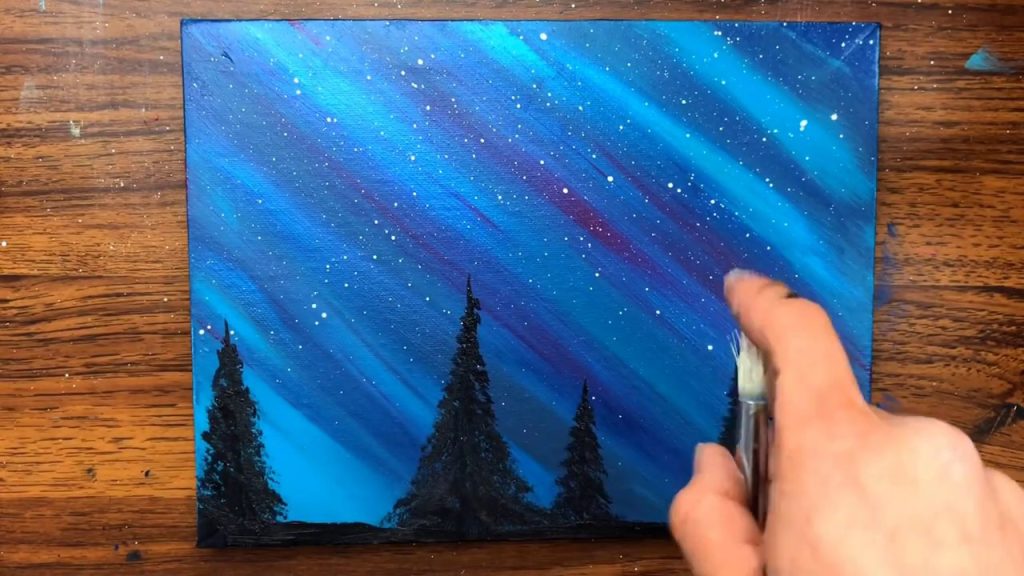
Blend two or three colors across the canvas, for example teal to navy or peach to lavender. Once dry, paint a solid black or dark shape on top: a tree, a city skyline, a deer, a couple holding hands or a mountain range. The gradient provides the color; the silhouette provides the story.
Moon Phases
Paint a dark background and trace a row of seven circles using a coin or bottle cap. Fill them to show the phases of the moon, from a thin crescent to full and back. A dry-brushed gray texture inside each circle suggests craters.
Single-Stroke Botanicals
Use a round brush and press-and-lift strokes to make leaves along a curved stem. Repeat in varying sizes for a fern, eucalyptus or olive branch. Two greens and a white background look calm and modern.
Wave and Line Patterns
Fill a canvas with parallel wavy lines in alternating colors, or concentric arches in earth tones, a style often seen in boho decor. A thin outline in white or gold between bands adds a finished look.
Geometric Tape Design
Lay painter’s tape in a pattern of triangles, chevrons or a mountain outline. Paint each section a different shade, then remove the tape to reveal clean lines. This is one of the most dependable designs for a polished result on the first try.
How to Paint Flowers With Acrylics Easy: Three Simple Motifs
| Motif | Brush | Key stroke | Time |
|---|---|---|---|
| Dot daisies | Brush handle, toothpick | Ring of dots around a center | 10 minutes |
| Five-petal blossoms | Filbert | Press and pull outward from center | 15 minutes |
| Tulips | Small flat or round | Three overlapping U-shapes on a stem | 15 minutes |
For each, paint the stems and leaves first, let them dry, then add petals so the colors stay clean. A tiny highlight of white on one side of each petal suggests a light source and adds depth.
Easy Designs for Rock Painting
Rocks are small, cheap and satisfying, which makes them perfect for practicing designs.
Prepping Rocks
- Choose smooth, flat stones. River rocks and landscaping pebbles are common choices.
- Scrub with soapy water and let them dry completely.
- Apply a base coat of white or a light color. This makes later colors brighter, especially on dark stone.
- Let the base coat dry fully before adding designs.
Rock Painting Designs Easy Enough for a First Try
- Dot mandalas: Start with a center dot and build rings of progressively smaller dots outward, using brush handles, toothpicks or pencil erasers. Alternate colors by ring.
- Ladybugs and bees: Base coat red or yellow, then add black details. The rock shape already suggests a body.
- Cactus or succulent: A green shape with white dashes for spines on a terracotta or sand base.
- Hearts and words: Short positive words or initials in a paint pen, with a simple heart or star.
- Night sky: Dark blue base, white splatter and a crescent moon.
- Fruit slices: Watermelon, lemon or orange cross-sections look great on round stones.
Sealing Rocks
Dried acrylic is water-resistant, but rocks left outdoors face rain, sun and handling. A clear sealer suited to outdoor use helps the design last. Apply in thin coats and let each dry. Test a small rock first, because some sealers can make certain paint pens smear.
Easy Glass Painting Designs for Beginners
Glass is smooth and non-porous, so standard acrylic does not grip it well. That affects both the designs you choose and how you prep.
Prepping Glass
- Wash with soapy water, dry, then wipe with rubbing alcohol to remove oils and fingerprints.
- Avoid touching the painting area afterward.
- Use paint labeled for glass, or mix standard acrylic with a glass and tile medium per the medium’s instructions.
- Some glass paints and mediums recommend curing in the oven; follow the label exactly if so.
Designs That Suit Glass
- Polka dots and confetti: Easy to apply and they look intentional even if spacing varies.
- Simple vines: A curving line with small leaves wrapping around a jar or vase.
- Stripes: Rubber bands around a glass make guides for horizontal stripes.
- Faux stained glass: Outline shapes with a dark line, then fill with translucent color. Thin acrylic with glazing medium for a see-through effect.
- Seasonal motifs: Snowflakes, pumpkins or hearts on windows or candle holders.
Keep painted designs on the outside of drinking glasses and away from the rim, since most craft paints are not intended for food or mouth contact. Hand wash painted glass gently unless the product label says otherwise.
How to Add Paper Designs in Acrylic
Mixed-media designs combine painted areas with paper: printed napkins, magazine cutouts, sheet music, maps, tissue paper or your own drawings. Acrylic medium acts as both glue and sealant.
- Paint a background and let it dry.
- Cut or tear paper shapes. Torn edges blend more softly; cut edges look graphic.
- Brush a thin layer of matte or gloss medium onto the canvas where the paper will go.
- Press the paper down and smooth from the center outward with a soft brush or your fingers to push out air bubbles.
- Coat the top with another thin layer of medium.
- Let it dry, then paint over or around the paper to integrate it. Glaze a transparent color over everything to unify the design.
Thin papers like tissue and napkins wrinkle easily; that texture can be a feature. Thicker papers may curl, so press them under a flat weight while drying if needed. Ink-jet prints may smear when wet; testing a scrap first avoids surprises.
Acrylic inks pair well with paper collage for line work and translucent washes. For a look at how one ink range behaves, see the Daler-Rowney acrylic ink review.
Easy Designs on Wood
Wood slices, plaques and small boxes make attractive design surfaces.
- Sand lightly and wipe off the dust.
- Seal with a primer or gesso if you want bright, even color, or leave the grain visible for a rustic look.
- Designs that suit wood: mountain scenes in a circle, simple florals, initials with leaves, geometric borders and folk-art dots.
- Finish with a clear sealer if the piece will be handled.
Easy Designs on Paper, Cards and Bookmarks
Heavy paper is the cheapest place to test a motif before putting it on canvas or a gift. Mixed-media paper or watercolor paper around 140 lb (300 gsm) handles acrylic without buckling much; lighter sketch paper tends to curl.
- Greeting cards: Fold the paper first, then paint a single motif on the front, such as a balloon, a cactus or three tulips. Leave generous white space.
- Bookmarks: Tape the edges of a 2×6 inch strip, paint a vertical gradient with a tiny silhouette at the bottom, and peel the tape for a crisp border.
- Gift tags: Repeat one small pattern, dots, stripes or tiny leaves, across a sheet, then cut it into tags once dry.
- Pattern swatches: Fill a grid of 2-inch squares with different patterns to build a personal motif library you can reuse later.
Painting on paper also shows how many coats a color needs, which helps you plan projects on rocks and wood where extra coats add drying time.
How to Paint a Sunset With Acrylics Easy as a Design Element
Sunsets work as a backdrop for many designs. Paint a circular sunset inside a traced circle on a white canvas for a modern, framed look. Blend yellow at the bottom of the circle through orange and pink to purple at the top, then add a black silhouette of palm trees, hills or birds across the lower third of the circle. The white border around the circle makes the design look crisp and intentional.
Making Simple Designs Look Finished
- Add outlines selectively. A fine dark or white line around the main motif sharpens the design.
- Add highlights last. Small touches of white on one side of shapes suggest light and volume.
- Clean up edges. Use a small flat brush and the background color to tidy wobbly outlines.
- Paint the canvas sides. Extending the background around the edges makes stretched canvas ready to hang without a frame.
- Varnish for even sheen. Matte and glossy areas look patchy; a final varnish unifies them once the paint has cured.
Acrylic Paint Hacks for Beginners Easy Enough to Use Today
- Trace with chalk: Chalk lines wipe away with a damp cloth once paint dries, unlike graphite, which can show through light colors.
- Use household objects as stencils: Lids, cookie cutters, leaves and lace make quick patterns.
- Paint pens for detail: Acrylic paint markers make lettering and fine lines much easier than a tiny brush.
- Dot tools from the junk drawer: Pencil erasers, nail heads, cotton swabs and dowels make consistent dots.
- Practice on paper first: Paint the motif three times on scrap before committing to the final surface.
Common Design Mistakes
| Mistake | What happens | Fix |
|---|---|---|
| Too many motifs | Design looks busy | Choose one main motif and one supporting pattern |
| Skipping base coat on rocks | Colors look dull | Base coat white first |
| Standard acrylic on glass without medium | Peeling and scratching | Clean with alcohol, use glass paint or medium |
| Wet paper wrinkling | Bubbles and creases | Use thin layers of medium and smooth from center |
| Outlining before paint dries | Smudged lines | Wait until fully dry to the touch |
FAQs
What are some easy acrylic painting designs for beginners?
Silhouettes over gradients, dot mandalas, geometric tape patterns, moon phases, single-stroke botanicals and simple flowers are all easy and look polished with minimal practice.
What rock painting designs are easy for kids and beginners?
Ladybugs, bees, hearts, fruit slices, simple faces and dot patterns are easy, because the rock’s shape does part of the work.
Can I use regular acrylic paint for glass painting designs?
You can, but adhesion is weak on bare glass. Clean the glass with alcohol and use a glass and tile medium or a paint made for glass for better durability.
How do you add paper designs in acrylic paintings?
Glue paper to a dried painted surface with matte or gloss acrylic medium, smooth it from the center, coat over it with medium, and paint around or over it once dry.
Where can I find easy acrylic painting tutorials for designs?
Start with simple motif-based projects like those above, then practice each motif on scrap paper. Tutorials are easiest to follow once you can confidently make dots, lines and press-and-lift strokes.
Do painted rocks and designs need varnish?
Indoor canvases can go unvarnished, but rocks, glass and wood that will be handled or kept outdoors benefit from a clear sealer suited to the surface.
Final Thoughts
The best easy acrylic painting designs rely on bold shapes, a limited palette and clean contrast. Pick one motif, practice it a few times, then carry it across canvas, rocks, glass and wood. Repetition turns simple designs into a recognizable personal style.
Opaque, vibrant paint makes graphic designs much easier to execute. See our full review of the best acrylic paints for crisp, colorful designs to choose a set that covers well on every surface.