PaintingProGuide is reader-supported. When you buy through links on this page we may earn an affiliate commission at no extra cost to you.
Quick answer: The standard fabric for painting canvas is cotton duck. For stretching and priming your own, 10 oz is the sweet spot, and the PHOENIX 10 oz unprimed duck, 72 inches wide gives you room for large canvases. For smaller projects, the Barcelonetta 10 oz natural duck by the yard comes in four weights. If you would rather skip gesso, the Kinlop double primed cotton roll is ready to stretch and paint.
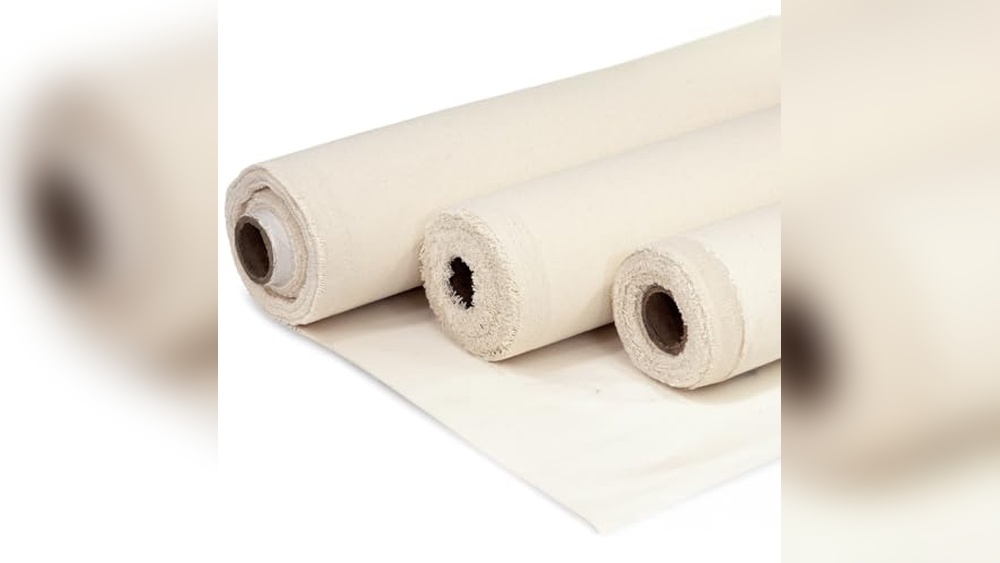
The best fabric for painting canvas is cotton duck: a tightly woven, plain-weave cotton that is strong enough to stretch drum-tight, takes gesso evenly and is inexpensive enough to buy by the yard. Linen is the traditional premium alternative, but most painters who stretch their own canvas start with cotton duck because it is forgiving, widely available and a fraction of the cost.
This guide explains how to choose canvas fabric by weight and width, whether to buy primed or unprimed, and how much fabric you need. Then we compare five fabrics on Amazon, from 7 oz craft duck to 10 oz wide-width artist duck and a ready-primed roll, plus a pre-stretched pack for anyone who decides stretching is not for them. We also explain which “canvas” fabrics to avoid for painting.
Our Top Picks at a Glance
- PHOENIX Unprimed 10 oz Canvas, 72 in x 2 yd — Best wide artist duck for large canvases
- Barcelonetta 10 oz Natural Cotton Duck, 62 in, by the Yard — Best for choosing your weight
- SOTISI 10 oz Natural Cotton Duck, 62 in — Best budget 10 oz duck
- GravitationOnline 7 oz Cotton Duck, 63 in x 3 yd — Best lightweight duck for small canvases
- Kinlop 36 in x 10 ft Double Primed Cotton Roll — Best ready-primed fabric
- GOTIDEAL 14 Pcs Stretched Canvas — Best if you would rather not stretch
| Product | Best For | Key Spec | Key Strength | Price Tier |
|---|---|---|---|---|
| PHOENIX Unprimed 10 oz | Large custom canvases | 72 in wide, 2 yd, 10 oz unprimed duck | Widest fabric here | $$ |
| Barcelonetta 10 oz | Choosing weight | 62 in wide, sold per yard; 4, 7, 10, 12 oz options | Weight flexibility | $ |
| SOTISI 10 oz | Budget 10 oz | 62 in wide, 1 yd (other lengths) | Low cost | $ |
| GravitationOnline 7 oz | Small canvases | 63 in wide x 3 yd, 100% cotton | Lighter, easier to stretch | $$ |
| Kinlop Double Primed Roll | Skip priming | 36 in x 10 ft, double primed cotton | Ready to stretch and paint | $$ |
| GOTIDEAL 14 Stretched | No stretching | 14 canvases, 4×4 to 11×14 | Ready to paint | $$ |
How We Chose
These picks are based on the Amazon listing details and specifications checked in October 2026: fiber content, fabric weight, width, length, and priming. We compared them with what painters need to stretch and prime their own canvases and considered how widely each product is reviewed by Amazon buyers. We have not stretched these fabrics ourselves; weight and fiber statements are the sellers’. We excluded canvas drop cloths, which are cotton-polyester blends made for floor protection in house painting, from our picks.
- Fiber: 100% cotton duck preferred.
- Weight: 7 oz for small work, 10 to 12 oz for medium and large canvases.
- Width: wider fabric allows bigger canvases and fewer offcuts.
- Priming: unprimed for custom grounds; primed to save time.
- Value: cost per usable square foot.
Cotton Duck Weights Explained
- 4 oz: very light; for crafts and linings, too thin for most stretched paintings.
- 7 oz: light; good for small canvases up to about 16×20 and for practice.
- 10 oz: medium-heavy; the most popular artist weight, suitable for most sizes.
- 12 oz and up: heavy; best for large canvases that must resist sagging.
Weights refer roughly to ounces per square yard of unprimed fabric. Heavier fabric takes more effort to stretch but holds tension better, and it also feels firmer under a palette knife or a heavily loaded brush.
Best Fabric for Painting Canvas Reviewed
1. PHOENIX Unprimed Canvas Fabric by the Yard, 72 in x 2 yd — Best for Large Custom Canvases

A 72-inch width changes what you can make. With this PHOENIX fabric you can cut a canvas up to about 66 inches in one dimension once you allow for wrapping, or several medium canvases side by side. The fabric is 10 oz unprimed cotton duck, tightly woven for strength and a robust texture.
PHOENIX describes it as a raw foundation designed for artists to apply gesso or specialty primers, which means you control the ground: smooth for portraits, toothy for textured work, oil ground or acrylic gesso. It is also sold in 1, 3 and 6-yard lengths.
Best suited for: painters building large or custom-size canvases and anyone who wants to choose their own ground.
Key features:
- 72 inches wide x 2 yards
- 10 oz unprimed cotton duck
- Tightly woven
- Other lengths available
Pros:
- Very wide for large canvases
- Artist-focused 10 oz weight
- Prime it your way
Cons and limitations:
- Needs sizing or gesso before painting
- Large piece to store
Buying consideration: Lay the fabric on the stretcher frame and draw your cut lines with chalk, leaving 2 to 3 inches on every side for wrapping.
2. Barcelonetta Canvas Fabric, Cotton Duck, 10 oz Natural, 62 in Wide — Best for Choosing Your Weight

Barcelonetta sells its 100% cotton duck in four weights, 4, 7, 10 and 12 oz, which makes it easy to match fabric to the canvas size you are making. The 10 oz natural duck reviewed here is 62 inches wide and sold by the yard.
One quirk to note: multiple yards ship as separate pieces, so ordering 5 yards means five 1-yard pieces, not one continuous length. For several medium canvases that is fine; for one very long canvas, order the length you need as a single piece if the listing allows.
Best suited for: painters who want to try different weights, and medium-size canvases.
Key features:
- 100% cotton duck
- 10 oz natural (4, 7 and 12 oz options)
- 62 inches wide
- Sold per yard as individual pieces
Pros:
- Four weight options
- Natural, undyed cotton
- Sturdy tight weave
Cons and limitations:
- Multiple yards arrive as separate pieces
- Unprimed
Buying consideration: Try 7 oz for canvases under 16×20 and 10 or 12 oz for anything larger.
3. SOTISI Canvas Fabric, Premium 10 oz Natural Cotton Duck, 62 in Wide — Best for Budget 10 oz Duck
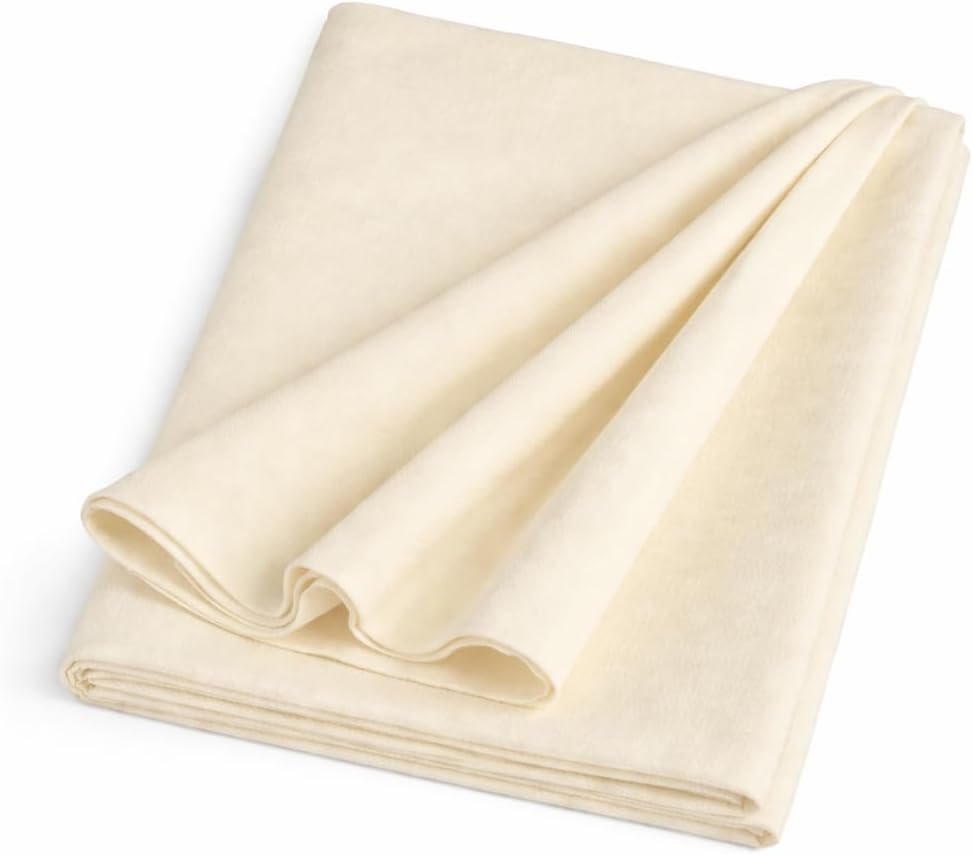
SOTISI offers 10 oz, 100% cotton duck at a low price, in widths of about 60 to 62 inches and lengths from 1 to 10 yards. One yard measures about 60 x 36 inches.
The listing emphasizes strength and abrasion resistance from the tight weave, which is what you want for a fabric that will be stretched and primed.
Best suited for: budget-conscious painters stretching small to medium canvases.
Key features:
- 10 oz, 100% cotton
- About 60 to 62 inches wide
- Sold in 1 to 10-yard lengths
Pros:
- Low cost
- Several length options
- Artist-friendly weight
Cons and limitations:
- Unprimed
- General-purpose fabric rather than art-specific
Buying consideration: Wash and dry a small test piece if you plan to size with rabbit-skin glue; it shows how much the fabric shrinks.
4. GravitationOnline 100% Natural Cotton 7 oz Canvas Fabric, 63 in x 3 yd — Best for Small Canvases

Lighter duck is easier to stretch with hand pliers and is perfectly adequate for small canvases. This 7 oz natural cotton duck from GravitationOnline comes as a 63-inch-wide, 3-yard piece, enough for many small and medium canvases.
The listing keeps it simple: 100% cotton, environmentally friendly natural fabric, hand-wash with mild soap. Prime it with two or three coats of acrylic gesso for a smooth, ready surface.
Best suited for: beginners learning to stretch canvas, and small to medium paintings.
Key features:
- 7 oz, 100% cotton duck
- 63 inches wide x 3 yards
- Natural, unprimed
Pros:
- Easy to stretch
- Generous length
- Inexpensive
Cons and limitations:
- Too light for large canvases
- Unprimed
Buying consideration: Use 7 oz for canvases up to about 16×20; above that, a heavier duck holds tension better.
5. Kinlop 36 Inch x 10 Feet Double Primed Cotton Canvas Roll — Best for Ready-Primed Fabric
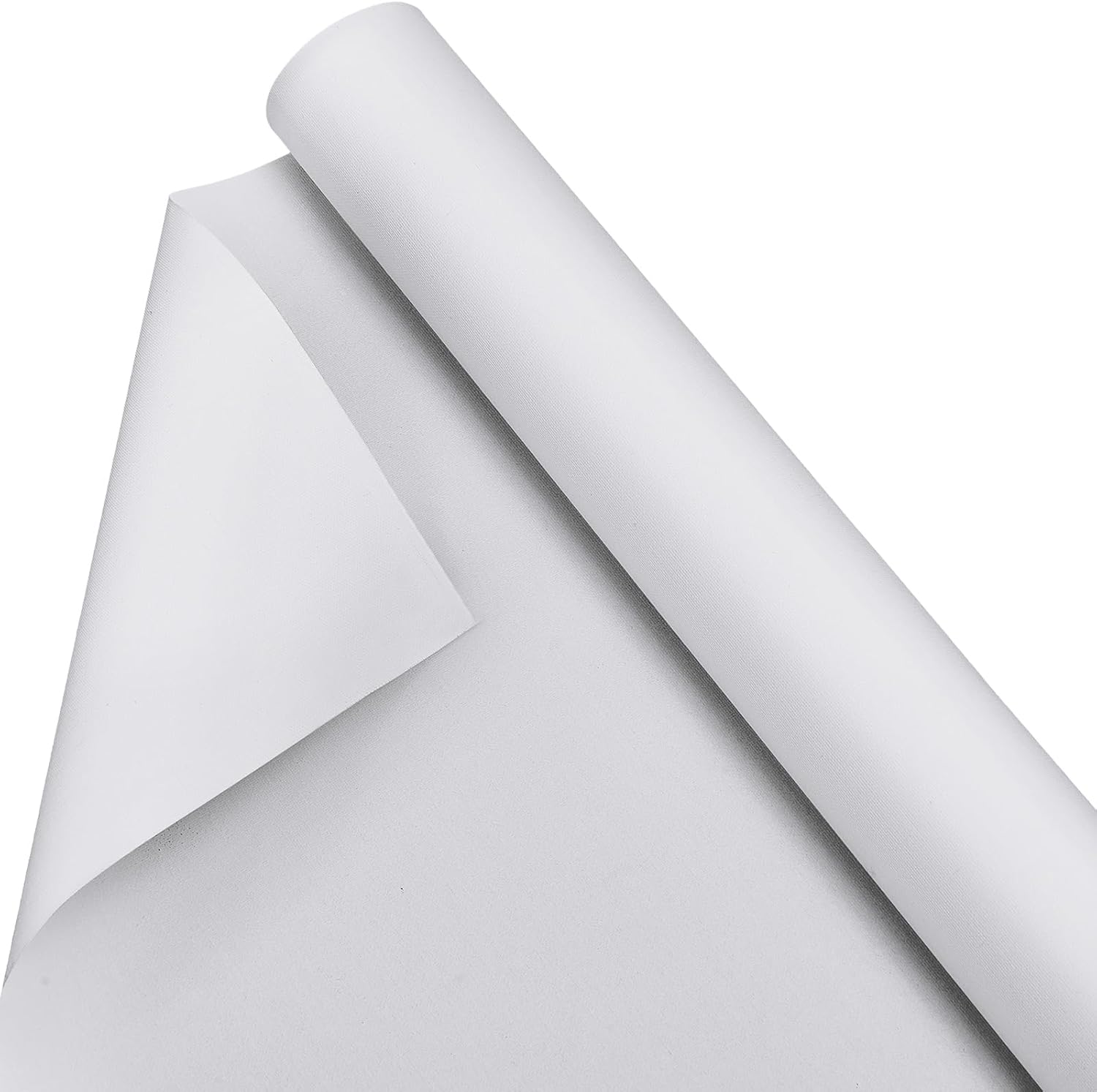
If stretching appeals but priming does not, a primed roll is the shortcut. Kinlop’s roll is about 36 inches wide and 10 feet long, made mainly of cotton and double primed in white.
Kinlop says it suits oil, acrylic, gouache and watercolor, though watercolor behaves very differently on gessoed canvas than on paper. The roll ships rolled; the maker suggests a light iron to relax it before stretching. It can also be cut and painted flat, then mounted later.
Best suited for: painters who want custom sizes without priming, and classrooms.
Key features:
- About 36 in x 10 ft
- Mainly cotton, double primed
- Cuts to any size
- For oil, acrylic and gouache
Pros:
- No priming needed
- Custom sizes
- Good for classes
Cons and limitations:
- Narrower than raw duck rolls
- “Mainly cotton” is less specific than 100% cotton
Buying consideration: Iron on the back, never the primed side, with a dry, low to medium setting.
6. GOTIDEAL 14 Pcs Multi Pack Stretched Canvas — Best for Skipping the Stretching
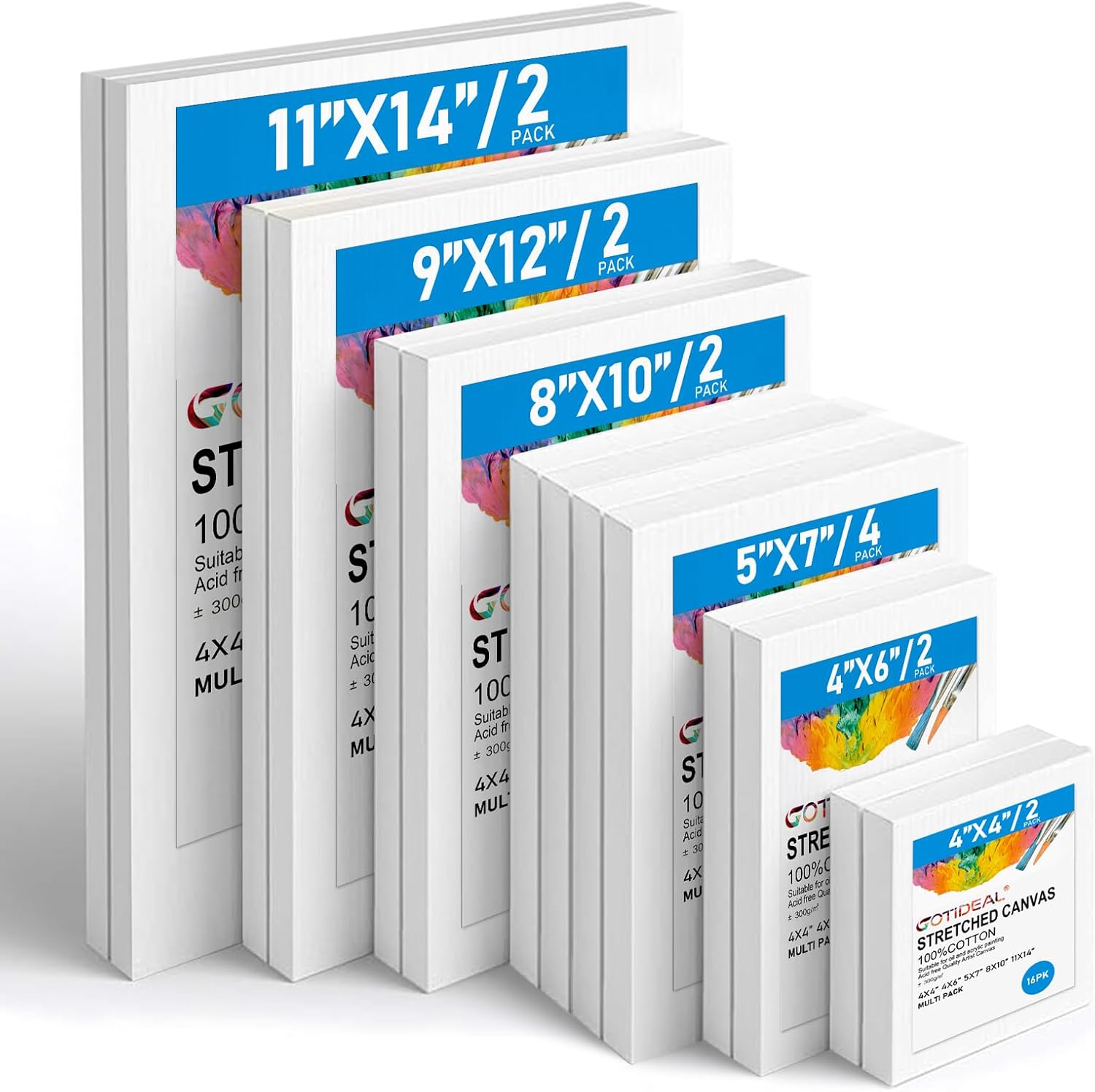
Stretching your own canvas is satisfying, but it is not for everyone. If you try it and decide you would rather paint, a pre-stretched pack is the simple answer. GOTIDEAL’s set includes 14 canvases from 4×4 to 11×14, 100% cotton with a medium grain and acid-free acrylic gesso, nailed to wood frames.
It is a useful comparison point: once you add up stretcher bars, staples and gesso, making your own small canvases is not always cheaper than a budget pre-stretched pack.
Best suited for: painters who want to start painting immediately.
Key features:
- 14 pre-stretched canvases
- 4×4, 5×7, 8×10, 11×14
- 100% cotton, medium grain
- Acid-free gesso
Pros:
- Ready to paint
- Inexpensive
- Range of small sizes
Cons and limitations:
- No large sizes
- Nailed construction
Buying consideration: Use budget pre-stretched canvases for small works and stretch your own for large or unusual sizes.
Buying Guide: How to Choose Fabric for Painting Canvas
Cotton duck, linen or blends
Cotton duck is the standard. Linen is stronger and more stable but much more expensive. Avoid cotton-polyester blends and drop cloths for artwork; they are made for protection, not stretching, and may not take gesso evenly.
Choose weight by size
7 oz for small canvases, 10 oz for most work, 12 oz or heavier for large canvases.
Width determines maximum size
Your canvas can be no wider than the fabric minus wrapping allowance. A 62-inch fabric yields canvases up to about 56 inches; a 72-inch fabric up to about 66 inches.
Primed or unprimed
Unprimed fabric lets you choose your ground and is cheaper. Primed fabric saves time but limits texture options.
How much to buy
Add 4 to 6 inches to each dimension of your canvas for wrapping. A 24×36 canvas needs a piece about 30×42 inches.
Natural or bleached
Most artist duck is sold natural, an off-white or light tan color. Bleached duck is whiter, but once you apply gesso the difference disappears. Natural duck is usually cheaper and avoids an extra chemical process, so it is the common choice for painters who prime their own canvas.
Tools you will need
Stretcher bars, a staple gun, canvas pliers, scissors, and gesso or size for unprimed fabric.
How to Stretch Canvas Fabric: Step by Step
- Build the frame. Push the stretcher bars together at the corners and check that the diagonals measure the same, which means the frame is square.
- Cut the fabric. Lay it on a clean surface, place the frame on top and cut with a 2 to 3-inch margin on every side.
- Anchor the centers. Fold the fabric over the back of one bar and staple at the center, then pull firmly across to the opposite bar and staple its center. Repeat for the other two sides.
- Work outward. Add staples a couple of inches apart, alternating sides and moving from the centers toward the corners, pulling evenly with canvas pliers.
- Fold the corners. Tuck each corner into a neat hospital fold and staple it flat.
- Tighten if needed. If the stretchers have keys, tap them into the corner slots to add tension.
Unprimed cotton tightens slightly as gesso dries, so stretch it firmly but do not overpull, especially on lighter 7 oz duck, or the frame can twist as the primer shrinks the fabric.
How to Prime Unprimed Canvas Fabric
- Stretch the fabric first; priming loose fabric can cause uneven shrinkage.
- Optional: apply a size coat, such as acrylic medium, to seal the fibers.
- Brush on a thin coat of acrylic gesso in one direction and let it dry.
- Apply a second coat at right angles; add a third for a smoother surface.
- Sand lightly between coats for a very smooth finish.
Prefer to paint on loose fabric instead? Our guide on how to paint on fabric canvas covers techniques for unstretched canvas. And once your canvas is ready, how to grid a canvas for painting helps you transfer a design accurately.
Common Mistakes to Avoid
- Using drop cloth for paintings. Blends and loose weaves are unreliable.
- Buying fabric too narrow. Allow for wrapping.
- Priming before stretching. Stretch first, then prime.
- Uneven tension. Staple from the centers outward in opposite pairs.
- Too light a weight for large canvases. Use 10 to 12 oz.
- Ironing the primed side. Iron only the back.
FAQs
What fabric is used for painting canvas?
Cotton duck is the most common. Linen is the traditional premium alternative. Both are stretched over wooden bars and primed before painting.
What weight cotton duck is best for painting?
10 oz is the most versatile. 7 oz suits small canvases; 12 oz or heavier suits large ones.
Can I use drop cloth as canvas?
Some people do for experiments, but drop cloths are often cotton-polyester blends made for floor protection. For artwork you want to keep, use 100% cotton duck or linen.
Do I need to prime canvas fabric?
Yes, unless you buy primed fabric. Gesso seals the fibers and gives paint a stable surface.
How much canvas fabric do I need?
The canvas size plus about 2 to 3 inches on every side for wrapping around the stretcher bars.
Is primed canvas fabric better than unprimed?
Primed saves time; unprimed lets you control the texture and ground. Both work.
Final Recommendation
For large canvases, the 72-inch PHOENIX 10 oz unprimed duck gives the most flexibility. Barcelonetta is the pick if you want to choose between 4, 7, 10 and 12 oz, and SOTISI is the budget 10 oz option. Lighter GravitationOnline 7 oz duck is ideal for learning to stretch small canvases, while the Kinlop double primed roll skips the gesso step. If stretching is not for you, a pre-stretched pack like GOTIDEAL’s gets you painting straight away.