
PaintingProGuide is reader-supported. When you buy through links on this page we may earn an affiliate commission at no extra cost to you.
Quick answer: If you want a canvas roll for painting that is ready to stretch and paint on the day it arrives, the Kinlop 48 in x 20 ft double primed cotton roll is the pick for most acrylic and oil painters, with the DPDIAN 48 in x 20 ft primed roll as a close alternative. Painters who prime their own grounds and work large should look at the Creative Mark 72 in x 30 yd unprimed 7 oz cotton duck, and anyone who just wants a few yards of raw canvas to test can start with the GravitationOnline 7 oz duck.
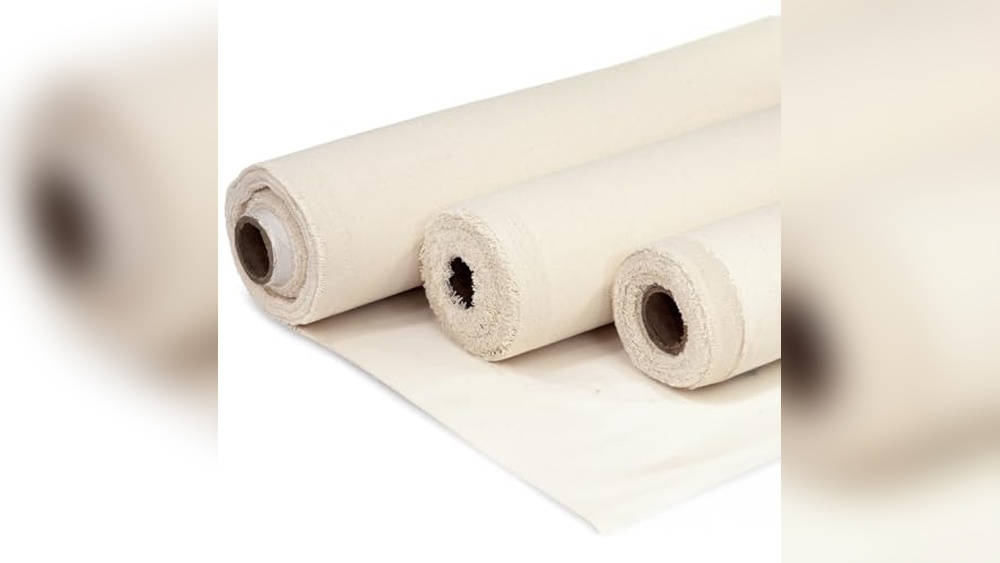
Buying a canvas roll for painting changes the economics of working on canvas. Instead of paying for a stretched frame every time, you buy fabric by the foot or yard, stretch it over bars you reuse or build, and cut panels to whatever proportion a composition demands. It is how most working painters buy canvas, and it is also how studios supply classes and painting parties without a closet full of pre-stretched stock.
The catch is that “canvas roll” on Amazon covers two very different products: primed artist canvas that is ready to stretch and paint, and raw cotton duck sold as fabric that you prime yourself. This guide covers both, explains which weights and widths make sense for which jobs, and compares six rolls that are worth considering.
Our Top Picks at a Glance
- Kinlop 48 in x 20 ft Double Primed Cotton Roll — Best overall primed roll for acrylic and oil
- DPDIAN 48 in x 20 ft Primed Cotton Roll — Best alternative primed roll with a defined paper core
- Kinlop 36 in x 10 ft Double Primed Roll — Best for small studios and first-time stretchers
- Creative Mark 7 oz Unprimed Cotton Duck, 72 in x 30 yd — Best bulk raw canvas for large work
- GravitationOnline 7 oz Cotton Duck, 63 in x 3 yd — Best raw canvas to try before committing to a bolt
- Barcelonetta 10 oz Cotton Duck, 62 in wide (by the yard) — Best heavyweight raw canvas for heavy impasto
| Product | Best For | Key Spec | Key Strength | Price Tier |
|---|---|---|---|---|
| Kinlop 48 in x 20 ft Double Primed | Everyday studio stretching | 48 in wide, 20 ft long, double primed cotton | Paint-ready, generous length | $$$ |
| DPDIAN 48 in x 20 ft Primed | Studio and classroom | 48 in wide, 20 ft long, primed cotton blend, 5.49 lb | Shipped on rigid core, multi-media surface | $$$ |
| Kinlop 36 in x 10 ft Double Primed | Small spaces, first roll | 36 in wide, 10 ft long, double primed cotton | Manageable size, low commitment | $$ |
| Creative Mark 7 oz Unprimed Duck | Large-scale, self-primed work | 72 in wide, 30 yd long, 7 oz raw cotton | Widest and longest here | $$$ |
| GravitationOnline 7 oz Duck | Testing raw canvas | 63 in wide, 3 yd long, 7 oz raw cotton | Short cut, low cost | $$ |
| Barcelonetta 10 oz Duck | Heavy textures, knife work | 62 in wide, sold per yard, 10 oz raw cotton | Heavier weight resists sagging | $ |
How We Chose
These comparisons are drawn from the Amazon listing details and specifications checked in October 2026, how well each roll’s width, length, weight and priming fit the way painters actually use rolled canvas, and how widely each product is reviewed by buyers. None of these rolls was stretched or painted on for this article; the judgments below rest on the stated specifications and on well-established facts about cotton canvas.
- Primed or raw: primed rolls were judged on priming claims and medium compatibility; raw duck on weight and width.
- Usable width: 48 inches covers most stretcher sizes up to 36 x 48 with margin; 60 to 72 inches is needed for large work.
- Length per purchase: how many standard canvases one roll yields.
- Weight (oz per square yard): 7 oz is a standard medium duck; 10 oz and up is heavy.
- Packaging: rolls shipped on a core arrive with fewer creases than folded fabric.
Best Canvas Rolls for Painting Reviewed
1. Kinlop 48 Inch x 20 Feet Double Primed Cotton Canvas Roll — Best for Everyday Studio Stretching

Kinlop’s 48 by 20 roll is the straightforward answer for a painter who wants to stretch their own canvases without priming them. The fabric is primarily cotton, double primed white, and the listing describes it as suitable for oil, acrylic, gouache and watercolor. Twenty feet at 48 inches wide is enough for roughly ten 24 x 36 canvases with stretching margin, or a far larger number of small panels.
The listing also makes a practical point many buyers miss: rolled canvas arrives with a slight curl, and a light pass with an iron on the back before stretching flattens it. Cutting is simple scissor work, so odd proportions such as a 20 x 50 panorama cost nothing extra.
Best suited for: Acrylic and oil painters who have a staple gun and a set of stretcher bars, studios that produce many mid-size canvases, and teachers who want to cut class-sized pieces.
Key features:
- About 48 inches wide and 20 feet long
- Double primed, white, mainly cotton
- Listed for oil, acrylic, gouache and watercolor
- Can be cut to any size and stretched on standard bars
- Ships rolled
Pros:
- Paint-ready with no gesso step
- Width suits most common stretcher sizes
- Long enough that cost per canvas drops sharply
Cons and limitations:
- The listing does not state fabric weight or priming thickness
- Any 48-inch roll needs floor space or a long table to cut accurately
- Factory priming is fine for most work but thinner than a hand-applied multi-coat ground
Buying consideration: If you have never stretched canvas, buy stretcher bars and canvas pliers at the same time. The roll is the cheap part; the frustration comes from trying to stretch 48-inch fabric with your hands alone.
2. DPDIAN 48 Inch x 20 Feet Primed Cotton Canvas Roll — Best for Studio and Classroom Use

DPDIAN’s roll matches the Kinlop on width and length and is pitched at the same painters. The listing describes a high-density cotton blend with a tight, uniform weave, primed for acrylic, oil, watercolor, tempera and gouache, with a moderate surface texture meant to grip brushes and palette knives without letting paint bleed through.
Two details stand out. The roll ships wrapped around a rigid paper core, which the listing says is there to prevent creases and transit damage, and the stated weight of 5.49 pounds for the whole roll gives some sense of fabric substance. The listing also mentions outdoor use with weather-resistant paints and sign painting, which hints at a tougher, less absorbent surface.
Best suited for: Painters who want a second option at the 48 x 20 size, classrooms and paint-party hosts cutting many pieces, and anyone who has received a creased roll before and wants one on a core.
Key features:
- 48 inches by 20 feet (240 inches), white
- Cotton blend, primed, tight uniform weave
- Listed for acrylic, oil, watercolor, tempera and gouache
- Shipped on a rigid paper core
- Total roll weight 5.49 pounds
Pros:
- Core packaging reduces the creasing problem rolled canvas is known for
- Moderate tooth works for both brush and knife
- Very flexible: cut small studies or a single 4-foot piece
Cons and limitations:
- “Cotton blended” means it is not 100% cotton; the listing does not say what the blend is
- Priming thickness is not specified
- Slightly heavier shipping weight if you are carrying it to a class
Buying consideration: Choose between DPDIAN and Kinlop on current price and availability; they serve the same job. Lean DPDIAN if arrival condition has been a problem for you with other rolls.
3. Kinlop 36 Inch x 10 Feet Double Primed Cotton Canvas Roll — Best for Small Studios and First-Time Stretchers

Not everyone has room to unroll four feet of canvas. The 36 by 10 Kinlop is the same double-primed cotton in a size that fits on a dining table and weighs under two pounds. Ten feet at 36 inches gives you around five 18 x 24 canvases, or a dozen 11 x 14 panels, which is a sensible amount for someone trying rolled canvas for the first time.
Everything else carries over from the larger Kinlop roll: scissor-cuttable, suitable for oil, acrylic, gouache and watercolor, and ready to stretch after a light ironing. Kinlop also sells a 24 inch by 20 foot version for painters who mostly work small but want more length.
Best suited for: Apartment painters, beginners stretching their first canvas, and anyone who wants to test the priming before buying a 20-foot roll.
Key features:
- About 36 inches wide and 10 feet long
- Double primed white cotton
- Weight 1.94 pounds
- Same medium compatibility as the larger Kinlop rolls
- Cut and stretch to size
Pros:
- Easy to handle and store
- Low cost of entry to rolled canvas
- Still wide enough for 24 x 30 canvases
Cons and limitations:
- Cost per square foot is higher than the 48 x 20 roll
- Not wide enough for anything over 30 inches on the short side
- Same unspecified fabric weight as the other Kinlop rolls
Buying consideration: Buy this one first. If you like the surface, the 48-inch roll is the same material in bulk.
4. Creative Mark Deluxe Unprimed Cotton Duck Canvas Roll, 7 oz, 72 in x 30 yd — Best for Large-Scale Work You Prime Yourself

This is the bolt a painter buys when canvas has become a recurring expense. Seventy-two inches wide and thirty yards long, the Creative Mark roll is raw 7 oz cotton duck in a single-fill weave, described in the listing as lightweight and flexible, suited to sketching, underpainting and studies built from thin layers rather than heavy tooth.
Because it is unprimed, you control the ground completely: size with PVA or rabbit-skin glue, then gesso or an oil ground, as thick or as thin as the work needs. That is a real advantage for oil painters who dislike acrylic-primed surfaces and for anyone painting murals, raw-canvas stain paintings or work wider than four feet. It is also the most expensive item here by a wide margin, so it only makes sense if you will use most of it.
Best suited for: Professional and serious amateur painters working at scale, muralists, and painters who have a strong preference for their own priming recipe.
Key features:
- 72 inches wide, 30 yards long
- 7 oz raw cotton duck, single-fill weave
- Unprimed; accepts any ground
- Sold cut by the yard format
- Suits portraits, abstraction and mixed media per the listing
Pros:
- Widest and longest roll in this guide
- Full control over priming and absorbency
- Lowest cost per square yard once the whole roll is used
Cons and limitations:
- Highest upfront price here
- Requires sizing and priming before painting with oils
- 7 oz is on the light side for very large stretched canvases, which can sag without a heavier ground
Buying consideration: If you have never primed canvas, run a test on a yard of the GravitationOnline duck first. Thirty yards of raw duck is a commitment, and priming technique takes a few tries to settle.
5. GravitationOnline 100% Cotton 7 oz Canvas Duck, 63 in x 3 yd — Best for Trying Raw Canvas Before Buying a Bolt

Three yards of 63-inch-wide 7 oz cotton duck is about the right amount to learn priming on, make four or five mid-size stretched canvases, or cut a set of raw-canvas panels. The listing keeps things simple: 100% cotton, natural beige color, hand-washable, and pitched at home, business and craft applications as much as at painters.
This is not artist-branded canvas and does not claim to be. What you get is a standard medium-weight duck that behaves like any other 7 oz cotton once sized and gessoed. For stain painting or raw-canvas work, the natural color is part of the appeal.
Best suited for: Painters who want to try self-priming, students building a few canvases for a class, and mixed-media artists who paint on raw fabric.
Key features:
- 63 inches wide by 3 yards long
- 100% cotton duck, 7 oz
- Natural beige, unprimed
- Hand wash with mild soap per the listing
- Sold in cut-by-the-yard format
Pros:
- Low-cost way to try raw canvas
- Wide enough for large single pieces
- Natural fiber with no coating
Cons and limitations:
- Needs sizing and priming for oil paint
- Not described as artist grade; weave consistency may vary
- Three yards goes quickly once you start stretching
Buying consideration: Buy this if you want to find out whether self-priming suits you. If it does, the Creative Mark bolt is the economical next step; if it does not, move to a primed Kinlop or DPDIAN roll.
6. Barcelonetta Heavy Cotton Duck Canvas, Natural 10 oz, 62 in Wide — Best for Heavy Textures and Knife Work

Heavy duck earns its place when the paint is heavy too. Barcelonetta sells this 100% cotton canvas by the yard at 62 inches wide, in a 10 oz weight that resists sagging under thick impasto, palette-knife work and layered mixed media better than a 7 oz fabric. The listing notes that 4, 7 and 12 oz weights exist in the same range, so you can match weight to the job.
One listing detail worth reading twice: each quantity ordered arrives as a separate one-yard piece, not a continuous length. For a single large canvas that is a problem; for a set of panels or canvases under 60 inches on the long side it is irrelevant.
Best suited for: Painters who build heavy texture, anyone stretching canvases over 30 inches who wants extra stiffness, and crafters making painted banners or covers that take abuse.
Key features:
- 62 inches wide, sold per yard as separate pieces
- 100% cotton duck, 10 oz weight
- Natural color, unprimed
- Also available in 4, 7 and 12 oz weights
- Tight interlocking weave described as wear-resistant
Pros:
- Heavier weight stays taut on large stretchers
- Takes thick paint and knife pressure well
- Choice of weights in one product line
Cons and limitations:
- Separate yard pieces limit the length of a single canvas
- Heavier fabric is harder to stretch by hand and needs a sturdier frame
- Unprimed, so priming is on you
Buying consideration: Order the number of yards you need per canvas as one quantity only if each canvas fits in 36 inches of length; otherwise look for a continuous-roll alternative such as the Creative Mark bolt.
Buying Guide: How to Choose a Canvas Roll for Painting
Primed versus unprimed
Primed rolls (Kinlop, DPDIAN) are coated with acrylic gesso at the factory and can be stretched and painted immediately with acrylics or oils. Unprimed duck (Creative Mark, GravitationOnline, Barcelonetta) must be sized and primed before oil paint touches it, because oil rots raw cotton over time. Acrylic can go onto raw canvas directly, but it soaks in and shifts color unless the fabric is sealed. If you do not want a priming step, buy primed.
Width decides your maximum canvas size
Allow at least 3 inches on each side for wrapping around the stretcher bar. A 36-inch roll therefore makes canvases up to about 30 inches on the short side; a 48-inch roll handles 42 inches; 62 to 72 inches is needed for anything over four feet. Buy the width for the largest canvas you realistically make, not the largest you dream about.
Weight and weave
Canvas weight is quoted in ounces per square yard of raw fabric. Around 7 oz is medium and suits most easel painting. Around 10 oz is heavy and holds tension better at large sizes or under impasto. Lighter fabrics are easier to stretch; heavier ones are stiffer and more forgiving of sagging. Primed listings often omit the raw weight, so compare on stated use and texture instead.
Length and how it is sold
Continuous rolls (20 feet, 30 yards) let you cut any length. Fabric sold by the yard as separate pieces caps a single canvas at about 36 inches in one direction. Check this before ordering several “yards” expecting one long piece.
Medium compatibility
Acrylic-primed canvas accepts acrylic, oil, alkyd and most mixed media. Watercolor and gouache on canvas need a specially absorbent ground; a listing that says “watercolor” for a standard primed roll means it is possible, not that it behaves like paper. Raw duck can be prepared for anything, including traditional oil grounds.
Packaging and creases
Rolled canvas on a rigid core arrives flatter than folded fabric. If a roll does arrive with a crease, a warm iron on the back, or simply stretching it, usually removes the mark on primed canvas. Deep folds in heavily primed canvas can crack the gesso, so unpack carefully.
The hidden costs
Stretcher bars, a staple gun, canvas pliers and, for raw canvas, size and gesso all add up. A roll only saves money once you own the tools and make enough canvases to spread their cost.
Further Reading Before You Buy
Three single-brand reviews on this site go deeper on specific rolls: our Claessens canvas roll review covers a traditional linen option, the Blick canvas roll review looks at a widely available studio roll, and the Arteza canvas roll review examines a budget primed roll. If you are new to stretching, the step-by-step guide to gridding a canvas for painting is useful once your canvas is on the bars, and our tip sheet on fixing a ripped canvas painting is worth bookmarking for the day a staple tears through.
Common Mistakes to Avoid
- Painting oils directly on raw cotton duck without sizing or priming.
- Buying a 36-inch roll and then planning a 40-inch canvas.
- Cutting pieces with no stretching margin; allow 3 inches or more per side.
- Ordering fabric “by the yard” and expecting a continuous length.
- Stretching heavy 10 oz duck on thin, lightweight stretcher bars that bow under tension.
- Ironing the primed face of the canvas instead of the back.
- Storing a partly used roll on its end or folded; keep it rolled, horizontal and dry.
FAQs
Is a canvas roll cheaper than buying stretched canvases?
Per square foot, yes, usually by a wide margin, but only after you own stretcher bars, a staple gun and canvas pliers. For someone painting a few canvases a year, pre-stretched is simpler; for anyone painting monthly or working at odd sizes, a roll pays off quickly.
Do I need to prime a primed canvas roll again?
Not for most work. Factory-primed rolls like Kinlop and DPDIAN are paint-ready. Some painters add one extra coat of gesso for a smoother or more absorbent surface, but it is optional.
What weight canvas roll should I buy?
For general easel painting up to about 36 inches, 7 oz raw (which becomes heavier once primed) is the standard. For large canvases or heavy impasto, step up to 10 oz or 12 oz duck so the surface stays taut.
Can I use a canvas roll without stretching it?
Yes. Primed canvas can be cut into panels and glued to board, taped to a drawing board for studies, or painted loose and framed later. Raw duck is often painted unstretched for stain and mural work.
How do I get creases out of rolled canvas?
Lay the canvas face down and iron the back on a medium setting without steam, or simply stretch it; tension removes most shipping curl. Avoid ironing the primed side directly.
How many canvases will a 48 inch by 20 foot roll make?
Roughly ten 24 x 36 canvases with stretching margin, or about twenty 18 x 24 canvases, or many more small panels. Lay out your cuts before the first snip to minimize waste.
Final Recommendation
For most painters the decision comes down to whether you want to prime. If not, the Kinlop 48 x 20 double primed roll and the DPDIAN 48 x 20 primed roll are interchangeable workhorses; buy whichever is in stock at the better price, and start with the Kinlop 36 x 10 if you want a smaller first roll. If you do prime your own canvas, the GravitationOnline 3-yard duck is the cheap way to learn, the Barcelonetta 10 oz is the heavyweight for textured work, and the Creative Mark 72 x 30 yd bolt is the economical choice once rolled canvas has become part of your practice.



2 Comments