Acrylic has a reputation as the fast-drying paint, and for thin layers that reputation is earned. But “dry” can mean three different things, and the answer to “how long does acrylic paint take to dry?” shifts a lot depending on film thickness, the surface underneath, the room you paint in and the type of acrylic in the tube.
Quick answer: A thin layer of acrylic paint is usually dry to the touch in 10–30 minutes, while thick heavy-body strokes can take 1–2 hours or more. Full curing, where the paint film has released its water and hardened throughout, generally takes from about 24 hours for thin films to several days or even weeks for thick impasto or acrylic pours. Humidity, temperature, airflow and surface porosity can speed this up or slow it down considerably.
Touch Dry vs. Recoat vs. Fully Cured
Most confusion about drying time comes from mixing up these stages. Acrylic paint is a water-based emulsion: tiny particles of acrylic polymer are suspended in water along with pigment. As water evaporates, the particles crowd together and fuse into a flexible plastic film. That process happens from the outside in, which is why a surface can feel dry while the paint beneath is still soft.
| Stage | What it means | Typical time (thin layer) | Typical time (thick layer) |
|---|---|---|---|
| Touch dry | Surface no longer feels tacky or cool | 10–30 minutes | 1–2+ hours |
| Recoatable | You can paint over it without lifting the layer below | 30–60 minutes | A few hours |
| Fully cured | Water has left the whole film; paint has reached final hardness | About 24–72 hours | Several days to a few weeks |
For everyday painting, the recoat stage is what matters. For varnishing, framing, stacking or shipping a piece, wait for full cure. Many acrylic manufacturers suggest waiting at least a few days before varnishing, and longer for thick passages, so check the label on your specific varnish.
What Affects How Long Acrylic Takes to Dry
Thickness of the paint film
This is the biggest factor. A wash thinned with water may dry in five minutes, while a palette-knife ridge a quarter inch tall can stay soft in the middle for days. Doubling thickness more than doubles drying time, because the outer skin slows evaporation from the layers underneath.
Humidity
Water evaporates more slowly when the air already holds a lot of moisture. On a humid summer day, a layer that would dry in 15 minutes may take 45 or longer. In very dry winter air, the same paint can skin over on the palette in a few minutes.
Temperature
Warm air speeds evaporation. Most acrylic manufacturers recommend painting above roughly 50°F (10°C); below that, the polymer particles may not fuse properly, which can leave a weak or cracked film even after the paint looks dry.
Airflow
Moving air carries water vapor away from the surface. A fan across the room or an open window can noticeably shorten drying time, while a closed, still room lengthens it.
Surface porosity
Absorbent surfaces like raw paper, cardboard and unsealed wood pull water out of the paint, so it sets faster. Non-porous surfaces like glass, plastic and sealed metal leave all the water to evaporate from the top, which takes longer and can affect adhesion.
Paint type and additives
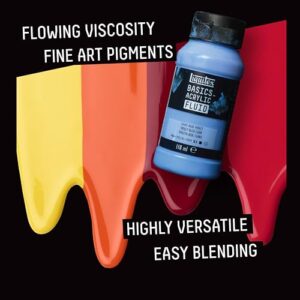
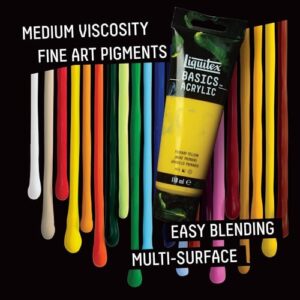
Heavy-body acrylics, fluid acrylics, craft acrylics, open (slow-drying) acrylics and acrylic inks each dry at different rates. Retarders and slow-drying mediums extend working time; water and some flow aids can shorten it slightly by thinning the film. Binder quality varies between brands too, which is one reason our acrylic paint brand comparison looks at consistency and film strength, not just color.
How Long Does Acrylic Paint Take to Dry on Different Surfaces?
The times below are typical ranges for a normal brushed layer in a room around 70°F with moderate humidity. Treat them as starting points, not guarantees.
| Surface | Touch dry | Fully cured | Notes |
|---|---|---|---|
| Primed canvas | 15–30 min | 24–72 hours | Gesso gives an even, slightly absorbent tooth |
| Paper | 5–20 min | About 24 hours | Fast, but paper may buckle with wet layers |
| Cardboard | 5–20 min | About 24 hours | Very absorbent unless primed |
| Raw wood | 15–30 min | 24–72 hours | Grain absorbs paint; sealed wood dries more slowly |
| Fabric | 30–60 min | About 24 hours, then heat-set if needed | Fabric medium changes timing |
| Plastic | 30–60 min | Several days | Needs a primer or adhesion promoter |
| Glass | 30–60 min | Up to 21 days for some glass paints | Follow the paint maker’s curing instructions |
| Air dry clay | 20–45 min | 24–72 hours | Clay must be fully dry before painting |
How long does acrylic paint take to dry on canvas?
On a primed canvas, thin to medium layers are usually touch dry in 15–30 minutes and safe to paint over within an hour. Allow at least a day before handling heavily, and several days or more before varnishing if you used thick strokes. Stretched canvas also breathes from the back, which helps slightly compared with rigid panels.
How long does acrylic paint take to dry on wood?
Raw wood soaks up the first coat quickly, so it can feel dry in 15 minutes, though the grain may raise and need a light sanding before a second coat. Sealed or varnished wood behaves more like a non-porous surface: drying slows and adhesion weakens unless you scuff-sand and prime first. Give painted wood signs or furniture 24–72 hours before sealing.
How long does acrylic paint take to dry on fabric?
Acrylic on fabric is usually dry to the touch in about 30–60 minutes, but it can remain stiff and crack-prone without a textile medium. If you mix in fabric medium, follow its instructions, which commonly include waiting about 24 hours and then heat-setting with an iron before washing. Many makers suggest waiting several days before the first wash.
How long does acrylic paint take to dry on plastic?
Plastic is slick and non-porous, so paint sits on top rather than soaking in. It may feel dry in 30–60 minutes, yet it scratches off easily for the first few days. Light sanding, a plastic-compatible primer and a clear sealant once cured make a big difference to durability.
How long does acrylic paint take to dry on glass?
Standard acrylic on glass is touch dry in roughly 30–60 minutes but stays fragile. Paints formulated for glass often call for a long air cure, in some cases up to three weeks, or an oven bake to make them more durable. Always follow the specific product’s instructions, especially for anything that will be washed.
How long does acrylic paint take to dry on paper?
Paper is one of the fastest surfaces. Thin layers can be dry in five minutes; thicker coats within 20. Heavier paper (around 140 lb or more) resists buckling, and taping it to a board while it dries keeps it flat.
How long does acrylic paint take to dry on cardboard?
Unprimed cardboard absorbs paint fast, so the first coat can feel dry within 5–15 minutes. The trade-off is that colors look dull and the board may warp. A coat of gesso first slows drying slightly but improves color and reduces warping. Priming also keeps the paint from sinking in so deeply that you need extra coats.
How long does acrylic paint take to dry on air dry clay?
Paint only after the clay itself is fully dry, which can take 24–72 hours depending on thickness. Painting damp clay traps moisture and can lead to cracks or peeling. Once the clay is dry, thin acrylic layers are usually touch dry in 20–45 minutes; seal the piece after a day or two.
Drying Times by Acrylic Paint Type
Not all acrylic is the same formula, and the label on the tube tells you a lot about how it will dry. Check the label for “heavy body,” “fluid,” “open” or “craft,” since each one signals a different drying profile.
| Type | Touch dry (typical) | Why |
|---|---|---|
| Heavy body | 20 min–2 hours | Thick, buttery; often applied in heavier strokes |
| Soft body / fluid | 10–30 min | Thinner films release water faster |
| Craft acrylic | 10–20 min | Thin consistency, often more filler |
| Open / slow-dry acrylic | Hours to a day or more | Formulated to stay workable much longer |
| Acrylic ink | A few minutes | Very thin, highly fluid |
| Acrylic spray paint | Often 10–30 min | Very thin coats; check can for recoat window |
How long does acrylic craft paint take to dry?
Craft acrylic is usually thin and quick, often dry to the touch within 10–20 minutes for a single coat. Because many craft paints need two or three coats for opacity, allow about an hour between coats for a smoother finish.
How long does acrylic spray paint take to dry?
Spray acrylics are applied in very fine coats, so they often feel dry quickly. However, many cans specify a recoat window, such as within an hour or after 24–48 hours, to avoid wrinkling. Read the can, since recoat instructions vary by brand.
How long does acrylic pour paint take to dry?
Acrylic pours are among the slowest acrylic projects because the paint is mixed with pouring medium and applied in a thick, continuous layer. Expect roughly 24–72 hours to be dry to the touch and several weeks for a full cure, especially in the thickest pools at the edges. Keep pours level and covered from dust while they dry, and avoid speeding them up with high heat, which can cause cracking or craters. If you work with fluid paints, the Daler-Rowney fluid acrylic review discusses how that formula behaves in pours and glazes.
How to Make Acrylic Paint Dry Faster
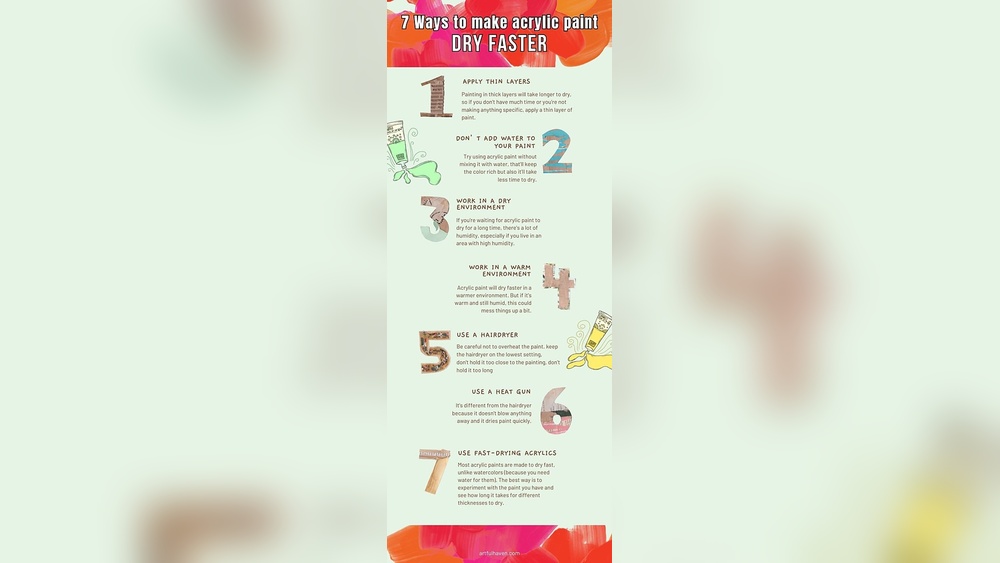
- Paint thinner layers. Two thin coats dry faster and more evenly than one thick one.
- Increase airflow. Set a fan on low a few feet away, aimed across rather than directly at the surface.
- Use a hair dryer carefully. On a low or warm setting, held at least 12 inches away and kept moving. Too much heat can cause skinning, bubbles or cracks.
- Lower the humidity. A dehumidifier or air conditioning helps on muggy days.
- Warm the room. Aim for a comfortable room temperature around 65–75°F.
- Choose absorbent surfaces. Paper and primed canvas set faster than glass or plastic.
How to Slow Down Acrylic Drying
Sometimes speed is the problem, especially when blending skies or skin tones.
- Add a retarder or slow-drying medium according to the label; many suggest staying below a certain percentage, because too much can leave the film tacky.
- Mist the palette and canvas lightly with a spray bottle of water.
- Use a stay-wet palette, which keeps paint workable for hours or days.
- Work in cooler, more humid conditions, away from fans, heaters and direct sun.
- Try open acrylics if you regularly need long blending time.
Signs Your Acrylic Is Not Fully Dry
- The surface feels cool to the back of your fingers, a sign water is still evaporating.
- The paint looks slightly milky or lighter than expected. Many acrylics look lighter wet and darken a little as they dry.
- A fingernail leaves a dent in thick areas.
- Paint lifts or smears when you brush another layer over it.
- Varnish clouds over or turns hazy, which can happen when moisture is trapped beneath it.
Common Drying Mistakes
- Varnishing too soon. Trapped moisture can cause cloudiness. Waiting longer is the safer default.
- Stacking or wrapping paintings early. Acrylic stays slightly soft and can stick to other surfaces, a problem often called “blocking.” Separate finished pieces with wax or silicone release paper.
- Painting in a cold garage. Paint below the manufacturer’s minimum temperature may not form a proper film.
- Over-thinning with water. Too much water dries quickly but can weaken the binder, leading to dull, chalky or poorly adhered paint. Use a medium for big dilutions.
- Blasting pours with heat. This dries the skin while the inside stays wet, which leads to cracks.
Acrylic vs. Oil Paint: How Long Does Oil Paint Take to Dry?
Oil paint does not dry by evaporation. Its oil binder reacts with oxygen and slowly hardens, a process called oxidation. That makes it far slower than acrylic.
| Factor | Acrylic | Oil |
|---|---|---|
| How it dries | Water evaporates, polymer fuses | Oil oxidizes and hardens |
| Touch dry (thin) | 10–30 minutes | Often 1–3 days or more |
| Varnish-ready | Days to a few weeks | Commonly 6–12 months for thick work |
| Can speed up with | Airflow, low heat, thin layers | Alkyd mediums, fast-drying pigments |
Drying speed is one of the main reasons beginners pick acrylics: you can complete a layered painting in an afternoon rather than over weeks.
FAQs
How long does it take for acrylic paint to dry between coats?
For most thin to medium coats, 30–60 minutes is a safe recoat window. If the surface still feels cool or tacky, wait longer. Thick layers can need several hours.
Why is my acrylic paint still sticky after drying?
Common causes are high humidity, a thick film, too much retarder, low-quality paint with soft binders, or a non-porous surface. Move the piece to a warmer, drier spot with good airflow and give it more time. If it stays tacky after several days, the paint may have been over-extended with additives.
Does acrylic paint dry darker or lighter?
Most acrylics dry slightly darker, because the milky look of the wet polymer clears as it dries. The shift varies by brand and formula; artist-grade paints are often designed to minimize it.
How long should acrylic paint dry before varnishing?
A common guideline is to wait at least a few days for thin paintings and two weeks or more for thick, textured work. Check your varnish label, since recommendations differ.
Can I use a hair dryer on acrylic paint?
Yes, on a low or warm setting and from a distance of about 12 inches, keeping it moving. Avoid high heat and avoid using it on acrylic pours, where it can cause craters and cracking.
Is acrylic paint waterproof once dry?
Fully cured acrylic is water-resistant, but it is not truly waterproof, especially on surfaces like glass, plastic or fabric without proper prep. Seal outdoor or frequently handled pieces with a suitable varnish once the paint has cured.
Final Thoughts
Plan around three numbers: roughly 15–30 minutes until touch dry, about an hour before recoating, and days to weeks before varnishing, depending on thickness. Adjust for humidity, temperature and surface, and remember that thin layers solve most drying problems.
The paint itself also plays a part, since binder quality and pigment load affect how evenly a film dries and how much color shifts. If you want a paint that behaves predictably from wet to cured, browse our guide to the best acrylic paints for artists at every level.