Three coats of yellow and the pencil lines still show through. A bright red that looks streaky and pink over a dark background. These are the moments that make painters wonder whether their acrylics are faulty. Usually they are not; the paint is simply doing what its pigment allows.
Quick answer: To make acrylic paint more opaque, choose naturally opaque pigments (or check the label’s opacity rating), add a small amount of titanium white or a matching opaque color, paint over a light or neutral underpainting, and apply two or three thin coats instead of one thick one. Avoid thinning with too much water, and consider heavy-body or artist-grade paint, which usually carries more pigment than budget paint.
This guide explains how to make acrylic paint more opaque with techniques that keep colors clean rather than chalky, plus tips for beginners on reading labels and planning layers. Paint quality plays a role, too; our review of the best student-grade acrylic paint sets notes which sets offer decent coverage for the price.
Why Some Acrylic Paints Are Transparent
Opacity comes from the pigment, not the brand name or the price tag alone. Each pigment has its own ability to scatter or absorb light. Some, like titanium white or cadmium red, block light strongly. Others, like phthalo blue or quinacridone magenta, let a lot of light pass through.
Three factors decide how opaque your paint film looks:
- The pigment itself. Its refractive index and particle size affect how much light it scatters.
- Pigment load. More pigment per volume of binder gives more coverage. Budget paints often contain extra fillers and less pigment.
- Film thickness. Thinned paint spreads the pigment out, letting more of the surface beneath show.
Transparent colors are not inferior. They are prized for glazing and luminous mixes. The trick is knowing which is which and using them deliberately.
Opaque vs Transparent Acrylic Pigments
| Typically opaque | Typically semi-opaque | Typically transparent |
|---|---|---|
| Titanium white | Burnt sienna | Phthalo blue and green |
| Cadmium red, orange and yellow | Ultramarine blue | Quinacridone magenta and rose |
| Mars black | Raw umber | Dioxazine purple |
| Chromium oxide green | Naphthol red | Hansa yellow (many versions) |
| Yellow ochre and red oxide | Cobalt blue | Transparent red and yellow oxide |
| Cerulean blue | Pyrrole red (varies) | Azo yellows (many versions) |
Exact opacity varies by brand and formulation, so treat this as a guide rather than a rule.
How to read opacity on a label
Many artist and student lines print an opacity symbol on the tube or bottle:
- Empty square: transparent.
- Half-filled or diagonally split square: semi-transparent or semi-opaque.
- Filled square: opaque.
Some brands use letters such as T, ST, SO and O instead. If you want reliable coverage, look for the filled square or “O” when buying.
How to Make Acrylic Paint More Opaque: 9 Proven Methods
1. Add a touch of titanium white
Titanium white is the most opaque white available in acrylic. A small amount, around 5–10% of the mix, noticeably increases coverage. The trade-off is that white lightens and cools the color, so a bright red becomes slightly pinkish. Add it in tiny increments and test on scrap paper.
2. Mix with an opaque neighbor color
To keep a color’s intensity, add an opaque pigment close to it on the color wheel rather than white. A transparent lemon yellow becomes more opaque with a dab of cadmium yellow or yellow ochre. A transparent magenta gains body from a touch of cadmium red or an opaque pink. This boosts coverage while staying in the same color family.
3. Use an underpainting
Painting over a light, neutral underlayer makes any color look more solid. Bright yellows, oranges and reds are notoriously transparent over dark grounds. Block them in first with white, a light gray or a pale yellow, let it dry, then paint the final color on top. Two coats over a light base usually beats five coats over a dark one.
4. Apply multiple thin coats
One thick coat can look patchy, dry with brushmarks and crack. Two or three thin layers, each allowed to dry (typically 10–30 minutes for thin acrylic), build an even, solid film. This is especially helpful with semi-opaque pigments.
5. Do not over-thin with water
Water spreads the pigment out and weakens the binder. For opaque coverage, use paint straight from the tube or with only a few drops of water to improve flow. If you need flow without losing opacity, use a flow improver or medium in small amounts rather than lots of water.
6. Choose heavy-body or artist-grade paint
Heavy-body acrylics are thicker and often carry more pigment than fluid or craft paints. Artist-grade lines generally offer higher pigment concentration than student lines. Student sets can still cover well; it depends on the pigments used.
7. Try acrylic gouache
Acrylic gouache is formulated to dry matte and opaque. It covers in one or two coats and is popular for flat illustration, design work and color blocking. It can be mixed with regular acrylic, though the finish may become satin rather than fully matte.
8. Prime the surface properly
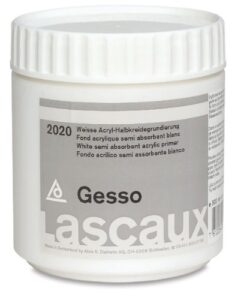
Unprimed or poorly primed surfaces absorb paint and make it look streaky. Two thin coats of white acrylic gesso give a uniform base that reflects light back through the paint, improving apparent opacity.
9. Use opaque “hue” or titanium-based formulas
Some brands offer opaque versions of normally transparent colors, often labeled “opaque”, “light” or “hue”, sometimes with titanium white or other opaque pigments blended in. These save mixing time, though the color may be slightly less saturated.
Color-by-Color Tips for Better Coverage
| Color | Common problem | Fix |
|---|---|---|
| Yellow | Very transparent, streaky over dark | Underpaint with white or light gray; add a little cadmium yellow or ochre |
| Red | Pinkish over dark, streaky | Underpaint with an opaque orange or pink; add cadmium red |
| Orange | Thin and uneven | Use cadmium orange; underpaint with yellow |
| Magenta and purple | Very transparent | Add tiny amounts of white or an opaque red; use a gray underlayer |
| Blue | Phthalo is transparent and staining | Use cerulean or ultramarine mixed with white for coverage |
| Green | Phthalo green is transparent | Add chromium oxide green or a little yellow ochre |
| White | Zinc or mixing whites cover poorly | Use titanium white for coverage |
Acrylic Painting Tips for Beginners: Planning for Opacity
Coverage problems are easier to prevent than to fix. These acrylic painting tips for beginners help you plan ahead.
- Work dark to light or light to dark, consistently. In acrylic, opaque lights over darks are common. Just remember yellows and reds may need a light underlayer.
- Swatch your colors. Paint a strip of each color over a black marker line. You will instantly see which pigments cover and which do not.
- Keep a coverage chart. Note which tubes are opaque and which are transparent, and keep it near your palette.
- Use a gray-toned ground. A mid-gray ground makes both lights and darks read clearly and reduces streaking compared to stark white.
- Load the brush well. A dry, scrubby brush spreads paint too thinly. Load enough paint to lay a smooth stroke.
Acrylic Paint Tips and Tricks for Smooth, Solid Color
Use soft synthetic brushes for flat areas
Soft synthetics lay paint smoothly without heavy brush marks. Stiff bristle brushes can leave ridges that look patchy when light hits them.
Keep the paint workable
Acrylic dries fast. Paint that has started to skin on the palette drags and streaks. Use a stay-wet palette or mist the palette lightly to keep paint fresh.
Paint in one direction, then cross-hatch
For flat backgrounds, apply the first coat in horizontal strokes and the second in vertical strokes. This evens out coverage.
Use a palette knife for flat, opaque color
Spreading paint with a knife lays down a thicker, more even layer than many brushes, which boosts opacity in one pass.
Let each coat dry fully
Painting into half-dry acrylic lifts the layer below and creates streaks. Wait until the surface feels dry and not cool to the touch.
A 10-Minute Opacity Test for Your Paints
Labels help, but nothing beats seeing your own tubes side by side. This quick test tells you exactly which colors will cover and which need help.
- Take a sheet of heavy paper or primed card and draw a thick horizontal stripe with a black permanent marker.
- Paint a vertical strip of each color across the stripe, straight from the tube, in one pass.
- Next to each, paint a second strip thinned with roughly 20% water.
- Let it dry and note how much black shows through each strip.
- Write the color name and an opacity score (1 for transparent to 5 for opaque) under each one.
Keep the card near your palette. You will quickly see that two tubes both labeled “red” can behave completely differently, and that a small amount of water costs more coverage than you might expect.
Fixing a Painting That Already Looks Streaky
If the coverage problem is already on the canvas, you do not need to start over.
- Let everything dry. Working into damp acrylic makes streaks worse.
- Knock back the area. Paint a thin layer of white, light gray or a pale version of the target color over the streaky passage.
- Repaint in thin coats. Apply the final color in two light layers, changing brush direction between them.
- Blend edges while wet. Feather the new paint into the surrounding area so the repair does not show as a patch.
- Varnish evenly. Uneven sheen can make well-covered areas look patchy. A single varnish coat unifies the surface.
Common Mistakes That Make Acrylic Look Transparent
- Adding too much water to stretch the paint.
- Painting yellows directly over dark colors without an underlayer.
- Relying on white alone, which turns everything pastel and chalky.
- Using a single heavy coat that dries uneven.
- Working on an unprimed surface that soaks up paint.
- Using craft paint for fine art when it has much lower pigment content.
Acrylic Paint vs Regular Paint: Does Coverage Differ?
“Regular paint” usually means house paint. House paint is often acrylic or vinyl-acrylic too, formulated with large amounts of titanium dioxide and fillers to cover walls in one or two coats. That is why a white wall paint covers so well.
Artist acrylics prioritize color range and pigment purity. Many brilliant artist colors are naturally transparent, so they do not cover like wall paint. House paint is not designed for fine art permanence, flexibility on canvas or color accuracy, so it is not a direct substitute, though some artists use it for large, cheap underlayers.
Where to Use Opaque vs Transparent Acrylic
| Task | Better choice | Why |
|---|---|---|
| Covering mistakes | Opaque | Hides what is below |
| Flat graphic shapes | Opaque | Even, solid color |
| Highlights on dark areas | Opaque | Reads as bright and solid |
| Glazing and color shifts | Transparent | Lets underlayers glow through |
| Deep shadows | Transparent | Rich, luminous darks |
| Skies and water | Both | Opaque for solid areas, transparent for depth |
Related Reading
FAQs
How do I make acrylic paint more opaque without white?
Mix in an opaque pigment close in hue, such as cadmium yellow into a lemon yellow, or paint over a light underpainting. Thin coats layered properly also help.
Why is my acrylic paint so transparent?
The pigment may be naturally transparent, the paint may be over-thinned, or the paint may contain a low pigment load. Check the label’s opacity rating.
Does gesso make acrylic paint more opaque?
Mixing a little gesso into paint increases opacity but makes it lighter and more matte. As a primer, gesso improves coverage by giving an even base.
How many coats of acrylic paint do I need?
Opaque colors often cover in one or two coats; transparent colors may need three or more, or an underpainting.
Is heavy-body acrylic more opaque?
Often, because it tends to have more pigment and goes on thicker. However, opacity still depends on the specific pigment.
Can I add acrylic gouache to regular acrylic?
Yes. It increases opacity and can make the finish more matte. Test the mix first, as finishes and handling vary by brand.
Final Thoughts
Better coverage in acrylic comes from understanding pigment, not fighting it. Pick opaque colors when you need coverage, use light underpaintings for yellows and reds, add white or opaque neighbors sparingly, and build thin, even coats.
The paint you start with also makes a difference. If coverage has been a constant struggle, compare the acrylic sets that balance pigment load and budget in our 2026 review, which flags the student-grade paints with the best opacity for beginners.