Some acrylic colors cover like house paint while others look like stained glass straight from the tube. If you want luminous glazes, soft washes, or layers that let the drawing beneath show through, you need to know how to make acrylic paint more transparent without turning it weak, chalky, or blotchy.
Quick answer: The most reliable way to make acrylic paint more transparent is to mix it with a clear gloss medium or glazing medium, starting around 1 part paint to 3 parts medium and adding more medium for a lighter veil. Choose pigments that are naturally transparent, such as quinacridones, phthalos and transparent iron oxides, and avoid adding white. Water also increases transparency, but beyond about a third water the paint film can weaken and lose adhesion.
Why Some Acrylic Paints Look Opaque
Transparency depends mostly on the pigment, not the paint brand. Every pigment particle either lets light pass through it or scatters and blocks it. Titanium white, cadmiums, chromium oxide green, cerulean blue and mars black are physically opaque pigments, so even thinned they leave a milky or chalky veil. Quinacridone magenta, phthalo blue and dioxazine purple are physically transparent, so they glow even at full strength.
The second factor is filler. Many student-grade and craft acrylics include extenders like calcium carbonate or extra white to stretch expensive pigment and improve coverage. Those fillers scatter light, which makes the paint look more opaque and slightly pastel. Artist-grade paints typically carry more pigment and less filler, so they keep their clarity when thinned. That difference is one reason pigment load matters when comparing artist-grade acrylic paint ranges.
The binder plays a small part too. Wet acrylic is milky because light scatters through the emulsion. As it dries, the polymer clears, which is why glazes often look cloudy at first and turn clear and darker within minutes.
How to Make Acrylic Paint More Transparent: Five Methods
1. Add gloss medium (the most dependable method)
Gloss medium is essentially clear acrylic binder. Mixing it into paint spreads the pigment particles farther apart while keeping plenty of binder in the film, so you get transparency without weakening the paint. It also deepens color and dries with a clear, slightly shiny surface.
Use it in the ratio that fits your goal. As a rough guide:
| Paint : medium | Effect | Typical use |
|---|---|---|
| 1 : 1 | Semi-transparent, rich color | Color shifts that still read strongly |
| 1 : 3 | Clearly transparent | Classic glazing over an underpainting |
| 1 : 5–10 | A faint tint | Unifying glazes, warming or cooling a whole area |
| 1 : 20+ | Barely there | Subtle atmospheric veils |
Measure with a palette knife or an eyedropper so you can repeat a glaze later.
2. Use a glazing medium for longer working time
Glazing medium is a gloss or satin medium formulated to stay workable longer than ordinary medium, and usually to flow and level smoothly. That extra open time lets you brush a glaze evenly, soften edges, or wipe it back with a cloth before it sets. It’s especially helpful for large areas, where regular medium can start to drag before you finish.
3. Thin with water, within limits
Water makes paint more transparent and more fluid, which is great for washes and staining. The catch is that water dilutes the binder as well as the pigment. Many manufacturers suggest that up to roughly 25 to 35 percent water is generally fine on primed surfaces, but much more than that can leave a powdery, poorly bonded layer that rubs off. On absorbent unprimed paper or raw canvas, very dilute acrylic stains more like watercolor, which can work, though results vary by surface.
For best results, combine the two: a little water to improve flow, plus medium to keep the film strong.
4. Choose naturally transparent pigments
No amount of medium will make titanium white truly clear. Start with pigments that are transparent by nature and the job gets easier. The tables below sort common colors roughly; exact opacity varies by manufacturer and formula.
| Transparent (great for glazing) | Semi-transparent | Opaque (hard to glaze) |
|---|---|---|
| Quinacridone magenta, rose, gold | Ultramarine blue | Titanium white |
| Phthalo blue and phthalo green | Hansa yellow (some versions) | Cadmium reds, oranges, yellows |
| Dioxazine purple | Naphthol red | Chromium oxide green |
| Transparent red and yellow iron oxide | Burnt umber | Cerulean blue |
| Perylene maroon and perylene red | Raw sienna | Mars black |
| Nickel azo yellow | Pyrrole red (varies) | Yellow ochre |
Many tubes print an opacity symbol on the label: an empty square for transparent, a half-filled square for semi-transparent, and a solid square for opaque. It’s worth checking before you buy colors specifically for glazing.
5. Use fluid acrylics or acrylic inks
Fluid acrylics and inks are already thin and usually highly pigmented, so they mix into medium quickly and give intense, clean glazes with very little paint. If you want to see how one fluid range handles thinning and glazing, our fluid acrylic paint review walks through its consistency and behavior.
Step-by-Step: Mixing a Transparent Glaze
- Check that the layer below is fully dry. Touch-dry is the minimum; a few hours is safer if you’ll brush back and forth.
- Squeeze a pea-sized amount of a transparent color onto a clean palette.
- Add medium beside it, about three times the volume of paint for a typical glaze.
- Mix thoroughly with a palette knife until there are no streaks of concentrated paint. Streaks cause dark spots on the canvas.
- Test on a scrap painted with the same underlayer, or on a strip of tape on the edge of the canvas. Let it dry; it will look darker and clearer than wet.
- Brush on with a soft, wide brush in thin, even strokes. Work quickly and don’t go back over areas that have started to set.
- Lift excess with a lint-free cloth if the glaze is too strong, or to pull out soft highlights.
- Let it dry, then repeat if you want more depth. Several thin glazes look richer than one heavy one.
A Simple Transparency Test You Can Make
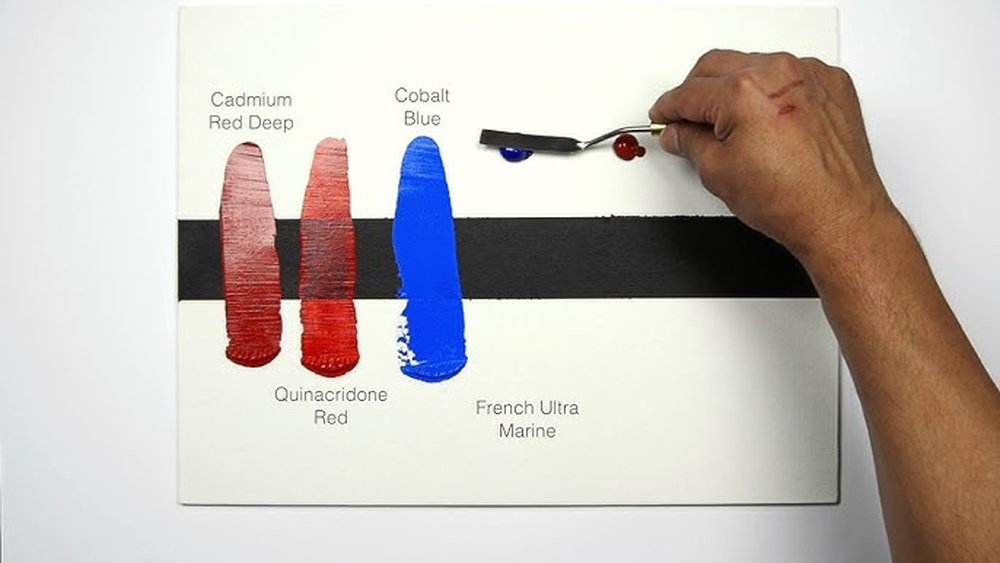
Draw a bold black stripe with a permanent marker across a strip of primed card or watercolor paper. Paint a short bar of each color straight across the stripe, once at full strength and once mixed 1:3 with gloss medium. When it dries, colors that disappear over the black are transparent; colors that leave a pale film over it are opaque. Keep this chart near your palette and you’ll never have to guess.
How to Make Acrylic Paint More Liquid Without Losing Color
“More transparent” and “more liquid” overlap but aren’t the same goal. If you want flow without much loss of color strength, use a fluid or flow medium instead of gloss medium, or add a small amount of flow improver to water. These reduce surface tension so the paint levels and moves freely while the pigment stays concentrated.
How to make heavy body acrylic paint more fluid
Mix heavy body paint with an equal volume of fluid medium or a thin gloss medium, stirring thoroughly, and add a few drops of water if needed. The result is similar to fluid acrylic in consistency. Mixing a small batch in a lidded jar keeps it ready for several sessions.
How to make my acrylic paint thinner for beginners
Start with water only for brush flow, adding a few drops at a time until the paint moves like light cream. When you need it thinner than that, switch to medium. That one habit prevents most chalky, flaking results.
How to make acrylic pouring paint
Pouring is a different use of transparency. Paint is mixed with a pouring medium, usually around 1 part paint to 1 or 2 parts medium, then a little water until it flows like warm honey. Transparent colors in pours tend to look deep and jewel-like, while opaque colors give stronger cells and contrast.
How to Make Cheap Acrylic Paint Better for Glazing
Budget paints can still glaze reasonably if you work with their limits. Pick the colors that are already brightest and most saturated, mix them with gloss medium instead of water, and expect to use more paint per glaze. Avoid budget whites and pastels for glazing, since they rely heavily on opaque fillers. Many painters keep a few artist-grade transparent colors just for glazing and use cheaper paint for underlayers. For a broader look at how quality varies, see our guide to which acrylic paint brands are worth it.
How the Layer Underneath Changes a Transparent Glaze
A transparent layer never has a color of its own on the canvas. It always combines with whatever sits below it, so the same glaze can look completely different over different grounds.
- Over white gesso, a glaze looks bright and saturated because white reflects light back through it, much like watercolor on paper.
- Over a mid-value underpainting, the glaze shifts the color while the underlying values do the modeling. This is the classic way to paint skin, foliage and fabric with depth.
- Over dark passages, transparent color nearly disappears. A glaze of yellow over dark blue reads as a deep green, not a yellow.
- Over a complementary color, the glaze neutralizes it. A thin red glaze over a too-bright green produces a softer, more natural green without remixing.
Plan for this. Keep the underpainting slightly lighter than your target if you’ll be glazing over it, since each glaze darkens the area a little. If a glaze goes too dark, it can’t be lightened with more glazing; you’ll need to scumble or repaint with opaque paint, then glaze again.
Gloss vs Matte Medium for Transparency
Gloss medium dries clearest, so it’s the default for transparent layers. Matte medium contains matting agents that scatter light to reduce shine, and in thick or stacked layers they can create a slightly cloudy or frosted look, especially over dark colors. If you prefer a matte finish, glaze with gloss medium and control the final sheen with a matte varnish at the end.
Common Mistakes
- Adding white to lighten a glaze. White makes a tint opaque. To lighten a glaze, add more medium instead.
- Using too much water. It creates weak, patchy, powdery layers.
- Glazing over damp paint. It lifts the layer below and causes streaks.
- Glazing with opaque pigments. Cadmiums and earth colors like yellow ochre cloud the layer.
- Uneven mixing. Unmixed specks of paint leave dark spots and streaks.
- Judging the glaze wet. Acrylic dries darker and clearer, so wait before adding more.
When Transparency Is the Wrong Choice
Transparent paint shows everything beneath it, including pencil lines, brush marks, and earlier mistakes. For covering errors, painting light over dark, or getting solid flat color, opaque pigments or a coat of opaque paint mixed with a little white work better. Many finished paintings use both: opaque passages for structure and light, transparent glazes for depth and shadows.
FAQs
How do you make acrylic paint see-through?
Mix it with a clear gloss or glazing medium, starting at about 1 part paint to 3 parts medium, and use transparent pigments. Add more medium for a lighter veil.
Can I use water to make acrylic paint transparent?
Yes, but in moderation. A little water increases transparency and flow, but heavy dilution weakens the binder and can cause the paint to lift or look chalky. For large amounts of thinning, use medium.
Does acrylic paint get darker when it dries?
Yes. Wet acrylic binder is milky white and turns clear as it dries, so colors and glazes usually look slightly darker and richer once dry.
What is the most transparent acrylic color?
Phthalo blue, phthalo green, quinacridone magenta and dioxazine purple are among the most transparent common pigments, along with transparent iron oxides. Opacity can vary slightly by brand.
Is glazing medium the same as gloss medium?
They’re similar. Both are clear acrylic binders, but glazing medium is usually formulated to stay workable longer and level more smoothly, which makes even glazes easier.
How do I make acrylic paint look like watercolor?
Thin transparent colors with water and a little medium, paint on absorbent watercolor paper or a primed surface, and build up washes in layers. Acrylic dries permanent, so you can’t lift it later like watercolor.
Next Step
Transparency comes from three choices working together: a transparent pigment, the right medium, and thin, patient layers. Make a quick black-stripe test chart of the colors you own and you’ll know at a glance which ones will glaze cleanly.
If your current set is mostly opaque or filler-heavy, adding a few transparent artist colors makes a noticeable difference. Compare pigment quality and color ranges in our guide to the best acrylic paint for glazing and everyday painting.