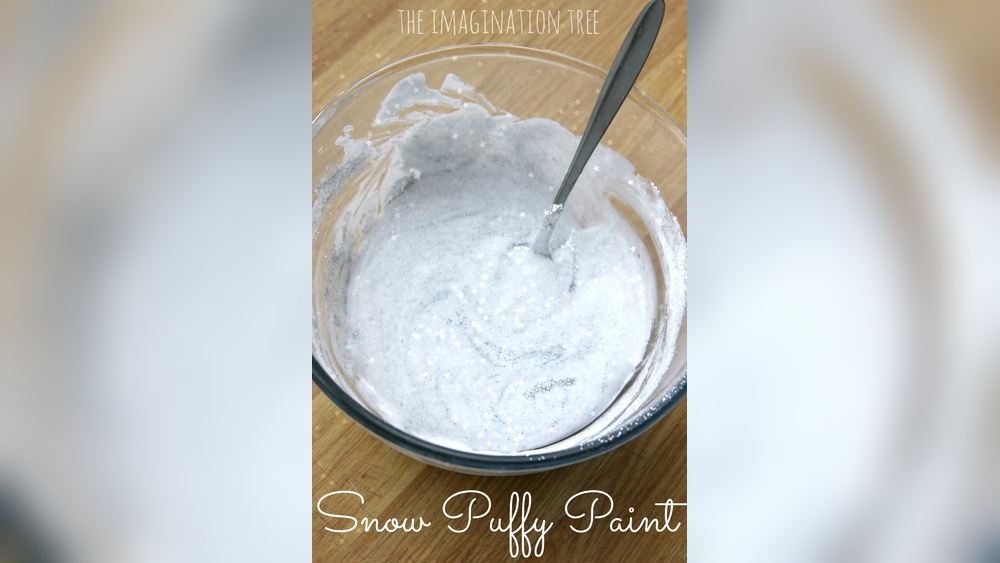
Snow paint is one of those recipes that turns a regular afternoon into a winter project, whether there is snow outside or not. Puffy snow paint dries with a raised, fluffy texture that looks like fresh snowfall on paper. Colored snow paint in squeeze bottles turns a real snowy yard into a giant canvas. Both are easy to mix from basic household ingredients.
Quick answer: To make snow paint for crafts, mix equal parts white school glue and white foaming shaving cream (for example, 1/2 cup of each) and stir gently until fluffy. Add a little white craft paint for brighter white, or glitter for sparkle. Spread it on card stock with a craft stick or brush and let it dry for several hours into a puffy, snow-like texture. For painting on real snow, fill squeeze bottles with water and a few drops of food coloring or liquid watercolor.
This guide shares recipes for puffy snow paint, a no-glue version, colored outdoor snow paint, and a microwave puffy paint option, plus project ideas and tips for best results. To stock up on colors for winter crafts, see our guide to the best craft paint sets for DIY home projects.
Two Kinds of Snow Paint
The phrase “snow paint” covers two different crafts:
- Puffy snow paint for crafts: A thick, textured paint made with glue and shaving cream that dries into a raised, snow-like surface on paper, cardboard or wood.
- Paint for snow: Colored water used to paint on real snow outdoors. It washes away as the snow melts.
Both are covered below, starting with the classic indoor version.
Recipe 1: Classic Puffy Snow Paint
Ingredients
- 1/2 cup white school glue (PVA)
- 1/2 cup white foaming shaving cream (not gel)
- Optional: 1 tablespoon white acrylic or tempera paint for brighter white
- Optional: 1 to 2 teaspoons fine iridescent glitter
- Optional: a few drops of peppermint extract for a wintry scent (for older kids who will not taste it)
Instructions
- Add glue to a bowl. Measure the glue into a mixing bowl.
- Add shaving cream. Spray in an equal amount of shaving cream.
- Fold gently. Use a spatula or craft stick to fold the two together. Avoid vigorous stirring, which knocks the air out and makes the paint less puffy.
- Add extras. Fold in white paint and glitter, if using.
- Use right away. The paint is at its fluffiest immediately after mixing. Spread it with craft sticks, cotton swabs, brushes or fingers.
- Dry flat. Let projects dry flat for several hours or overnight. Thick areas take longer.
Adjusting the texture
| If you want | Adjust |
|---|---|
| Puffier, lighter paint | More shaving cream (up to 2 parts cream to 1 part glue) |
| Stronger, more durable paint | More glue (up to 2 parts glue to 1 part cream) |
| Brighter white | Add white craft paint |
| Sparkly frost | Fold in glitter or sprinkle on top while wet |
| Colored snow paint | Add a few drops of food coloring or a squeeze of colored paint |
Recipe 2: No-Glue Snow Paint
If you are out of glue, this version gives a softer, temporary texture.
- 1 cup foaming shaving cream
- 2 tablespoons cornstarch
- 1 tablespoon white tempera or acrylic paint
Fold together gently. It is great for sensory play and short-term pictures, but it is less durable once dry and may flake. Use it on heavy card stock and handle finished pieces gently.
Recipe 3: Microwave Puffy Snow Paint
This version puffs up in the microwave and is popular with preschool classes.
- 1 cup self-rising flour
- 1 cup water (add gradually)
- 1 tablespoon salt
- White paint or food coloring as desired
- Mix flour and salt, then add water a little at a time until it is like thick pancake batter.
- Spoon into squeeze bottles or zip bags with a corner snipped off.
- Squeeze designs onto thick card stock or cardboard (not anything with metal or glitter).
- Microwave on high for about 20 to 40 seconds, watching closely, until the paint puffs. An adult should do this step, and microwave times vary by machine.
- Let cool before touching.
How to Make Paint for Snow (Outdoor Snow Painting)
When there is real snow on the ground, colored water turns the yard into a canvas. Kids love it, and it disappears with the next melt.
Ingredients
- Squeeze bottles, spray bottles, or clean condiment bottles
- Water, slightly warm so it flows well
- Food coloring or liquid watercolor
Instructions
- Fill each bottle with water.
- Add 5 to 15 drops of food coloring or a squirt of liquid watercolor per cup of water. More color gives brighter results on snow.
- Shake to mix.
- Head outside and squeeze or spray designs onto the snow.
Snow painting tips
- Use bottles with small tips for drawing lines and letters; spray bottles for large color areas.
- Warm water flows better than cold, which can freeze in the nozzle on very cold days.
- Food coloring can stain hands, mittens and clothing. Wear old waterproof gloves.
- Paint away from light-colored paths, decks and siding, which may stain.
- Pack snow into shapes like snowmen and color them afterward.
Snow Paint Craft Ideas
Puffy snowmen
Draw three circles on dark blue or black card stock and fill them with snow paint. Once dry, add paper hats, button eyes, orange paper noses and twig arms.
Winter landscapes
Paint a night sky with watercolor or tempera, let it dry, then add snow paint on the ground, rooftops and tree branches.
Snowflakes
Squeeze snow paint from a zip bag with a small corner cut off to draw snowflake shapes on dark paper. Sprinkle with glitter while wet.
Polar animals
Paint polar bears, arctic foxes or snowy owls with snow paint, then add eyes and details with a marker once dry.
Snow-capped mountains
Paint mountains in gray or blue, then add snow paint to the peaks for a three-dimensional effect.
Holiday cards
Small snow paint details on folded card stock make tactile handmade cards. Keep the paint layer thin so cards can be mailed in an envelope.
Snowy ornaments
Spread snow paint on cardboard or wooden ornaments, or on the roof of a small painted birdhouse; our guide on painting a birdhouse covers the base painting.
Step-by-Step: A Puffy Snow Night Scene
This project combines a painted background with snow paint for a picture that looks good on a wall all winter. It works well for kids around age 4 and up, with adult help for mixing.
- Paint the sky. On a sheet of heavy card stock, paint the top two-thirds with dark blue tempera or acrylic. Blend a little purple near the top for depth. Let it dry completely.
- Add a moon. Trace around a bottle cap with a pencil and paint the circle pale yellow or white.
- Paint simple trees. Use dark green or black to paint a few triangle-shaped pine trees along the horizon. Vary their heights.
- Mix the snow paint. Fold together equal parts glue and shaving cream, plus a spoonful of white paint.
- Lay the ground. Spread a thick layer of snow paint across the bottom third with a craft stick, making gentle hills and drifts.
- Snow the trees. Use a cotton swab to dab small amounts of snow paint along the tops of the tree branches.
- Add falling snow. Dot tiny bits of snow paint across the sky with the tip of a cotton swab or the end of a brush.
- Sprinkle sparkle. While the paint is still wet, shake a pinch of fine glitter over the ground for a frosty shimmer.
- Dry overnight. Leave it flat in a warm room until the thickest areas feel firm.
Learning Through Snow Paint
Snow paint is not only a craft; it is a natural tie-in for early learning. Mixing two ingredients and watching them change texture introduces simple science ideas about air and foam. Talking about why real snow is cold and fluffy, or how animals stay warm in winter, adds a bit of nature study. Younger children build fine motor skills spreading and dotting the paint, and older kids can plan a scene, practice layering, and write a short winter story to go with their picture.
Best Surfaces for Snow Paint
| Surface | Works well? | Notes |
|---|---|---|
| Heavy card stock | Yes | Best everyday choice; resists warping |
| Construction paper | Okay | May warp under thick paint |
| Cardboard | Yes | Sturdy and free; great for big scenes |
| Wood | Yes | Good for ornaments and signs |
| Canvas | Yes | Pair with acrylic backgrounds |
| Printer paper | No | Too thin; buckles and tears |
Snow Paint With Kids: Safety and Tips
- Supervise young children; shaving cream and glue are not for eating, and shaving cream can sting eyes.
- Choose fragrance-free or sensitive-skin shaving cream for kids with sensitive skin.
- Cover the table and roll up sleeves; snow paint is sticky.
- Mix fresh batches; the paint loses its fluffiness within an hour or so.
- Use craft sticks, cotton swabs and sponges as applicators for little hands.
- An adult should handle the microwave method.
Troubleshooting Snow Paint
| Problem | Cause | Fix |
|---|---|---|
| Paint flat, not puffy | Over-stirred; gel shaving cream | Fold gently; use foaming cream |
| Paint cracks when dry | Too much shaving cream; too thick | Add more glue; apply thinner |
| Paint never dries | Very thick layer; humid room | Spread thinner; dry in a warm, dry spot |
| Paper warps | Thin paper | Use card stock or cardboard |
| Snow paint flakes off | No-glue recipe or too little glue | Use the glue recipe; increase glue ratio |
| Outdoor colors faint | Too little coloring | Add more food coloring or liquid watercolor |
Colored Snow Paint Ideas
Snow paint does not have to be white. Tinting small batches opens up more projects while keeping the same puffy texture.
- Ice blue: A drop of blue food coloring plus white paint makes frosty icicles and frozen ponds.
- Pastel ice cream: Pink, mint and pale yellow batches turn into puffy ice cream scoops on paper cones, a fun summer twist on the recipe.
- Cloud scenes: Gray and white batches layered in a sky.
- Northern lights: Swirl green, teal and purple snow paint across a black background.
Add color a drop at a time. Too much liquid food coloring can thin the mixture and reduce puffiness; a small squeeze of tempera or acrylic adds color while keeping body.
Storing Snow Paint and Finished Projects
Glue-and-shaving-cream paint is best used immediately. It deflates over time, so mix only as much as you need. Store finished projects flat, and avoid stacking them, which can crush the puffy texture. Once dry, pieces are sturdy enough to hang on a wall or refrigerator, but the surface can still dent if pressed.
FAQs
How do you make snow paint with shaving cream?
Mix equal parts white school glue and white foaming shaving cream, folding gently until combined. Add white paint for brightness or glitter for sparkle, then spread on card stock and let it dry.
How long does snow paint take to dry?
Usually several hours, and overnight for thick layers. Drying is faster in a warm, dry room.
How do you make paint for real snow?
Fill squeeze or spray bottles with water and add food coloring or liquid watercolor. Squeeze or spray designs on the snow. Warm water flows better on cold days.
Can I make snow paint without glue?
Yes. Mix shaving cream with a little cornstarch and white paint. It is fun for sensory play but less durable once dry than the glue version.
Why is my snow paint not puffy?
Over-mixing knocks out the air, and gel shaving cream does not foam the same way. Fold foaming shaving cream into the glue gently and use the paint immediately.
Is snow paint safe for toddlers?
With close supervision, many toddlers enjoy it. Keep it away from mouths and eyes, choose gentle shaving cream, and wash hands afterward.
Final Thoughts
Making snow paint for crafts takes two main ingredients and a few minutes. Fold glue and shaving cream gently for puffy indoor art, or mix colored water in squeeze bottles when real snow arrives. Either way, it is an easy, low-cost winter project that kids remember.
To brighten winter backgrounds and add color to your snowy scenes, browse our picks for craft paint sets for home crafts.