Quick answer: Here is how to use gouache brush technique in short: dampen the brush, blot most of the water on a towel, and load it with paint thinned to the consistency of heavy cream. Lay each area down in as few confident strokes as possible, keep the brush moving in one direction, and avoid scrubbing over dry layers, which reactivates the paint underneath. Rinse often, because gouache dries in the heel of the brush quickly.
Most frustration with gouache traces back to the brush, not the paint. Streaky flats, chalky patches and muddy layers usually come from a brush that is too wet, too dry, or worked too many times over the same spot. Learning how to use a gouache brush properly fixes most of those problems in a single session.
This guide covers the practical side: how wet the bristles should be, how to load them, which strokes work, and how to keep layers clean. It also answers the two questions beginners ask first, what brushes are good for gouache and which ones to start with. When you are ready to choose specific brushes, our guide to the best paint brushes for gouache compares the leading options.
How Gouache Behaves on a Brush
Gouache is a water-based paint bound with gum arabic, like watercolor, but with much more pigment and sometimes a white filler. The result is opaque, matte and creamy. Those qualities affect brushwork in three ways.
- It is sensitive to water ratio. Too little water and it drags and leaves dry, broken strokes. Too much and it turns translucent and streaky.
- It rewets when dry. Traditional gouache can be reactivated with water, so a wet brush passing over a dry layer can lift and mix it.
- It dries fast. Thin layers can be touch-dry in a few minutes, and paint creeping toward the ferrule dries quickly too.
Every technique below is a way of working with those traits rather than against them.
What Brushes Are Good for Gouache?
The best gouache brushes have enough spring to push creamy paint across the paper but enough softness to leave a smooth, flat film. That usually means soft-to-medium synthetic filaments.
| Brush type | Why it suits gouache | Typical use |
|---|---|---|
| Synthetic round (size 2 to 8) | Holds a point, springs back, rinses clean | Shapes, edges, small areas, line work |
| Synthetic flat or bright (1/4″ to 3/4″) | Wide even strokes and crisp edges | Flat color blocks, skies, backgrounds |
| Filbert | Soft rounded edge blends neighboring shapes | Foliage, clouds, soft transitions |
| Small detail round or liner | Fine control for thin lines | Highlights, branches, lettering |
| Natural or synthetic squirrel mop | High water capacity | Wetting paper, thin underlayers (less useful for opaque work) |
Very stiff hog bristle brushes tend to leave visible ridges and can scrub up lower layers. Very soft floppy brushes struggle to move thicker paint. The middle ground is where gouache feels easiest.
What Brushes Should I Use for Gouache as a Beginner?
A compact kit is enough to learn everything in this guide:
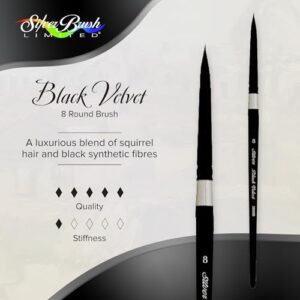
- A medium synthetic round, around size 6, for most shapes.
- A small synthetic round, size 1 or 2, for details.
- A synthetic flat, about 1/2 inch, for clean flat areas.
- Optionally, a small filbert for soft edges.
Buy more only when you notice a specific gap, such as needing a wider flat for backgrounds or a liner for thin lines.
How to Use Gouache Brush Strokes: Step by Step
1. Prepare the paint first
Squeeze a pea-sized amount of tube gouache onto the palette. Add water a few drops at a time with the brush and mix until the paint flows like heavy cream or thin yogurt. It should spread under the brush but not run. Mix enough for the whole area you plan to cover, because remixing an exact match mid-shape is difficult.
2. Dampen, then blot
Dip the brush in clean water, then touch the heel of the hairs to a paper towel or cloth to pull out excess. The bristles should be damp, not dripping. A brush full of water dilutes the paint as you load it and causes streaks.
3. Load the front two-thirds
Roll or press the brush into the mixed paint so it coats the front portion of the hairs. Avoid pushing paint up to the ferrule. Paint in the heel dries, stiffens the brush and is hard to wash out later.
4. Lay the stroke down with intent
Place the brush and pull it in one direction with even pressure. For flat areas, overlap each stroke slightly into the wet edge of the last one. Two or three passes over an area is fine; ten passes is where streaks and lifting begin.
5. Reload before the brush runs dry
When strokes begin to break up or look scratchy, reload rather than pressing harder. A starved brush leaves dry-brush texture you may not want.
6. Let layers dry before going over them
Wait until the surface loses its sheen and feels cool but not damp. Then paint the next layer with a well-loaded brush and a light touch, so you deposit paint rather than scrub.
7. Rinse frequently
Swish the brush in water between colors and every few minutes during long sessions. Use two water jars, one for the first rinse and one for clean water, so your whites and pale mixes stay clean.
Brush Strokes That Work Well With Gouache
Flat color fills
Use a flat brush with creamy paint. Start at one edge, paint in parallel strokes that overlap by roughly a third of the brush width, and finish the area while it is still wet. This gives the poster-like flat color gouache is known for.
Crisp edges
Load a round, then press gently so the belly holds paint and the tip defines the edge. Paint the edge first, then fill inward. With a flat, use the chisel edge and pull the brush along the line.
Soft edges and blends
Gouache blends best while wet. Lay two colors next to each other, then pass a clean, damp (not wet) filbert along the join with light strokes. If the paint has dried, you can soften an edge by dampening it slightly and feathering, but go gently to avoid lifting.
Dry brush texture
Load a little thicker paint, wipe most of it off on a towel, and drag the brush lightly so it catches the tooth of the paper. Useful for grass, wood grain, rough stone and hair.
Fine lines and highlights
Use a small round or liner with paint slightly thinner than normal so it flows. Hold the brush more upright, rest your hand on a scrap sheet, and pull rather than push. Opaque white gouache over a dark layer makes clean highlights if applied in one pass.
Glazes and washes
Diluted gouache can be used like watercolor for underpaintings. Use a larger round or a mop, keep the paint thin, and let it dry fully before opaque layers go on top.
Common Mistakes When Using a Gouache Brush
| Problem | Likely cause | Fix |
|---|---|---|
| Streaky flat areas | Paint too thin or brush too wet | Thicken to heavy-cream consistency, blot brush before loading |
| Muddy colors | Overworking wet paint, or lifting dry layers | Fewer strokes; wait for layers to dry; light touch on top |
| Chalky, cracked patches | Paint applied too thickly | Build opacity in two thinner layers instead of one heavy one |
| Scratchy broken strokes | Brush starved of paint | Reload more often |
| Brush stiff and splayed after a session | Paint dried near the ferrule | Load only the front of the hairs and rinse frequently |
| Visible brush marks | Stiff bristles or thick paint | Use a softer synthetic; add a few drops of water |
Gouache Brush Handling by Skill Level
Beginners
Practice consistency before subject matter. Paint swatches with the same color at three water ratios and see which one covers in one coat without streaks. Then paint simple flat shapes, such as squares and circles, to build a feel for loading and stroke count.
Intermediate painters
Plan your layers from dark to light or light to dark depending on the subject, and use larger brushes for longer than feels natural. Switching to small brushes too early tends to produce fussy, overworked paintings.
Advanced painters
Experiment with deliberate lifting, using a damp brush to soften or pull out light areas, and with combining opaque passages against transparent ones. Some painters add a drop of gum arabic or a gouache medium to adjust flow and reduce lifting, though results vary by brand.
Cleaning Your Brush After Gouache
Traditional gouache is gentle on brushes, which is one of its advantages. Still, a little routine keeps the point sharp.
- Rinse in water until no color appears.
- Work a small amount of mild brush soap into the hairs near the ferrule, then rinse again.
- Reshape the head with your fingers.
- Dry flat or tip-down. Do not store wet brushes upright, where water drains into the ferrule.
If you use acrylic gouache, clean immediately. It dries to a permanent film and behaves more like acrylic paint in the bristles.
Holding the Brush: Grip, Angle and Pressure
How you hold the brush changes the mark as much as the brush itself. For broad flat areas, hold the handle farther back and keep the brush at a low angle, around 30 to 45 degrees to the paper. This uses the side of the hairs and spreads paint evenly. For edges and lines, hold closer to the ferrule and bring the brush more upright so only the tip touches.
Pressure works in three stages with a round: tip only for hairlines, light pressure for a medium stroke, and pressing into the belly for a wide mark. Practicing a single stroke that starts thin, swells and tapers again teaches you to control all three. With a flat, rotating the handle between your fingers switches between the wide face and the thin chisel edge in one movement.
Keep your wrist relaxed for long strokes and move from the elbow or shoulder rather than the fingers. Finger-only movement tends to produce short, hesitant marks that look scratchy in gouache.
How Paper Changes Your Brushwork
| Surface | How the brush behaves | Adjustment |
|---|---|---|
| Hot-press watercolor paper | Smooth; paint glides and lays flat | Ideal for flat color and fine detail; fewer strokes needed |
| Cold-press watercolor paper | Slight texture catches the brush | Load a little more paint; good for dry-brush effects |
| Mixed-media paper | Can buckle with wet layers | Use creamier paint and less water |
| Sketchbook paper | Absorbent; layers lift easily | Thicker paint and minimal reworking |
| Illustration board | Firm, smooth, stays flat | Good for crisp edges and lettering |
Lighter papers buckle when they absorb water, which makes flat strokes difficult. Taping paper down on all sides, or choosing a heavier sheet around 140 lb (300 gsm), keeps the surface flat enough for even brushwork.
A 20-Minute Practice Routine for Brush Control
- Consistency swatches (5 minutes): Mix one color at three dilutions and paint a small square of each. Note which one covers in one pass.
- Flat squares (5 minutes): With a flat brush, paint three 1-inch squares in a single color using as few strokes as possible.
- Pressure strokes (5 minutes): With a round, paint rows of thin-thick-thin strokes, then rows of dots of increasing size.
- Layer test (5 minutes): Once the squares are dry, paint a contrasting color over half of each with one stroke. Check for lifting and adjust your touch.
Repeating this a few times trains the loading, pressure and timing that every gouache painting relies on.
FAQs
Should the brush be wet or dry for gouache?
Damp. Dip it in water and blot the excess before loading paint. A dripping brush thins the paint and causes streaks, while a completely dry brush drags and can damage the hairs over time.
Can I use watercolor brushes for gouache?
Yes. Gouache is water-based, so watercolor brushes work. Springy synthetics usually handle gouache’s thicker body better than very soft, floppy mops.
Why does my gouache look streaky?
Usually the paint is too thin or the brush is carrying too much water. Mix to a creamy consistency, blot the brush, and use overlapping strokes in one direction.
How do I stop lifting the layer underneath?
Let the lower layer dry, load the brush well so the paint does the work, and use one or two light strokes rather than scrubbing.
Are acrylic brushes okay for gouache?
Soft synthetic acrylic brushes work fine. Stiff bristle brushes can leave ridges and disturb lower layers.
How many brushes do I need to start gouache?
Three is enough: a medium round, a small round and a flat. Add a filbert or liner when you find you need one.
Next Step
Good brush handling with gouache comes down to a few habits: creamy paint, a damp rather than wet brush, confident strokes, and patience between layers. Practice those on swatches for an evening and your flat areas will start looking clean and even.
Once you know how you like to paint, the right tools make those habits easier. Our comparison of top brush picks for smooth gouache strokes breaks down rounds, flats and sets by size and filament so you can build a kit that fits your style.