PaintingProGuide is reader-supported. When you buy through links on this page we may earn an affiliate commission at no extra cost to you.
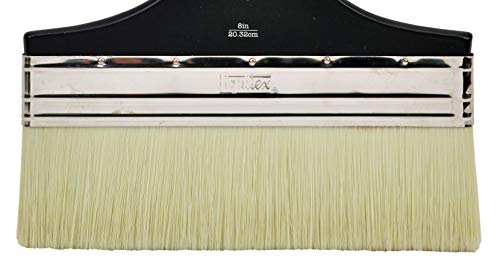
If you are looking for a Liquitex oil painting brush, the first thing to know is that Liquitex builds its brushes around acrylic. The Liquitex brush that turned up in our October 2026 Amazon check is the Large Scale Broad Flat/Varnish Brush, a 3-inch synthetic brush whose listing recommends pairing it with Liquitex acrylic colors and mediums. It can still earn a place in an oil painter’s kit, but for a specific job, not as an all-round oil brush.
This review explains where that brush fits in oil painting, where it does not, and which oil-friendly brushes and sets fill the gaps, starting with a natural hog bristle set built for oil.
Quick answer: The Liquitex Large Scale Broad Flat/Varnish Brush (3 inch) is useful to oil painters for toning large canvases, laying in big backgrounds and applying varnish. For actual oil painting strokes, the Fuumuui 11-piece Hog Bristle set is the better match because stiff natural bristle moves thick oil paint well. If you want many shapes in one purchase, the Fuumuui 25-piece 9-shape set is the alternative.
Our Top Picks at a Glance
- Liquitex Large Scale Broad Flat/Varnish Brush, 3 inch — Best for toning, large backgrounds and varnishing
- Fuumuui 11pcs Hog Bristle Oil Paint Brush Set — Best for traditional oil brushwork
- Fuumuui 25pcs 9-Shape Paint Brush Set — Best for trying many shapes with oil and acrylic
- Nicpro 30pcs Paint Brush Set — Best for broad size range on a budget
- GETHPEN 12pcs Filbert Brush Set — Best for blending and soft edges
- Benicci 12-Piece Brush Set — Best low-cost synthetic set for oil and acrylic
| Product | Best For | Key Spec | Key Strength | Price Tier |
|---|---|---|---|---|
| Liquitex Broad Flat/Varnish 3 in | Toning, varnish | 3-inch width, long handle | Covers large areas fast | $$ |
| Fuumuui 11pcs Hog Bristle | Oil brushwork | Natural Chungking hog bristle | Stiff, dense heads for thick paint | $$ |
| Fuumuui 25pcs 9-Shape | Shape variety | 24 brushes in 9 shapes + knife | Includes rigger, dagger, cat tongue | $$ |
| Nicpro 30pcs | Size range | Flats, rounds, filberts #0–#14 and more | Many sizes plus canvas roll | $$ |
| GETHPEN 12pcs Filbert | Blending | Filberts #1–#12 | Full filbert size run | $ |
| Benicci 12-Piece | Budget synthetic | Flat, round, fan, filbert | Low cost, core shapes | $ |
How We Chose
We have not painted with these brushes. Our picks are based on the Amazon listing details and specifications checked in October 2026, how well each brush or set’s fiber, shapes and sizes fit oil painting, and how widely each product is reviewed by Amazon buyers. We put fiber type high on the list because it matters more in oil than in almost any other medium.
- Fiber: natural hog bristle for thick paint and texture, synthetic for smooth blending and detail.
- Shapes: flats, filberts and rounds are the core of oil painting; brights and riggers are useful extras.
- Size range: enough small, medium and large brushes to block in and refine.
- Handle and ferrule: long handles for easel work, secure ferrules that tolerate solvent cleaning.
- Fit to the query: how directly the product serves someone who wants a Liquitex brush for oil.
Liquitex Oil Painting Brush Review: The Large Scale Broad Flat
1. Liquitex Large Scale Broad Flat/Varnish Brush, 3 Inch — Best for Toning, Large Backgrounds and Varnishing

The listing keeps things short. This is a single 3-inch broad flat with a long handle described as easy to grip for quick strokes on large-scale work. Liquitex lists three applications: large surface covering, varnishing and broad gestural strokes. It also recommends the brush for use with Liquitex Professional Acrylic colors and mediums, which tells you the intended medium.
So why consider it for oil? Because some oil painting jobs are about coverage, not finesse. Toning a large canvas with a thin wash, scrubbing in a background, and applying final varnish evenly all go faster with a wide, flat brush. The synthetic fibers can be cleaned of oil paint with an appropriate brush cleaner or solvent, then washed with soap.
What it will not do is replace a set of oil brushes. A 3-inch head has no use in drawing, edges or detail, and the listing does not describe the fiber’s stiffness, so it may not push heavy oil paint the way a bristle brush does.
Best suited for: oil painters working on large canvases who need a dedicated brush for toning, broad lay-ins and varnish.
Key features:
- 3-inch broad flat head
- Long handle for quick strokes on large work
- Listed for large surface covering, varnishing and gestural strokes
Pros:
- Speeds up toning and background work on big canvases
- Wide head helps lay varnish in even passes
- Single-purpose tool that lasts if kept clean
Cons and limitations:
- Designed and marketed for acrylic, not oil
- One brush only; no use for detail or edges
- Fiber stiffness is not described in the listing
Buying consideration: if you use it for varnish, keep it only for varnish. Paint residue in a varnish brush can streak a final coat.
Alternatives Worth Comparing
For the brushwork itself, these are the options in our product data that suit oil painting best, starting with the only natural bristle set.
2. Fuumuui 11pcs Hog Bristle Oil Paint Brush Set — Best for Traditional Oil Brushwork

Hog bristle is the traditional choice for oil because its stiff, naturally split tips hold thick paint and push it around the canvas. Fuumuui’s set uses natural Chungking hog bristle, which the listing describes as very dense, thickly haired brushes with nicely weighted handles. Ferrules are nickel-plated brass, double-crimped, and the handles are polished birch. Each brush comes individually wrapped to protect its shape.
The listing names flat, filbert and round brushes for detail, wash, fills and thin to thick lines, and describes using them for branches, trees, texture, water, gravel, snowbanks and grass.
Best suited for: oil painters who work with paint straight from the tube or with little medium, and anyone wanting visible, textured brushwork.
- 11 natural hog bristle brushes
- Nickel-plated brass, double-crimped ferrules
- Polished birch handles; individually wrapped
Pros:
- The classic fiber for oil painting
- Dense heads carry plenty of paint
- Durable ferrule construction
Cons and limitations:
- Bristle leaves visible strokes, less suited to very smooth blending
- Natural bristle is harder on fine detail than soft synthetics
Buying consideration: pair these with one or two soft synthetic rounds for the final details.
3. Fuumuui 25pcs 9-Shape Paint Brush Set — Best for Trying Many Shapes

This set includes 24 brushes in nine shapes, large wide flat, flat, filbert, fan, dagger, cat’s tongue, round, angle and rigger, plus a palette knife and a waterproof canvas roll with a slot for each brush. Fuumuui lists oil alongside acrylic and watercolor. The synthetic fibers are described as holding more pigment than standard brushes and keeping their shape under pressure, with birch handles and double-crimped ferrules.
Best suited for: painters who work in both oil and acrylic and want every common shape in one roll.
- 24 brushes in 9 shapes plus palette knife
- Synthetic fibers, birch handles
- Waterproof canvas roll
Pros:
- Rigger and dagger handle lines and branches
- Palette knife adds a mixing and texture tool
Cons and limitations:
- Synthetic, so less grip on very thick oil paint than hog bristle
- Many shapes you may not need
Buying consideration: a good companion to a hog bristle set, giving you softer shapes for blending and fine lines.
4. Nicpro 30pcs Paint Brush Set — Best for Broad Size Range on a Budget

Nicpro’s 30 pieces are itemized in detail: eight flats, six rounds from #0 to #14, six filberts from #2 to #14, three angles, three fans, two daggers, a cat’s tongue, a liner and a spatula, packed in a nylon canvas roll the listing describes as resistant to oil and water. Fibers are nylon with double-crimped aluminum ferrules and birch handles.
Best suited for: oil painters who prefer smooth, blended surfaces and want lots of sizes.
- 30 pieces with itemized sizes
- Nylon fibers, aluminum ferrules
- Oil- and water-resistant roll
Pros:
- Full size run in flats, rounds and filberts
- Roll handles oily brushes without soaking through, per the listing
Cons and limitations:
- Nylon is softer than bristle for impasto
- More brushes than most painters use regularly
Buying consideration: strong value if you paint thin layers and blend a lot.
5. GETHPEN 12pcs Filbert Brush Set — Best for Blending and Soft Edges

The filbert, a flat brush with a rounded tip, is arguably the most versatile oil painting shape. It makes soft-edged strokes, blends well and can turn sideways for thinner lines. GETHPEN’s set gives you a full run of 12 filberts, sizes 1 through 12, in soft synthetic bristles with short white wooden handles and crimped aluminum ferrules. It lists oil, acrylic and watercolor among its uses.
Best suited for: portrait and figure painters, and anyone who blends skin tones, skies or soft forms.
- 12 filberts, sizes 1–12
- Soft synthetic bristles
- Short wooden handles; storage container
Pros:
- Complete filbert size range in one pack
- Very low cost
Cons and limitations:
- Short handles are less ideal for standing at an easel
- One shape only
Buying consideration: an inexpensive way to discover how many filbert sizes you actually use.
6. Benicci 12-Piece Brush Set — Best Low-Cost Synthetic Set for Oil and Acrylic

Benicci names this its 12-piece acrylic and oil brush set. It includes flat, round, fan and filbert shapes in high-grade nylon with ergonomic wooden handles, and the listing claims the bristles do not shed and keep their shape. It is pitched as a middle ground between cheap and premium brushes.
Best suited for: beginners testing oil painting before spending more.
- 12 nylon brushes in four shapes
- Wooden handles
- Listed for oil, acrylic and watercolor
Pros:
- Core shapes at a very low cost
- Works across mediums
Cons and limitations:
- Sizes not listed in the bullets
- No natural bristle option for thick paint
Buying consideration: fine for learning; upgrade to bristle when you start working thicker.
Buying Guide: How to Choose Oil Painting Brushes
Hog bristle vs synthetic
Hog bristle is stiff and has naturally split tips that hold paint, making it the standard for thick oil and visible brushwork. Synthetics are smoother, keep a sharper edge and blend more softly. Most oil painters use both: bristle for blocking in and texture, synthetic for blending and detail.
Core shapes
Flats lay in planes and make crisp edges. Filberts blend and soften. Rounds draw and detail. Brights, short flats, give control with thick paint. A rigger or liner handles thin lines like branches and rigging.
Long handles
Oil painting is traditionally done standing at an easel, at arm’s length. Long handles let you hold the brush further back for looser strokes and help you see the whole painting. Short handles suit close work at a table.
Solvent resistance
Oil brushes are cleaned with solvent or oil-based cleaners, then soap. Secure, double-crimped ferrules and good glue resist loosening from repeated cleaning.
Size range for your canvas
Buy brushes scaled to your work. Large canvases need wide flats and big filberts; small panels need fewer large brushes and more mid sizes. The 3-inch Liquitex brush only makes sense on large surfaces.
A dedicated varnish brush
A wide, soft, clean brush reserved for varnish gives even coats without streaks or contamination. This is where the Liquitex Broad Flat fits best.
Using a Broad Flat for Toning and Varnishing in Oil
Since the Liquitex Broad Flat’s real value for oil painters lies in two tasks, here is how to approach each one.
Toning a canvas
- Mix a small amount of a transparent earth color, such as burnt sienna or raw umber, with odorless solvent until it is thin and watery.
- Load the broad flat and cover the canvas in quick, overlapping strokes.
- Wipe back with a lint-free rag to even the tone and lift excess paint.
- Let the toned layer dry or become tacky before painting over it, and keep it lean so later layers stay fat over lean.
Applying varnish
- Wait until the painting is fully dry. Thick oil passages can take many months.
- Work in a dust-free room with the painting lying flat.
- Use a clean brush that has never touched paint, loaded lightly with varnish.
- Apply in long, parallel strokes, then a light second pass at a right angle if the varnish maker recommends it.
- Leave the painting flat until the varnish has set.
A Practical Oil Brush Kit From These Picks
You do not need every product on this page. A balanced oil kit could look like this:
- Hog bristle flats and filberts from the Fuumuui 11-piece set for blocking in and textured passages.
- Synthetic filberts from the GETHPEN run for blending skin, sky and soft transitions.
- A synthetic round and rigger from a mixed set such as the Fuumuui 25-piece for detail and lines.
- The Liquitex 3-inch Broad Flat for toning large canvases, plus a second one kept only for varnish if you varnish often.
That combination covers coverage, texture, blending and detail without a drawer full of brushes you never touch.
Build Brush Control
Most brush shapes become more useful once you can control them. Practice thin, steady lines with our guide to using a liner brush for detail work, and try the exercises in painting dots with a round brush to build tip control that carries over to oil.
Common Mistakes to Avoid
- Using only soft synthetic brushes for thick oil. They bend under heavy paint. Add hog bristle brushes for impasto.
- Leaving brushes in solvent. Long soaks loosen ferrules and bend tips. Clean promptly, then wash with soap.
- Using the same brush for paint and varnish. Residue can streak the final coat.
- Buying short handles for easel work. They push you too close to the canvas.
- Expecting a 3-inch brush to do detail. Wide brushes are for coverage only.
- Skipping soap after solvent. Solvent alone leaves oily residue in the heel of the brush.
FAQs
Does Liquitex make brushes for oil painting?
Liquitex’s brush listings, including the one reviewed here, are designed around acrylic. Synthetic brushes like the Liquitex Broad Flat can be used with oil if cleaned properly, but they are not marketed as oil brushes.
Can I use synthetic brushes with oil paint?
Yes. Synthetic brushes handle oil well, especially for smooth blending and detail. Clean them with an appropriate cleaner or solvent, then soap and water.
What is the Liquitex Large Scale Broad Flat brush used for?
Liquitex lists large surface covering, varnishing and broad gestural strokes. For oil painters, it is most useful for toning canvases, laying in backgrounds and applying varnish.
Are hog bristle brushes better for oil painting?
For thick paint and textured brushwork, yes. Hog bristle is stiff and carries a lot of paint. For smooth blending and fine detail, many painters prefer synthetics.
What brushes should a beginner oil painter buy?
A few hog bristle flats and filberts in small, medium and large sizes, one or two synthetic rounds for detail, and a wide flat for toning. That covers most beginner work.
How do I clean oil painting brushes?
Wipe off excess paint, rinse in an odorless solvent or oil-based brush cleaner, then wash with soap and water, reshape the tip and let the brush dry flat.
Final Recommendation
The Liquitex Large Scale Broad Flat/Varnish Brush is worth buying as a specialty tool if you paint large oil canvases and want a dedicated brush for toning and varnish. It is not a complete oil painting brush.
For the painting itself, start with the Fuumuui 11-piece Hog Bristle set. If you work in both oil and acrylic, the Fuumuui 25-piece 9-shape set or the Nicpro 30-piece set adds range. Portrait painters who blend a lot will get value from the GETHPEN filbert run, and budget-minded beginners can try the Benicci set first.