Quick answer: Good seasonal painting ideas for kids tie a simple technique to what they can see outside: fingerprint blossoms and tissue-paper rainbows in spring, ice painting and watercolor sunsets in summer, leaf prints and fork-painted pumpkins in fall, and salt-watercolor snowflakes and crayon-resist winter nights in winter. Rotate projects through the year so kids practice new techniques while celebrating each season.
Seasons give kids a built-in reason to paint. The first warm day, a pile of crunchy leaves, or a frosty window are prompts no worksheet can match. A year of seasonal painting ideas for kids also quietly builds skill: each season pairs naturally with certain techniques, so by the time the calendar comes around again, your child has tried stamping, resist, washes, printing, and splatter without ever doing a “lesson.” Below you’ll find 32 ideas organized by season and age, a month-by-month planner, and the color palettes that make each season look right.
How to Use This Seasonal Painting Plan
Each season below includes ideas for three age bands: preschool (3–5), early elementary (6–8), and older kids (9–12). Most ideas work with washable tempera and paper; a few use watercolor or canvas. Pick one or two per month rather than trying everything at once. Repeating a favorite project each year also creates a lovely record of how your child’s skills change.
If you are looking for more project picks across holidays and seasons, our curated list of top seasonal painting ideas is a handy companion to this guide.
Seasonal Color Palettes for Kids
Giving kids a limited palette that matches the season helps their paintings look cohesive and teaches color mood without any theory.
| Season | Core colors | Mixing challenge |
|---|---|---|
| Spring | Pale pink, lilac, leaf green, sunny yellow, sky blue | Add white to make soft pastels |
| Summer | Turquoise, hot pink, orange, lemon yellow, bright green | Mix the brightest possible orange |
| Fall | Burnt orange, red, gold, brown, deep plum | Mix brown from red, yellow, and blue |
| Winter | White, icy blue, navy, silver, pale purple | Create three different blues with white |
Spring Painting Ideas for Kids
Spring is about new growth, rain, and soft color. Techniques that build up small marks, like fingerprints, dots, and stamps, mirror the way blossoms and buds appear.
Preschool (3–5)
- Fingerprint cherry blossoms: draw bare branches with a brown marker, then let kids press pink and white fingertips along them.
- Bottle-bottom flowers: dip the base of a plastic soda bottle in paint; the five-lobed bottom stamps a perfect flower shape.
- Raindrop dot painting: use cotton swabs to dot blue “rain” falling from a cotton ball cloud glued at the top.
Early Elementary (6–8)
- Tissue-paper rainbow bleed: lay strips of bleeding art tissue on watercolor paper, mist with water, let dry, and peel off to reveal soft color. Paint a black umbrella or birds over it.
- Butterfly symmetry prints: paint one half of a butterfly on folded paper, press, and open for a mirrored design.
- Puddle reflections: paint a simple tree or house and its upside-down reflection in a blue puddle below.
Older Kids (9–12)
- Wet-on-wet tulip field: wet the paper, drop in reds, pinks, and yellows for flower heads, then add stems with a dry brush once the paper is damp rather than wet.
- Bird on a branch: practice simple shapes (oval body, circle head, triangle beak) on a canvas panel with a pastel background.
Summer Painting Ideas for Kids
Summer means outdoor painting, bright saturated color, and projects that are fine to get messy. Many summer activities also cool kids off.
Preschool (3–5)
- Ice cube painting: freeze washable liquid watercolor in an ice cube tray with craft sticks as handles, then “paint” outdoors as the cubes melt.
- Sidewalk water painting: a bucket of water and a big brush turn the patio into a canvas that resets as it dries.
- Bubble wrap sea creatures: stamp painted bubble wrap for fish scales and jellyfish tops. Our bubble wrap painting tips include more pattern ideas.
Early Elementary (6–8)
- Watercolor sunset silhouettes: blend yellow, orange, and pink bands across the page, let dry, then paint black palm trees or a city skyline along the bottom.
- Sponge-painted watermelons: sponge a red semicircle, add a green rind, and dot black seeds with a pencil eraser.
- Splatter fireworks: outdoors on a dark paper, flick bright paint from a toothbrush, then add sparkle with glitter glue.
Older Kids (9–12)
- Underwater wax resist: draw coral, fish, and seaweed in crayon, then wash over with layers of blue and green watercolor.
- Beach painting on canvas: paint sky, sea, and sand bands, then use a dry brush for foam lines where waves meet the sand.
- Plein air sketch: take a small watercolor kit to a park and paint one tree, flower, or bench from life in 20 minutes.
Fall Painting Ideas for Kids
Fall offers free art supplies on every sidewalk. Leaves, acorns, pine cones, and twigs all make excellent stamps and brushes.
Preschool (3–5)
- Leaf prints: paint the veined underside of a fresh leaf, press it onto paper, and lift. Layering red, orange, and yellow prints creates a rich autumn collage.
- Fork-painted pumpkins: drag an orange-loaded fork in curved strokes to suggest pumpkin ridges; add a green stem with a finger.
- Apple stamps: cut an apple in half crosswise to reveal the star in the center, blot, dip, and stamp.
Early Elementary (6–8)
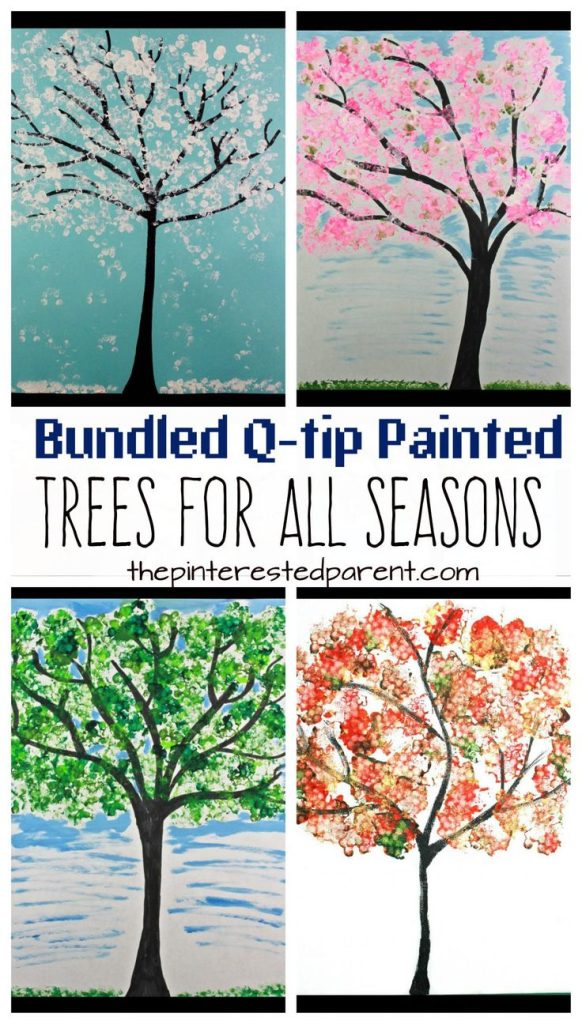
- Cotton swab autumn tree: paint a brown trunk and branches, then fill the canopy with dots of warm colors using bundled swabs.
- Scarecrow or owl portrait: paint big simple shapes, then add texture with dry brush for straw or feathers.
- Pine cone rolling: roll a paint-dipped pine cone across paper inside a shallow box for wild texture.
Older Kids (9–12)
- Leaf study with color mixing: collect three leaves and challenge kids to mix paint that exactly matches each one. It is a great color-mixing exercise.
- Harvest moon landscape: paint a large pale orange moon low on the horizon over dark fields, then add silhouetted trees or a barn.
- Fall paint night at home: set up a family canvas night with a simple step-by-step design such as a pumpkin patch, and let each person put their own spin on it.
Winter Painting Ideas for Kids
Winter projects lean on contrast: white on dark, cold blues against warm lights. Resist techniques and salt effects feel especially wintry.
Preschool (3–5)
- Puffy paint snowmen: mix equal parts white school glue and foam shaving cream, then let kids spread it into snowman shapes on blue paper. It dries puffy. Supervise so it stays off faces.
- Handprint penguins: a black handprint turned upside down becomes a penguin body; add a white belly and orange feet.
- Snowy cotton ball stamping: clip cotton balls into clothespins and stamp white snow over a painted scene.
Early Elementary (6–8)
- Salt watercolor snowflakes: draw snowflakes in white crayon, paint over with blue and purple watercolor, and sprinkle salt while wet for a frosty texture.
- Winter night village: paint a dark blue sky, simple house shapes, and yellow window squares. Splatter white for falling snow.
- Mitten pattern prints: paint mitten shapes with stripes, dots, and zigzags, then cut them out and hang them on a string.
Older Kids (9–12)
- Northern lights: blend green, teal, and purple wavy bands over a navy wash, then paint a black pine forest silhouette along the bottom.
- Cardinal on a snowy branch: practice painting a simple red bird with highlight and shadow on a white background.
- Valentine’s mixed media: late winter is a great time for heart-themed collages and prints. For more ideas, see our easy Valentine’s Day painting ideas.
Month-by-Month Seasonal Painting Planner
| Month | Project idea | Technique practiced |
|---|---|---|
| January | Salt watercolor snowflakes | Wash and salt texture |
| February | Heart prints and collage | Printing, cutting, layering |
| March | Puddle reflections | Symmetry, observation |
| April | Fingerprint blossoms | Dotting, color tinting |
| May | Butterfly symmetry prints | Mirror printing |
| June | Ice cube painting | Color mixing through melting |
| July | Splatter fireworks | Splatter control |
| August | Underwater wax resist | Resist, layering washes |
| September | Apple stamps | Stamping, pattern |
| October | Leaf prints and pumpkins | Nature printing, texture |
| November | Leaf color-matching study | Color mixing accuracy |
| December | Winter night village | Contrast, splatter |
Easy Canvas Painting Ideas for Kids Step by Step (Any Season)
This one template adapts to every season by changing just a few details, which makes it ideal for a yearly tradition.
- Paint the sky. Spring: soft blue. Summer: bright turquoise. Fall: orange to pink. Winter: navy.
- Add a ground line. Green grass, golden sand, brown fields, or white snow across the bottom third.
- Paint one tree trunk in brown or black, rising from the ground with three or four branches.
- Decorate the tree for the season. Pink blossoms, full green leaves, orange-red dots, or bare branches with white snow along the tops.
- Add one seasonal detail: a bird, a sun, falling leaves, or snowflakes.
Paint this same tree four times a year on small canvas panels and display them as a set. Kids love seeing their seasonal series side by side.
Supplies That Cover a Whole Year
- Washable tempera in primaries, white, black, and a few seasonal extras such as pink and orange
- Pan or liquid watercolors
- Heavy paper and a few canvas panels
- Brushes in three sizes plus sponges and cotton swabs
- White crayons, table salt, painter’s tape, and glue
- Nature finds collected each season: leaves, flowers, pine cones
Store seasonal extras, such as dried leaves or leftover tissue paper, in a labeled box for each season. Next year, setup takes minutes instead of a shopping trip.
Tips for Seasonal Painting Success
- Go outside first. A five-minute walk to look at real blossoms, leaves, or snow gives kids details to include.
- Limit the palette. Four or five seasonal colors produce better results than a full set.
- Save and date the work. Seasonal art makes a natural yearly portfolio.
- Display by season. Swap a “gallery wall” or fridge display as each season changes.
- Turn art into gifts. Seasonal paintings work well as cards, gift tags, or calendar pages for relatives.
Adapting Seasonal Ideas to Where You Live
Not every child sees snow in January or red maples in October. In warm climates, swap snow scenes for winter citrus, holiday lights, or migrating birds, and let fall be about harvest foods rather than leaf color. In places with long winters, extend the indoor projects and save splatter and ice painting for the few warm weeks.
The point is observation. Ask kids what actually changes outside their own window each season, whether it is rain, wind, flowers, or the angle of the light, and paint that. Their paintings become more personal and more accurate at the same time.
Common Seasonal Painting Mistakes
- Waiting for the perfect day. A gray March afternoon is still spring; paint the rain.
- Using every color in the box. Seasonal palettes look stronger when limited.
- Skipping drying time between layers. Silhouettes and snow splatter smear on wet backgrounds; take a 15-minute break.
- Using fragile nature finds. Crispy, dry leaves crumble when printed. Fresh, flexible leaves give clearer veins.
FAQs
What are easy spring painting ideas for kids?
Fingerprint cherry blossoms, bottle-bottom flower stamps, butterfly symmetry prints, and raindrop dot paintings are all simple spring projects that use washable paint and household items.
What can kids paint in winter?
Salt watercolor snowflakes, puffy paint snowmen, handprint penguins, winter night villages with splattered snow, and northern lights scenes are all popular winter projects.
What are good fall painting ideas for kids?
Leaf prints, fork-painted pumpkins, apple stamps, and cotton swab autumn trees are classic fall choices. Older kids enjoy mixing paint to match real leaf colors.
What are easy canvas painting ideas for kids step by step?
A seasonal tree is one of the easiest: paint the sky, ground, trunk, and branches, then decorate for spring, summer, fall, or winter. Sunsets with silhouettes and simple pumpkin patches also work well.
How can I make seasonal painting educational?
Pair each project with a short nature walk, talk about why colors change with the seasons, and introduce one new technique per month. Color-matching challenges also teach mixing skills.
What paint is best for seasonal kids’ crafts?
Washable tempera suits most projects for young children, watercolor works for washes and salt effects, and acrylic is best for older kids painting outdoor items such as rocks or pumpkins.
Final Thoughts
Following the seasons gives kids an endless supply of subjects and a steady path through new techniques, all without feeling like a lesson. Pick a project for this month, go outside for a few minutes of inspiration, and start a seasonal series you can repeat every year. For more inspiration and our favorite picks for each time of year, browse our roundup of the best seasonal painting projects for 2026.