
PaintingProGuide is reader-supported. When you buy through links on this page we may earn an affiliate commission at no extra cost to you.
For a toddler, paint is not really about pictures. It is cold and squishy, it changes color when two blobs meet, it leaves a mark when pressed, and it can be smeared with a whole palm. That is sensory play: learning through touch, sight and movement. The right sensory paint for toddlers is thick enough to feel interesting, washable enough that cleanup does not end the fun, and labeled non-toxic with an age range that matches your child.
This guide compares five paints and one helpful accessory listed on Amazon, from a sealed mess-free finger painting station suitable from age 1 to big bulk bottles of washable tempera for daycares. We explain which options suit young toddlers who still put everything in their mouths, which work for older toddlers ready for brushes and sponges, and how to set up a session that stays fun for everyone.
Quick answer: For young toddlers, the Crayola Mess Free Finger Painting Station is the best sensory paint option: rated for ages 1 and up, it seals paint and paper under a flexible cover so little hands squish color without touching it directly, and the unit goes in the dishwasher. For full hands-on finger painting, Jar Melo Washable Finger Paints offer 10 colors in large 2.1 oz tubes with a silky, cream-like texture. Families and classrooms that paint often will get the most paint from Colorations Simply Washable Tempera, eight 16 oz bottles that are paraben-free and free of common allergens.
Our Top Picks at a Glance
- Crayola Mess Free Finger Painting Station — Best for young toddlers (ages 1+)
- Jar Melo Washable Finger Paints, 10 Colors — Best hands-on finger paint
- ABEIER Washable Finger Paint, 12 Colors — Best color range for ages 1 to 3
- Colorations Simply Washable Tempera, 8 x 16 oz — Best bulk paint for daycares and families
- Crayola Washable Project Paint, 6 Colors — Best budget set for older toddlers
- Bvrbaory 10-Pack Plastic Art Trays — Best accessory to contain the mess
| Product | Best For | Key Spec | Key Strength | Price Tier |
|---|---|---|---|---|
| Crayola Mess Free Station | Ages 1+, mess-averse homes | 3 x 5 oz paints; 10 coated sheets; sealed case | Squish-through cover, dishwasher safe | $$ |
| Jar Melo Finger Paints | Full sensory finger painting | 10 x 2.1 oz tubes | Silky, cream-like texture | $$ |
| ABEIER Finger Paint | Toddlers 1 to 3 | 12 colors; 1.21 oz each; ASTM D-4236 | Includes white, black and brown | $ |
| Colorations Tempera | Daycares, frequent painters | 8 x 16 oz; AP Seal; paraben-free | Allergen-conscious formula | $$ |
| Crayola Project Paint | Ages 3+, brush and sponge play | 6 x 2 oz; resealable caps | Low-cost, familiar brand | $ |
| Bvrbaory Art Trays | Containing paint play | 10 trays; 11 x 8.3 x 1.2 in | BPA-free, stackable | $ |
How We Chose
These picks are based on the Amazon listing details and specifications checked in October 2026, how well each paint’s texture, washability, packaging and stated age range fit toddler sensory play, and how widely each product is reviewed by Amazon buyers. We have not used these paints with children ourselves; all product details below come from the listings or from well-established guidance on children’s art materials.
What we weighed:
- Stated age range: a product labeled 1+ is a different proposition from one labeled 3+.
- Safety labeling: non-toxic claims, ASTM D-4236 conformance and AP Seal certification.
- Washability: from skin, surfaces and clothes, with honest notes on porous fabrics and wood.
- Texture: thick, creamy paint gives more sensory feedback and drips less.
- Volume: toddlers use paint by the handful; bigger bottles matter for frequent play.
- Mess control: sealed stations, trays and resealable caps make sessions easier to manage.
Best Sensory Paint for Toddlers Reviewed
1. Crayola Mess Free Finger Painting Station — Best for young toddlers, ages 1 and up

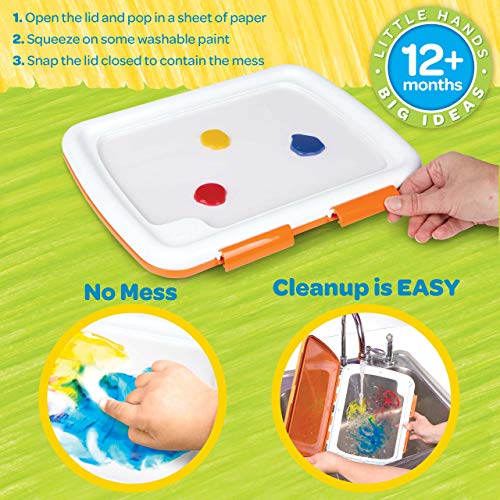
Crayola’s station is designed for the youngest painters and for parents who dread cleanup. The paint and a sheet of coated finger painting paper lock under a flexible cover. Your toddler presses, swirls and squishes through the cover, and the color moves underneath. It is listed as safe and non-toxic for ages 1 and up.
The kit includes the finger paint case, three 5 oz squeeze bottles of washable finger paint in red, blue and yellow, and 10 coated sheets. After a session, the unit can go under the faucet or into the dishwasher. Refill paint and paper are sold separately. You lose some direct tactile feedback compared with bare-hand painting, but you gain a version of sensory art that works at a kitchen table five minutes before a nap.
Best suited for: Toddlers from age 1, children who still mouth their hands, travel and restaurant play, and households that want minimal cleanup.
Key features:
- Sealed finger painting case with flexible cover
- 3 x 5 oz washable finger paints (red, blue, yellow)
- 10 coated finger paint sheets
- Unit is dishwasher safe
- Non-toxic; ages 1+
Pros:
- Youngest stated age range here
- Paint stays contained under the cover
- Easy, fast cleanup
- Teaches primary color mixing
Cons and limitations:
- Less direct hand-on-paint sensation
- Highest price tier of the paints here
- Only three colors; refills cost extra
Buying consideration: Start here for 1-year-olds, then add a hands-on finger paint as your child grows and stops mouthing everything.
2. Jar Melo Washable Finger Paints, 10 Colors — Best for full hands-on finger painting

Jar Melo’s set is built for messy, full-hand play. Ten tubes, each 2.1 fl oz (60 ml), give a total of 600 ml of paint, which is a lot of squishing. The brand describes the texture as silky, like a face cream, and the ingredients as non-toxic pigments with glycerin.
The listing says the paint washes off skin easily, and it is upfront that porous fabrics and wood may be harder to clean. It is suggested for paper, canvas, crafts and even foot painting, which makes it a natural choice for handprint and footprint keepsakes.
Best suited for: Toddlers ready for direct hand-and-foot painting under supervision; handprint crafts and sensory bins.
Key features:
- 10 colors in 2.1 fl oz (60 ml) tubes
- Silky, cream-like texture
- Non-toxic pigments with glycerin
- Washes off skin easily
- Suitable for paper, canvas, crafts and foot painting
Pros:
- Large tubes for lots of play
- Smooth, creamy sensory texture
- Good for handprint and footprint art
- Clear note about porous fabrics
Cons and limitations:
- No specific age range given in the listing
- May stain porous fabrics and wood
- Mid price tier
Buying consideration: Dress toddlers in old clothes and paint on a wipeable surface. This is the most “classic” sensory finger painting experience here.
3. ABEIER Washable Finger Paint for Toddlers, 12 Colors — Best for color variety for ages 1 to 3

ABEIER offers the widest palette among the finger paints: 12 colors including white, black, brown and pink, each 1.21 fl oz. The listing describes a thick, silky cream texture and states the paint conforms to ASTM D-4236, is non-toxic, and can be in direct contact with skin. It is marketed specifically for toddlers aged 1 to 3.
Like Jar Melo, ABEIER notes that porous fabric and wood can absorb paint. It also includes a choking-hazard note about small parts, so caps should stay with adults. The extra neutral colors let older toddlers paint animals, faces and more realistic scenes.
Best suited for: Toddlers aged 1 to 3 who enjoy color mixing; families wanting variety without stepping up a price tier.
Key features:
- 12 colors, 1.21 fl oz each (about 435 ml total)
- Thick, silky cream texture
- Conforms to ASTM D-4236; non-toxic
- Washable from skin, fabrics and plastics
- Marketed for ages 1 to 3
Pros:
- Most colors of the finger paints here
- Clear safety standard listed
- Neutral colors (white, black, brown) included
- Mid-low price tier
Cons and limitations:
- Smaller tubes than Jar Melo
- Small parts warning; caps need adult control
- Porous fabric and wood may stain
Buying consideration: A strong all-round choice once your child is ready for direct hand painting. Keep caps out of reach.
4. Colorations Simply Washable Tempera Paint, Rainbow 8-Pack — Best for daycares and frequent painters

Colorations is a classroom staple, and this rainbow set includes red, orange, yellow, green, blue, purple, black and white in 16 oz bottles, a full gallon of paint in total. The listing says it is paraben-free, certified with the AP Seal, made in the USA and conforms to ASTM D-4236. It also states the paint does not include latex, dairy, casein, egg, gluten, peanut, tree nuts or soy.
Tempera is a little thinner than finger paint, so it works with brushes, rollers and sponges as well as hands. Colorations says it will not chip, flake or crack when dry and works on paper, canvas, wood, cardboard and paper mache. For daycares and families who paint several times a week, the volume is the selling point.
Best suited for: Daycares, preschools, homeschool families and children with food allergies.
Key features:
- 8 colors, 16 oz each (128 oz total)
- Paraben-free; AP Seal certified; ASTM D-4236
- Free of latex, dairy, casein, egg, gluten, peanut, tree nut and soy
- Made in the USA
- Works with brushes, rollers, sponges and hands
Pros:
- Biggest volume by far
- Allergen-conscious formula
- Strong safety certifications
- Versatile for many surfaces and tools
Cons and limitations:
- High upfront price tier
- Thinner than dedicated finger paint
- Large bottles need decanting for small hands
Buying consideration: Pour small amounts into trays or muffin tins. For extra sensory texture with older toddlers who no longer mouth, stir in a little salt or sand.
5. Crayola Washable Project Paint, 6 Colors — Best for older toddlers on a budget

Crayola’s washable project paint is the low-cost entry point. Six 2 oz bottles come in bold colors, and the listing says the smooth, creamy paint blends easily and washes from skin and most washable clothing. Resealable caps help paint stay fresh.
Crayola rates this paint for ages 3 and up, so it is best for older toddlers and preschoolers. It is aimed at brushes and sponges on paper rather than pure finger painting, making it a good next step after a mess-free station.
Best suited for: Children aged 3 and up, brush and sponge painting, and families trying paint for the first time.
Key features:
- 6 washable colors, 2 oz each
- Smooth, blendable formula
- Resealable caps
- Washable from skin and most washable clothing
- Non-toxic; ages 3+
Pros:
- Lowest price tier here
- Trusted children’s brand
- Resealable caps reduce waste
- Easy to blend
Cons and limitations:
- Ages 3+, not for younger toddlers
- Small bottles for heavy sensory play
- Less thick than dedicated finger paint
Buying consideration: A sensible budget option for preschoolers. For under-3s, choose a product labeled for their age.
6. Bvrbaory 10-Pack Plastic Art Trays — Best for containing the mess

Not a paint, but this accessory transforms sensory painting. Each of the 10 trays measures 11 by 8.3 by 1.2 inches, and the raised edges hold paint, sand, beads and loose parts. The listing describes BPA-free, PVC-free plastic that is light, strong and odor-free, in eight bright colors.
Give each child a tray with paper inside, squeeze in a few colors, and the mess stays put. The trays stack for storage and work just as well for play dough, science experiments and sorting games.
Best suited for: Any family or classroom doing regular paint, sand or loose-parts play.
Key features:
- 10 trays in 8 colors
- 11 x 8.3 x 1.2 inches each
- BPA-free, PVC-free plastic
- Stackable
- Easy-grip square design
Pros:
- Raised edges contain paint spills
- One tray per child for group play
- Multi-use beyond painting
- Mid-low price tier
Cons and limitations:
- Does not include paint
- Small for large paper
- Plastic may stain with strong pigments
Buying consideration: Pair with any paint above. Trays make the difference between a quick cleanup and a full-kitchen scrub.
Buying Guide: How to Choose Sensory Paint for Toddlers
Every toddler is different. These factors help you choose paint that is safe, engaging and practical for your home or classroom.
Check the age label first
Paint labels list a recommended age for a reason. The Crayola Mess Free station is labeled 1+, ABEIER is marketed for 1 to 3, and Crayola project paint is 3+. Follow the label, and supervise closely at every age.
Non-toxic is not the same as edible
Non-toxic art materials are formulated not to cause harm with normal use, but they are not food. If your child still puts their hands in their mouth constantly, choose a sealed station or a paint specifically made to be taste-safe, and redirect hands away from faces.
Safety standards
Look for ASTM D-4236 conformance, which is the US labeling standard for art materials, and the AP Seal from the Art and Creative Materials Institute. Allergen statements matter for children with food allergies.
Texture and thickness
Finger paints are thick and creamy, which feels satisfying and drips less. Tempera is thinner and better for brushes and sponges. For more texture with older toddlers, mix in salt, sand or rice, keeping add-ins away from children who mouth.
Washability
Washable paints should come off skin and most washable clothing. Porous fabrics and wood absorb paint, as several listings note, so cover furniture and use play clothes.
Volume and packaging
Squeeze tubes and bottles are easier to control than tubs. Big bottles last longer but need decanting into small cups or trays.
Mess containment
Trays, splat mats, smocks and painting in the bath or outdoors all make sessions easier. Sealed stations are ideal for travel and limited cleanup time.
Sensory Painting Ideas and Next Steps
Once you have paint, the fun is in the activity. Our collection of sensory painting ideas for toddlers includes squish bags, ice painting, texture painting and more. For a simple, low-prep activity, try blob painting for toddlers, and see our tips on how to paint with toddlers for setup, timing and keeping sessions short and happy.
Common Mistakes to Avoid
- Ignoring the age label. Paint rated 3+ is not intended for a 1-year-old.
- Assuming non-toxic means safe to eat. Supervise and discourage mouthing.
- Putting out too much paint at once. A few small dollops are plenty; refill as needed.
- Painting in good clothes or on wood tables. Washable paint can still mark porous materials.
- Leaving caps within reach. Small caps are a choking hazard.
- Making sessions too long. Toddler attention spans are short; ten to fifteen minutes is often perfect.
FAQs
What is the best sensory paint for toddlers?
For young toddlers, the Crayola Mess Free Finger Painting Station is a strong choice because it is labeled for ages 1 and up and keeps paint sealed. For hands-on finger painting, Jar Melo and ABEIER finger paints offer thick, washable, non-toxic formulas.
At what age can toddlers start finger painting?
Some products are labeled for ages 1 and up. Many families start around 12 to 18 months with close supervision, using paint labeled for that age group and keeping sessions short.
Is washable finger paint safe if my toddler tastes it?
Non-toxic paint is formulated to be safe for normal use, but it is not food. If your child mouths frequently, use a sealed mess-free station or a product made to be taste-safe, and always supervise.
How do I get finger paint out of clothes?
Rinse with cold water as soon as possible, then wash normally. Washable paints are designed to come out of most washable clothing, but porous or delicate fabrics may hold stains.
What is the difference between finger paint and tempera?
Finger paint is thicker and creamier, made for hands. Tempera is a bit thinner and works with brushes, sponges and rollers as well as fingers. Both come in washable, non-toxic versions for kids.
How can I make paint more sensory for toddlers?
Change the texture or temperature: chill paint in the fridge, mix in salt or sand for older toddlers who no longer mouth, or seal paint in a zip bag for squishing. Our sensory painting ideas guide has more activities.
Final Recommendation
For toddlers around their first birthday, start with the Crayola Mess Free Finger Painting Station. When your child is ready for direct hand painting, choose Jar Melo for its large tubes and creamy feel, or ABEIER for more colors and an explicit ages 1 to 3 label.
Daycares and families who paint often should look at Colorations tempera for its volume and allergen-conscious formula, while Crayola Project Paint is the budget pick for children aged 3 and up. Whatever you choose, add a few Bvrbaory art trays: they keep the paint where it belongs and make sensory play something you will want to repeat.




