Start with simple subjects like skies, fruit, silhouettes, sunsets, and color blocks.
If you have wondered what to paint on a canvas for beginners, this guide gives you clear, friendly steps. I teach new painters every week, and I know how to turn fear into fun. You will learn easy subjects, simple color choices, and small wins that build skill fast. Read on to master what to paint on a canvas for beginners with confidence.
Start Here: Choosing Easy, Rewarding Subjects
When you ask what to paint on a canvas for beginners, think simple, bold, and high contrast. Big shapes are easier than tiny details. Clear light and dark areas make results look strong.
Pick subjects you can set up fast. Use a window, a lamp, or a phone flashlight. Keep the scene calm. One fruit on a plate beats a crowded table. In my classes, this shift alone helps beginners relax. That is the secret to what to paint on a canvas for beginners.
Paint from life when you can. If not, use your own photos. Make sure the photo has a clear focal point. Before you start, squint. If the main shape stands out while squinting, you chose well. This simple test works every time for what to paint on a canvas for beginners.
12 Beginner-Friendly Ideas to Paint Today
If you want fast wins and need what to paint on a canvas for beginners, start with these. Each idea builds a core skill and needs few colors.
1) Sky gradient
Practice soft blends. Use two or three blues and a touch of white. Work from dark at top to light near the horizon.
2) Single fruit still life
Choose an apple, lemon, or pear. Place it near a window. Focus on the shadow shape first, then the highlight.
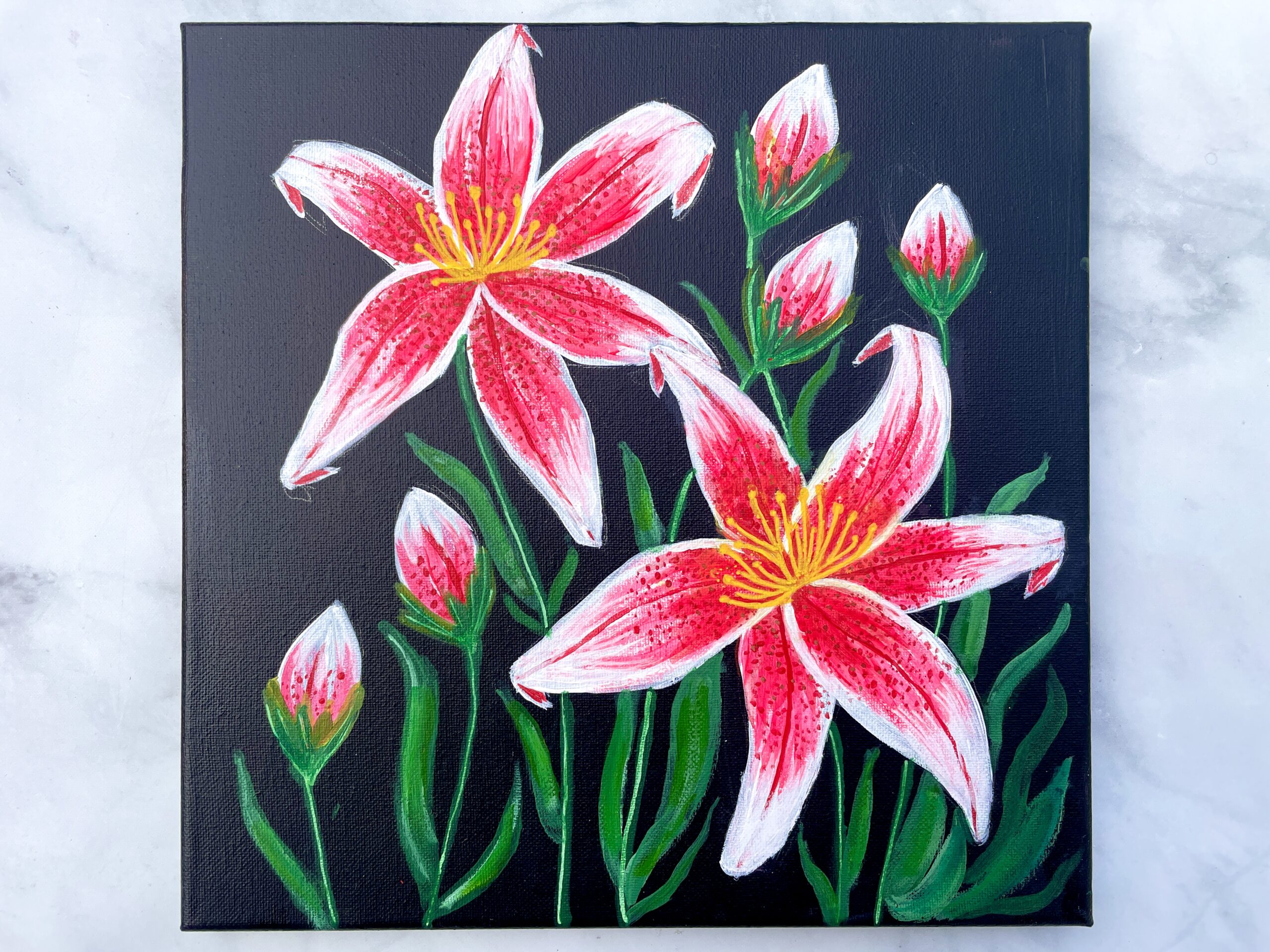
3) Simple flower head
Try a daisy or sunflower. Keep petals as big shapes. Add details last with a small brush.
4) Mountain silhouette
Paint a sunset sky. Add a dark mountain line on top. Sharp edges make it pop.
5) Beach scene
Use bands of sky, water, and sand. Add a bright white wave line. Keep shapes flat and clean.
6) Abstract color blocks
Tape off rectangles. Fill with two or three colors. Learn clean edges and color harmony.
7) Galaxy mini
Blend deep blues and purples. Dab stars with a toothbrush. Use a tiny dot brush for larger stars.
8) Leaf study
Pick a leaf with veins. Paint the large green shape first. Add veins with a thin, darker line.
9) Coffee mug
Paint a white mug with a cast shadow. The shadow tells the story. Use light gray for form.
10) City skyline silhouette
Use a photo with a strong outline. Keep windows minimal. Focus on sky color and clean edges.
11) Cactus in a pot
Simple shapes, clear contrast. Add small spines with a thin brush. Use warm terracotta for the pot.
12) Minimal boat on water
Paint a calm gradient water. Add a small dark boat shape. Suggest a reflection with soft strokes.
These ideas are proven hits. I use them when students ask what to paint on a canvas for beginners. Each one teaches a skill you will use again.

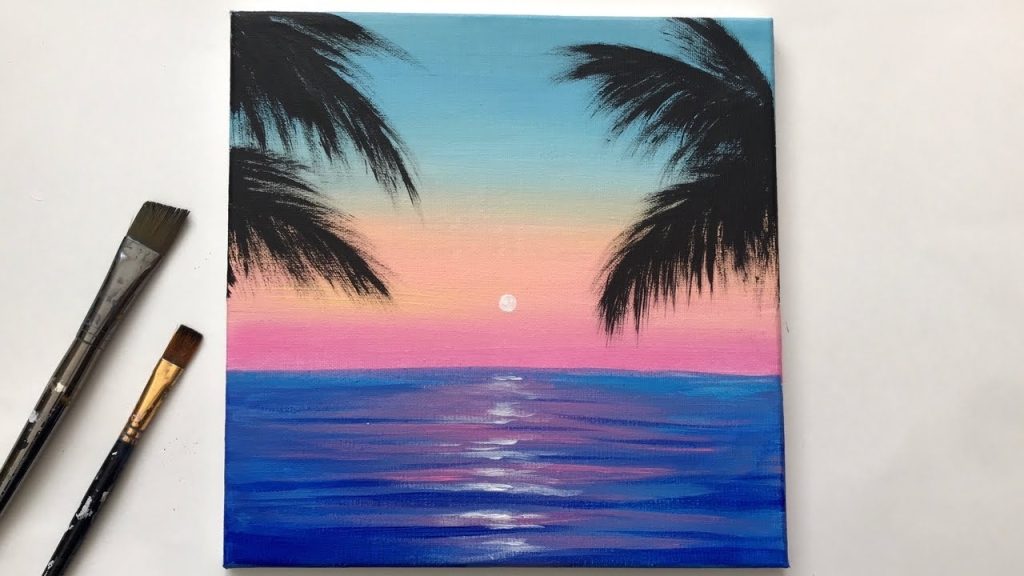
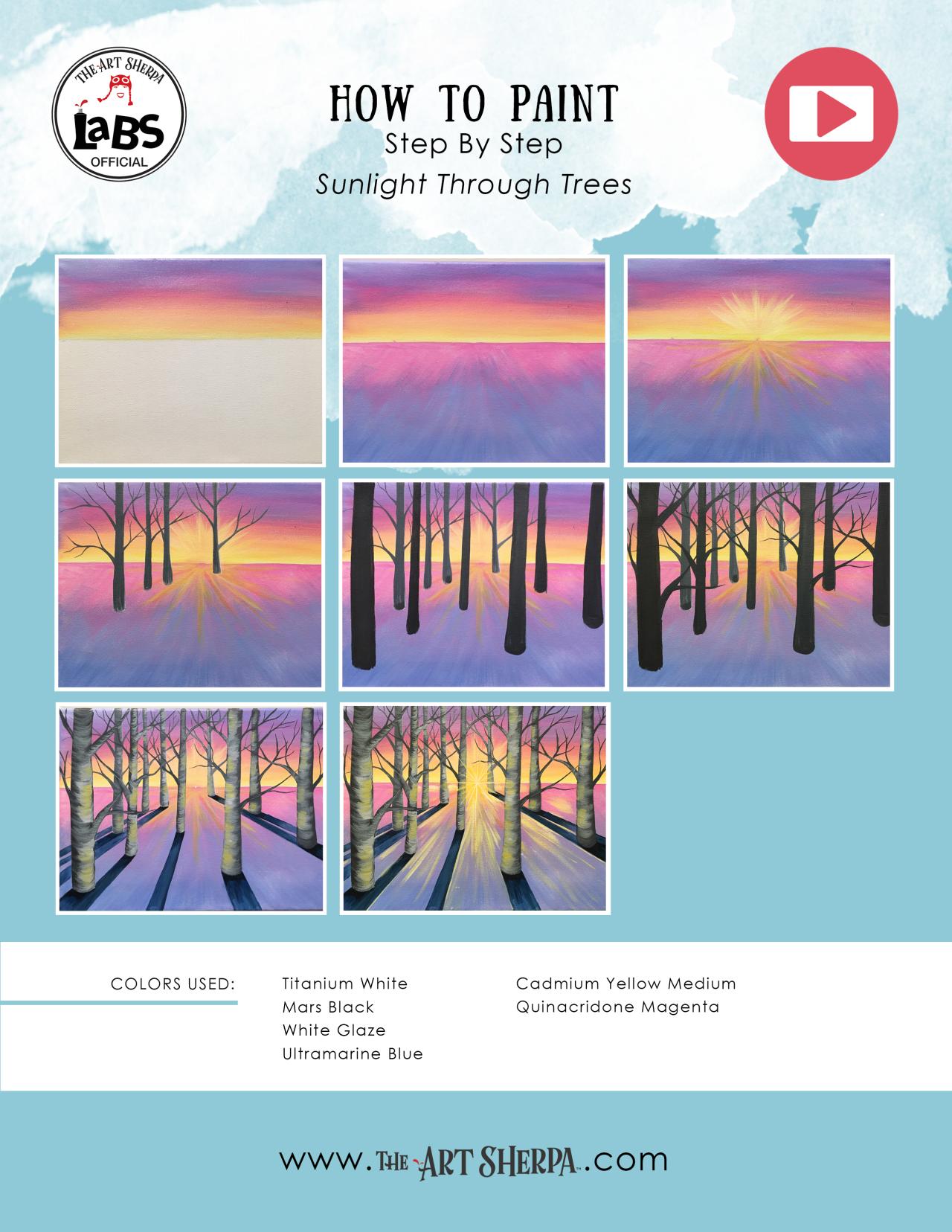
Step-by-Step Mini Project: Sunset Over Water
This quick project is great if you are unsure what to paint on a canvas for beginners. It blends color and shape in a simple scene.
- Prepare colors. Yellow, orange, magenta, ultramarine blue, and white.
- Paint the sky. Start with yellow near the horizon. Blend to orange and then to magenta higher up.
- Soften blends. Use a clean, slightly damp brush and gentle strokes.
- Add water. Mirror the sky colors below, but a bit darker.
- Horizon line. Use a ruler edge if needed. Keep it level and thin.
- Add a dark land strip. A simple shape is enough.
- Finishing touches. Add a few thin, light streaks on the water.
You now have a calm scene with bold color. This is a strong answer to what to paint on a canvas for beginners because it teaches blending and contrast with little detail.

Color, Brushes, and Canvas: Simple Setup
Good tools make learning smoother. You do not need many supplies to get started with what to paint on a canvas for beginners.
- Paint type. Acrylics dry fast and are easy to clean. Oils blend longer but need more setup.
- Basic palette. Titanium White, Ultramarine Blue, Phthalo Blue, Cadmium Yellow or Hansa Yellow, Cadmium Red Light, Alizarin Crimson or Quinacridone Magenta, Burnt Umber.
- Brushes. One medium flat, one small round, one large flat or mop. Add a liner for details.
- Canvas. 8×10 or 9×12 is perfect. Smaller sizes reduce pressure.
- Extras. Palette, paper towels, water jar, masking tape, and chalk or a light pencil.
In my studio, I limit new painters to five colors for two weeks. This boosts color control faster than any hack. Smart limits help with what to paint on a canvas for beginners.

Composition Made Easy
Strong composition guides the eye. It turns a simple idea into a clear story. When picking what to paint on a canvas for beginners, start with these basics.
- Rule of thirds. Place your main subject off-center. Avoid dead center unless you want bold symmetry.
- Big, medium, small. Use one big shape, one medium, and a few small accents.
- Values first. Decide light and dark areas before color. Squint to test.
- Clear edges. Mix soft edges with a few sharp ones at the focal point.
- Breathing room. Leave some empty space. It adds calm and clarity.
These simple rules turn a lemon on a plate into a strong painting. This is key to what to paint on a canvas for beginners that looks finished, not flat.

Common Mistakes Beginners Make and How to Fix Them
I see the same issues often. Small fixes lead to big wins. If you struggle with what to paint on a canvas for beginners, check this list.
- Muddy colors. Clean your brush often. Mix with a knife when possible.
- Over-detailing early. Block big shapes first. Add details in the last 10 percent.
- Weak darks. Do not fear strong shadows. Dark accents add depth fast.
- Chalky lights. Add a touch of warm color to white. Pure white is for the brightest spots.
- Rushing. Paint in layers. Let thin underlayers set before glazing or blending.
Small changes like these raise the success rate a lot. Students feel proud sooner, which keeps them painting.
A 14-Day Practice Plan
Want a clear track for what to paint on a canvas for beginners? Use this two-week plan. Keep sessions short. Aim for 30 to 45 minutes.
- Day 1. Sky gradient.
- Day 2. Single lemon with shadow.
- Day 3. Simple flower.
- Day 4. Mountain silhouette at sunset.
- Day 5. Abstract color blocks.
- Day 6. Coffee mug form study.
- Day 7. Beach bands and horizon line.
- Day 8. Leaf study with veins.
- Day 9. Galaxy mini.
- Day 10. City skyline silhouette.
- Day 11. Cactus in pot.
- Day 12. Boat on water reflection.
- Day 13. Pick your favorite and repaint it better.
- Day 14. Paint a small series of three. Same subject, three color moods.
This plan removes choice overload. It turns what to paint on a canvas for beginners into a simple, steady habit.
Inspiration Prompts You Can Repeat
When you feel stuck on what to paint on a canvas for beginners, use prompts that loop. Repeat them with new colors or light.
- One object, three angles. Paint a cup from the front, side, and top.
- One shape, three moods. Paint a circle in calm, bright, and dark palettes.
- Morning and night. Paint your window view at two times.
- Reflective study. Paint a spoon with highlights and shadows.
- Texture focus. Paint wood grain, stone, and fabric folds.
- Limited palette. Use only blue, orange, and white. Then switch to red, green, and white.
Looping prompts build skill fast. You learn more each round.
Frequently Asked Questions of what to paint on a canvas for beginners
What size canvas should I use first?
Start with 8×10 or 9×12. It is big enough to learn and small enough to finish.
How many colors do I need as a beginner?
Five to seven is ideal. Fewer colors help you learn mixing and avoid mud.
Should I copy photos or paint from life?
Do both. Paint from life to train your eye, and use photos for simple references with clear light.
How do I know if my subject is too hard?
Squint at it. If you cannot see clear light and dark shapes, pick a simpler subject.
What brush should I use for details?
Use a small round or a liner brush. Save details for the last stage when the big shapes are in.
Conclusion
You now have a clear path for what to paint on a canvas for beginners. Start with simple shapes, bold values, and easy color plans. Build wins with small projects and repeat favorite prompts to grow fast.
Pick one idea today. Set a 30-minute timer. Finish a tiny painting and hang it where you can see it. Want more step-by-step guides like this? Subscribe for new project plans, or leave a comment with your next painting idea.