Use odorless mineral spirits, linseed or safflower oil, and dedicated brush soap.
I have cleaned thousands of oil brushes in busy studio settings and quiet home spaces. In this guide, I cut through myths and show you what to use to clean oil paint brushes, from classic solvents to gentle, eco options. You will learn what works, why it works, and how to make your brushes last for years.
Why brush cleaning matters
Great brushes shape your strokes, edges, and blends. But oil paint dries into a hard film that can ruin bristles fast. Clean gear saves time, money, and your next layer’s finish. This is why it pays to know what to use to clean oil paint brushes.

What to use to clean oil paint brushes: the best options
Here are the top choices I reach for, in order of strength and control. Each has a role, and picking the right one keeps your brush hair safe.
- Odorless mineral spirits. The studio workhorse. It dissolves oil paint fast, has low odor, and leaves little residue. Choose artist-grade OMS for fewer impurities and better drying.
- Mineral spirits. Slightly stronger smell than OMS but effective and affordable. Good for first rinses when paint is heavy.
- Turpentine. Very strong, fast, and traditional. The smell is harsh and it can irritate skin and lungs. I reserve it for tough, old paint only, and I use strong ventilation.
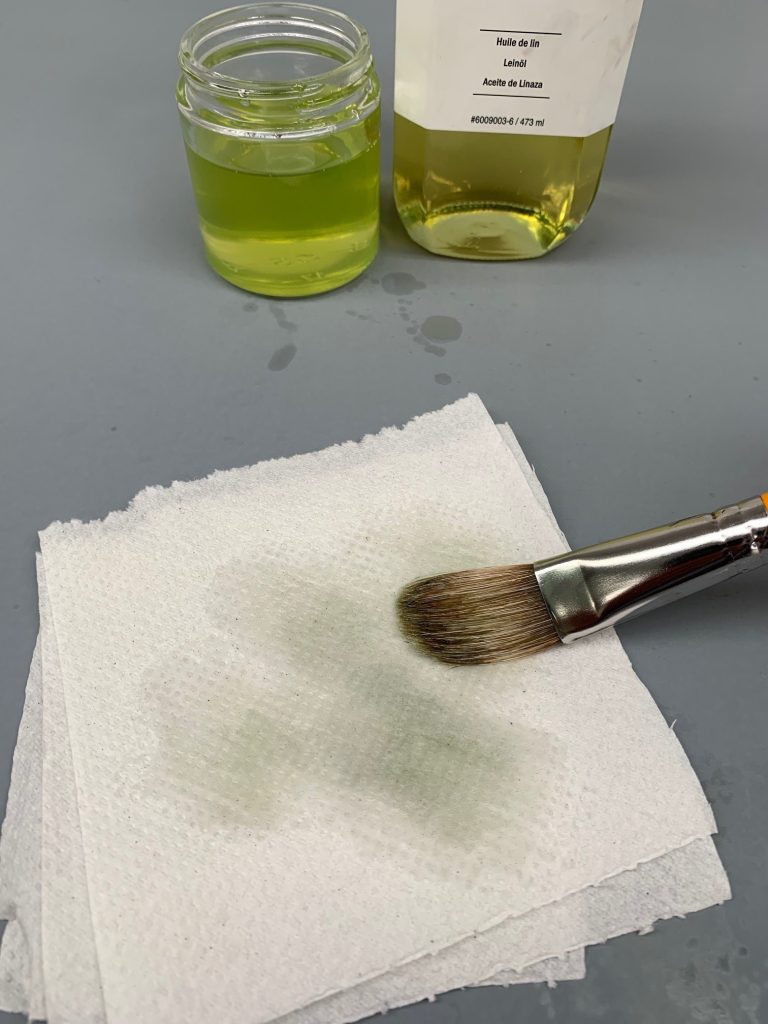
- Linseed or safflower oil. Gentle and safe on natural hair. These oils swell the paint and lift pigment. Great as a first step before soap and water.
- Dedicated brush soap. Artist soaps with conditioners clean and preserve bristles. They work with water and break down paint and oil residue without stripping hair.
- Mild dish soap. Handy, cheap, and effective for final washing. Choose a gentle, dye-free formula to avoid drying out bristles.
- Citrus-based cleaners. These break down oil with d-limonene. Low odor, but can be strong on skin. Patch test on synthetic brushes first.
- Biodiesel or plant-based solvents. Low VOC and kinder to air quality, but slower. Good for patient cleaning and home studios.
Two things guide what to use to clean oil paint brushes: the paint load and the brush hair. Start gentle, then build to stronger options only if needed. This approach keeps your brushes lively for years.
Step-by-step: how to clean oil paint brushes the right way
Use this simple workflow. It is fast, safe, and repeatable.
- Wipe excess paint. Use a rag or paper towel. Pinch from ferrule to tip.
- Oil loosen. Swirl the brush in a small cup of linseed or safflower oil. Wipe again.
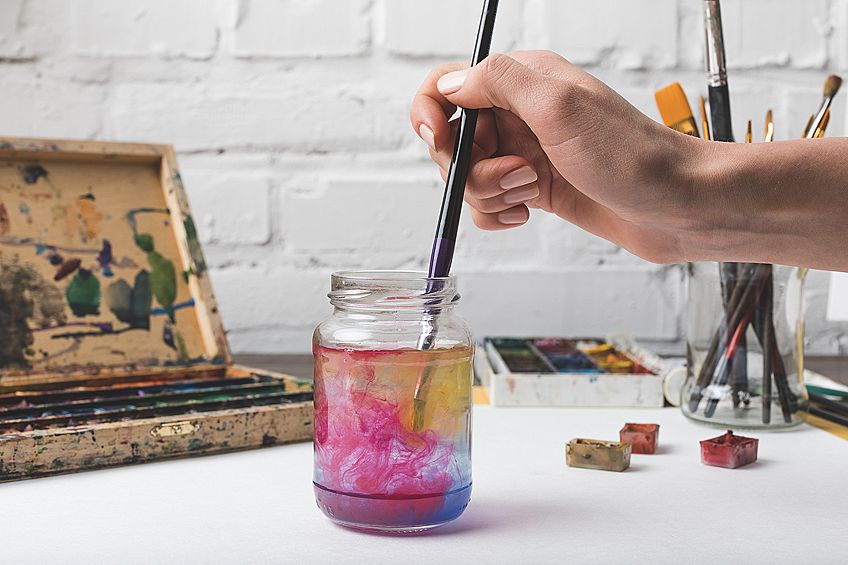
- Solvent rinse. Swirl in a jar of clean OMS. Tap on the jar wall to knock loose pigment.
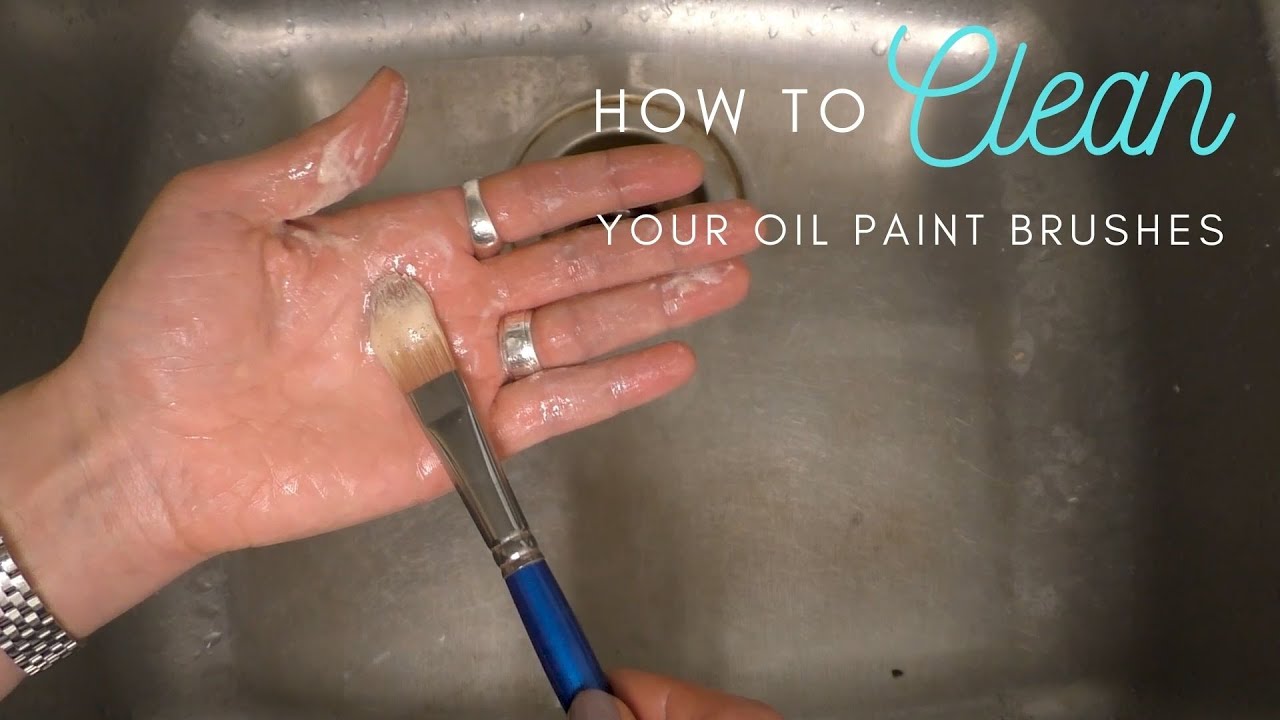
- Soap wash. Work brush soap into the hairs. Massage from ferrule outward. Rinse with lukewarm water until clear.
- Shape and dry. Gently reshape the tip. Lay flat or hang with the tip down to avoid water in the ferrule.
For long sessions, keep two jars: a dirty first rinse and a clean second rinse. This saves solvent and time. When people ask what to use to clean oil paint brushes fast, this two-jar method is my top tip.
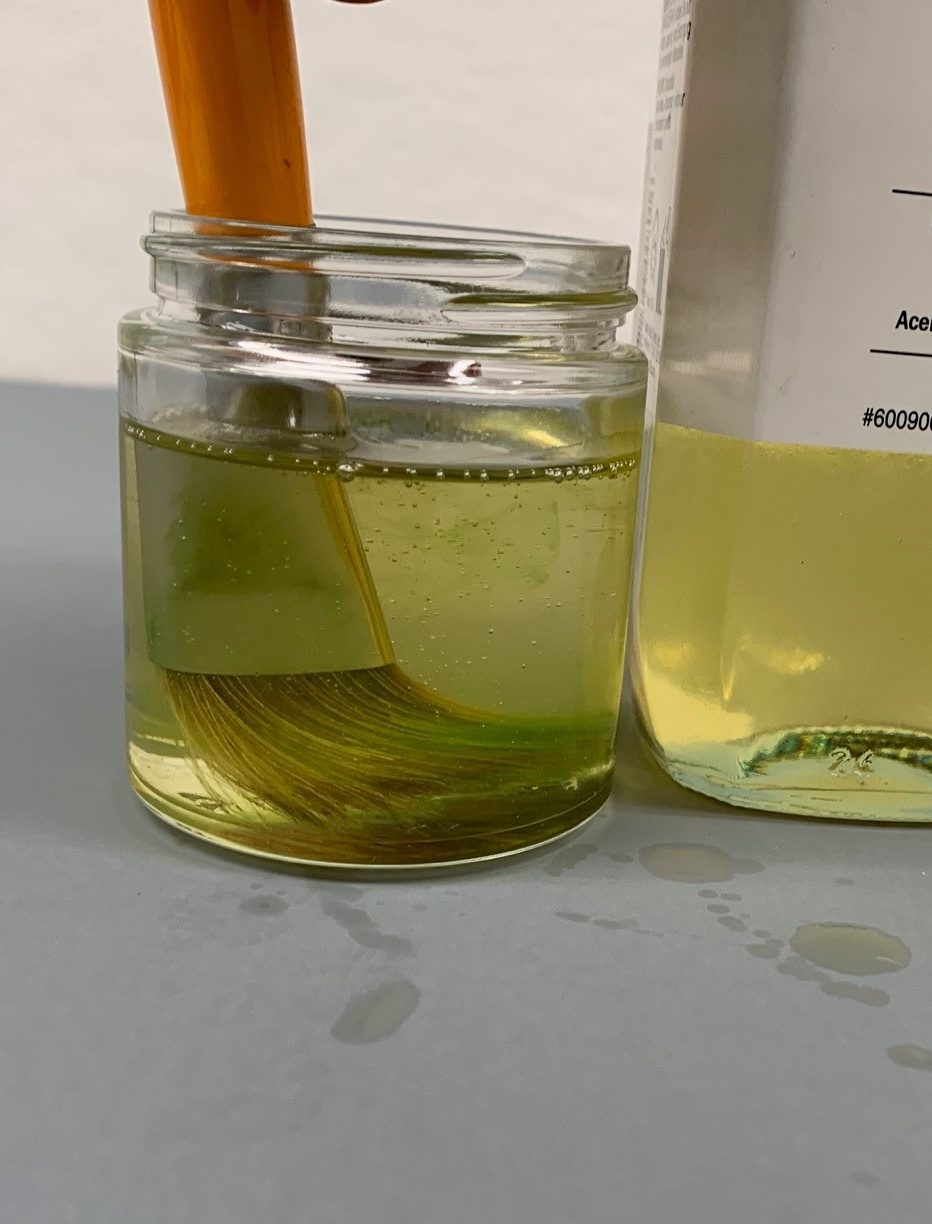
Eco-friendly and low-odor methods for what to use to clean oil paint brushes
You can clean well without harsh fumes. These choices are studio-safe and home-ready.
- Oil step only. Use linseed or safflower oil to loosen paint. Follow with brush soap and water.
- Citrus cleaners. Use a small amount, then wash with soap. Ventilate, as citrus vapors can still build.
- Plant-based OMS alternatives. Slower but effective with patience. Ideal for small spaces and long cleanup windows.
If you want what to use to clean oil paint brushes without a strong smell, pair safflower oil with a great brush soap. It is slow but gentle, and the results are clean and soft.
Deep cleaning, rescue, and restoration
Old, stiff brushes can come back to life. I have rescued many with this plan.
- Oil soak. Soak only the hairs in safflower oil for 30 to 60 minutes.
- Solvent swish. Move the brush in OMS to lift swollen paint.
- Soap revival. Work in brush soap until a rich lather pulls out color.
- Comb the hairs. Use a brush comb or an old toothbrush to free packed paint near the ferrule.
- Condition. Rub in a tiny bit of brush soap and leave it to set overnight. Rinse and shape next day.
This process is slow, but it beats losing a favorite sable. If you are unsure what to use to clean oil paint brushes that are rock hard, start with oil, not solvent.
What not to use and key safety rules
Avoid harsh cleaners that strip hair or harm your lungs.
- No acetone or lacquer thinner. These can melt synthetic hair and dry natural hair beyond repair.
- No boiling water. Heat loosens glue in the ferrule and ruins the shape.
- No household bleach or strong degreasers. They weaken the hairs and corrode metal.
Always use a lidded jar, wear gloves if you have sensitive skin, and ventilate the room. For what to use to clean oil paint brushes safely, choose low VOC products and keep rags in a metal can to prevent fires.

Storage, conditioning, and long-term care
Brush care does not end at cleaning. Small habits make a big impact.
- Never store brushes tip-up while wet. Water can seep into the ferrule and split handles.
- Keep a small dab of brush soap on the tip after cleaning. It holds the shape.
- Use a brush cap or roll. Protects hairs from bends and dust.
If you wonder what to use to clean oil paint brushes and keep them soft, the answer is brush soap plus a gentle oil pre-clean. It preserves snap and spring.
Cost, time, and a simple kit
You do not need a big budget to do this right. Build a small kit and refill as needed.
- Two glass jars with lids. One for dirty rinse, one for clean rinse.
- Artist-grade OMS. A quart goes a long way with the two-jar method.
- Safflower or linseed oil. For pre-clean and gentle lifts.
- Brush soap. For the final clean and conditioning.
- Rags or shop towels. For wiping and safe disposal.
This kit answers what to use to clean oil paint brushes in any studio. It is simple, cheap over time, and produces great results.
Frequently Asked Questions of what to use to clean oil paint brushes
Can I use regular dish soap only?
Yes, for light paint loads. For heavy oil paint, pair dish soap with linseed oil or OMS to loosen pigment first.
Is turpentine better than odorless mineral spirits?
Turpentine is stronger and faster but harsher. OMS cleans well with fewer fumes, which many artists prefer for daily use.
How do I dispose of solvent and oily rags?
Let solids settle in jars, pour off clean solvent for reuse, and take sludge to a hazardous waste site. Store oily rags in a sealed metal can to prevent fires.
Will vegetable oil work in a pinch?
Yes, it will loosen paint. Follow with brush soap to remove the oil film or the brush may stay tacky.
How often should I deep clean my brushes?
If you paint daily, do a deeper soap-and-comb clean weekly. For light use, every few sessions is enough.
Are eco-friendly solvents as good as traditional ones?
They work but are slower. With patience and good brushing technique, results are comparable for routine cleaning.
What is the best method for synthetic brushes?
Use OMS or safflower oil followed by brush soap. Avoid strong solvents like acetone that can soften synthetic fibers.
Conclusion
Clean brushes are your edge in every painting session. Choose the right tool for the job, start gentle, and finish with brush soap. If you remember only one thing about what to use to clean oil paint brushes, make it this: oil to loosen, OMS to lift, soap to finish.
Put this system to work on your next cleanup. Your brushes will last longer, and your paint will lay down better. Want more studio guides like this? Subscribe, share a tip from your own workflow, or drop a question in the comments.