Quick answer: As for what type of paint for canvas works best, acrylic suits most people, because it dries fast, cleans up with water and bonds well to the acrylic gesso found on nearly all store-bought canvases. Oil paint is the traditional choice for rich color and slow blending, provided the canvas is properly primed. Gouache and acrylic gouache work for matte, flat color on suitably primed canvas, while watercolor needs a special absorbent ground. Avoid house paint for fine art, as it is not formulated for flexibility or lightfastness on fabric.
Choosing a paint for canvas is really a question about compatibility. Canvas is flexible fabric, usually coated with a primer, and the paint you put on top has to stick to that primer, flex with the fabric, and keep its color for years. Some paints do all three easily. Others need special preparation or are simply the wrong tool.
This guide explains what type of paint for canvas works best for different goals, how each one behaves, and how the canvas itself affects the result. Because surface and paint work together, it also helps to know which canvases suit water-based media; our guide to choosing a canvas for gouache work covers that side of the equation.
Best Type of Paint for Canvas: The Short Comparison
| Paint | Drying time | Cleanup | Canvas prep needed | Best for |
|---|---|---|---|---|
| Acrylic | Minutes to an hour to touch | Water (while wet) | Standard acrylic-primed canvas | Beginners, layering, mixed media, fast projects |
| Oil | Days to touch; months to fully cure | Solvent or oil-based soap | Primed canvas (acrylic gesso or oil ground) | Blending, portraits, rich depth, traditional work |
| Water-mixable oil | Similar to oil | Water (while wet) | Primed canvas | Oil look without strong solvents |
| Acrylic gouache | Fast, dries matte | Water (while wet) | Primed canvas | Flat, graphic color, illustration-style painting |
| Traditional gouache | Fast, stays re-wettable | Water | Absorbent ground recommended; varnish to protect | Studies, matte designs |
| Watercolor | Fast, stays re-wettable | Water | Watercolor ground required | Specialty pieces on prepared canvas |
| Alkyd | Overnight to a day | Solvent | Primed canvas | Oil-like work that dries faster |
The rest of this guide explains each option in more detail so you can choose with confidence.
Acrylic Paint on Canvas
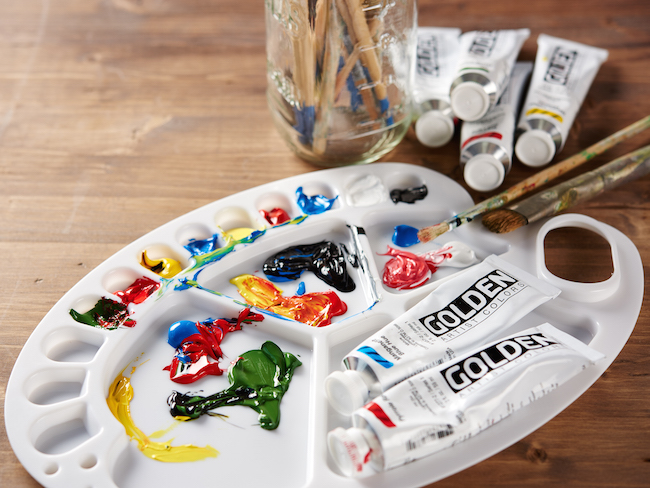
Acrylic is pigment suspended in an acrylic polymer emulsion. As the water evaporates, the polymer particles fuse into a flexible, water-resistant film. Because most canvas primer, called gesso, is itself acrylic-based, the paint and ground are chemically similar and bond very well.
Why acrylic is the default choice
- Speed. Thin layers dry in minutes, so you can stack layers in a single session.
- Flexibility. Dried acrylic film bends with the canvas instead of cracking.
- Easy cleanup. Soap and water clean brushes while the paint is wet.
- Versatility. With mediums, it can be thinned to washes, thickened for impasto, made glossy or matte, or slowed down for blending.
Limitations
Acrylic darkens slightly as it dries, which makes color matching tricky at first. Fast drying also limits wet blending; a retarder or slow-drying medium helps. Brushes left with paint in them can be ruined once it dries.
Student vs artist grade
Student-grade acrylics use less pigment and more filler, so colors are weaker and coverage is thinner. Artist-grade paints carry more pigment, cover better and mix cleaner. A practical middle path is artist-grade white and a few key colors with student grade for the rest.
Oil Paint on Canvas
Oil paint is pigment bound in a drying oil, usually linseed. It does not dry by evaporation. Instead, the oil reacts with oxygen and slowly hardens. That chemistry gives oils their buttery texture, long working time, and deep, luminous color.
What oils need from the canvas
Oil must never touch raw fabric, because the oil can degrade canvas fibers over time. Store-bought canvases primed with acrylic gesso are generally considered suitable for oils. Some painters prefer a traditional oil ground or an oil-primed linen for a slicker surface.
The fat over lean rule
Each layer of oil paint should contain the same or a little more oil than the layer beneath it. Lean, thinned layers go first; richer layers go on top. Painting lean over fat can cause cracking as layers dry at different rates.
Downsides
Oils are slower in every sense. Layers may need days to set, varnishing usually waits months, and traditional cleanup involves solvents that need good ventilation. Water-mixable oils remove most of the solvent concern while keeping the oil feel.
Gouache and Acrylic Gouache on Canvas
Gouache is a highly pigmented, opaque water-based paint that dries to a flat, velvety matte. On paper it is a favorite for illustration. On canvas, the two kinds behave differently.
Acrylic gouache uses an acrylic binder, so once dry it stays put. It works on standard primed canvas and can be layered without lifting the paint below. This is the easier route for canvas work.
Traditional gouache uses gum arabic, so it re-wets when water touches it. On slick acrylic primer it can be chalky and fragile. It handles better on canvas with an absorbent ground, and finished work usually needs a fixative or varnish suited to gouache, or framing under glass.
Can You Use Watercolor on Canvas?
Standard canvas primer is non-absorbent, so watercolor beads up and wipes away. To use watercolor on canvas, coat it with a watercolor ground, a primer that dries to an absorbent, paper-like surface, or buy canvas made specifically for watercolor. Finished pieces need sealing, since watercolor stays water-soluble.
Paint Consistency Matters Too
Within acrylics especially, the same pigment can come in very different textures. Picking the right one for your canvas technique saves frustration.
- Heavy body: thick, buttery paint that holds brush strokes and knife marks. Good for impasto and expressive texture on canvas.
- Soft body: creamy, self-leveling paint that spreads smoothly. Good for even coverage, blending and detail.
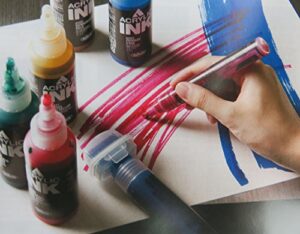
- Fluid or high flow: pourable or ink-like. Useful for washes, fine lines, airbrushing, and pouring techniques across large canvases.
- Open or slow-drying acrylics: formulated to stay workable longer, closing some of the blending gap with oil.
Oils vary too. Some brands are stiff straight from the tube while others are softer. A little medium, such as linseed oil or a commercial painting medium, adjusts flow, but remember fat over lean when you add oil to later layers.
Mediums and Varnish by Paint Type
Mediums let you change how a paint behaves without switching to a different paint. A few that matter most on canvas:
- Acrylic gloss or matte medium: thins paint without breaking down the binder the way excess water can, and adjusts sheen.
- Acrylic retarder: slows drying for wet blending. Use sparingly, since too much can leave paint tacky.
- Modeling paste or gel medium: builds thick texture on canvas that holds its shape as it dries.
- Linseed or stand oil: increases flow and gloss in oil paint; stand oil levels brush marks.
- Odorless mineral spirits: thins early oil layers for lean underpainting and cleans brushes.
Varnish is the final protective layer. Acrylic paintings can usually be varnished once the paint has fully dried, often within a few days for thin layers. Oil paintings need much longer, commonly six months or more depending on thickness, before a final varnish. Many painters apply an isolation coat of clear gel or medium over acrylics first, so any future varnish removal does not disturb the paint.
Paints to Avoid on Canvas
- House paint (latex wall paint). Designed for walls, not flexible fabric. Pigments are not chosen for artistic lightfastness, and the film may crack or yellow. Some artists use it for large, temporary pieces, but it is not ideal for lasting work.
- Craft paint, for finished art. Fine for practice and crafts, but often low in pigment and lightfastness. Colors may fade.
- Tempera (school poster paint). Can crack and flake on flexible canvas and is not water-resistant.
- Enamel and spray paint, without testing. Some spray paints are made for art and work on canvas, but solvent-based products can be brittle or react with primer. Test first.
Types of Canvas for Painting
The canvas matters as much as the paint. A good match makes painting easier and the result more durable.
Cotton duck canvas
The most common, affordable fabric. Its texture is even and it accepts acrylic and oil well when primed. Heavier weights resist sagging better.
Linen canvas
Made from flax, linen is stronger and less prone to reacting to humidity changes. It is prized for oil painting and fine detail, and costs more.
Synthetic and poly-cotton canvas
Stable and affordable, synthetic blends resist slackening. They are common in budget and student canvases.
Canvas panels and boards
Canvas glued to a rigid backing. They are ideal for studies, small works and anything you want to keep flat, and they suit both acrylic and oil.
Texture: fine vs rough weave
Fine weave (smooth) suits portraits and detailed work. Medium weave is a good all-rounder. Rough weave adds visible texture and suits bold, expressive painting. If you want to build texture deliberately rather than rely on the weave, see our guide to painting a textured background on canvas.
Best Type of Paint for Canvas Painting by Goal
| Your goal | Recommended paint | Why |
|---|---|---|
| Learning to paint | Acrylic | Fast, forgiving, inexpensive, easy cleanup |
| Smooth blended portraits | Oil or water-mixable oil | Long open time for soft transitions |
| Bold flat graphic look | Acrylic gouache | Opaque, matte, does not lift when layered |
| Thick textured impasto | Heavy body acrylic or oil | Holds brush and knife marks |
| Painting with kids | Student acrylic or washable paint | Water cleanup; lower cost |
| Painting outdoors | Acrylic or alkyd | Dries faster for transport |
| Large murals on canvas | Acrylic, including fluid formulas | Covers large areas; flexible |
How to Prepare a Canvas for Any Paint
- Check the label. Most canvases say “primed” or “gessoed.” If not, assume it needs primer.
- Add extra gesso if desired. One or two thin coats smooth the surface and improve coverage, especially on budget canvases.
- Sand lightly. Fine sandpaper between gesso coats gives a smoother finish for detailed work.
- Tone the canvas. A thin wash of a neutral color helps with value judgment and removes the glare of white.
- For watercolor or traditional gouache, apply an absorbent ground and let it cure per the manufacturer’s directions.
Common Mistakes When Choosing Canvas Paint
- Using oil on raw canvas. Always prime first.
- Putting acrylic over oil. Acrylic does not bond reliably to oil paint. Oil over dry acrylic is generally fine; the reverse is not.
- Buying the cheapest set for finished work. Low-pigment paint makes colors look chalky and requires many coats.
- Skipping varnish. Varnish protects against dust and UV and evens out the sheen; apply it once paint is fully dry.
- Ignoring canvas tension. A slack canvas makes even good paint harder to apply. Tighten the keys first.
Related Reading
FAQs
What type of paint is best for canvas for beginners?
Acrylic. It dries quickly, cleans up with water, bonds to standard primed canvas and is forgiving when you make mistakes, since you can paint over errors in minutes.
Can I use oil paint on any canvas?
Only on primed canvas. Most commercial canvases are primed with acrylic gesso, which is generally considered suitable for oils. Never apply oil to raw, unprimed fabric.
Is acrylic or oil better for canvas?
Neither is better in every way. Acrylic is faster and easier to clean up. Oil offers longer blending time and a different depth of color. Choose based on your patience, ventilation and the look you want.
Can you use gouache on canvas?
Yes. Acrylic gouache works well on standard primed canvas. Traditional gouache works better on an absorbent ground and needs protection after it dries because it can re-wet.
Can you use house paint on canvas?
You can, but it is not ideal for lasting art. Wall paint is not formulated for flexible fabric or long-term lightfastness, so colors may fade or crack over time.
What types of canvas are there for painting?
Cotton duck, linen, and synthetic blends, available stretched on frames, glued to panels or boards, in pads, or on rolls. Weave texture ranges from fine to rough.
Final Thoughts
If you only remember one thing, make it this: acrylic is the safest, most flexible answer to what type of paint for canvas, and oil is the classic alternative when you want slower blending. Gouache and watercolor can work too, but only with the right preparation.
Your surface completes the picture. For matte water-based paints in particular, our comparison of top canvas picks for gouache painters explains which grounds hold color without lifting.