Quick answer: The main benefit of using oil versus tempera paint was working time. Egg tempera dries in minutes, so painters had to build form with tiny hatched strokes, while oil paint stays wet for hours or days, allowing smooth blending, soft edges, subtle transitions and corrections. Oil also gave deeper, richer darks, translucent glazes that create a glowing sense of depth, and a flexible film that suited canvas, which made larger, portable paintings practical. These advantages are why oil gradually replaced tempera as the main European easel medium during the 15th and 16th centuries.
For roughly two centuries before oil took over, many of Europe’s most admired panel paintings were made with egg tempera: pigment bound with egg yolk. Then, over the 1400s and 1500s, painters increasingly switched to pigment bound in drying oils such as linseed or walnut. Understanding what was the benefit of using oil versus tempera paint explains much of how Renaissance painting changed, from the hard-edged clarity of early panels to the soft, atmospheric modeling of later masters.
This guide compares the two media in practical terms, walks through the history of the shift, explains how each was used, and clears up a common confusion with modern school “tempera.” For a broader look at oil painting styles, techniques and what to look for in oil works today, see our complete guide to oil paintings.
First, What Do We Mean by “Tempera”?
The word tempera can refer to two quite different paints:
- Egg tempera: the historical artists’ medium, made by mixing powdered pigment with egg yolk and a little water. This is the tempera compared with oil in art history.
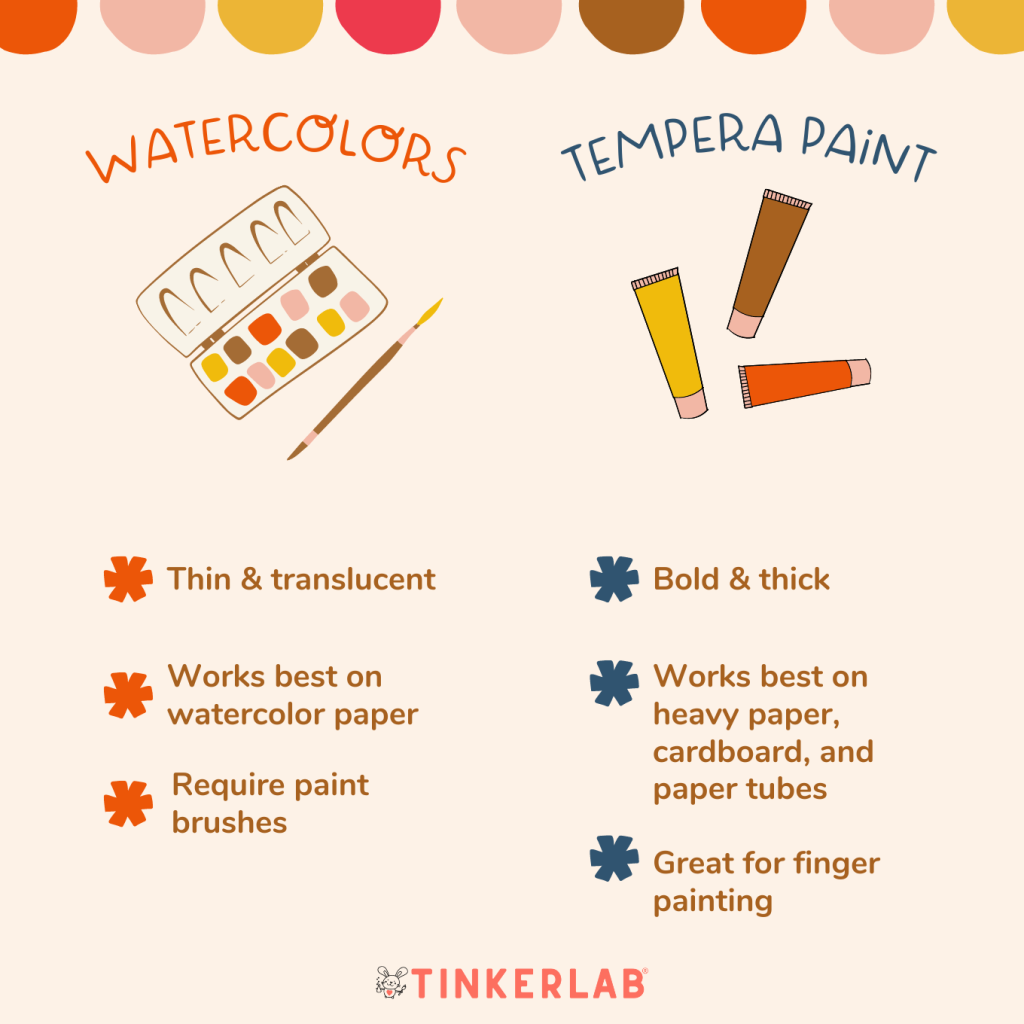
- School or poster “tempera”: the inexpensive, opaque, water-based paint used in classrooms, typically bound with starch, cellulose or similar binders rather than egg. It is closer to poster paint or gouache than to historical egg tempera.
This article focuses on egg tempera versus oil, with a short section on modern tempera paint vs oil and acrylic for painters choosing supplies today.
Tempera vs Oil Paint: Side-by-Side Comparison
| Property | Egg tempera | Oil paint |
|---|---|---|
| Binder | Egg yolk (with water) | Drying oil (linseed, walnut, poppy) |
| Drying | Water evaporates in minutes; film continues to harden over months | Oxidizes slowly; touch-dry in days, fully cured much later |
| Blending | Very limited; built up with hatching and cross-hatching | Easy wet-into-wet blending and soft transitions |
| Layering | Many thin, quick layers | Thick impasto or thin glazes, both possible |
| Darks | Can look lighter and less saturated | Deep, saturated darks; oil makes pigments look richer |
| Surface | Best on rigid gessoed wood panels; can crack on flexible supports | Works on panels and on flexible stretched canvas |
| Finish | Matte to satin; crisp, luminous, cool | Satin to glossy; warm, glowing depth with glazes |
| Corrections | Difficult once painted | Can be wiped, scraped or painted over |
| Aging | Tends to resist yellowing | Oil can yellow somewhat with age, especially in the dark |
| Scale | Usually small to medium panels | Small to very large works |
The Key Benefits of Oil Over Tempera
1. Longer working time and blending
This was the decisive advantage. With egg tempera, each stroke dries almost immediately, so painters modeled form by laying down many fine parallel strokes, gradually building tone the way an engraver builds shadow. Smooth gradients were possible but laborious. Oil paint stays workable long enough for an artist to blend one tone into another directly on the surface, creating seamless transitions in skin, sky and fabric.
2. Soft edges and atmospheric effects
The ability to blend allowed soft, smoky transitions between light and shadow, the technique later called sfumato and associated especially with Leonardo da Vinci. Atmospheric perspective, where distant hills fade into blue haze, also became easier to render convincingly. Modern oil painters still use these same blending properties for subjects like mist and haze; our guide on painting fog in oil shows how the technique works in practice.
3. Glazing and depth
Oil paint can be thinned into transparent layers called glazes. Each glaze tints the layers beneath while letting light pass through, bounce off the lighter ground and return through the colors. The result is a deep, jewel-like glow that is difficult to achieve with tempera. Early Netherlandish painters became famous for this effect in rich fabrics, metal and gemstones.
4. Richer, deeper darks
Pigments look different depending on the binder. In oil, many pigments appear darker and more saturated because the oil’s refractive properties make the pigment particles more transparent and the color more intense. Tempera tends to dry lighter and more matte. Oil therefore allowed dramatic contrasts between light and shadow, which later artists pushed further in strongly lit, dark-background paintings.
5. Flexibility and canvas
Egg tempera forms a relatively brittle film and is best suited to rigid wooden panels prepared with layers of gesso. Oil paint forms a more flexible film that can tolerate the slight movement of stretched canvas. Canvas was lighter than wooden panels, cheaper for large sizes and could be rolled for transport. That opened the door to large altarpieces, portable commissions and, eventually, the huge canvases of later centuries.
6. Corrections and revisions
Because oil stays workable and can be painted over opaquely, artists could change compositions, adjust a hand or reposition a figure. Technical studies of many oil paintings reveal such changes, known as pentimenti, beneath the surface. Tempera allowed less room for rethinking.
7. Texture and expressive brushwork
Oil can be applied thickly in visible strokes (impasto) as well as thinly. That range eventually supported more expressive, painterly styles in which the brushstroke itself becomes part of the image, something tempera’s quick-drying, thin layers do not lend themselves to.
Were There Benefits to Tempera?
Tempera did not disappear because it was bad. It has real strengths, and some artists still choose it today.
- Clarity and precision: fine, crisp detail and clean color.
- Luminosity: layered tempera over white gesso can have a cool, pearly glow.
- Stability of color: egg tempera tends to resist the yellowing that can affect oil over time.
- Fast drying: artists could work layer after layer the same day without waiting.
- Durability on panels: many tempera panels from the medieval and early Renaissance periods survive in good condition.
Some 20th-century painters, notably Andrew Wyeth, worked extensively in egg tempera for exactly these qualities of precision and luminosity.
A Short History of the Shift From Tempera to Oil
Before oil: the tempera era
From the medieval period into the 15th century, egg tempera on gessoed wooden panels was the main medium for altarpieces and devotional panels in Italy and much of Europe, often combined with gold leaf. Painters such as Duccio and Giotto worked within this tradition, alongside fresco for wall painting.
Oil was not invented in the Renaissance
Drying oils had been used in painting long before the 15th century, and earlier written sources describe oil-based techniques. A popular story, repeated by the 16th-century writer Giorgio Vasari, credited Jan van Eyck with inventing oil painting. Historians now generally regard that as a simplification. What changed in the early 1400s, particularly in the Low Countries, was a refinement of the technique: better oil preparation, controlled drying and a systematic layering of translucent glazes that produced unprecedented detail and luminosity.
The Netherlandish breakthrough
Painters such as Jan van Eyck and Rogier van der Weyden produced oil paintings with remarkable realism, texture and light. Works like the Ghent Altarpiece and the Arnolfini Portrait are often cited as landmarks of this approach.
Spread to Italy
Over the second half of the 15th century, Italian painters increasingly adopted oil, sometimes combining it with tempera in the same work, using tempera underlayers and oil glazes on top. Antonello da Messina is often associated with bringing Netherlandish oil methods to Venice, though the exact routes of transmission are debated. Venetian painters such as Giovanni Bellini, and later Giorgione and Titian, exploited oil’s color and softness. Venice’s humid climate also made canvas attractive compared with fresco and wooden panels.
The transition period
The change was gradual. Botticelli’s famous Birth of Venus, for example, is generally described as tempera on canvas, painted in the 1480s, when oil was already spreading. Leonardo da Vinci experimented with media; his Last Supper used an experimental technique on a dry wall that began deteriorating within his lifetime, while his portraits such as the Mona Lisa are in oil on wood panel. By the 16th century, oil had become the dominant medium for easel painting across much of Europe.
How Painting Technique Changed
| Aspect | Tempera approach | Oil approach |
|---|---|---|
| Modeling form | Fine hatching and cross-hatching | Blended tones, glazes and scumbles |
| Edges | Mostly crisp and defined | Can be soft, lost or sharp as needed |
| Underdrawing | Fully planned; little change possible | Planned, but adjustments possible during painting |
| Light | Even, clear light | Dramatic light and shadow possible |
| Process | Rapid layers, built up meticulously | Layers over days or weeks, fat over lean |
Oil Paint vs Tempera vs Acrylic Today
For modern painters, the comparison often includes acrylic, which did not exist in the Renaissance.
| Feature | Egg tempera | Oil | Acrylic | School tempera |
|---|---|---|---|---|
| Drying time | Minutes | Days | Minutes to an hour | Minutes |
| Blending | Limited | Excellent | Moderate; retarders help | Limited |
| Permanence | High on panels | High with good practice | High | Low; can crack and fade |
| Cleanup | Water | Solvents or oil and soap | Water while wet | Water |
| Best for | Fine detail on panels | Blending, glazing, realism | Versatile, fast work | Kids, posters, practice |
Tempera paint vs acrylic paint for students
Classroom tempera is inexpensive and washable but can crack when applied thickly and may fade. Acrylic is more permanent, water-resistant when dry and more flexible, making it better for work you want to keep.
Oil pastels vs tempera paint sticks
Tempera paint sticks are solid sticks of quick-drying tempera that go on like a marker and dry in a minute or two; they are popular in classrooms for mess-free color. Oil pastels are pigment in a non-drying oil and wax binder; they stay soft, blend by smudging and never fully dry. Neither is closely related to historical egg tempera or oil paint, despite the names.
Common Misconceptions
- “Van Eyck invented oil paint.” Oil was used before him; he and his contemporaries refined and transformed the technique.
- “Tempera is inferior.” It suits different goals and has excellent longevity on panels.
- “The switch happened overnight.” It took many decades, and mixed tempera-and-oil techniques were common.
- “School tempera is the same as Renaissance tempera.” Most classroom tempera does not use egg and behaves differently.
FAQs
Why did artists switch from tempera to oil paint?
Oil dries slowly, which allows blending, soft edges and corrections. It also produces deeper darks, glowing translucent glazes and a flexible film suitable for canvas, enabling larger and more portable paintings.
What is the difference between tempera and oil paint?
Egg tempera binds pigment with egg yolk and dries in minutes to a matte, crisp finish. Oil binds pigment with drying oil and dries slowly by oxidation, allowing blending and glazing with a richer, deeper finish.
Is tempera paint better than oil?
Neither is simply better. Tempera excels at fine detail and color stability on rigid panels; oil excels at blending, depth and scale. The choice depends on the artist’s goals.
Who popularized oil painting?
Early Netherlandish painters, especially Jan van Eyck, are credited with refining oil technique in the early 15th century. It spread to Italy later in that century, where Venetian painters embraced it.
Was the Mona Lisa painted in tempera or oil?
The Mona Lisa is painted in oil on a poplar wood panel. Its soft transitions are a famous example of what oil’s slow drying makes possible.
Is school tempera paint the same as egg tempera?
No. Most school tempera uses non-egg binders and is designed to be cheap and washable. Historical egg tempera is a professional medium with very different handling.
Final Thoughts
The benefit of oil over tempera comes down to time and depth: slow drying made blending, soft modeling and revisions possible, while translucent glazes and richer darks gave paintings a new sense of light and space. Tempera remained valued for its clarity and stability, but oil’s flexibility reshaped European painting. To explore how those same properties shape oil painting styles today and what to look for in oil works, read our oil paintings guide covering techniques, styles and buying tips.