PaintingProGuide is reader-supported. When you buy through links on this page we may earn an affiliate commission at no extra cost to you.
Winsor & Newton and Daler-Rowney are both long-established British art brands, and both make acrylics at several price levels. That is why “Winsor and Newton vs Daler Rowney acrylics” is less a question of which brand is better and more a question of which line you are comparing. Most people searching this are weighing the two best-known student ranges: Winsor & Newton Galeria and Daler-Rowney System3.
This comparison focuses on those two ranges as they appear in the sets listed on Amazon when we checked in October 2026, plus Daler-Rowney’s acrylic inks, which have no direct Winsor & Newton counterpart in our product data. We look at consistency, finish, tube sizes, color range and the kind of painter each suits.
Quick answer: For most painters choosing between Winsor & Newton and Daler-Rowney student acrylics, Winsor & Newton Galeria is the better all-round pick thanks to its larger 60ml tubes, satin finish and wide single-pigment range. Daler-Rowney System3 is the better choice for a low-cost, fluid, matte paint that also suits murals and screen printing. If you want fluid color for pens, airbrush or washes, Daler-Rowney’s FW and System3 acrylic inks are worth a look.
Winsor & Newton vs Daler-Rowney Acrylics at a Glance
| Factor | Winsor & Newton Galeria | Daler-Rowney System3 |
|---|---|---|
| Range level | Student / emerging artist | Student / all-purpose |
| Consistency (per listings) | Smooth with good coverage and flow | Fluid “unique flow,” thins to washes easily |
| Finish | Satin | Matte |
| Set in our data | 10 x 60ml tubes | 6 x 22ml tubes |
| Color range | Over 60 colors, high proportion single pigment | Wide range, fully intermixable |
| Pigment note | Quality pigments at a lower concentration than pro ranges | High-quality pigments, archival |
| Uses highlighted | Layering, blending, bold brushwork | Canvas, murals, screen printing, pottery, indoor and outdoor |
| Upgrade path | Winsor & Newton Professional Acrylic | Daler-Rowney Cryla (artist range) |
Both brands also offer other lines, such as Daler-Rowney Graduate for students. Comparing like for like (student vs student, artist vs artist) gives a fairer picture than comparing brands overall.
A Little Brand Background
Both companies have long histories in British art materials. Winsor & Newton was founded in London in the 1830s and is known worldwide for watercolors, oils and acrylics. Daler-Rowney traces its roots to 1783, as its listings note, and is known for paints, papers and canvases. Both brands offer student lines for learning and artist lines for professional work, so either can take you from first painting to advanced practice.
How the Two Ranges Differ in Practice
Body and handling
Galeria is often described as a medium-bodied paint that holds soft brush marks and covers well, which makes it comfortable for traditional canvas painting. System3 is more fluid, which helps with washes, smooth flat areas and techniques that need paint to flow, but it holds less texture without a gel medium.
Finish
Galeria dries to a satin sheen; System3 dries matte. Matte paintings photograph without glare and suit layered work; satin gives a little more depth straight away. Either can be adjusted with a gloss, satin or matte varnish.
Value
The Galeria set in our data offers 600ml of paint across ten tubes, while the System3 set offers 132ml across six tubes at a lower price tier. Per milliliter, the Galeria set gives more paint; the System3 set has a lower entry cost.
Color selection
Galeria’s listing highlights a high proportion of single-pigment colors, which tend to mix more cleanly. System3 emphasizes intermixability and archival quality. Both cover a full spectrum in open stock, so you can add individual tubes later.
Our Top Picks at a Glance
- Winsor & Newton Galeria Acrylic Paint Set (10 x 60ml) — Best for all-round canvas painting
- Daler-Rowney System3 6-Tube Acrylic Set — Best for low-cost, fluid matte paint
- Daler-Rowney FW Acrylic Ink 6-Color Primary Set — Best for fluid color for pens, airbrush and washes
- Daler-Rowney System3 Acrylic Ink Set of 6 — Best for opaque ink for lettering and design
| Product | Best For | Key Spec | Key Strength | Price Tier |
|---|---|---|---|---|
| Winsor & Newton Galeria Acrylic Paint Set (10 x 60ml) | all-round canvas painting | 10 x 60ml tubes, satin finish | Large tubes, single-pigment range | $$ |
| Daler-Rowney System3 6-Tube Acrylic Set | low-cost, fluid matte paint | 6 x 22ml tubes, matte finish | Fluid, versatile and inexpensive | $$ |
| Daler-Rowney FW Acrylic Ink 6-Color Primary Set | fluid color for pens, airbrush and washes | 6 x 29.5ml bottles + empty marker | Intense, lightfast fluid color | $$ |
| Daler-Rowney System3 Acrylic Ink Set of 6 | opaque ink for lettering and design | 6 x 29.5ml incl. titanium white and mars black | Includes white and black | $$$ |
How We Chose
We did not paint side by side with these products. This comparison is based on the Amazon listing details and specifications checked in October 2026, how well each set’s format, finish and stated qualities fit common acrylic painting needs, and how widely each product is reviewed by Amazon buyers. We excluded listings that were single tubes or did not match the brands compared. We considered:
- Like-for-like range level: student ranges compared with each other.
- Paint volume and tube size in each set.
- Finish and consistency as described in the listings.
- Versatility across surfaces and techniques.
Winsor & Newton vs Daler-Rowney Acrylic Sets Reviewed
1. Winsor & Newton Galeria Acrylic Paint Set (10 x 60ml) — Best for all-round canvas painting

Galeria is Winsor & Newton’s student acrylic, positioned as a step toward professional ranges. The listing describes bright, stable colors with high tinting strength from quality pigments at a lower concentration, which keeps the price accessible while preparing you for professional paint behavior.
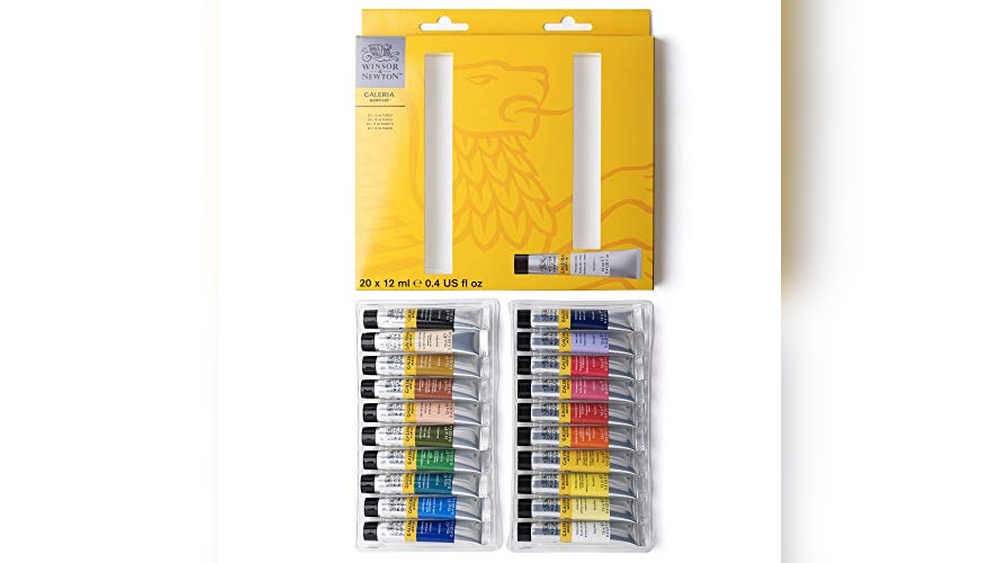
This set includes ten 60ml tubes, a generous amount of paint for a starter set. The listing notes a smooth, satin finish with good coverage and flow, suited to layering, blending and bold brushwork, and a wider range of over 60 colors in open stock.
Best suited for: Beginners and improving painters working mainly on canvas who want generous tubes and a satin finish.
Key features:
- 10 x 60ml (2 oz) tubes
- Satin finish
- High tinting strength per listing
- Part of a 60+ color range with many single-pigment colors
Pros:
- More paint per set than the System3 set
- Single-pigment colors mix cleanly
- Clear upgrade path to Winsor & Newton Professional
Cons/limitations:
- Higher entry cost than the 6-tube System3 set
- Satin may not suit painters who prefer matte
Buying consideration: Add a large tube of titanium white; it is used in most mixes.
2. Daler-Rowney System3 6-Tube Acrylic Set — Best for low-cost, fluid matte paint

System3 is Daler-Rowney’s versatile all-purpose acrylic. The listing describes a fully intermixable, archival acrylic with a unique flow that dries quickly to a flexible, insoluble finish, and says it can be thinned for pale washes or mixed with mediums.
This six-tube set uses 22ml tubes and dries matte. The listing highlights use indoors and outdoors on many surfaces, including canvas, murals, screen printing and pottery. It is a sensible way to try the range before buying larger tubes.
Best suited for: Students, mural painters, printmakers and anyone who wants a fluid, matte acrylic at a low entry cost.
Key features:
- 6 x 22ml tubes
- Matte finish
- Fluid, intermixable and archival per listing
- Indoor and outdoor use on multiple surfaces
Pros:
- Low entry price
- Fluid paint suits washes and flat areas
- Matte finish photographs well
Cons/limitations:
- Small tubes
- Only six colors in this set
Buying consideration: For texture or impasto, pair System3 with a gel medium to add body.
3. Daler-Rowney FW Acrylic Ink 6-Color Primary Set — Best for fluid color for pens, airbrush and washes

FW inks are Daler-Rowney’s acrylic artists’ inks. The listing describes intensely colored, water-based permanent inks that are fully intermixable and resist fading, usable straight from the dropper or diluted like watercolor. It also lists airbrush, technical pen, dip pen and miniature painting uses.
The primary set includes six 29.5ml bottles and an empty marker you can fill with ink. Winsor & Newton does not have a matching ink set in our product data, so this is an extra option on the Daler-Rowney side rather than a head-to-head.
Best suited for: Illustrators, mixed-media artists and anyone who wants fluid acrylic color for pens, airbrushing or washes.
Key features:
- 6 x 29.5ml bottles of FW acrylic ink
- Empty marker for custom ink colors
- Lightfast and permanent per listing
- Dropper bottles
Pros:
- Very fluid and intense
- Works in pens, markers and airbrushes
- Mixes with acrylic paint
Cons/limitations:
- Not a substitute for tube paint body
- Transparent inks may need layering for opacity
Buying consideration: Shake or stir inks well before use; pigments can settle.
4. Daler-Rowney System3 Acrylic Ink Set of 6 — Best for opaque ink for lettering and design

System3 acrylic inks are designed for graphic designers, calligraphers, illustrators and hobbyists, according to the listing. The set includes ultramarine, titanium white, silver imitation, cadmium yellow hue, cadmium red hue and mars black in 29.5ml bottles.
The listing describes them as water-resistant when dry and suitable for indoor and outdoor use, with high lightfastness. Including white and black makes this set handy for opaque lettering and design work.
Best suited for: Calligraphers, illustrators and designers who want opaque, water-resistant acrylic ink.
Key features:
- 6 x 29.5ml bottles
- Includes titanium white, mars black and silver imitation
- Water-resistant when dry
- High lightfastness per listing
Pros:
- White and black included
- Opaque options for lettering
- Pairs naturally with System3 paint
Cons/limitations:
- Highest price tier of the four options
- Limited color count
Buying consideration: Use with a dip pen or brush; clean pens promptly since dried acrylic ink is permanent.
Verdict by Use Case
| If you are… | Choose | Why |
|---|---|---|
| A beginner painting on canvas | Winsor & Newton Galeria | Generous 60ml tubes, satin finish, clean single-pigment mixes |
| On the tightest budget | Daler-Rowney System3 | Low entry price and very versatile |
| Painting murals or large flat areas | Daler-Rowney System3 | Fluid flow and matte finish |
| Building toward professional paint | Winsor & Newton Galeria | Positioned as a step toward professional ranges |
| Working with pens, airbrush or washes | Daler-Rowney FW inks | Fluid, intense, lightfast ink |
| Doing lettering or graphic design | Daler-Rowney System3 inks | Opaque white and black included |
If you are still undecided, buy the small System3 set and two or three single Galeria tubes in colors you use often. Painting the same simple study with each will show you quickly which body and finish you prefer, at a modest cost.
There is no universal winner. Galeria tends to suit traditional canvas painting; System3 suits fluid, matte and large-scale work. Many painters keep both.
Buying Guide: How to Choose Between Acrylic Brands
Compare the same tier
Student paints from both brands are designed for learning and value. Artist ranges carry more pigment. Compare student with student to make a fair decision.
Decide on body
Medium or heavy body paint holds texture; fluid paint flows and levels. Your techniques should drive the choice.
Choose a finish
Matte, satin or gloss all work; varnish can change it later.
Think about tube size
Larger tubes are cheaper per milliliter. Small sets are good for testing a range.
Check open-stock availability
Both ranges are sold as individual tubes, so you can replace the colors you use most without buying another set.
Starter Colors to Buy in Either Range
Small sets are a good introduction, but most painters soon buy individual tubes. A versatile limited palette in either brand might include:
- Titanium white (buy a large tube)
- A lemon or cool yellow and a warm medium yellow
- A warm red (such as cadmium red hue) and a cool red or crimson
- Ultramarine blue and a phthalo or cerulean blue
- Burnt sienna or burnt umber
- Mars or ivory black (optional)
Choose single-pigment versions where available; they tend to produce cleaner mixes.
Student vs Artist Acrylics: What Changes When You Upgrade
Student ranges like Galeria and System3 keep costs down by using lower pigment concentrations, more hue (substitute) colors and sometimes extenders. Artist ranges from both brands generally carry more pigment, offer more single-pigment colors and hold their color better when mixed with white. You do not need artist paint to learn, but many painters upgrade a few key colors first, such as white, a strong blue and a reliable red, and keep student paint for underpaintings and large backgrounds.
Mediums and Compatibility
Both brands make acrylic mediums (gloss, matte, flow and gel mediums, plus retarders) that change body, sheen and drying time. Water-based acrylic mediums are generally compatible across brands, so you can use one company’s gel with the other’s paint. As always, test a small mix first, especially when combining fluid paints like System3 with heavy gels or when mixing inks into paint.
Storage and Shelf Life
Keep caps clean and tightly closed so paint does not dry in the thread. Store tubes and bottles at room temperature; freezing can ruin acrylic emulsions. Inks should be stored upright and shaken before use. Opened tubes from either brand typically last a long time if sealed properly.
Practice Projects for Either Brand
Both ranges are well suited to classic beginner exercises. Try our tutorial on painting smooth gradients with acrylics, which shows how paint flow and finish affect blending, then put it to use with a dreamy acrylic sky.
Common Mistakes to Avoid
- Comparing a student line to an artist line. Price and pigment differences make it unfair.
- Judging by one color. Coverage varies by pigment within any range.
- Over-thinning with water. Use a medium for washes to keep the paint film strong.
- Mixing up paint and ink. Acrylic ink is much more fluid and often more transparent.
- Ignoring the finish. Satin and matte look different under lights and in photos.
FAQs
Is Winsor & Newton better than Daler-Rowney for acrylics?
Neither is better overall. Galeria suits canvas painting with larger tubes and a satin finish; System3 suits fluid, matte and large-scale work at a lower entry cost.
What is the difference between Galeria and System3?
Galeria is a smooth, satin student acrylic from Winsor & Newton; System3 is a fluid, matte, all-purpose student acrylic from Daler-Rowney.
Can you mix Winsor & Newton and Daler-Rowney acrylics?
Generally yes. Water-based acrylics from different brands usually intermix, though test first because consistency and finish may differ.
Which is better for beginners?
Galeria is a comfortable all-round starter for canvas; System3 is a good budget option for experimenting and large projects.
Are Daler-Rowney FW inks the same as acrylic paint?
No. They are acrylic inks: far more fluid and designed for pens, airbrush and washes, though they can be mixed with acrylic paint.
What are the artist-grade options from each brand?
Winsor & Newton Professional Acrylic and Daler-Rowney Cryla are the artist-level ranges.
Final Recommendation
Pick Winsor & Newton Galeria if you paint mainly on canvas and want large tubes, a satin finish and a clear path toward professional paint. Pick Daler-Rowney System3 if you want the lowest entry cost, fluid handling and a matte finish for murals, printmaking or flat color. Add Daler-Rowney FW or System3 inks if you need fluid color for pens, airbrushing or lettering.