
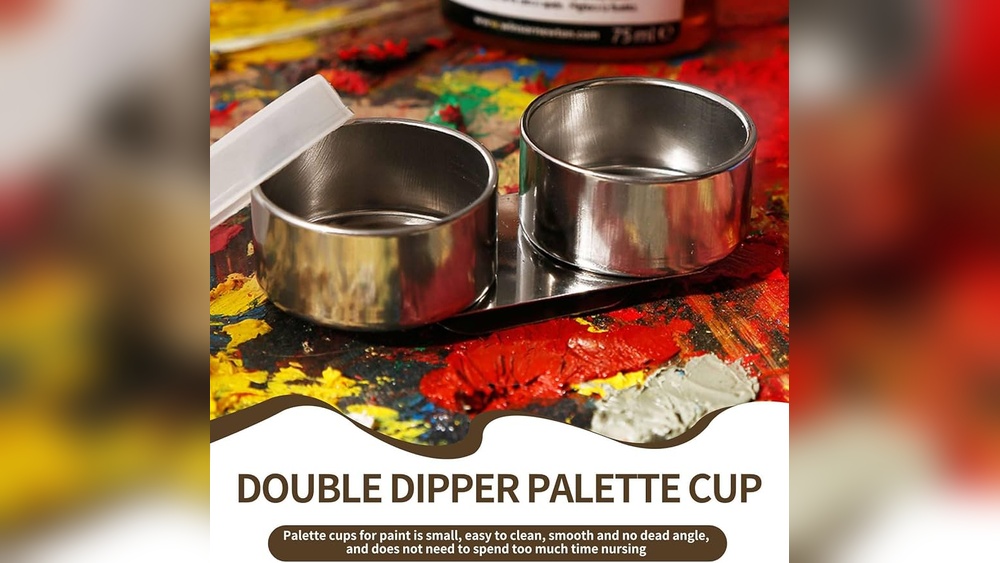
Palette cups are small, but they collect the stickiest residue in an oil painter’s kit: medium that has started to thicken, solvent clouded with pigment, and rings of dried linseed oil around the rim. Left alone, that residue hardens into a varnish-like crust that contaminates fresh medium and can stop the lid from sealing. This guide explains how to clean palette cups after oil painting, with methods for metal, plastic, glass and porcelain cups, and the habits that make cleanup a one-minute job.
Quick answer: To clean palette cups after oil painting, pour usable solvent back into a settling jar, wipe the cup out with a paper towel, swish a small amount of clean odorless mineral spirits or vegetable oil to dissolve remaining medium, wipe again, then wash with warm water and dish soap and dry thoroughly. For dried, crusty medium, soak the cup in solvent or a citrus-based cleaner for several hours, then scrape with a palette knife or wooden stick. Clean cups after every session so oil films never fully cure.
What Palette Cups Hold and Why They Get Dirty
Palette cups (sometimes called dippers or palette pots) clip onto the edge of a palette and hold liquids within reach of your brush. Oil painters typically use them for:
- Painting medium: Linseed oil, stand oil, alkyd mediums or blends with solvent.
- Solvent: Odorless mineral spirits for thinning early layers or rinsing brushes.
- Oil for cleaning: Some painters keep a cup of safflower or linseed oil to wipe brushes between colors.
Drying oils cure by reacting with oxygen, not by evaporating. A thin film of medium left in a cup will gradually thicken and harden, sometimes within a day or two for alkyd mediums and longer for pure oils. Once cured, it no longer dissolves easily in mild solvents, which is why prompt cleaning matters so much.
The cup’s material and design also affect cleanup. Our guide to the best palette cups for oil painting compares metal, plastic and lidded options by how easy they are to keep clean. If you are still getting used to these little containers, our walkthrough on using a palette cup for oil painting covers setup and filling.
What You Need
- Paper towels or lint-free rags
- Odorless mineral spirits (or vegetable oil for a solvent-free method)
- A lidded glass jar for settling and reusing dirty solvent
- Warm water and dish soap
- Palette knife, wooden coffee stirrer or plastic scraper for crusted residue
- Optional: citrus-based or soy-based brush cleaner for dried oil
- Gloves if you have sensitive skin or use solvents often
Step-by-Step: Cleaning Palette Cups After Every Session
- Decide what to keep. Clean medium can often be capped and saved if your cups have lids, especially for a session the next day. Solvent that is only lightly tinted can be poured into a settling jar.
- Empty the cup. Pour dirty solvent into a lidded settling jar, never down the sink. Pour leftover medium you will not reuse onto a paper towel.
- Wipe it out. Use a paper towel to wipe the interior, the rim, the clip and the underside of the lid. Most residue comes away at this stage while it is still fluid.
- Rinse with a little clean solvent or oil. Add a teaspoon of fresh odorless mineral spirits or vegetable oil, swirl it around, and wipe again. This dissolves the thin film that paper towels leave behind.
- Wash with soap and water. Use warm water and dish soap with a soft sponge or bottle brush. Soap removes the oily layer so the cup does not feel greasy.
- Rinse and dry completely. Water left in the cup can cloud medium in the next session. Metal cups, especially, should be dried promptly to protect against corrosion at seams.
The entire routine takes a minute or two per cup, and it prevents the much longer job of removing cured medium later.
Removing Dried or Crusty Medium
If medium has been left for days or weeks, it may have hardened into a skin or amber crust.
Method 1: Solvent soak
Fill the cup with odorless mineral spirits, cover it to limit evaporation and fumes, and leave it for several hours or overnight. Softened residue can then be scraped out with a palette knife or wooden stick and the cup washed with soap.
Method 2: Citrus or soy-based cleaner
Many brush cleaners marketed for oil paint can soften dried oil films. Fill the cup, leave it according to the product directions, then scrape and wash. These products are often lower in odor than mineral spirits, but still follow label safety guidance.
Method 3: Peel it out
On smooth plastic or metal cups, a fully cured skin of medium sometimes lifts away in one piece. Work a palette knife under the edge and peel.
Method 4: Hot soapy water (plastic and metal)
Soaking in very warm soapy water can soften thinner films of partially cured oil. It is less effective on thick, fully hardened residue.
Avoid harsh paint strippers on plastic cups; they can soften or craze the plastic. Test any cleaner on a small area first.
Cleaning by Cup Material
| Material | Best cleaning approach | Watch out for |
|---|---|---|
| Metal (stainless steel, aluminum, tin) | Wipe, solvent rinse, soap; soak for crusts | Corrosion at seams if left wet; dents in thin metal |
| Plastic | Wipe, oil rinse, soap; peel cured skins | Some solvents and strippers can cloud or soften plastic |
| Glass | Wipe, solvent, soap; razor scrape rims if needed | Breakage; chipped rims |
| Porcelain/ceramic | Wipe, soap and warm water | Chips; avoid abrasive powders on glazed surfaces |
Metal palette cups
Metal cups tolerate solvents well and are generally the easiest to restore. Single and double metal palette cups with clips are a classic choice. Pay attention to the seam where the clip attaches; residue can collect there, so use a stiff brush or toothpick to clean it.
Plastic palette cups
Plastic cups are light and inexpensive, and cured medium often releases from them easily. However, some plastics react with strong solvents over time, becoming cloudy or brittle. A vegetable oil rinse followed by soap is gentler.
Porcelain palette cups
Porcelain cups are smooth and nonreactive, which makes them easy to wipe clean and pleasant for medium. Handle them carefully; chipped edges can trap residue.
Glass
Small glass jars and dishes are easy to inspect for residue and resist solvents. A razor blade can lift dried films from flat glass areas.
Cleaning Palette Cups With Lids
Lidded palette cups are popular because they let you save medium and reduce solvent evaporation. The lid and threads need attention:
- Wipe the threads and lid underside after every session; dried medium in the threads can glue the lid shut.
- If a lid is stuck, run the cup under warm water or soak the cap in solvent briefly to soften the residue, then twist.
- Check rubber or silicone seals for cracking and clean them gently with soap.
- Do not store solvent long term in thin plastic cups unless the manufacturer says they are suitable; use a proper solvent container instead.
Solvent Recycling: The Settling Jar Method
Dirty solvent does not need to be thrown away after each session. A settling jar lets pigment sink so you can reuse the clear liquid.
- Pour used solvent into a glass jar with a tight lid. Label it.
- Leave it undisturbed for a few days. Pigment settles into a sludge at the bottom.
- Carefully decant the clear solvent into a clean container for reuse.
- Let the sludge dry out in a well-ventilated area and dispose of it according to your local hazardous waste guidelines.
This reduces solvent use and keeps paint out of drains.
Solvent-Free Cleaning Options
Painters who avoid mineral spirits can clean palette cups with vegetable oil and soap:
- Wipe out excess medium.
- Add a small amount of safflower, sunflower or another vegetable oil and swirl to dissolve remaining paint and medium.
- Wipe clean.
- Wash thoroughly with dish soap and warm water to remove the oil, which would otherwise slow drying if it contaminated your medium.
Note that non-drying kitchen oils should be thoroughly washed out of cups that will later hold painting medium.
Safety and Disposal
- Ventilate when using solvents. Keep containers closed when not in use.
- Oily rags: Rags and paper towels soaked with drying oils can heat as they cure. Lay them flat to dry outdoors or store them in a sealed metal container with water before disposal, following local rules.
- Never pour solvent down drains or onto the ground.
- Keep solvents away from heat and flames.
- Wear gloves if solvents irritate your skin.
Habits That Keep Palette Cups Clean Longer
Fill less
Pour only a small amount of medium, enough for the session. A half-full cup leaves less to clean and less to waste.
Use separate cups for medium and solvent
Mixing them by accident changes your medium’s behavior. Double palette cups make it easy to keep them apart, and many painters label each side.
Wipe brushes before dipping
Wiping excess paint from the brush onto a rag before dipping into medium keeps the cup cleaner for longer.
Cap between sessions
Lidded cups slow skinning of medium, so you can save it for the next day.
Clean the clip
Paint and medium collect on clips and transfer to the palette edge. A quick wipe prevents buildup.
Common Mistakes
- Leaving medium in cups for days: It cures into a hard film that is much harder to remove.
- Skipping the soap wash: A greasy residue can contaminate fresh medium.
- Using harsh strippers on plastic: These can damage or cloud the cup.
- Storing solvent in uncapped cups: Evaporation fills the room with fumes and wastes solvent.
- Not drying metal cups: Moisture at seams can lead to corrosion.
When to Replace Palette Cups
Even well-cared-for cups wear out. Replace them when lids no longer seal, clips are bent and do not grip the palette, plastic has become cloudy, cracked or sticky, or metal shows rust or leaks at the seams. Large palette cups and cups with clips are inexpensive compared to the medium they protect, so it is worth replacing damaged ones rather than risking contamination.
Organizing Cups in Your Studio Routine
Treating palette cups as part of your end-of-session checklist makes cleaning automatic. A simple order that works for many painters is: save usable paint on the palette, empty and wipe the cups, clean brushes, then wash cups and brushes together with soap at the sink. Keeping a dedicated small towel and a roll of paper towels near the easel means you never put off the job because supplies are elsewhere. If you paint several days in a row with the same medium, a lidded cup lets you skip the full wash until the end of the series, as long as you wipe the rim and threads each day.
Some painters keep two sets of cups and rotate them: one set in use, the other clean and dry. That way a cup left soaking overnight never delays the next session.
FAQs
How do you clean palette cups after oil painting?
Empty usable solvent into a settling jar, wipe the cup with a paper towel, rinse with a little clean solvent or vegetable oil, wipe again, then wash with soap and warm water and dry completely.
How do you get dried linseed oil out of a palette cup?
Soak the cup in odorless mineral spirits or a citrus-based oil paint cleaner for several hours, then scrape or peel the softened film and wash with soap.
Can I clean palette cups with soap and water only?
Soap and water help, but wiping out medium first and rinsing with a little solvent or oil removes residue much more effectively.
Are metal or plastic palette cups easier to clean?
Metal cups tolerate solvents and soaking well. Plastic cups often release dried skins easily but can be damaged by strong solvents.
Can I leave medium in palette cups overnight?
If the cups have tight lids, many painters save medium overnight. Without lids, medium skins and thickens, so empty and clean them.
How do I dispose of dirty solvent from palette cups?
Let pigment settle in a closed jar, reuse the clear solvent, and dispose of the sludge according to local hazardous waste rules.
Final Thoughts
Palette cups stay easy to clean if you never let oil films cure. Wipe, rinse with a little solvent or oil, wash with soap and dry after every session, and use a settling jar to recycle solvent. If your current cups leak, stick or crack, take a look at our guide to palette cups that suit oil painters to find a design that is easier to maintain.




