PaintingProGuide is reader-supported. When you buy through links on this page we may earn an affiliate commission at no extra cost to you.
Twelve by sixteen inches is the size where a painting stops feeling like a study and starts feeling like a piece you might hang. It is big enough for a real composition, small enough to finish in a weekend, and it fits standard 12×16 frames. That is why so many painters buy a canvas set 12×16 pack rather than single canvases: once you settle on the format, you want a stack of them ready.
The catch is that “12×16 canvas” covers two very different products. Stretched canvas is cotton wrapped around a wooden frame, ready to hang. Canvas panels are cotton glued to a flat board, ready to frame or stack. This guide sorts six 12×16 packs into those two camps, explains which fits your painting habits, and flags the details in each listing worth checking before you order.
Quick answer: For stretched canvas, the ESRICH 12×16 Stretched Canvas 10 Pack is the most balanced pick: 5/8 inch pine frames, acid-free gesso and a pack size that suits regular painters. If you want twelve stretched canvases, the FUMILE 12-Pack uses the same profile. For classrooms, paint parties or high-volume practice, the Simetufy 24 Pack of flat 12×16 panels gives the most surfaces per box.
Our Top Picks at a Glance
- ESRICH 12×16 Stretched Canvas, 10 Pack — Best overall 12×16 stretched set
- FUMILE 12×16 Stretched Canvas, 12 Pack — Best for a dozen ready-to-hang canvases
- Simetufy 12×16 Canvas Boards, 24 Pack — Best bulk 12×16 panel pack
- PHOENIX 12×16 Canvas Boards, 12 Pack — Best panels for framing and practice
- ESRICH 12×16 Canvas Boards, 16 Pack — Best mid-size bulk set of panels
- Artlicious 12×16 Canvas Panels, 12 Pack — Best value panels for beginners and parties
| Product | Best For | Key Spec | Key Strength | Price Tier |
|---|---|---|---|---|
| ESRICH Stretched 10 Pack | Finished, hangable work | 5/8 in pine frame, 8 oz primed cotton | Balanced pack size | $$ |
| FUMILE Stretched 12 Pack | Series and gallery walls | 5/8 in pine frame, 8 oz primed | Twelve matching canvases | $$ |
| Simetufy Boards 24 Pack | Classes and heavy practice | Cotton on acid-free MDF | Most surfaces per box | $$ |
| PHOENIX Boards 12 Pack | Framing and studies | 1/8 in panel, 8 oz primed | Detailed construction specs | $$ |
| ESRICH Boards 16 Pack | Steady practice | Cotton on board core | Sixteen flat panels | $$ |
| Artlicious Panels 12 Pack | Beginners, parties | Acid-free cotton, wrapped singly | Individually wrapped | $$ |
How We Chose
We have not painted on these canvases. The picks are based on the Amazon listing details and specifications checked in October 2026, how well each product’s construction and pack size fit common uses for 12×16 canvas, and how widely each product is reviewed by Amazon buyers. Where a listing makes a claim we cannot verify, such as how many primer coats were applied, we say it is the seller’s claim.
For a 12×16 pack specifically, these were the deciding factors:
- Correct size: every pick is sold as 12×16 inches, not a mixed-size assortment.
- Construction stated clearly: frame profile for stretched canvas, backing material for panels.
- Primer and fiber: cotton surface and an acid-free acrylic gesso were baseline requirements.
- Pack size versus purpose: 10 to 24 surfaces, matched to solo painters, series work or groups.
- Medium compatibility: listings that name acrylic and oil, plus any stated limits such as pouring.
Best Canvas Set 12×16 Pack Options Reviewed
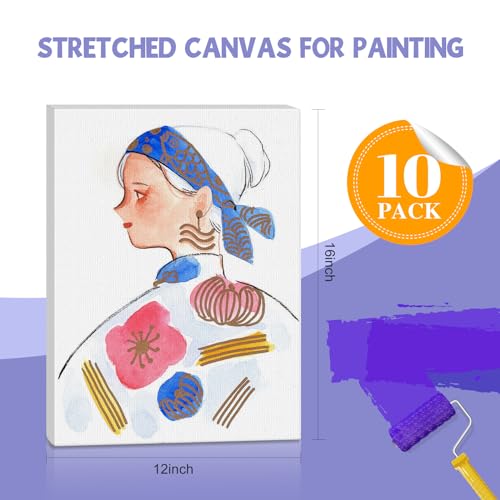
1. ESRICH 12×16 Stretched Canvas, 10 Pack — Best Overall Stretched Set

The ESRICH 10 pack is the version of this size most painters picture: cotton canvas stapled around a 5/8 inch pine frame, pre-coated with acid-free acrylic gesso, ready to paint and ready to hang. The listing gives a primed weight of 8 oz, which is the common standard for value-pack canvas.
Ten is a sensible number. It is enough for a month or two of regular painting without the storage problem that comes with a 24-pack of stretched frames, which take far more shelf space than flat panels. The 5/8 inch profile is the standard depth, so these will go into regular frames if you decide a piece deserves one.
Best suited for: acrylic and oil painters who want ready-to-hang 12×16 canvases for finished work.
Key features:
- 10 stretched canvases, 12×16 inches
- 5/8 inch pinewood stretcher frame
- Cotton canvas pre-coated with acid-free acrylic gesso; listed primed weight 8 oz
- Listed for oil, acrylic, watercolor, tempera and gouache
Pros:
- Standard profile fits common frames and hangs cleanly without one
- Manageable pack size for a solo painter
- Listing is specific about frame wood and primer
Cons and limitations:
- Stretched canvas flexes under heavy pressure from a palette knife
- Takes more storage space than flat panels
- Watercolor on gessoed canvas needs a special ground to behave like paper
Buying consideration: If you mostly paint quick studies you do not plan to keep, panels are cheaper per surface and easier to store.
2. FUMILE 12×16 Stretched Canvas, 12 Pack — Best for a Dozen Ready-to-Hang Canvases

FUMILE’s 12-pack mirrors the ESRICH specification closely: 5/8 inch profile, pinewood frames, acid-free acrylic gesso and an 8 oz primed weight. The difference is two more canvases, which matters if you plan to paint a series or build a grid of matching pieces.
A dozen identical 12×16 canvases also make a practical gallery-wall kit. Three rows of four, or two rows of three with spares for mistakes, all line up because the frame depth is the same. If that kind of project is on your list, our guide to painting a multi-canvas wall art set walks through planning the composition across panels.
Best suited for: painters working in series or building matching wall displays.
Key features:
- 12 stretched canvases, 12×16 inches
- 5/8 inch pine frame, nailed construction per the listing
- Pre-coated acid-free acrylic gesso, 8 oz primed weight
- Listed as suitable for oil, acrylic, watercolor, tempera and gouache
Pros:
- Twelve matching canvases for series and multi-panel work
- Same standard profile as the top pick
- Listing gives the actual product dimensions
Cons and limitations:
- Less established brand than ESRICH on this list
- Twelve stretched frames need real storage space
- Listing does not specify the cotton weight before priming
Buying consideration: Choose between this and the ESRICH set mainly on how many canvases you need right now.
3. Simetufy 12×16 Canvas Boards, 24 Pack — Best Bulk Panel Pack

When the goal is volume, flat panels win, and the Simetufy 24-pack gives the most 12×16 surfaces of any set here. The listing describes 100% cotton without alkaline chemicals, glued to an acid-free MDF board, with a triple acrylic primer.
MDF backing is the key detail. It keeps the panel rigid, so it will not drum or flex when you press hard, and it will not warp easily as long as you avoid soaking it. That rigidity makes these good for palette-knife work, classroom use and outdoor painting on a field easel with clips.
Best suited for: art teachers, paint-party hosts and painters who burn through practice surfaces quickly.
Key features:
- 24 flat canvas boards, 12×16 inches
- 100% cotton glued to acid-free MDF board
- Triple acrylic primer per the listing
- Listed for oil, watercolor, acrylic, pastel, tempera and gouache
Pros:
- Most surfaces per pack in this guide
- Rigid MDF core handles firm brushwork and knife painting
- Flat boards stack and store far more easily than frames
Cons and limitations:
- Needs a frame or backing hardware to hang
- MDF adds weight to the box
- Not the right format if you want gallery-wrap edges
Buying consideration: For group sessions, count painters times sessions and buy accordingly; a 24-pack goes quickly in a class.
4. PHOENIX 12×16 Canvas Boards, 12 Pack — Best Panels for Framing and Practice

PHOENIX gives one of the most detailed specification lists in this category: hand-stretched 100% cotton over MDF, 4 oz unprimed and 8 oz primed weight, 1/8 inch panel thickness, and AP and CE safety marks. At 1/8 inch, the panel slides into an ordinary 12×16 picture frame without special depth.
The listing also includes an honest warning: these panels are not designed for acrylic pouring because of the amount of paint involved. That is useful to know before you buy. For brush painting in acrylic, oil, watercolor or tempera, the seller recommends them, and the flat format suits keepsake projects and collage work too.
Best suited for: painters who frame their work and want precise panel specifications.
Key features:
- 12 canvas boards, 12×16 inches, 1/8 inch thick
- Cotton surface: 4 oz unprimed, 8 oz primed with acid-free gesso
- MDF backing to resist curling and warping
- AP and CE marks stated in the listing
Pros:
- Thin profile drops straight into standard frames
- Clear construction details, including what not to use them for
- Twelve panels is a practical middle-ground quantity
Cons and limitations:
- Seller advises against acrylic pouring on these panels
- Flat panels have no side edges to paint
- Some panels ship vacuum packed per the listing
Buying consideration: If pouring is part of your plan, choose a stretched set instead and prop the canvas level while it dries.
5. ESRICH 12×16 Canvas Boards, 16 Pack — Best Mid-Size Bulk Panel Set

ESRICH’s board version sits between a 12-pack and a 24-pack. You get sixteen 12×16 panels with a pure cotton surface, a non-toxic, acid-free primer and a sturdy board core described as resistant to warping.
Notably, this listing names pouring among the uses, unlike the PHOENIX set. If you want flat panels for occasional pour experiments as well as brushwork, that makes this a more flexible choice, though any panel should be laid flat and level while a heavy pour cures.
Best suited for: regular painters who prefer panels and want more than a dozen without jumping to 24.
Key features:
- 16 canvas panels, 12×16 inches
- Pure cotton surface with acid-free, non-toxic primer
- Board core described as not easily deformed
- Listed for oil, watercolor, acrylic, tempera, pouring and gouache
Pros:
- Sixteen panels at a mid-range quantity
- Pouring listed as a supported use
- Same brand as our top stretched pick, if you want to mix formats
Cons and limitations:
- Listing does not name the core material
- Heavier box than the stretched packs
- Watercolor still needs a watercolor ground for best results on gesso
Buying consideration: Good fit if you alternate between brush studies and the occasional pour on the same size.
6. Artlicious 12×16 Canvas Panels, 12 Pack — Best Value Panels for Beginners

Artlicious keeps things simple: twelve 12×16 flat panels with an acid-free cotton surface, grown and primed in India according to the listing, and each panel individually wrapped. That last detail matters more than it sounds, because loose panels in a box pick up dust and scuffs that show under thin paint.
These sit in the lowest price tier of the panel sets here, which makes them a sensible first purchase for someone learning acrylics or for hosting a small paint night where everyone gets a clean board.
Best suited for: beginners, kids and adults at paint parties, and anyone testing the 12×16 format.
Key features:
- 12 flat canvas boards, 12×16 inches
- Acid-free cotton surface
- Each panel individually wrapped
- Listed for oil, acrylic, tempera and watercolor
Pros:
- Individually wrapped panels stay clean until used
- Low-cost way to try the size
- Flat panels are easy to hand out at events
Cons and limitations:
- Listing gives few construction details about the backing
- No stated primer weight
- Not intended for gallery-wrap display
Buying consideration: If you know you will paint at this size for months, a larger pack lowers the cost per panel.
Buying Guide: How to Choose a 12×16 Canvas Pack
Stretched canvas or flat panel?
This is the decision that matters most. Stretched canvas has a springy surface, deep sides you can paint, and hangs straight from a nail. Panels are rigid, thin, cheap per piece, and need a frame or backing to hang. If you paint to sell or display, stretched is usually worth it. If you paint to learn, panels give more practice per dollar and take a fraction of the shelf space.
Many painters keep both: panels for studies, stretched canvas for the version they plan to finish.
Frame profile and depth
All the stretched sets here use a 5/8 inch profile, often called standard profile. It fits most ready-made frames. Deeper gallery profiles, around 1.5 inches, look better unframed but cost more and are not what these value packs offer. For panels, thickness matters for framing: the PHOENIX boards state 1/8 inch, which suits standard picture frames.
Primer weight and surface
Value canvases are typically primed to around 8 oz, which several listings here state. That gives a smooth, even tooth suited to acrylic. Oil painters who want extra protection sometimes add one more coat of acrylic gesso and sand it lightly. If you use watercolor, standard gesso is too slick; apply a watercolor ground first or use paper.
Pack size versus storage
Twelve stretched 12×16 canvases stand roughly a foot deep on a shelf once you count the frames. Twenty-four panels stack to just a few inches. Think about where finished and unfinished canvases will live, especially while paintings dry, before choosing the biggest number on the box.
Medium compatibility and pouring
Every set here lists acrylic and oil. The useful differences are in the fine print: PHOENIX advises against acrylic pouring on its panels, while the ESRICH board set lists pouring as a use. Stretched canvas can also sag slightly under a heavy pour, so many pour artists place a small support under the center while it cures.
Who will use them
For a classroom or party, individually wrapped or easy-to-distribute panels save time. For a solo painter building a portfolio, stretched canvas with consistent edges looks more professional. For kids, flat panels are lighter, cheaper and harder to puncture.
Plan Your Next 12×16 Project
A matched pack is the perfect excuse for a multi-panel piece. Learn how to plan and paint across several canvases in our guide to painting a three-panel canvas set. And if a stretched canvas gets punctured on the way to a show, our walkthrough on how to fix a ripped canvas painting covers patching from the back.
Common Mistakes to Avoid
- Buying panels when you plan to hang without frames. Panels need framing; stretched canvas does not.
- Pouring on a panel the seller says is not for pouring. Read the listing notes before a heavy pour.
- Storing stretched canvases flat under weight. Pressure dents the surface; store them upright.
- Skipping a quick wipe before painting. Dust from packaging shows under thin glazes.
- Using standard gesso for watercolor. Watercolor beads and lifts; use a watercolor ground.
- Ignoring frame size. 12×16 frames exist, but confirm your frame rebate fits the canvas depth.
FAQs
Is 12×16 a standard canvas size?
Yes. 12×16 inches is a common ready-made canvas and frame size in the US, which makes it easy to frame and display without custom framing.
Should I buy stretched canvas or canvas panels in 12×16?
Choose stretched canvas if you want to hang paintings without a frame or paint the sides. Choose panels if you want more surfaces per dollar, easier storage, or a thin support that fits standard picture frames.
How many canvases should be in a 12×16 pack?
For a solo painter, 8 to 12 stretched canvases or 12 to 16 panels usually lasts several weeks. For classes or parties, a 24-pack of panels is more practical.
Can I use oil paint on these primed canvas packs?
All the sets listed here name oil among compatible media. They are primed with acrylic gesso, which is the standard ground for oil and acrylic on value canvas.
Can I do acrylic pouring on 12×16 canvas boards?
It depends on the product. The PHOENIX listing says its panels are not designed for pouring, while the ESRICH board pack lists pouring as a use. Stretched canvas is the most common choice for pours.
Do I need to add more gesso to pre-primed canvas?
Not for most acrylic work. Some oil painters add a coat and sand it lightly for a smoother, more sealed surface, but it is optional.
Final Recommendation
If you want ready-to-hang 12×16 canvases for work you plan to keep, start with the ESRICH 10 pack, or the FUMILE 12 pack if you need more matching pieces for a series or wall grid.
If you paint mainly to practice, teach or host, flat panels make more sense: the Simetufy 24 pack for volume, the PHOENIX 12 pack when framing and detailed specs matter, the ESRICH 16 pack if you want pouring on the table, and the Artlicious 12 pack as the simplest low-cost start. Match the format to how the finished paintings will live, and the right pack follows.