PaintingProGuide is reader-supported. When you buy through links on this page we may earn an affiliate commission at no extra cost to you.
The best craft paint for foam sheets is water-based acrylic: ordinary acrylic craft paint for most projects, acrylic paint pens for detail, and acrylic over a flexible primer when the foam has to bend. Craft foam sheets are usually EVA (ethylene vinyl acetate), a closed-cell plastic foam that does not absorb paint the way paper does, so the paint needs to grip the surface rather than soak in.
Below we explain why acrylic wins, how to prep foam so paint does not peel or crack, which paint types to avoid, and, because the right foam makes a difference too, which craft foam sheets are worth painting on.
Quick answer: Use acrylic craft paint on foam sheets, applied in thin coats over a light base coat of white acrylic, gesso or a decoupage-style glue sealer. For lettering and outlines, acrylic paint pens are the easiest choice. For cosplay or anything that flexes, seal the foam first (heat sealing is common for thicker EVA) and use a flexible primer before acrylic. Avoid watercolor and washable kids paint on bare EVA; they bead up and rub off.
Best Paint for Foam Sheets at a Glance
- Acrylic craft paint — Best overall for most foam sheet crafts
- Acrylic paint pens — Best for lettering, faces and outlines
- Artist acrylic in soft or fluid body — Best for blended, display-quality work
- Flexible primer plus acrylic — Best for cosplay and foam that bends
- Spray paint over primer — Best for fast, even base coats on larger pieces
| Paint type | Best for | Finish | Flex on foam | Prep needed |
|---|---|---|---|---|
| Acrylic craft paint | Most foam sheet crafts, kids projects | Matte to satin | Good in thin coats | Light primer or base coat helps |
| Acrylic paint pens | Lettering, outlines, details | Satin | Good | Clean surface |
| Artist acrylic (soft or fluid body) | Blended color, display pieces | Satin to gloss | Good, more flexible film | Primer recommended |
| Flexible primer + acrylic | Cosplay armor, props that bend | Any, after sealing | Best | Heat seal, then flexible primer |
| Spray paint | Even base colors on larger pieces | Varies | Can crack without primer | Flexible primer first; test solvents |
| Watercolor or washable kids paint | Not recommended | Beads up | Rubs off | Not suitable on bare EVA |
How We Chose
This guide is based on how EVA craft foam and common craft paints behave as materials, and on the Amazon listing details for the foam sheets below, checked in October 2026, along with how widely each product is reviewed by Amazon buyers. We have not run our own paint tests on these sheets. The product data we had covered foam sheets rather than paints, so our product picks are surfaces; the paint advice is about paint types, not specific paint brands.
We judged paint options on:
- Adhesion: does the paint grip non-porous EVA without peeling?
- Flexibility: will it crack when the foam bends?
- Ease and safety: water cleanup and suitability for classrooms.
- Finish: even coverage without beading.
- Prep required: how much priming the method needs.
Why Acrylic Is the Best Craft Paint for Foam Sheets
Acrylic paint dries into a flexible plastic film. That matters on EVA foam, which is itself flexible and non-porous. A rigid or chalky paint sits on top and cracks the first time the sheet bends; a water-only paint has nothing to hold on to and beads up. Acrylic forms a film that bonds to the surface and bends with it, at least in thin coats.
Acrylic craft paint is also cheap, comes in hundreds of colors, cleans up with water while wet and is widely sold in kid-safe formulas, which is why it is the default in classrooms and craft rooms.
Acrylic craft paint
The small bottles of matte or satin craft acrylic sold for decor projects are the easiest place to start. They are opaque, so a light color can cover dark foam in two coats, and they dry within minutes in thin layers. Their limitation is flexibility in thick coats: if you lay it on heavily, it can crack when the foam is bent. Two thin coats beat one thick one.
Acrylic paint pens
Paint pens put acrylic paint into a marker format, which makes them ideal for outlines, lettering, faces and patterns on foam. They lay down a thin, even line without brush marks and dry quickly. They are less economical for covering large areas, so most crafters base coat with bottled paint and detail with pens.
Artist acrylic
Student or artist acrylics in soft-body or fluid formulas tend to form a more flexible film than inexpensive craft paint and blend more smoothly. They are worth using when the piece is meant to last or be displayed, such as a foam mask or decorative wall piece.
Flexible primer for cosplay and props
Cosplayers working with thicker EVA foam usually heat seal the surface with a heat gun to close the pores, then apply a flexible primer or sealer before painting with acrylic. The primer gives the paint something to grip and absorbs some of the flexing. For thin 2 mm craft sheets used in kids crafts, this is overkill; a base coat of acrylic or a glue-based sealer is enough.
Spray paint
Spray paint gives fast, even base coats on larger pieces, but some solvent-based sprays can react with foam, and rigid spray films can crack. Test on a scrap, apply light coats from a distance, and use a flexible primer first if the piece bends. Spray outdoors or in a well-ventilated space.
Paints to avoid
Watercolor, washable tempera and other paints that rely on absorbent surfaces generally bead up on bare EVA and rub off once dry. If you must use them, for example in a preschool class, coat the foam with a layer of white acrylic or a glue sealer first so the paint has something to cling to.
How to Prep and Paint Craft Foam, Step by Step
- Clean the sheet. Wipe with a dry or barely damp cloth to remove dust and any release residue from manufacturing.
- Cut first, paint second. Cutting painted foam can chip edges; cut shapes before painting where possible.
- Base coat. Apply a thin coat of white acrylic, gesso or a decoupage-style glue sealer. Let it dry completely.
- Paint in thin layers. Use a soft brush or foam brush and build color in two or three thin coats, letting each dry.
- Add details. Use acrylic paint pens or a fine round brush for lines, lettering and faces.
- Seal if handled. A coat of acrylic varnish or sealer protects painted foam that will be touched, worn or displayed.
For thick cosplay foam, add heat sealing before the base coat and swap the base coat for a flexible primer.
Foam Sheets Worth Painting On
The foam itself affects results. Smooth, consistently colored EVA sheets take paint more evenly, white foam makes colors brighter, and thicker 2 mm sheets are easier to handle while painting. These sheets from our product data suit painted projects.
Our Top Picks at a Glance
- MEARCOOH 104 Pack Foam Sheets — Best bulk pack for classrooms
- Horizon Group USA 30 Rainbow Foam Sheets — Best mid-size pack with 2 mm sheets
- OISAKLD 10 Pack 9×12 EVA Foam, 2 mm — Best larger sheets for masks and props
- Do²ping White Foam Sheets, 10 Pack — Best blank white base for painted designs
- AmazingSpark Magical Foam Texture Paper, 30 Pcs — Best for puffy 3D painted cards
| Product | Best For | Key Spec | Key Strength | Price Tier |
|---|---|---|---|---|
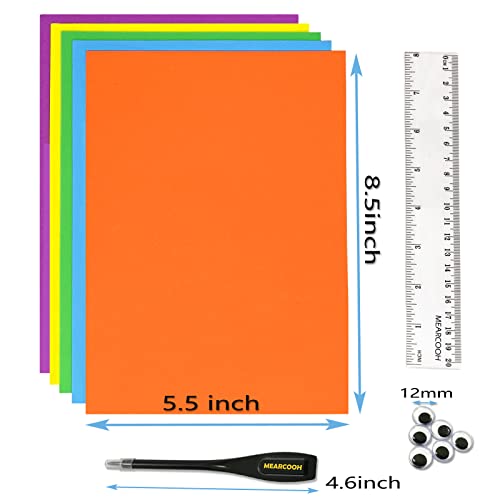
| MEARCOOH 104 Pack | Classrooms, bulk crafts | 104 sheets, 13 colors, 8.5×5.5 in | Large count, no adhesive backing | $ |
| Horizon Group 30 Pack | Home crafts | 30 sheets, 2 mm, 5.5×8.5 in | Pliable, sturdy EVA | $ |
| OISAKLD 9×12 (10) | Masks, cosplay, signs | 10 sheets, 9×12 in, 2 mm | Larger sheets | $ |
| Do²ping White (10) | Painted designs | 10 white sheets, 8.5×5.5 in | Clean white base | $ |
| AmazingSpark Foam Paper | 3D cards, kids art | 30 x 3×3 in cellulose | Swells to 3D with water | $ |
1. MEARCOOH 104 Pack Foam Sheets — Best Bulk Pack for Classrooms

MEARCOOH packs 104 EVA sheets in 13 colors at 8.5 x 5.5 x 0.07 inches. The listing describes low porosity, a soft touch, no odor and no adhesive backing. No backing is useful for painting, because you can work on either side and glue afterward.
With that many sheets, you can let a class experiment with paint freely.
Best suited for: teachers, scout leaders and families who go through a lot of foam.
Key features:
- 104 sheets in 13 colors
- 8.5 x 5.5 x 0.07 inches
- EVA, no adhesive backing
Pros:
- Largest count here
- Paint either side
- Plenty of colors as base tones
Cons and limitations:
- Smaller sheet size
- Thin compared with 2 mm sheets
Buying consideration: Paint on lighter colors for brighter results, or base coat dark sheets with white first.
2. Horizon Group USA 30 Rainbow Foam Sheets — Best Mid-Size Pack

Horizon’s 30-sheet pack gives 5.5 x 8.5-inch sheets at 2 mm thick in rainbow colors. The listing calls the foam pliable and sturdy, not prone to tearing, odor-free, and easy to adhere to nearly any surface.
Two millimeters is a comfortable thickness for painting: rigid enough to hold while you work, thin enough to cut with scissors.
Best suited for: home crafters who want a moderate amount of slightly thicker foam.
Key features:
- 30 sheets, 2 mm thick
- 5.5 x 8.5 inches
- Assorted rainbow colors
Pros:
- 2 mm thickness handles well when painting
- Resists tearing per listing
- Low price tier
Cons and limitations:
- Smaller sheets
- Colors may need base coating under light paint
Buying consideration: Good all-rounder for painted crafts with kids.
3. OISAKLD 10 Pack 9×12 EVA Craft Foam, 2 mm — Best Larger Sheets

OISAKLD’s sheets are 9 x 12 inches and 2 mm thick, large enough for masks, signs, costume pieces and bigger cut-outs. The listing highlights elastic EVA that is easy to cut and fold, and cosplay as a common use.
For painted cosplay accents, these are a better fit than small sheets, though serious armor builds typically use much thicker foam.
Best suited for: mask makers, costume accents, signs and larger painted shapes.
Key features:
- 10 sheets, 9 x 12 inches
- 2 mm EVA
- Elastic, easy to cut and fold
Pros:
- Larger working area
- Suitable for light cosplay pieces
Cons and limitations:
- Only ten sheets
- Bending can crack thick paint; use thin coats
Buying consideration: Use a flexible primer or thin acrylic coats if the piece will be worn.
4. Do²ping White Foam Sheets, 10 Pack — Best White Base

White foam is the easiest base for painted designs because colors appear true and bright with fewer coats. Do²ping’s pack includes ten 8.5 x 5.5-inch white sheets, described as evenly colored, soft and pliable, and suited to scissors, dies and cutting tools.
If you are painting detailed designs or using paint pens, starting on white saves a base coat.
Best suited for: painted designs, paint pen art and projects where color accuracy matters.
Key features:
- 10 white sheets
- 8.5 x 5.5 inches
- Works with scissors and dies
Pros:
- White base makes paint colors brighter
- Lowest price tier
- Consistent color across the sheet
Cons and limitations:
- Small pack
- Smaller sheet size
Buying consideration: Wipe the surface before painting; white foam shows dust and fingerprints.
5. AmazingSpark Magical Foam Texture Paper, 30 Pcs — Best for 3D Painted Cards

This is a different material: 3×3-inch sheets of cellulose sponge paper that swell to about 8 mm thick when brushed with water. You draw your design, wet it, and it puffs into a 3D relief. The listing pitches it for acrylic painting, cards, bookmarks and decorative pieces.
Unlike EVA, this material is absorbent, so it takes water-based paints readily. It is a fun option for kids who want painted textures without plastic foam.
Best suited for: kids art, greeting cards and textured mini artworks.
Key features:
- 30 sheets, 3 x 3 inches
- Natural wood pulp sponge
- Swells to about 8 mm with water
Pros:
- Absorbent, so water-based paints work
- 3D relief effect
- Non-toxic per listing
Cons and limitations:
- Small squares
- Not EVA, so it behaves differently in crafts
Buying consideration: Paint after swelling and drying for crisp color, or before for softer, blended effects.
Buying Guide: Choosing Paint and Foam for Foam Sheet Crafts
Match paint to how much the foam will bend
Flat decorations and cards can use any acrylic. Masks, wearable pieces and props need thin coats and a flexible primer or sealer under the paint.
Choose foam thickness for the job
Thin sheets around 1.5 to 2 mm are best for kids crafts and cards. Larger 9×12-inch 2 mm sheets suit masks and signs. Cosplay armor uses much thicker foam that needs heat sealing.
Start light
Light or white foam needs fewer coats. On dark foam, a white base coat first makes paint colors brighter.
Pick the applicator
Soft brushes and foam brushes give smooth coverage; stiff bristle brushes leave streaks. Paint pens are best for details.
Seal for durability
Painted foam that will be handled, worn or displayed benefits from a coat of acrylic varnish or sealer. It reduces chipping and evens the finish.
Think about safety and ventilation
For children, choose water-based acrylic labeled for kids use. Spray paints and heat guns belong with adults in ventilated spaces.
Foam and Craft Painting Projects
If you are using foam to make your own stamps, our guide on how to do foam stamp painting crafts shows how acrylic behaves when printed from foam shapes.
Looking for another painted craft with the same paints? Try making a painted birdhouse.
Common Mistakes to Avoid
- Painting bare EVA with watercolor or washable tempera and watching it bead up.
- Applying one thick coat of acrylic that cracks when the foam bends.
- Skipping the base coat on dark foam and needing four coats of color.
- Using solvent-based spray paint without testing it on a scrap first.
- Painting before cutting, then chipping edges with scissors.
- Forgetting to seal painted pieces that will be handled often.
FAQs
What kind of paint sticks to craft foam?
Acrylic paint sticks best. It forms a flexible film that bonds to EVA foam. A light base coat of white acrylic, gesso or a glue sealer improves adhesion further.
Do you need to prime foam sheets before painting?
For thin craft sheets, a base coat helps but is not essential. For thick cosplay foam, heat sealing and a flexible primer are standard practice.
Can I use paint pens on foam sheets?
Yes. Acrylic paint pens are one of the easiest ways to add lettering, outlines and details to craft foam.
Will acrylic paint crack on foam?
Thick coats can crack when the foam bends. Thin layers, a flexible primer and a final flexible sealer reduce cracking.
Can kids use washable paint on foam sheets?
Washable paints tend to bead up and rub off bare EVA. Base coat the foam with white acrylic or glue first, or switch to kid-safe acrylic.
How do I seal painted craft foam?
Brush on a water-based acrylic varnish or sealer once the paint is fully dry. Use a flexible product for pieces that bend.
Final Recommendation
For almost every foam sheet project, acrylic craft paint in thin coats over a light base coat is the best choice. Add acrylic paint pens for detail, use a flexible primer and sealer for anything worn or bent, and skip watercolor or washable paint on bare EVA.
If you are buying foam to paint, start with white sheets like the Do²ping pack for the brightest colors, pick the MEARCOOH 104-pack for classrooms, and choose larger 9×12 OISAKLD sheets for masks and signs. For something different, AmazingSpark’s swelling foam paper gives kids a 3D painted effect with ordinary water-based paints.