
PaintingProGuide is reader-supported. When you buy through links on this page we may earn an affiliate commission at no extra cost to you.
Non toxic washable paint is the category parents and teachers reach for when a child is old enough to hold a brush but young enough to wipe it on the sofa. The label covers two quite different products: thick finger paints for toddlers who paint with their hands, and liquid tempera for preschool and school-age kids who use brushes and sponges. Both should carry a recognized non-toxicity mark, and both should rinse out of skin and most clothing with soap and water.
This guide separates the two types, ranks seven widely stocked options by age fit and safety labeling, and explains what “washable” does and does not mean before you hand a bottle to a three-year-old.
Quick answer: For toddlers aged 1 to 3, the Honeysticks Non Toxic Finger Paint is the top choice because it is water based with cosmetic-grade colorings and a thick texture that stays where small hands put it. For preschool and school-age children using brushes, the Colorations Simply Washable Tempera 8-pack offers 16 oz bottles with the AP seal and ASTM D-4236 compliance. The Crayola Washable Kids Paint 6-count is the budget pick for ages 3 and up.
Our Top Picks at a Glance
- Honeysticks Non Toxic Finger Paint, 6 Colors — Best for toddlers and first painting
- Colorations Simply Washable Tempera, Rainbow Plus 8-Pack — Best for classrooms and heavy use
- Crayola Washable Kids Paint, 6 Count — Best budget washable paint for ages 3+
- ABEIER Washable Finger Paint, 12 Colors — Best color range for toddlers
- Jar Melo Washable Finger Paints, 10 Colors — Best large-capacity finger paint
- TMOL Washable Paint for Kids, 12 Colors with Brushes — Best complete starter kit
- ARTME Washable Paint for Kids, 14 Colors — Best mid-range value with brushes
| Product | Best For | Key Spec | Key Strength | Price Tier |
|---|---|---|---|---|
| Honeysticks Finger Paint | Ages 1–3, first art | 6 x 2.02 fl oz, water based, cosmetic-grade colorings | Thick texture for little hands | $$ |
| Colorations Tempera 8-Pack | Classrooms, paper, wood, cardboard | 8 x 16 oz, AP seal, ASTM D-4236, paraben-free | Large bottles; allergen-free formula | $$ |
| Crayola Washable Paint 6ct | Ages 3+, school projects | 6 x 2 fl oz, resealable caps | Trusted brand at the lowest tier | $ |
| ABEIER Finger Paint 12 | Toddlers wanting more colors | 12 x 1.21 fl oz, ASTM D-4236 | Twelve blendable colors | $ |
| Jar Melo Finger Paints 10 | Frequent finger painters | 10 x 2.1 fl oz (600 ml total) | Generous capacity | $$ |
| TMOL Washable Paint 12 | Starter kit with tools | 12 bottles, 6 brushes, 2 palettes, bucket | Everything in one box | $$ |
| ARTME Washable Paint 14 | Ages 3+ with brushes | 14 x 2 oz, 3 brushes, ASTM D-4236 | Fourteen colors | $$ |
How We Chose
We selected these paints from the Amazon listing details and specifications as checked in October 2026, from how well each product’s type and labeling fits its stated age group, and from how widely each is reviewed by Amazon buyers. We have not tested them on children or fabric. The criteria:
- Safety labeling. Preference for products citing ASTM D-4236 conformance or the ACMI AP (Approved Product) seal, which are the recognized US standards for art-material toxicity labeling.
- Age fit. Thick finger paints for 1–3 year olds; brush-friendly tempera for 3 and up.
- Washability claims. Listings that specify what the paint washes out of, and that honestly note exceptions such as porous fabric and wood.
- Quantity and packaging. Bottle size, resealable caps, and whether tools are included.
- Formula notes. Paraben-free, allergen-free and water-based claims where stated.
Finger Paint vs. Washable Tempera
Finger paint is thick, almost like lotion, so a toddler can push it around with hands and feet without it running off the paper. It is formulated for direct skin contact and usually comes in small pots or tubes. Washable tempera is thinner, flows from a brush or sponge and dries matte and opaque on paper and cardboard. Older toddlers can use tempera with chunky brushes, but it drips more and is a poorer fit for hand painting. Most of the finger paints below are for ages 1 to 3; the tempera products are for 3 and up.
Best Non Toxic Washable Paints Reviewed
1. Honeysticks Non Toxic Finger Paint, 6 Bright Colors — Best for Toddlers and First Painting

Honeysticks positions this set squarely at first painting moments. The six pots (yellow, red, blue, purple, orange and green) hold about 2 fl oz each of water-based paint colored with cosmetic-grade colorings, and the listing stresses a thick, creamy texture that gives little fingers more control and produces fewer spills.
The paint is described as washable from skin, including hands and feet, and as drying well on paper so finished pieces can be hung without smudging. The honeypot bottles are made from reclaimed plastic and the packaging is FSC-certified cardboard, which will matter to some families.
Best suited for: Parents of one- to three-year-olds who want a first paint with a short, transparent ingredient story.
Key features:
- 6 pots, 2.02 fl oz each: yellow, red, blue, purple, orange, green
- Water based with cosmetic-grade colorings
- Thick, creamy texture for control
- Washable from skin
- Recyclable reclaimed-plastic pots and FSC cardboard
Pros:
- Formulated for direct skin contact
- Thick body stays on the paper
- Sustainable packaging
Cons and limitations:
- Highest price tier for six small pots
- Only six colors
- Listing specifies washable from skin; fabric is not promised
Buying consideration: Cover clothing with a smock anyway; the listing’s washability claim is for skin, and glossy-finish finger paints can leave a tint on light fabrics.
2. Colorations Paraben-Free Simply Washable Tempera, Rainbow Plus 8-Pack — Best for Classrooms and Heavy Use

Eight 16-ounce bottles (red, orange, yellow, green, blue, purple, black and white) make this the only set here sized for a classroom, daycare or a household with several young painters. Colorations lists the AP seal for non-toxicity and ASTM D-4236 conformance, and the formula is now paraben-free.
It is also the most allergen-conscious product on the list: the listing states it is free of latex, dairy, casein, egg, gluten, peanut, tree nuts and soy. The paint is said to work on paper, canvas, wood, cardboard, cardstock and paper mache without chipping or cracking when dry, indoors or out.
Best suited for: Teachers, childcare providers and families who paint often enough to justify quart-sized bottles.
Key features:
- 8 x 16 oz bottles including black and white
- AP seal and ASTM D-4236 non-toxicity
- Paraben-free; free of common allergens listed above
- Suitable for paper, canvas, wood, cardboard and paper mache
- Made in the USA
Pros:
- Largest quantity by far
- Strong safety and allergen labeling
- Includes black and white for tinting and shading
Cons and limitations:
- Highest price tier up front
- Large bottles need decanting into cups for toddlers
- Not a finger paint texture
Buying consideration: Buy a set of small squeeze bottles or a divided tray to portion out paint; 16 oz bottles are too heavy for small hands.
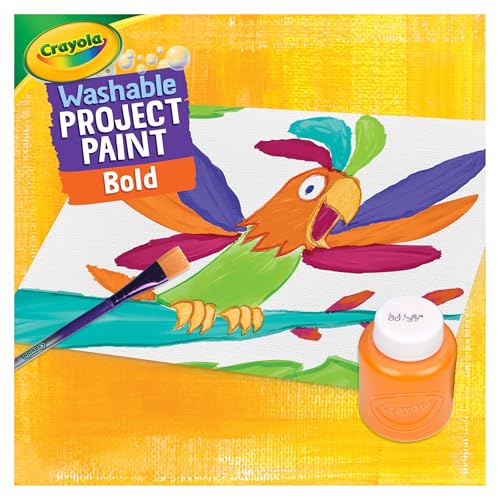
3. Crayola Washable Kids Paint, 6 Count — Best for Budget Washable Paint for Ages 3+

Crayola’s six-pack of 2 fl oz bottles is the lowest-cost entry here and the one most likely to match what children use at school. The listing names a non-toxic formula for ages 3 and up, a smooth creamy consistency that blends into additional hues, and resealable caps.
Washability is stated as from skin and most washable clothing. The color set skews bright (yellow, green, yellow-orange, red-orange, fuchsia, teal, blue-violet), so you may want a separate white and black for mixing.
Best suited for: Families who want a reliable brand name for school-age projects without a large outlay.
Key features:
- 6 x 2 fl oz bottles, bold colors
- Non-toxic, ages 3 and up
- Washable from skin and most washable clothing
- Resealable caps
- Recommended surface: paper
Pros:
- Lowest price tier
- Widely available and familiar
- Creamy, blendable consistency
Cons and limitations:
- Small 2 oz bottles run out fast
- No white or black included
- Paper is the only recommended surface
Buying consideration: Pair with a cheap pack of white and black tempera so kids can learn tints and shades.
4. ABEIER Washable Finger Paint for Toddlers, 12 Non-Toxic Colors — Best for Toddlers Who Want More Colors

ABEIER expands the finger paint palette to twelve colors, including brown, white and black, which most toddler sets skip. The listing cites ASTM D-4236 conformance, a thick, silky texture and blendable colors, and notes it can be in direct contact with skin.
Washability is claimed from skin, fabrics and plastics, with an honest caveat that perforated fabric and porous surfaces are harder to clean. Each pot is about 1.21 fl oz, so this is a wide palette in small quantities. The listing also includes a small-parts choking warning.
Best suited for: Toddlers past the first-paint stage who are beginning to notice and name colors.
Key features:
- 12 colors including brown, white and black
- 1.21 fl oz per color
- ASTM D-4236 conformance
- Thick cream texture; blendable
- Washable from skin, fabric and plastics per the listing
Pros:
- Widest toddler palette here
- Low-to-mid price tier
- Includes neutrals for mixing
Cons and limitations:
- Small pots
- Choking-hazard note on small parts; supervise
- Porous surfaces may stain
Buying consideration: Decant two or three colors at a time into a muffin tin; toddlers rarely need twelve open pots at once.
5. Jar Melo Washable Finger Paints for Toddlers, 10 Colors — Best for Frequent Finger Painters

Jar Melo’s ten tubes hold 2.1 fl oz each, about 600 ml in total, which the listing highlights as a generous capacity for extended play. The paint is described as made from non-toxic pigments and glycerin with a face-cream texture, and as tested across age groups including sensitive-skinned adults.
It washes off skin with ease, but the listing is candid that porous fabrics and wood may be slightly harder to clean. It can be used on paper, canvas and crafts and for foot painting.
Best suited for: Toddlers who finger paint several times a week and burn through small pots.
Key features:
- 10 tubes, 2.1 fl oz each (600 ml total)
- Non-toxic pigments and glycerin base
- Silky cream texture
- Washes easily from skin
- Suitable for paper, canvas, foot painting and crafts
Pros:
- Largest finger paint volume here
- Mid price tier
- Tubes are easier to portion than pots
Cons and limitations:
- Porous fabric and wood may stain
- No white or black
- Tubes can be squeezed empty by enthusiastic toddlers
Buying consideration: Store tubes cap-up in a zip bag; glycerin-based paints can separate slightly and a quick knead restores them.
6. TMOL Washable Paint for Kids, 12 Colors with Brushes, Palette and Bucket — Best for A Complete Starter Kit
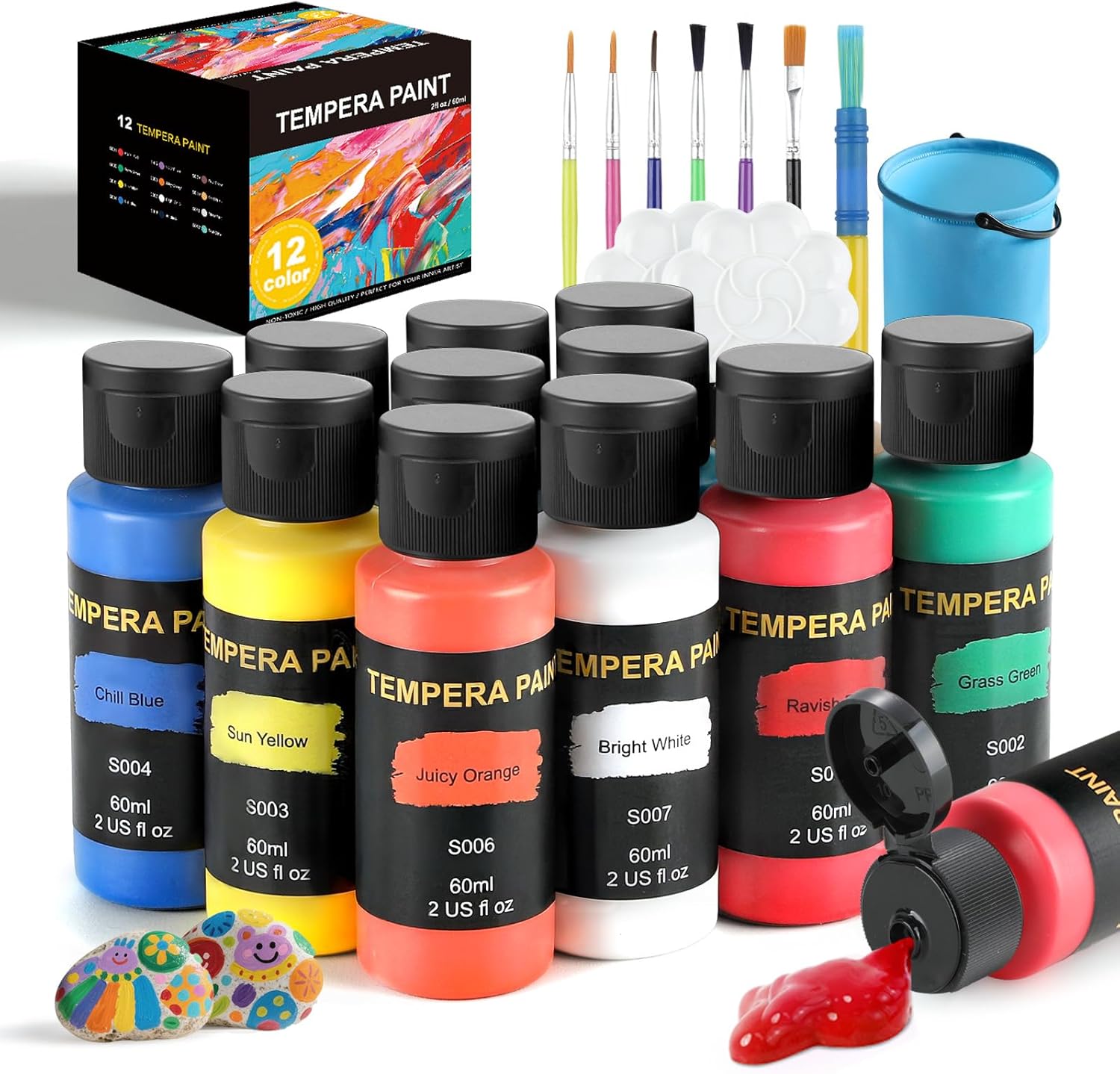
TMOL’s kit is the only one here that arrives ready to paint: 12 bottles of washable tempera, six brushes, two palettes and a foldable water bucket. The bottles are transparent and labeled so children can match names to colors, with aluminum-sealed flip-top caps to limit drying and spills.
The listing says the paint washes off skin, clothes and surfaces with soap and water and is certified non-toxic. Note the recommended age for finger painting is stated as six and up, so treat this as a brush paint for preschoolers rather than a toddler finger paint.
Best suited for: Families setting up a first paint station who do not want to buy brushes and cups separately.
Key features:
- 12 transparent, labeled bottles of washable tempera
- 6 brushes, 2 palettes, 1 foldable bucket
- Flip-top caps with aluminum seals
- Certified non-toxic per the listing
- Works on paper, cardboard and wood
Pros:
- Nothing else to buy
- Clear bottles help color learning
- Mid price tier
Cons and limitations:
- Finger painting age guidance is 6+
- Brush quality in bundles is usually basic
- A 42-color option exists; confirm which you add to the cart
Buying consideration: Replace the included brushes with a few chunky round and flat brushes once your child outgrows them.
7. ARTME Washable Paint for Kids, 14 Colors x 2 oz with 3 Brushes — Best for Mid-Range Value With Brushes

Fourteen 2 oz bottles plus three brushes gives ARTME the most colors of any set here. The formula is described as skin-safe, acid-free and conforming to ASTM D-4236, and the paint is water based and washable from skin, fabrics, plastics and tables.
As with the other honest listings, ARTME warns that untreated fabric or wood may stain. The set is pitched for finger painting as well as brushwork, and at the mid price tier it undercuts the larger finger paint brands while offering more colors.
Best suited for: Preschoolers and early elementary kids who want a broad palette and a few brushes to start.
Key features:
- 14 colors, 2 oz each
- 3 brushes included
- ASTM D-4236 conformance; acid-free
- Water based; washable from skin, fabric, plastic and tables
- Suitable for finger and brush painting
Pros:
- Most colors in the roundup
- Mid price tier
- Includes brushes
Cons and limitations:
- Only three brushes for fourteen colors
- Untreated fabric and wood may stain
- No tray or cups
Buying consideration: Add a divided palette so several colors can be out at once without cross-contaminating the bottles.
Buying Guide: How to Choose Non Toxic Washable Paint
Look for ASTM D-4236 and the AP seal
In the US, art materials must be labeled under ASTM D-4236, and the ACMI AP seal indicates a product has been evaluated as non-toxic by a toxicologist. Listings that mention one or both are giving you a verifiable claim. “Non-toxic” with no standard cited is weaker.
Match texture to age
Under three: thick finger paint that does not run. Three and up: liquid tempera with brushes. Some finger paints work with brushes too, but tempera used as finger paint is runny and messy.
Understand what “washable” covers
Most listings promise washability from skin and from most washable clothing. Several honestly add that porous fabric, untreated wood and grout can stain. Treat washable as “much easier to clean” rather than “impossible to stain,” and keep a smock on.
Bottle size and packaging
Small 1 to 2 oz pots suit occasional painting and travel; 16 oz bottles suit classrooms. Flip-top or resealable caps matter because tempera dries hard if left open. Transparent bottles help younger kids identify colors.
Color selection
Six bright colors are enough to start. Sets that include white and black let children learn tinting and shading, and brown is useful for the trees and animals kids love to paint.
Allergens and parabens
If anyone in the house has food allergies or sensitive skin, favor products that list what they exclude. Colorations publishes an allergen-free statement; Honeysticks and Jar Melo describe their colorant and base ingredients.
Surface compatibility
Paper and cardboard are universal. If your child paints rocks, wood or paper mache, choose a tempera that names those surfaces, since finger paints often stay tacky on non-porous materials.
Projects to Try With Washable Paint
Washable tempera is well suited to rock painting and simple animal projects. Try our guide to making painted rock critters with kids, then move on to two step-by-step favorites: how to paint a ladybug and how to paint a dinosaur, both written for young painters using exactly these kinds of paints.
Common Mistakes to Avoid
- Assuming “washable” means stain-proof. Porous fabric, untreated wood and light carpet can hold a tint.
- Giving a two-year-old runny tempera. Use thick finger paint until brush control develops.
- Leaving caps off. Tempera skins over within an hour and becomes unusable.
- Buying only bright colors. Add white, black and brown so children can mix.
- Skipping the standard check. Prefer listings that cite ASTM D-4236 or the AP seal rather than a bare “non-toxic” claim.
- Letting paint dry on clothing before washing. Rinse in cold water as soon as the session ends.
FAQs
What does non toxic washable paint actually mean?
Non-toxic indicates the product has been labeled under ASTM D-4236 or carries the ACMI AP seal, meaning it is not expected to cause harm in normal use. Washable means it is formulated to rinse from skin and most washable fabrics with soap and water, though porous materials may still stain.
Is finger paint safe if my toddler puts it in their mouth?
Finger paints labeled non-toxic are not meant to be eaten, but are formulated so small accidental tastes are not expected to be harmful. Supervise closely, and choose products that describe their ingredients, like Honeysticks or Jar Melo.
Which washable paint is best for a 2 year old?
A thick finger paint with a stated safety standard, such as Honeysticks, ABEIER or Jar Melo. Avoid liquid tempera until around age three, when children can manage a brush.
Does washable paint come out of clothes?
Usually, if you rinse in cold water promptly and wash as normal. Listings typically say “most washable clothing”; delicate, porous or light fabrics can retain a faint tint, so a smock is still wise.
Can washable tempera be used on rocks or wood?
Yes for products that list those surfaces, such as Colorations and TMOL, though the paint remains water-soluble and will need a clear sealer if the rocks go outside.
How much paint do I need for a classroom?
Sixteen-ounce bottles like the Colorations 8-pack are the practical choice; small 2 oz bottles empty after one or two group sessions.
Final Recommendation
Pick by age first. For a child under three, the Honeysticks finger paint is the cleanest choice, with ABEIER for more colors and Jar Melo for more volume. For three and up, Crayola’s 6-count covers casual projects cheaply, while TMOL and ARTME add brushes and more colors.
If you run a classroom or have several kids painting weekly, the Colorations Simply Washable Tempera 8-pack is the only option sized for that use, and its AP seal and allergen-free statement are the strongest safety labeling in the group.




