PaintingProGuide is reader-supported. When you buy through links on this page we may earn an affiliate commission at no extra cost to you.
Before choosing a paint, there is one safety point every helmet painter needs to know. Many bike, motorcycle and sports helmet manufacturers advise against painting a protective helmet, because solvents in some paints can weaken the shell or the foam liner, and modifying a certified helmet may affect its safety rating. So the best paint for helmets depends on what the helmet is for. For a costume, cosplay, display or decorative helmet, spray paint gives a smooth, durable finish. For a helmet you actually wear for protection, check the manufacturer’s guidance first and consider decals, wraps or covers instead.
With that in mind, this guide covers how to paint decorative and costume helmets, which paint types bond to helmet plastics and fiberglass, and five products on Amazon: two spray paints, a color-shift effect spray, white paint pens for details and a pack of painter’s spray socks to keep overspray off your hair. We left out car touch-up pens and fabric markers from the same search, since they are not suited to helmet shells.
Quick answer: For a classic glossy finish on decorative or costume helmets, Krylon ColorMaxx Gloss Spray Paint is a low-cost, widely available option rated for plastic and metal. For a flat, weather-resistant finish on fiberglass shells, Dupli-Color Multi-Purpose Enamel is designed for automotive and home projects. For an eye-catching color-change effect, Rust-Oleum Color Shift goes over a black base coat.
Our Top Picks at a Glance
- Krylon ColorMaxx Gloss Spray Paint — Best all-round spray for decorative helmets
- Dupli-Color Multi-Purpose Enamel — Best flat finish for fiberglass and metal
- Rust-Oleum Color Shift Spray Paint — Best special effect finish
- Overseas White Oil-Based Paint Pens (12-pack) — Best for details, numbers and lettering
- TCP Global Painters Spray Socks (12-pack) — Best accessory for spray painting sessions
| Product | Best For | Key Spec | Key Strength | Price Tier |
|---|---|---|---|---|
| Krylon ColorMaxx Gloss | Decorative helmets | 12 oz spray, gloss | Plastic, metal and more | $ |
| Dupli-Color Multi-Purpose Enamel | Fiberglass and metal | 12 oz spray, flat | UV resistant, weatherable | $$ |
| Rust-Oleum Color Shift | Show helmets, cosplay | 11 oz spray, gloss | Color changes with angle | $ |
| Overseas White Paint Pens | Details and numbers | 12 pens, 5 mm tip, oil-based | Opaque, quick-dry | $ |
| TCP Global Spray Socks | Painter protection | 12-pack, one size | Keeps overspray off hair | $$ |
How We Chose
We did not paint helmets with these products for this guide. Picks are based on the Amazon listing details and specifications checked in October 2026, including surface compatibility, finish and durability claims, how well each product suits decorative, costume and display helmets, and how widely each product is reviewed by Amazon buyers. We did not evaluate any product for effects on protective helmet certification.
- Surface compatibility: rated for plastic, fiberglass or metal.
- Finish: gloss, flat or special effect.
- Durability: UV, weather or chip resistance claims.
- Ease of use: spray cans and pens suitable for DIY work.
- Safety: accessories that support safer spray practice.
Protective Helmets: Read This First
Protective helmets are engineered systems. The outer shell spreads an impact and the foam liner, usually EPS, absorbs it. Some solvents and chemicals can damage polycarbonate shells or soften foam, sometimes without visible signs. For that reason, many helmet makers say not to paint, apply solvent-based products to, or otherwise modify their helmets, and doing so may void a warranty or certification.
If you want to personalize a helmet you ride or play in, safer options include manufacturer-approved decals, vinyl wraps designed for helmets, fabric helmet covers and stickers. If you are unsure, contact the manufacturer. The paints below are best for helmets that are decorative, costume, display or prop pieces, or for helmets whose maker explicitly permits painting.
What Helmets Are Made Of
Polycarbonate and ABS plastic
Many bike helmets and costume helmets use thin plastic shells. Plastic needs light scuffing and a paint or primer rated for plastic to bond.
Fiberglass and composites
Many higher-end motorcycle helmets and props use fiberglass. It accepts automotive-style enamels and primers well after sanding.
Resin and 3D-printed props
Cosplay helmets are often resin-cast or 3D printed. These usually need filler primer and sanding to hide layer lines before color coats.
How to Paint a Decorative or Costume Helmet
- Remove parts. Take off visors, pads, straps and vents. Mask anything that cannot be removed.
- Clean. Wash with mild soap and water, rinse and dry. Wipe with a cleaner suited to the surface to remove oils.
- Scuff. Lightly sand glossy surfaces with fine-grit sandpaper so paint can grip. Wipe off dust.
- Prime. Use a primer compatible with the shell material, especially on bare plastic or resin.
- Spray color. Apply several light coats from 10 to 12 inches away, rotating the helmet on a stand or upturned bucket.
- Add details. Use paint pens or masking for stripes, numbers and lettering once the base is dry.
- Clear coat. A compatible clear coat protects the design and adds depth.
- Cure. Let the paint cure fully before handling heavily or reattaching parts.
Design Ideas for Painted Helmets
Racing stripes
Mask one or two stripes running front to back with fine-line tape, spray the stripe color, then peel the tape while the paint is still slightly soft for the cleanest edge. Contrasting colors, such as white on black or red on silver, give a classic motorsport look.
Two-tone fades
Spray the lighter color over the whole helmet, then mist the darker color from one direction only, building it up gradually. Holding the can farther away softens the transition.
Character and cosplay schemes
Prop helmets often need weathering. After the base color cures, dry-brush silver on edges to suggest worn metal, or apply a thin wash of black or brown and wipe it back so it settles into panel lines.
Lettering and numbers
Print a template at the right size, tape it in place and trace through with a ballpoint pen to leave a faint guide, then fill with a paint pen. Keep text on smoother, flatter areas where it reads clearly.
Setting Up a Safe Spray Area
Spray outdoors on a calm day or in a garage with the door open and a fan pushing air outside. Protect the floor with drop cloths and build a simple stand by placing the helmet on an upturned bucket or a paint can wrapped in plastic. Wear a respirator rated for paint vapors, nitrile gloves and safety glasses. Keep cans away from heat and flames, and let empty cans vent before disposal according to local rules.
Best Paint for Helmets Reviewed
1. Krylon ColorMaxx Gloss Spray Paint — Best for decorative helmets
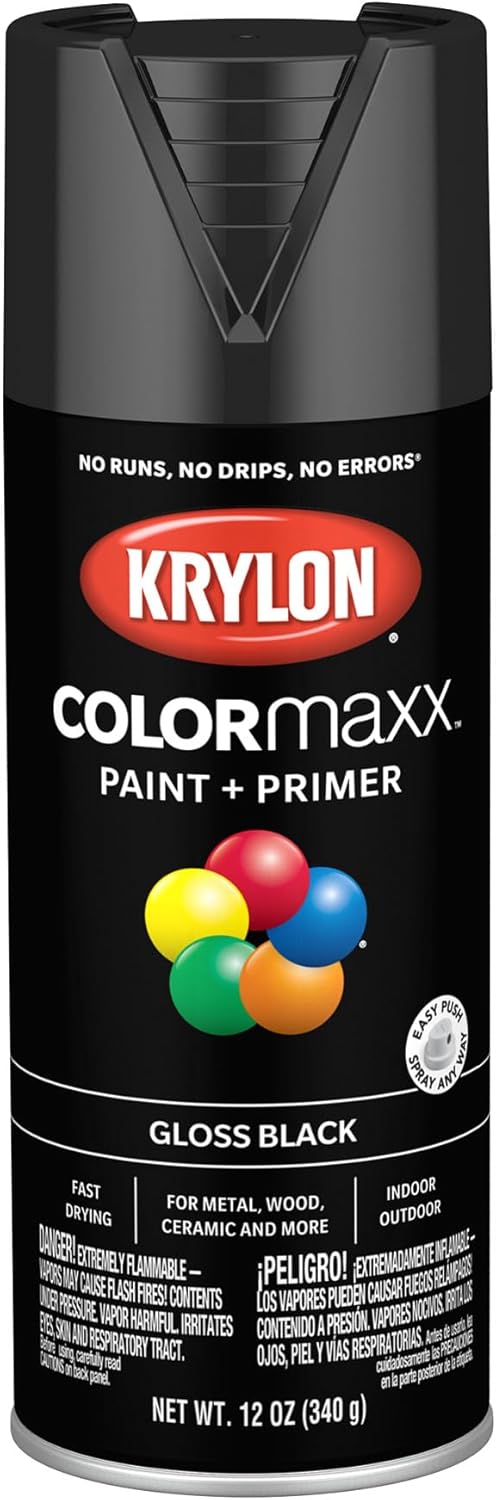
Krylon ColorMaxx is a widely available all-purpose spray paint, and this 12 oz can is gloss black. The listing names wood, ceramic, paper, fabric, glass, metal, plastic, wicker and plaster as recommended surfaces, notes outdoor usage and rust resistance, and says it is made in the United States.
Gloss black is the classic helmet color and hides minor imperfections better than most people expect, as long as the surface is sanded smooth first. The low price tier makes it easy to buy enough cans for primer-free practice on props before committing to a final piece.
Because the listing is sparse on details such as dry times, follow the instructions printed on the can.
Best suited for: Costume, cosplay and display helmets needing a smooth gloss.
Key features:
- 12 oz spray can
- Gloss black finish
- Rated for plastic, metal and more
- Rust resistant, outdoor use
Pros:
- Very low cost
- Wide surface compatibility
- Easy to find
Cons and limitations:
- Sparse listing details
- Gloss highlights uneven surfaces
Buying consideration: Sand the shell smooth before spraying, since gloss shows every scratch.
2. Dupli-Color Multi-Purpose Enamel — Best for fiberglass and metal shells

Dupli-Color is known for automotive spray paints, and this multi-purpose enamel is described as ideal for both automotive and home projects. The listing highlights outstanding weatherability and adhesion, and UV resistance for color retention.
Surface recommendations include wood, metal and fiberglass, which makes it a good fit for fiberglass prop and display helmets. The flat black finish gives a stealthy, modern look and hides small surface flaws better than gloss.
Best suited for: Fiberglass or metal decorative helmets wanting a durable flat finish.
Key features:
- 12 oz spray can
- Flat black
- Wood, metal and fiberglass
- UV resistant, weatherable
Pros:
- Strong adhesion claims
- UV resistance
- Flat finish hides flaws
Cons and limitations:
- Plastic not listed as a surface
- Flat finishes mark more easily without a clear coat
Buying consideration: Use a compatible clear coat in satin or matte to protect the flat finish.
3. Rust-Oleum Color Shift Spray Paint — Best for special effects

Rust-Oleum’s Color Shift spray creates a finish that changes color as the viewing angle changes. This Blue Cosmos shade is rated for all surfaces including wood, metal and plastic, durable for indoor and outdoor use, and dries to the touch in 20 minutes, covering 10 to 12 square feet per can.
The listing recommends applying it over a black base coat for best results, so plan to buy a black spray as well. It is a showpiece finish for cosplay helmets, sci-fi props and display pieces.
Best suited for: Cosplay, sci-fi props and show helmets.
Key features:
- 11 oz spray can
- Color-shifting gloss finish
- Wood, metal and plastic
- Dries in 20 minutes, 10 to 12 sq ft per can
Pros:
- Dramatic effect
- Works on plastic
- Quick drying
Cons and limitations:
- Needs a black base coat
- Effect varies with coat thickness
Buying consideration: Apply light, even coats over black and check the effect in daylight between coats.
4. Overseas White Oil-Based Paint Pens (12-pack) — Best for details and lettering

These white paint pens use oil-based ink that the listing describes as opaque, lightfast, quick-dry, odorless, non-toxic and xylene-free. Each pen has a 5 mm tip that produces a line about 2 mm wide, and the pens are individually sealed to prevent leaks.
Paint pens are the easiest way to add numbers, names, pinstripes and outlines to a painted helmet without masking. The listing names wood, rock, metal, glass, plastic, stone, leather, rubber and ceramic as suitable surfaces.
Best suited for: Adding numbers, names and fine details over a cured base coat.
Key features:
- 12 white pens
- 5 mm tip, about 2 mm line
- Oil-based, opaque ink
- Individually sealed
Pros:
- Precise control
- Opaque white over dark colors
- Multi-surface
Cons and limitations:
- White only
- Seal with clear coat for durability
Buying consideration: Test the pen and your clear coat together on a scrap piece to make sure they are compatible.
5. TCP Global Painters Spray Socks (12-pack) — Best for spray painting sessions

TCP Global’s spray socks are one-size-fits-all head covers sold in a pack of 12. Painters wear them to keep overspray mist out of their hair and off their skin while working with aerosols.
They are not a substitute for a respirator or eye protection, but they make a long spray session far more comfortable and reduce cleanup afterward.
Best suited for: Anyone spray painting helmets or props in a garage or booth.
Key features:
- Pack of 12
- One size fits all
- Head cover for spray painting
Pros:
- Keeps overspray out of hair
- Disposable or reusable between sessions
- Inexpensive per sock
Cons and limitations:
- Listing provides limited details
- Not respiratory protection
Buying consideration: Pair with a properly rated respirator and safety glasses whenever you spray.
Buying Guide: How to Choose Paint for Helmets
Know the helmet’s purpose
For protective helmets, check manufacturer guidance before painting. For decorative or costume helmets, choose freely.
Match paint to shell material
Plastic needs a plastic-rated paint or primer; fiberglass takes automotive-style enamels well.
Pick a finish
Gloss for a classic shine, flat or matte for a stealth look, special-effect sprays for show pieces.
Plan for primer and clear coat
Primer improves adhesion and hides imperfections. Clear coat protects color and details.
Check compatibility
Stick to one paint system where possible, and test layering on a scrap piece.
Protect yourself
Spray outdoors or in a ventilated area with a respirator, gloves and eye protection.
Alternatives to Painting a Protective Helmet
If your helmet is for real riding or sport, these options personalize it without solvents touching the shell:
- Manufacturer decals: many brands sell graphics designed for their helmets.
- Helmet wraps: vinyl wraps cut for helmet shapes give full-color designs and can be removed later.
- Covers: fabric covers slip over cycling and skate helmets for color and visibility.
- Reflective stickers: add visibility at night as well as style.
More Painting Projects
If you enjoy custom finishes, try a lower-stakes project first, such as a painted DIY birdhouse, or experiment with layered reveals in our guide to scratch art painting crafts.
Common Mistakes to Avoid
- Painting a protective helmet without checking the manufacturer’s guidance.
- Spraying without removing pads, visors and straps.
- Skipping scuff sanding, which leads to peeling.
- Applying heavy coats that run and pool in vents.
- Mixing incompatible paint, pen and clear coat products.
- Spraying indoors without ventilation or a respirator.
FAQs
Is it safe to paint a bike or motorcycle helmet?
Many manufacturers advise against it because some paints and solvents can weaken the shell or liner and may affect certification. Check your helmet maker’s guidance, and consider decals, wraps or covers for protective helmets.
What paint works on plastic costume helmets?
A spray paint rated for plastic, such as Krylon ColorMaxx or Rust-Oleum Color Shift, applied over lightly sanded and primed plastic.
Do I need a clear coat on a painted helmet?
A compatible clear coat protects color and paint pen details from scratches and handling. Choose gloss, satin or matte to match the look you want, and test it over your paint first.
How do I add numbers or stripes to a helmet?
Use painter’s tape for stripes and paint pens for numbers and outlines once the base coat is dry.
How long should helmet paint cure?
Follow the can. Spray paints can be touch-dry in about 20 minutes but need longer to cure before handling heavily.
Can I paint a fiberglass helmet?
Fiberglass decorative and prop helmets accept enamels like Dupli-Color Multi-Purpose Enamel well after sanding and priming. Fill any pinholes with filler primer first for the smoothest finish.
Final Recommendation
Start with the helmet’s purpose. For protective helmets, follow the manufacturer’s advice and consider decals or wraps. For decorative, costume and display helmets, Krylon ColorMaxx is the best low-cost gloss, Dupli-Color Multi-Purpose Enamel suits fiberglass with a durable flat finish, and Rust-Oleum Color Shift creates a show-stopping effect over black. Add Overseas white paint pens for details, and keep TCP Global spray socks on hand for cleaner spray sessions.
Take your time with prep, spray in light coats and let each layer cure. A patient approach turns an inexpensive can of spray paint into a helmet that looks custom-made.