
PaintingProGuide is reader-supported. When you buy through links on this page we may earn an affiliate commission at no extra cost to you.
Crafters lose more brushes to dried paint than to wear. The right paint cleaner depends on what you paint with. For water-based craft acrylics, a dedicated brush cleaner or a mild brush soap removes pigment from deep in the bristles that water alone leaves behind. For oil paint, you need an odorless mineral spirit to dissolve paint before soap and water finish the job. And for hands, tables and tools, heavy-duty art wipes clean up wet acrylic, glue and resin without a trip to the sink.
Quick answer: For most crafters, The Masters Brush Cleaner and Preserver is the best all-round paint cleaner: it cleans and conditions in one step and works on acrylic, oil and watercolor. If dried acrylic is your problem, DecoArt DecoMagic is made to remove dried-in paint from craft brushes and stencils. Painters who rinse brushes daily will like the large X ARTY HUB 32 oz water-based cleaner, and for hands and surfaces, HIPPIE CRAFTER paint and art wipes are the quick fix.
Matching the Cleaner to the Paint
| Paint Type | First Step | Deep Clean | Avoid |
|---|---|---|---|
| Craft and artist acrylic | Rinse in water while wet | Brush soap or acrylic brush cleaner | Letting paint dry in the ferrule |
| Watercolor and gouache | Rinse in clean water | Mild brush soap occasionally | Harsh detergents on natural hair |
| Oil paint | Wipe, then odorless mineral spirits | Brush soap and water | Pouring solvent down the drain |
| Fabric paint | Rinse in water while wet | Brush cleaner | Hot water on wet paint, which can set it |
| Resin and glue | Wipe immediately | Isopropyl alcohol or art wipes | Rinsing uncured resin down the drain |
How to Clean Brushes After Painting Crafts
- Wipe off excess: squeeze paint out with a paper towel or rag, from the ferrule toward the tip.
- Rinse: swish in water (acrylic, watercolor) or odorless mineral spirits (oil).
- Clean: work a brush cleaner or soap into the bristles with your fingers or on your palm, paying attention to the base near the ferrule.
- Rinse again: until the water or lather runs clear.
- Reshape: gently form the bristles into their original shape. Conditioning cleaners leave a light coating that helps hold the shape.
- Dry flat or bristles down: never upright while wet, which lets water seep into the ferrule and loosen the glue.
Rescuing brushes with dried paint
Partially dried acrylic can often be softened with a dedicated cleaner and a soak of a few hours, followed by gentle combing. Fully hardened acrylic is harder to remove; products marketed for dried-in paint have the best chance. Avoid soaking the whole handle, which can swell wood and crack lacquer. Suspend the brush so only the bristles sit in the cleaner.
A cleaning routine that keeps brushes for years
- During painting: rinse the brush every few minutes, even if you plan to use the same color again, so paint never dries near the ferrule.
- Use two water jars: one for the first dirty rinse and one for a clean final rinse.
- Do not overload brushes: keep paint on the front two-thirds of the bristles; paint packed into the ferrule is the hardest to remove.
- Separate craft and fine-art brushes: use cheap brushes for glue, Mod Podge, glitter and texture paste, and keep good brushes for paint only.
- Deep clean weekly: even with good rinsing, a weekly session with brush cleaner removes residue that builds up.
- Store dry brushes flat or upright tip-up only once fully dry, with bristles protected from crushing.
Cleaning palettes, stencils and tools
Wet acrylic wipes off plastic palettes and stencils easily. Dried acrylic often peels off plastic after a soak in warm water. Stainless palette knives wipe clean with a rag. For stencils, a cleaner that is safe for fabric and plastic saves time.
Brush cleaner, brush soap or dish soap?
Brush cleaners and brush soaps overlap. Solid cakes like The Masters clean and condition at the same time and suit end-of-session care. Liquid cleaners are faster for several brushes at once and can be used as a soak. Dish soap is a common shortcut and removes fresh paint, but it is designed to strip grease, which can dry out natural hair over time and leave residue if not rinsed thoroughly. For synthetic craft brushes used with acrylic, dish soap is acceptable in a pinch; for good brushes, a dedicated cleaner is the better habit.
Safe disposal
- Wipe excess paint onto paper towels and bin them, rather than washing large amounts down the sink.
- Let acrylic rinse water settle; pour off the clear water and let the sludge dry before discarding.
- Reuse mineral spirits by letting pigment settle in a sealed jar, then decanting the clear solvent.
- Lay oily rags flat to dry before disposal, since balled-up oily rags can self-heat.
Messy techniques like bubble wrap painting and sponge painting crafts load tools with paint, so it pays to keep a cleaner and a pack of wipes on the table from the start.
Our Top Picks at a Glance
- The Masters Brush Cleaner and Preserver, 2.5 oz — Best all-round brush cleaner
- DecoArt DecoMagic Brush Cleaner, 4 oz — Best for dried-in craft paint
- X ARTY HUB Paint Brush Cleaner, 32 fl oz — Best for daily water-based cleanup
- HIPPIE CRAFTER Paint and Art Wipes, 50 Count — Best for hands, tables and tools
- Halldeli Odorless Mineral Spirits, 100 ml — Best for oil paint brushes
| Product | Best For | Key Spec | Key Strength | Price Tier |
|---|---|---|---|---|
| The Masters Brush Cleaner, 2.5 oz | All-round brush care | Cake cleaner and conditioner | Oils, acrylics, watercolors, varnish | $ |
| DecoArt DecoMagic, 4 oz | Dried-in acrylic | Liquid cleaner for brushes, stencils, fabric | Removes dried paint from most brushes | $$ |
| X ARTY HUB Brush Cleaner, 32 oz | Daily water-based cleanup | Large bottle for acrylic, gouache, watercolor | Softens slightly dried paint | $$ |
| HIPPIE CRAFTER Wipes | Hands and surfaces | 50 heavy-duty 7 x 10 in wipes | Scrubbing fibers, hand safe | $$ |
| Halldeli Odorless Mineral Spirits | Oil painters | 100 ml refined mineral spirits | Cleans and thins oil paint | $ |
How We Chose
These picks are based on Amazon listing details checked in October 2026, compared against the cleanup jobs crafters face: daily rinsing of water-based paint, rescuing brushes with dried acrylic, oil paint cleanup, and quick wipes for hands and surfaces. We also considered how widely each product is reviewed by Amazon buyers. We have not used these cleaners; descriptions come from the listings. A contractor-style brush and roller restorer in the same search was left out because it targets house painting tools, and a 1 oz size of The Masters is mentioned under the main pick.
- Paint compatibility: acrylic, watercolor, oil, varnish.
- Dried paint performance: claims about removing set paint.
- Brush care: conditioning and gentleness on natural and synthetic hair.
- Size and value: daily-use volumes versus occasional rescue.
- Safety labeling: non-toxic claims for home and classroom use.
Best Paint Cleaners for Painting Crafts Reviewed
1. The Masters Brush Cleaner and Preserver, 2.5 oz — Best for All-Round Brush Care

The Masters, made by General Pencil Company, is a long-standing brush cleaner that cleans and conditions in one step. The listing says it removes oils, acrylics, watercolors, stains and varnishes and is suitable for sable, bristle and synthetic brushes.
It is a solid cake: wet the brush, swirl it on the surface, lather in your palm and rinse. The conditioning effect helps brushes keep their shape between sessions. A smaller 1 oz size is available for travel kits; its listing notes it can lift old dried paint if left on the brush for up to several hours.
Best suited for: Crafters and painters who use several media and want one cleaner.
Key features:
- 2.5 oz cake
- Cleans and conditions in one step
- Oils, acrylics, watercolor, varnish
- Safe for sable, bristle and synthetic
Pros:
- Works across media
- Conditions as it cleans
- Long-established product
- Lasts a long time
Cons and limitations:
- Solid cake is slower for big batches of brushes
- Not a solvent for heavy oil cleanup
- Mid price tier for the size
Buying consideration: Use it at the end of each session after a water or solvent rinse for best results.
2. DecoArt DecoMagic Brush Cleaner, 4 oz — Best for Dried-In Craft Paint

DecoArt, the maker of Americana craft paint, describes DecoMagic as a non-toxic cleaner that removes paint from brushes with less scrubbing so brushes last longer, and that will remove even dried-in paint from most brushes.
The listing also says it can be used on stencils, fabric and hands, which makes it useful at a busy craft table. It notes not to use it on pearls or costume jewelry.
Best suited for: Crafters who occasionally find paint dried into their brushes or stencils.
Key features:
- 4 oz bottle
- Non-toxic
- Brushes, stencils, fabric and hands
- Removes dried-in paint from most brushes
Pros:
- Made by a major craft paint brand
- Rescues brushes with dried paint
- Multi-use on stencils and fabric
Cons and limitations:
- Small bottle for the price tier
- Results on fully hardened paint vary
- Not for oil solvent cleanup
Buying consideration: Suspend brushes so only the bristles sit in the cleaner during a rescue soak.
3. X ARTY HUB Paint Brush Cleaner, 32 fl oz — Best for Daily Water-Based Cleanup

X ARTY HUB’s cleaner is formulated for acrylic, gouache, watercolor and airbrush paints. The listing says it dissolves paint quickly from brushes and tools, and that a 4 to 6 hour soak softens slightly dried paint, though it is not intended for paint that has fully hardened.
It is positioned as gentler than dish soap or bar soap, rinsing away completely without stripping or embrittling bristles. The 32 fl oz bottle covers daily use for a long time and also cleans palettes, knives and airbrushes.
Best suited for: Painters who clean several brushes after every session.
Key features:
- 32 fl oz bottle
- For acrylic, gouache, watercolor, airbrush
- Softens slightly dried paint with a soak
- Cleans palettes and knives too
Pros:
- Large volume for daily use
- Gentle on bristles per the listing
- Clear about its limits
Cons and limitations:
- Not for fully hardened paint
- Not for oil paint
- Bulky bottle
Buying consideration: Clean immediately after painting; the listing’s own advice is that cleaning while fresh is what extends brush life.
4. HIPPIE CRAFTER Paint and Art Wipes, 50 Count — Best for Hands, Tables and Tools
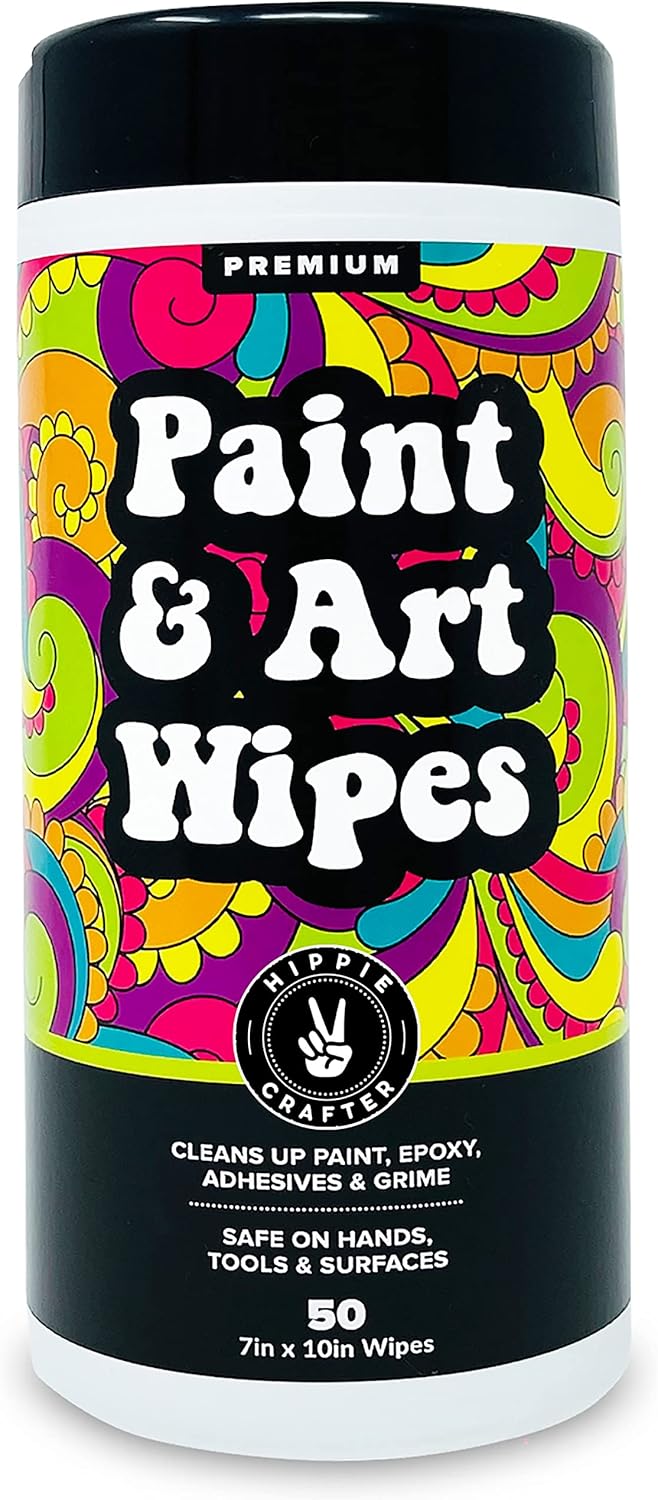
HIPPIE CRAFTER’s wipes are large 7 x 10 inch heavy-duty wipes with textured plastic fibers for scrubbing. The listing says they clean wet acrylic paint, latex, adhesives, epoxy, grime and grease from hands, brushes, plastic, metal, wood and floors without gloves.
Wipes do not replace brush cleaning, but they make cleanup during a session far easier, especially at group craft tables and for resin or glue spills.
Best suited for: Busy craft tables, resin crafters and anyone who wants fast mid-session cleanup.
Key features:
- 50 wipes, 7 x 10 in
- Textured scrubbing fibers
- For acrylic, latex, epoxy, glue
- Safe for hands per the listing
Pros:
- Instant cleanup without a sink
- Handles resin and glue
- Large, sturdy wipes
Cons and limitations:
- Single-use product
- Not a full brush cleaner
- Mid price tier per wipe
Buying consideration: Keep a pack open on the table during messy projects so spills are wiped before they set.
5. Halldeli Odorless Mineral Spirits, 100 ml — Best for Oil Paint Brushes

Halldeli’s refined, low-odor mineral spirits are sold for cleaning oil paint from brushes, palettes and painting knives and for thinning oil paint. The listing also mentions use with varnishes, enamels and other oil-based coatings.
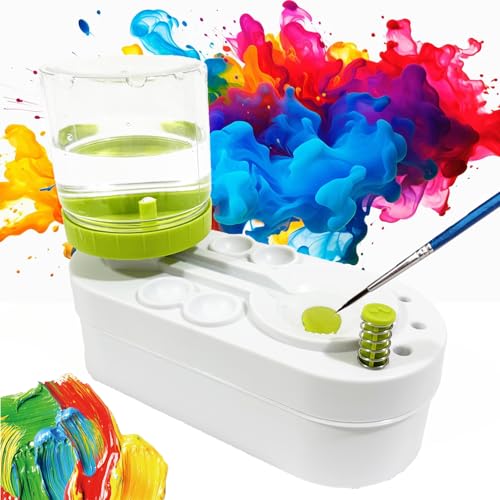
A small 100 ml bottle suits occasional oil painters. Pour a little into a lidded jar with a coil or screen in the bottom, rinse brushes, and let pigment settle so you can reuse the clear solvent.
Best suited for: Crafters and painters who occasionally work in oils.
Key features:
- 100 ml bottle
- Odorless, refined mineral spirits
- Cleans brushes, palettes and knives
- Also thins oil paint
Pros:
- Low odor compared with standard spirits
- Small size for occasional use
- Low price tier
Cons and limitations:
- Solvent: needs ventilation and safe storage
- Not for water-based paints
- Small volume for regular oil painters
Buying consideration: Follow solvent cleaning with brush soap and water to remove the last of the oil.
Buying Guide: How to Choose Paint Cleaners for Painting Crafts
Water-based versus solvent
Acrylic, watercolor, gouache and most craft paints clean up with water and a brush cleaner. Oil paint needs mineral spirits or a solvent-free oil cleaner first.
Daily cleaner or rescue product
Daily cleaners and soaps keep brushes in good shape. Rescue products target dried paint. Most crafters need a daily option and keep a rescue product for emergencies.
Conditioning
Conditioning cleaners help bristles keep their shape and are especially good for natural hair brushes.
Bottle size
Large bottles suit daily painters and classrooms. Small sizes suit occasional crafters and travel kits.
Surfaces beyond brushes
Some cleaners also work on stencils, palettes, fabric and hands. That versatility saves buying several products.
Safety and odor
Choose non-toxic water-based cleaners for kids and classrooms. Use solvents only with good ventilation and keep them capped and away from heat.
Common Mistakes to Avoid
- Letting acrylic dry in brushes during a long session; rinse every few minutes.
- Standing wet brushes upright in a jar, which loosens the ferrule.
- Soaking brush handles in cleaner or solvent.
- Using hot water on wet acrylic or fabric paint, which can set it.
- Pouring solvent or large amounts of paint down the drain.
- Scrubbing brushes hard against the jar bottom, which splays bristles.
FAQs
What is the best way to clean acrylic paint from brushes?
Wipe off excess, rinse in water while the paint is wet, then work a brush cleaner or soap into the bristles near the ferrule and rinse until clear. Reshape and dry flat.
Can you save a brush with dried acrylic paint?
Often, yes. Products made for dried-in paint, combined with a soak of several hours and gentle combing, can restore many brushes. Fully hardened paint is harder to remove.
What cleans oil paint from brushes?
Wipe off excess paint, rinse in odorless mineral spirits, then wash with brush soap and water to remove the remaining oil.
Is dish soap good for cleaning paint brushes?
It works in a pinch, but it can strip natural oils from bristles and leave residue. A dedicated brush cleaner is gentler and more effective over time.
How do I get acrylic paint off my hands?
Wash with soap and water while the paint is wet. Heavy-duty art wipes help when there is no sink nearby, and also remove glue and uncured resin.
How do I dispose of paint rinse water?
Let the water stand so pigment settles, pour off the clear water, and let the sludge dry before discarding with household trash, following local guidance.
Final Recommendation
Keep The Masters Brush Cleaner and Preserver as your everyday cleaner, add DecoArt DecoMagic for dried-in craft paint and stencils, and choose the X ARTY HUB 32 oz bottle if you paint with water-based media daily. A pack of HIPPIE CRAFTER wipes handles hands and spills, and Halldeli odorless mineral spirits covers the occasional oil painting session.





One Comment