
PaintingProGuide is reader-supported. When you buy through links on this page we may earn an affiliate commission at no extra cost to you.
Quick answer: Buy one good brush before you buy a bag of cheap ones. The Purdy XL 3-pack (1-inch Dale, 1.5-inch Glide, 2-inch Sprig) is the set to own if you want nylon-polyester filaments that cut a clean line and last through many jobs. For a complete low-cost kit that covers walls, trim and stain, the Pro Grade 5-piece set adds the short-handled 2-inch angle stubby most sets skip. For fine trim, window sashes and touch-ups, the Bates 3-piece trim brushes in 5/8, 3/4 and 1 inch are the right tool.
Choosing paint brushes for houses comes down to three decisions: filament type, shape, and size. Get those right and even an inexpensive brush will lay paint down smoothly; get them wrong and a premium brush will still leave ridges and stray bristles. This guide covers seven brush sets sold on Amazon, from a single professional 3-pack to budget bundles, and explains what each is actually good for on interior walls, exterior siding, trim, doors and cabinets.
Although this site focuses on artists’ materials, the same wall and trim brushes are what muralists, set painters and anyone priming a large panel reach for, so the recommendations apply whether you are repainting a hallway or basecoating a six-foot canvas.
Our Top Picks at a Glance
- Purdy XL 3-Pack (Dale, Glide, Sprig) — Best professional-grade brushes for all paints
- Pro Grade 5-Piece Set — Best complete kit with the 2-inch angle stubby included
- Bates 6-Pack Flat and Angled — Best value assortment for a whole-house project
- Bates 3-Piece Trim Brushes — Best for detail, sashes and touch-ups
- Bates 2-Pack 3-inch Flat and 2.5-inch Angle — Best wide brushes for siding, fences and decks
- Coltree 5-Piece Set — Best budget set for both oil and water-based paints
- Magimate 5-Piece Set — Best for stains and varnish with long-handled angles
| Product | Best For | Key Spec | Key Strength | Price Tier |
|---|---|---|---|---|
| Purdy XL 3-Pack | Professional results on walls and trim | 1 in Dale, 1.5 in Glide, 2 in Sprig; nylon-polyester | Versatile filament for all paints and stains | $$ |
| Pro Grade 5-Piece Set | Complete starter kit | 1 & 2 in flat, 1.5 & 2.5 in angle, 2 in angle stubby | Includes the short stubby for cabinets and sashes | $ |
| Bates 6-Pack | Whole-house value | 1, 1.5, 2 in flat; 1.5, 2, 2.5 in angle | Six brushes, flat and angled in each size | $ |
| Bates Trim 3-Piece | Detail and touch-up | 5/8, 3/4 and 1 in flagged bristle | Small sizes most kits omit | $ |
| Bates 2-Pack Wide | Siding, decks, fences | 3 in flat and 2.5 in angle sash | Widest brushes in this guide | $ |
| Coltree 5-Piece Set | Budget oil and water-based use | 1 & 2 in flat, 1.5, 2 & 2.5 in angle; stainless ferrule | Thick bristles hold plenty of paint | $ |
| Magimate 5-Piece Set | Stain and varnish | 1 & 2 in flat, 1.5, 2 & 2.5 in long-handle angle | Soft polyester, long handles for cutting in | $ |
How We Chose
These picks are based on the Amazon listing details and specifications checked in October 2026: filament material, the exact sizes and shapes in each pack, ferrule and handle construction, and the paints each maker says the brushes suit. We weighed that against how a house painter actually uses brushes, where a 2.5-inch angle sash does most of the cutting in and a 1-inch flat handles spindles and sash bars. We also looked at how widely each set is reviewed by Amazon buyers. We have not used these brushes ourselves, so claims such as “zero bristle loss” are reported as the maker’s claims.
- Filament: synthetic (nylon, polyester or a blend) for latex and water-based paint; natural bristle only for oil-based coatings.
- Shape mix: angled sash brushes for cutting in, flats for broad coverage, small sizes for trim.
- Construction: ferrule material and how bristles are bonded, since shedding ruins a finish.
- Handle: wood versus plastic, length, and whether a short “stubby” is included.
- Coverage of a real job: can one pack take you from ceiling line to baseboard without a second purchase?
Best Paint Brushes for Houses Reviewed
1. Purdy XL 3-Pack: Dale, Glide and Sprig — Best for Professional Results on Walls and Trim

Purdy’s XL line uses a nylon and polyester blend that the company describes as its most versatile series, designed for all paints and stains, interior or exterior. This pack gives you the three shapes that cover most household work: the 1-inch XL Dale for narrow trim and sash bars, the 1.5-inch XL Glide angle for cutting in around windows and doors, and the 2-inch XL Sprig for baseboards, door panels and wider trim.
What separates a brush like this from the budget bundles below is the filament tapering and how the brush is finished at the factory. A well-tipped nylon-polyester brush releases paint evenly and springs back to a chisel edge, so you can cut a ceiling line without tape. With proper cleaning these are the brushes that last through several rooms rather than one.
Best suited for: Homeowners painting more than one room who want a brush that will still cut a clean line next year, and anyone applying both latex and oil-based products with the same tools.
Key features:
- Three brushes: 1 in XL Dale, 1.5 in XL Glide, 2 in XL Sprig
- Nylon and polyester blend filament
- Rated for all paints and stains
- Suitable for interior and exterior projects
- Natural wood handles
Pros:
- Versatile filament works in latex, oil and stain
- Angled Glide shape is the standard cutting-in brush
- Built to be cleaned and reused many times
Cons and limitations:
- No brush wider than 2 inches, so siding and fences need another brush
- Highest price in this guide
- Only one angle sash in the pack
Buying consideration: Treat this as a core set rather than a complete kit. Add a 2.5 or 3-inch brush for exterior siding or decks, and keep these three for the fine work where their quality shows most.
2. Pro Grade 5-Piece Paint Brush Set — Best for A Complete Starter Kit

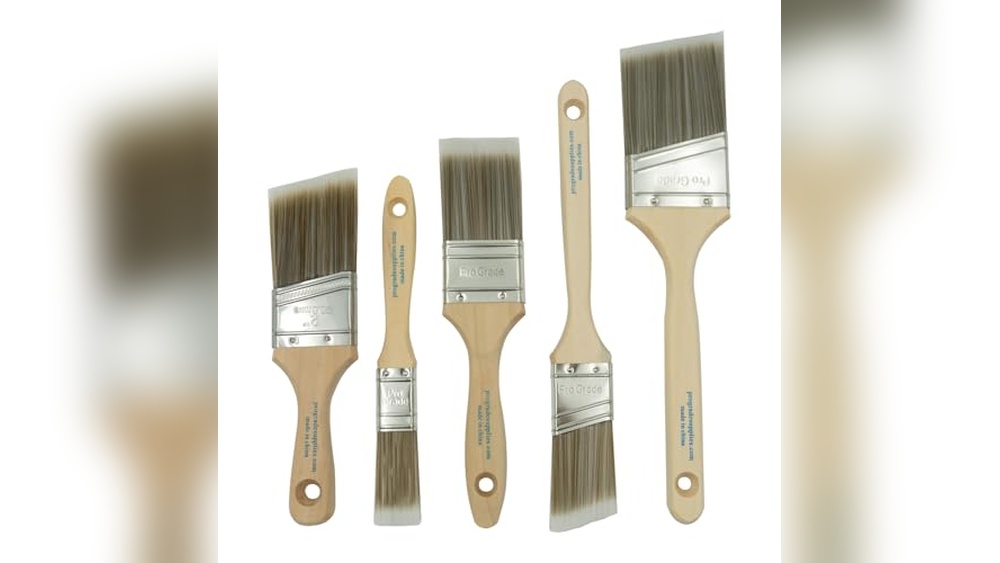
Pro Grade packs five brushes: a 1-inch flat, 1.5-inch angle, 2-inch flat, 2-inch angle stubby and 2.5-inch angle. The stubby is the standout, because the short handle lets you work inside cabinets, behind toilets and along window sashes where a full-length handle hits the frame. The listing describes SRT filaments bonded with a precision-set adhesive inside a coated steel ferrule.
The brand positions the set at property managers and turnover crews, which tells you the design priority: enough sizes to finish a unit without hunting for another brush, at a price where losing one is not a tragedy. For a first-time house painter it is a sensible kit to learn on, and the solid wood handles are comfortable for a full day.
Best suited for: First-time home painters, landlords and anyone who wants every common size in one purchase, especially if cabinet interiors or window sashes are on the list.
Key features:
- Five brushes: 1 in flat, 1.5 in angle, 2 in flat, 2 in angle stubby, 2.5 in angle
- SRT synthetic filaments
- Precision adhesive bonding inside a coated steel ferrule
- Solid wood handles
- Suited to primers, stains, varnish, polyurethane and paints
Pros:
- Includes the angle stubby most sets leave out
- Low price for five usable sizes
- Flat and angle in each major width
Cons and limitations:
- Budget filaments will not hold a chisel edge as long as premium brushes
- The 2.5 in angle is the widest brush; no 3 in flat
- Shedding claims are the maker’s and vary by batch
Buying consideration: Before the first use, flick the bristles and rinse the brush in water (for latex) to remove loose filaments and factory dust. Doing this with any budget set removes most of the strays that would otherwise end up in your wall.
3. Bates 6-Pack Flat and Angled Brushes — Best for Whole-House Value

Bates bundles three flats (1, 1.5 and 2 inch) and three angles (1.5, 2 and 2.5 inch) with treated wood handles. The listing describes the filaments as sturdy natural bristles that hold more paint, while the detail section lists natural bristles, synthetic filaments and wood as materials, so expect a blend. The brand says they suit both oil-based paints and latex stains.
Six brushes in matched sizes mean you can keep one set for primer and another for topcoat, or dedicate a brush to each color on a multi-tone trim scheme without stopping to wash. For a whole-house repaint where you will be using several brushes at once, that convenience is worth more than a marginal gain in filament quality.
Best suited for: Larger projects where several brushes are in use at once, DIYers who want flat and angled options in every size, and anyone painting with both oil and water-based products.
Key features:
- Six brushes: 1, 1.5, 2 in flat and 1.5, 2, 2.5 in angle
- Natural bristle and synthetic filament blend
- Treated lightweight wood handles
- Suited to oil-based paints and latex stains per the listing
- Reusable and easy to clean
Pros:
- Most brushes per dollar in this roundup
- Matched flat and angle sizes
- Light handles reduce fatigue over a long session
Cons and limitations:
- Natural bristle content can go limp in water-based paint
- No brush under 1 in for fine trim
- Mid-range finish quality compared with premium brushes
Buying consideration: If most of your painting is latex wall paint, reserve these for stain, oil enamel and primer, where natural bristle content is an asset rather than a liability, and use a fully synthetic brush for the latex topcoat.
4. Bates 3-Piece Trim Brush Set — Best for Detail, Sashes and Touch-Ups

Most house brush bundles stop at 1 inch. Bates fills the gap below that with 5/8, 3/4 and 1-inch trim brushes with flagged bristle tips, which split at the ends to carry more paint and leave fewer marks. The handles are shaped for a comfortable grip during long detail sessions.
These are the brushes for muntins on a divided-light window, the edges of raised-panel doors, stair spindles, picture frames and the inevitable touch-ups after the furniture goes back. They are also the sizes a mural painter uses for outlining on a wall, which is why they earn a place on an art-focused site.
Best suited for: Anyone painting window sashes, spindles, furniture edges or doing touch-up work, and muralists who need wall-paint brushes narrower than 1 inch.
Key features:
- Three brushes: 5/8 in, 3/4 in and 1 in
- Flagged bristle ends for smooth application
- Ergonomic comfort-grip handles
- Described as shed-resistant
- Suitable for pros and DIY painters
Pros:
- Covers the small sizes that general kits omit
- Low price tier
- Comfortable for long fine-detail sessions
Cons and limitations:
- Not useful for walls or wide trim on their own
- Listing does not specify filament material
- Three small brushes still need a wide brush alongside them
Buying consideration: Buy these as a companion set, not a replacement. Pair them with any 2 to 2.5-inch angle sash and you have the full range from ceiling line down to window muntin.
5. Bates 2-Pack: 3-inch Flat and 2.5-inch Angle — Best for Siding, Fences and Decks

This two-brush pack is the only one here with a 3-inch flat, and that single brush changes what you can do outdoors. Clapboard siding, fence pickets, deck railings and garage doors all go faster with a wide flat that loads a lot of paint. The 2.5-inch angle sash that comes with it handles the edges and the cutting in around windows.
The listing describes synthetic filaments designed to hold more paint and a lightweight treated wood handle. Synthetic filaments are the right call for exterior latex, which is what most siding and fences receive today, because they do not swell and soften in water the way natural bristle does.
Best suited for: Exterior projects, large flat surfaces such as garage doors and fences, and anyone who already owns small brushes and only needs the wide ones.
Key features:
- Two brushes: 3 in flat and 2.5 in angle sash
- Synthetic filaments
- Treated lightweight wood handle
- Suited to house, trim and sash painting
- Lowest price in the roundup
Pros:
- Only pack with a 3 in brush
- Synthetic filament is right for exterior latex
- Very low price for two full-size brushes
Cons and limitations:
- No small brushes for detail
- Listing text is thin on construction details
- A 3 in brush is heavy on the wrist for ceilings
Buying consideration: A 3-inch brush holds a lot of paint, so load it only halfway up the bristles and tap rather than wipe on the can rim. Overloading is the main cause of drips on vertical siding.
6. Coltree 5-Piece Flat and Angle Set — Best for A Budget Set for Oil and Water-Based Paints
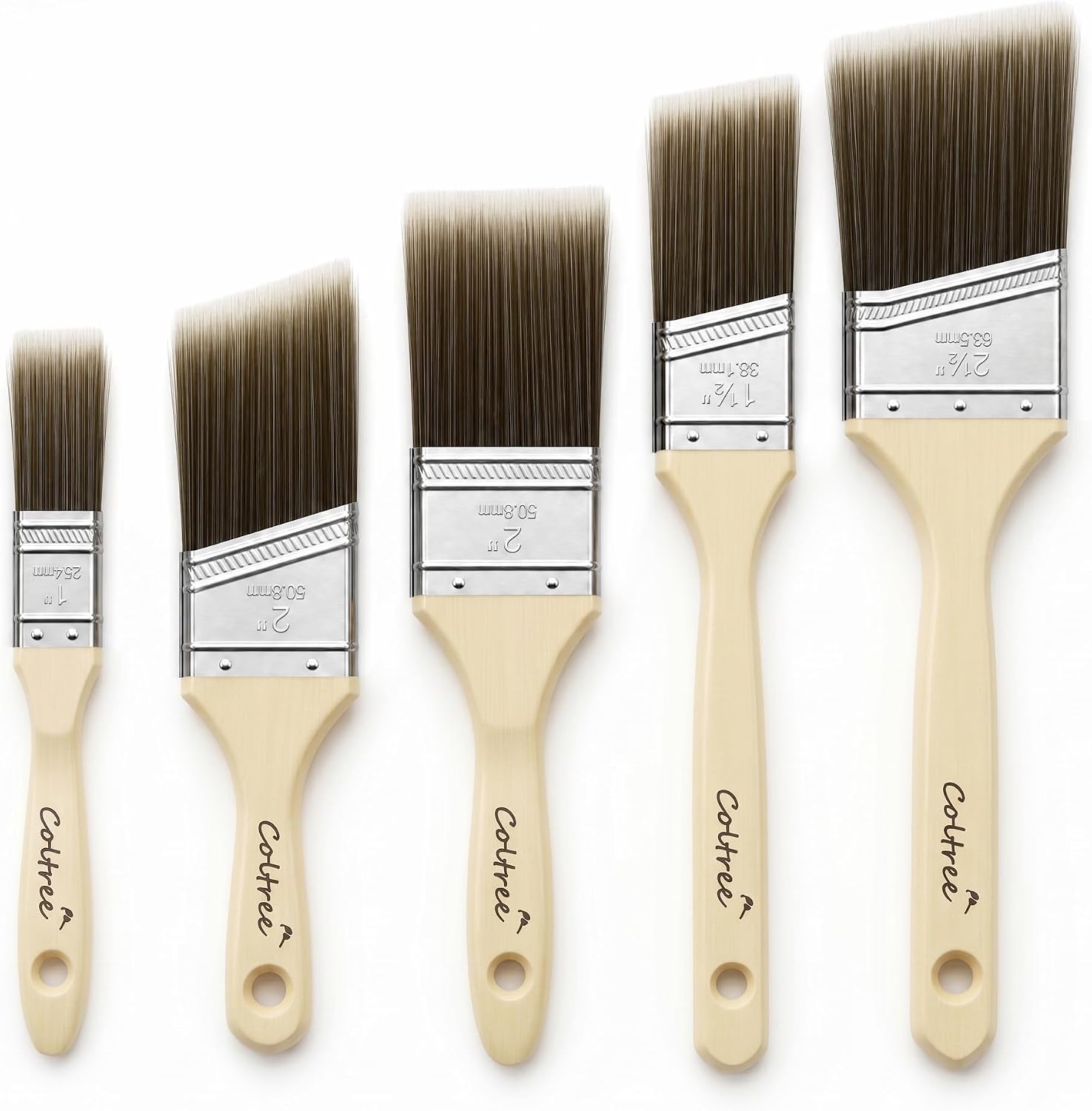
Coltree matches the standard five-size layout (1 and 2-inch flat; 1.5, 2 and 2.5-inch angle) and adds a detail that matters for longevity: stainless steel ferrules, which will not rust if you leave a brush soaking overnight. The bristles are described as thick, soft and low-shedding, and the maker gives clear cleaning advice for water-based (water) and oil-based (solvent) paints.
The handles are solid wood and vary in shape across the set, a small touch that makes it easy to grab the right brush by feel. For walls, ceilings, doors, cabinets and fences it covers the same ground as the Pro Grade set, minus the stubby.
Best suited for: Budget-minded painters who alternate between oil and water-based products and want ferrules that will not rust, plus anyone who needs a second set to keep for primer.
Key features:
- Five brushes: 1 in flat, 2 in flat, 1.5 in angle, 2 in angle, 2.5 in angle
- Thick bristles for paint holding
- Stainless steel ferrule on solid wood handles
- Rated for oil and water-based paints and stains
- Indoor and outdoor use
Pros:
- Rust-proof ferrules
- Different handle shapes aid quick identification
- Low price tier
Cons and limitations:
- No stubby or sub-1 in brush
- Soft bristles may flex too much in heavy exterior paint
- Fewer construction specifics than premium brands
Buying consideration: Soft bristles excel at a smooth finish on doors and cabinets but tire quickly against rough stucco or textured siding. Match the set to interior work and keep a stiffer brush for rough exteriors.
7. Magimate 5-Piece Wood Handle Set — Best for Stains and Varnish

Magimate’s set pairs two flats (1 and 2 inch) with three long-handled angled brushes (1.5, 2 and 2.5 inch). The maker calls out varnish, oil-based and mixed paints as the intended coatings, and describes soft synthetic polyester filaments that hold paint and release evenly without shedding.
Long handles on the angle brushes give extra reach and leverage when cutting a straight line along a ceiling or around a door frame, which is why many trim painters prefer them. Soft polyester is also a good match for varnish and clear finishes, where a stiff brush leaves visible stroke marks.
Best suited for: Painters applying stain, varnish or polyurethane to trim, doors and furniture, and anyone who prefers long-handled sash brushes for cutting in.
Key features:
- Three long-handle angled brushes: 1.5, 2 and 2.5 in
- Two flat brushes: 1 and 2 in
- Soft synthetic polyester filaments
- Smooth wood handles
- Intended for varnish, oil-based and mixed coatings, indoors and out
Pros:
- Long handles improve control when cutting in
- Soft polyester suits clear finishes and varnish
- Good angled selection for touch-up work
Cons and limitations:
- Soft filaments are less effective in thick exterior latex
- No wide flat for siding
- Light-colored handles show stains quickly
Buying consideration: For varnish and polyurethane, keep one of these brushes exclusively for clear coats. Even a well-cleaned brush that has carried pigmented paint can tint a clear finish.
Buying Guide: How to Choose Paint Brushes for Houses
Match the filament to the paint
Latex and other water-based paints need synthetic filaments: nylon, polyester or a blend. Natural bristle absorbs water, goes limp and leaves streaks in latex. Oil-based paints, varnish and oil stains work with either, and many painters still prefer natural bristle for oil enamel. Blends such as the Purdy XL line are the compromise that handles both.
Angle sash for cutting in, flat for coverage
An angled sash brush has bristles cut on a slant so the long corner reaches into the junction of wall and ceiling. It is the brush for every edge. Flat brushes carry more paint for baseboards, door panels and siding. A good kit includes both; a minimal kit is a 2.5-inch angle and a 2-inch flat.
Choosing widths
Use 1 to 1.5 inches for sash bars, spindles and narrow trim; 2 to 2.5 inches for baseboards, casings, doors and cutting in; 3 inches and up for siding, fences and decks. Trim brushes under 1 inch are for detail and touch-ups. Wider is not always faster: a 3-inch brush on a ceiling line fatigues the wrist and is harder to control.
Handle length and the stubby
Standard handles balance reach and control. Long-handled sash brushes give leverage for straight lines. Short “stubby” handles fit inside cabinets, behind fixtures and along window frames where a long handle hits the glass. If cabinets or sashes are on your list, make sure the set has one.
Ferrules and bonding
The ferrule is the metal band holding the bristles. Stainless steel resists rust from repeated washing; coated steel is fine if dried promptly. Makers describe adhesive bonding to prevent shedding, but any new brush should be flicked, combed and rinsed before use to shed loose filaments. Our guide on how to keep paint brushes from shedding covers the full prep routine.
Technique with wide brushes
Large brushes reward a different grip and loading method than small ones. Hold the handle near the ferrule, load the bristles halfway, and work from dry to wet areas. We go deeper in how to paint with large brushes, which applies equally to a 3-inch wall brush and a wide artist flat.
Cleaning and drying
A brush left standing in water or solvent splays and never recovers its edge. Wash, spin or shake, reshape, and hang bristles-down or lay flat. Our article on how to dry paint brushes correctly explains why hanging matters and how to store brushes between coats.
Common Mistakes to Avoid
- Using a natural-bristle brush in latex paint and blaming the paint for the streaks.
- Loading the bristles to the ferrule, which causes drips and makes cleaning nearly impossible.
- Skipping the pre-use rinse and comb that removes loose factory filaments.
- Trying to cut in with a flat brush instead of an angled sash.
- Buying a 20-piece craft brush set for house trim; craft brushes are too small and too soft for wall paint.
- Leaving brushes standing on their bristles in a bucket overnight.
- Using the same brush for clear varnish and colored paint.
FAQs
What is the best brush size for painting interior walls?
A 2.5-inch angle sash is the standard for cutting in around ceilings, corners and trim, with a roller doing the open wall. For small rooms or closets where a roller is awkward, a 3-inch flat covers wall area quickly.
Can I use the same brush for latex and oil-based paint?
A nylon-polyester blend such as the Purdy XL is designed for both. Fully natural bristle should stay with oil-based products. Whatever you use, clean thoroughly between paint types because residue of one can contaminate the other.
Why do cheap brushes shed bristles?
Loose filaments from manufacturing, weak adhesive at the ferrule, or bristles that were never trimmed cleanly. Flicking, combing and rinsing a new brush removes most strays. Brushes that keep shedding after a few uses have a bonding problem that will not improve.
Do I need natural bristle brushes anymore?
Only for oil-based paints, varnish and oil stains, where many painters still prefer the way natural bristle lays down a smooth film. For the latex paints most homes use today, synthetic filaments perform better.
How many brushes do I need to paint a house interior?
Three cover most work: a 2.5-inch angle for cutting in, a 2-inch flat or angle for trim and doors, and a 1-inch or smaller brush for sash bars and touch-ups. Extra brushes let you keep one per color or finish without constant washing.
Are house painting brushes useful for murals or art panels?
Yes. Muralists use 2 to 3-inch wall brushes for blocking in and small trim brushes for outlining, and artists prime large canvases with a 3-inch flat. The same filament rules apply: synthetic for acrylic and latex, natural for oil.
Final Recommendation
If you paint regularly or want a brush that will still cut a clean ceiling line in a year, the Purdy XL 3-pack is the one to buy, then add a wide brush for exteriors. For a complete, inexpensive kit that already includes the cabinet-friendly stubby, choose the Pro Grade 5-piece set. A whole-house job with several brushes in use at once favors the Bates 6-pack, while the Bates trim set fills in the sub-1-inch sizes every other kit misses. Exterior siding and fences call for the Bates 3-inch and 2.5-inch pair, and anyone focused on varnish and stain should look at the soft polyester Magimate set. Whatever you pick, prep the brush before the first stroke and dry it properly after the last one; that routine matters more to the finish than the price tag.




