PaintingProGuide is reader-supported. When you buy through links on this page we may earn an affiliate commission at no extra cost to you.
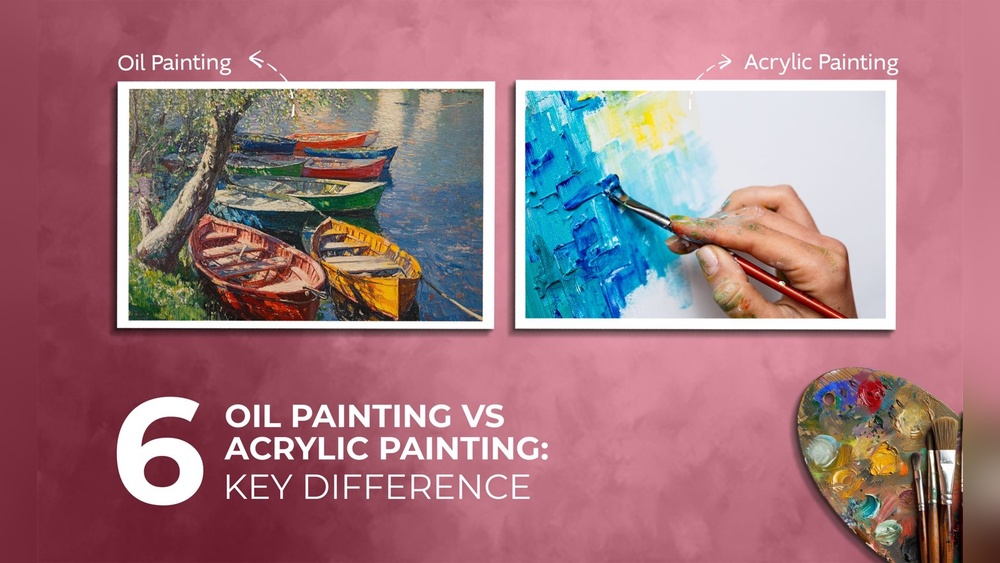
The main oil painting vs acrylic painting differences are drying time, cleanup, how colors shift as they dry, how you layer, and how the finished surface looks. Acrylic is water-based and dries in minutes, so it suits fast work, layering and mixed media. Oil is bound in drying oil and stays workable for hours or days, which suits slow blending, glazing and the luminous depth associated with traditional painting.
Neither medium is better overall. This guide sets out every practical difference side by side, explains which subjects and personalities suit each, and finishes with books that teach both media well.
Quick answer: Choose acrylic if you want fast drying, soap-and-water cleanup, no solvents and the freedom to paint on almost any surface. Choose oil if you want long blending time, rich glazes and a buttery paint that stays wet while you work. For learning either, the DK Artist’s Painting Techniques book covers watercolor, acrylic and oil, and William F. Powell’s Color Mixing Recipes for Oil & Acrylic shows how mixing works in both.
Oil vs Acrylic: Side-by-Side Comparison
| Factor | Oil paint | Acrylic paint |
|---|---|---|
| Binder | Drying oil (linseed, safflower, poppy, walnut) | Acrylic polymer emulsion in water |
| How it dries | Oxidation; slow, over days to weeks | Water evaporation; fast, minutes to hours |
| Working time | Long; easy wet blending | Short; extended with retarders and wet palettes |
| Color shift | Very little change from wet to dry | Often dries slightly darker |
| Cleanup | Solvent or oil and soap | Soap and water while wet |
| Fumes | Solvents can produce fumes; solvent-free methods exist | Low odor |
| Layering rule | Fat over lean | Flexible; any layer over any layer |
| Surfaces | Primed canvas, panel, prepared paper | Almost anything non-greasy: canvas, paper, wood, fabric, walls |
| Finish | Rich, deep, often satin to glossy | Matte to glossy; can look flatter without varnish |
| Varnishing | After months of curing | After days to weeks |
| Mixed media | Limited; oil over acrylic is possible, not the reverse | Excellent; works with collage, pastels, inks |
| Cost | Similar ranges; solvents and mediums add cost | Similar ranges; mediums add cost |
Drying Time and Working Time
Drying time is the difference most painters feel first. Acrylic dries as water evaporates, often within minutes on the palette and canvas. That speed lets you layer quickly and finish a painting in one sitting, but it makes soft blending harder. Retarders, slow-drying mediums and wet palettes help.
Oil paint dries by oxidizing, absorbing oxygen and slowly hardening. Thin layers may be touch-dry in a few days, thick passages can take weeks, and full curing takes months. That long open time is a gift for blending skin tones, skies and atmospheric effects, and a frustration if you want to layer quickly. Alkyd mediums speed it up.
Color Behavior and Mixing
Acrylic often dries slightly darker than it looks wet because the binder turns from milky to clear. Experienced acrylic painters mix a touch lighter to compensate. Oil paint changes very little as it dries, so what you mix is what you get.
Oil colors also blend smoothly on the canvas, so gradual transitions are easy. In acrylic, many painters blend on the palette, use glazes or rely on techniques such as scumbling and layering instead.
Layering and Structure
Oil paintings follow the fat-over-lean rule: each layer should contain a little more oil than the one below so the painting stays flexible as it cures. Painting lean, fast-drying layers over oily ones can cause cracking.
Acrylic layers bond to each other chemically and do not need that rule. You can paint thin over thick and thick over thin. You can also paint oil over a fully dry acrylic underpainting, but never acrylic over oil, because acrylic will not adhere reliably to an oily surface.
Cleanup, Health and Studio Space
Acrylic cleans up with soap and water while wet, and it is low odor. That makes it popular for small apartments, schools and families. Dried acrylic, however, ruins brushes, so rinse often.
Oil painters traditionally clean with solvents such as odorless mineral spirits. These need ventilation and safe disposal. Solvent-free oil painting is entirely possible: wipe brushes, clean with a little safflower or linseed oil, then wash with soap. Oily rags must be laid flat or stored in a sealed metal can.
Surfaces and Versatility
Acrylic sticks to almost any surface that is not greasy: canvas, paper, wood, fabric, rocks, walls and more. It works beautifully in mixed media and as an underpainting.
Oil needs a primed surface to protect the support from the oil, which can rot canvas or paper over time. Primed canvas, panels and specially prepared paper work well.
Appearance of the Finished Painting
Oil paintings have a characteristic depth and luminosity, especially in glazed passages, and the slow-drying paint holds brushmarks softly. Acrylic can look flatter, particularly in matte paints, but gloss varnish and glazing mediums close much of the gap. Many viewers cannot tell the difference in a well-varnished painting.
Brushes, Tools and Mediums for Each
Many tools work for both, but a few differences are worth knowing. Oil painters traditionally use stiff hog bristle brushes, which push thick paint and leave visible texture, plus soft synthetics or sable for glazes. Acrylic painters usually prefer synthetic brushes, because dried acrylic is hard to remove from natural hair, and they rinse brushes constantly to keep paint out of the ferrule. Palette knives, canvases and easels work for both.
Mediums differ completely. Oil mediums are based on oils, resins or alkyds and change drying time, gloss and flow. Acrylic mediums are polymer-based gels, pastes, glazing liquids, pouring media and retarders. Never mix the two families.
Cost Over Time
Tube for tube, student and artist grades of oil and acrylic sit in similar ranges, with expensive pigments such as cadmiums and cobalts costing more in both. The ongoing costs differ. Oil painters buy solvent or cleaning oil, more paper towels and sometimes more drying space. Acrylic painters lose more paint to drying on the palette, unless they use a wet palette, and replace brushes more often when acrylic dries in them. Overall, neither is dramatically cheaper; your habits matter more than the medium.
Learning Curve
Acrylic rewards decisive painting. Because it dries fast, you learn to commit to a stroke, layer confidently and manage edges with glazes. Oil rewards patience and planning. You learn to think in layers, to keep early layers lean and to resist overworking wet paint into mud. Beginners who struggle with acrylic drying too fast often find oil easier; those who dislike waiting for paint to dry often prefer acrylic. Both teach the same core skills of value, color temperature and composition, and those skills transfer completely from one medium to the other.
Combining Oil and Acrylic in One Painting
A popular hybrid approach uses acrylic for the underpainting and oil for the upper layers. Acrylic’s quick drying lets you tone the canvas, draw and block in values in an hour, and oil then provides the blending and depth for the finish. The rule is one-way: oil can go over fully dry, slightly absorbent acrylic, but acrylic should never go over oil. Keep the acrylic underlayer thin and matte, since very glossy acrylic gives oil less to grip.
Which Should You Choose?
- Choose acrylic if you paint in a small space, have children or pets, want to finish quickly, enjoy mixed media or want to paint on varied surfaces.
- Choose oil if you love blending, portraiture, glazing and slow, considered painting, and can ventilate and manage cleanup.
- Try both if you are unsure. Many painters use acrylic for underpaintings and oil for final layers.
Our Top Picks at a Glance
- Artist’s Painting Techniques (DK) — Best book covering watercolor, acrylic and oil
- Color Mixing Recipes for Oil & Acrylic (William F. Powell) — Best mixing guide for both media
- 1,500 Color Mixing Recipes for Oil, Acrylic & Watercolor (William F. Powell) — Best extended mixing reference
- Oil Painter’s Bible (Marylin Scott) — Best oil reference
- Acrylics for the Absolute Beginner (Charles Evans) — Best acrylic starter book
| Product | Best For | Key Spec | Key Strength | Price Tier |
|---|---|---|---|---|
| Artist’s Painting Techniques (DK) | Comparing media | Hardcover | Covers three media | $$ |
| Color Mixing Recipes for Oil & Acrylic | Mixing in both media | Hardcover, 450+ combinations | Direct oil/acrylic focus | $ |
| 1,500 Color Mixing Recipes | Extended mixing | Spiral-bound | Large recipe range | $$ |
| Oil Painter’s Bible | Oil painters | Spiral-bound reference | Practicing-artist focus | $$ |
| Acrylics for the Absolute Beginner | Acrylic beginners | Paperback | Absolute-beginner level | $$ |
How We Chose
The comparison above reflects well-established properties of oil and acrylic paint. The books were selected from Amazon listings checked in October 2026, based on how clearly their titles and descriptions address oil, acrylic or both, and how widely each is reviewed by Amazon buyers. We describe the books by their published titles and stated scope only.
- Relevance: coverage of oil, acrylic or both.
- Level: beginner-friendly or practical reference.
- Format: spiral-bound references lie flat in the studio.
- Publisher and author signals: established art publishers and authors.
Best Books for Learning Oil and Acrylic
1. Artist’s Painting Techniques (DK) — Best Book Covering All Three Media

DK’s Artist’s Painting Techniques explores watercolors, acrylics and oils, with a stated aim of helping you discover your own style. For someone weighing oil against acrylic, a book that covers both in one place makes comparison easy.
Best suited for: Beginners deciding between media and painters who want a broad reference.
Key features (from the listing):
- Hardcover
- Covers watercolor, acrylic and oil (per title)
- Part of DK’s Artist’s Techniques series
Pros:
- Multi-media coverage
- Established publisher
Cons and limitations:
- Less depth per medium than single-medium books
- We have not reviewed its contents in detail
Buying consideration: Use it to try a technique in both media before committing to one.
2. Color Mixing Recipes for Oil & Acrylic (William F. Powell) — Best Mixing Guide for Both Media

William F. Powell’s book offers mixing recipes for more than 450 color combinations in oil and acrylic, per its title. Since mixing behavior is similar in both media, with acrylic’s slight darkening as the main difference, a shared guide is practical.
Best suited for: Painters who want reliable mixing starting points in oil or acrylic.
Key features (from the listing):
- Hardcover
- 450+ mixing recipes (per title)
- Oil and acrylic focus
Pros:
- Directly addresses both media
- Compact reference
Cons and limitations:
- Recipes depend on specific paints
- Contents not reviewed in detail
Buying consideration: Paint swatches of the recipes with your own paints; pigments vary by brand.
3. 1,500 Color Mixing Recipes for Oil, Acrylic & Watercolor (William F. Powell) — Best Extended Mixing Reference

The expanded version covers oil, acrylic and watercolor with 1,500 recipes for landscapes, portraits and still lifes, according to its title. The spiral binding lets it lie flat beside the palette.
Best suited for: Painters who mix a lot and want a larger reference.
Key features (from the listing):
- Spiral-bound
- 1,500 recipes (per title)
- Oil, acrylic and watercolor
Pros:
- Large range
- Lies flat while painting
Cons and limitations:
- More than beginners need
- Contents not reviewed in detail
Buying consideration: Choose this over the smaller book if you also paint watercolor.
4. Oil Painter’s Bible (Marylin Scott) — Best Oil Reference

Marylin Scott’s Oil Painter’s Bible is described as an essential reference for the practicing artist. Spiral-bound and compact, it suits painters who choose oil and want techniques and materials at hand.
Best suited for: Painters who have chosen oil.
Key features (from the listing):
- Spiral-bound
- Oil painting reference (per title)
Pros:
- Studio-friendly format
- Focused on oil
Cons and limitations:
- Single medium
- Contents not reviewed in detail
Buying consideration: Keep it near the easel as a quick reference rather than a cover-to-cover read.
5. Acrylics for the Absolute Beginner (Charles Evans) — Best Acrylic Starter Book

Charles Evans’ book targets absolute beginners in acrylic, per its title. If this comparison tips you toward acrylic, it is a natural first book. For a technique reference, the Compendium of Acrylic Painting Techniques by Gill Barron is a complementary option.
Best suited for: New acrylic painters.
Key features (from the listing):
- Paperback
- Absolute-beginner acrylic guide (per title)
Pros:
- Beginner level
- Acrylic focus
Cons and limitations:
- Single medium
- Contents not reviewed in detail
Buying consideration: Pair it with a small set of student acrylics and a wet palette.
Buying Guide: Choosing Between Oil and Acrylic
Consider your space
Small, shared or poorly ventilated rooms favor acrylic. A room with airflow makes oil easy.
Think about pace
If you like finishing quickly, acrylic suits you. If you like returning to a wet painting the next day, oil does.
Look at your subjects
Portraits and soft atmospheric landscapes are easier to blend in oil. Graphic, layered and mixed-media work suits acrylic.
Budget for extras
Oil needs solvents or solvent-free cleaning supplies and slower-drying patience. Acrylic needs retarders or a wet palette for blending.
Plan for varnishing
Acrylic can be varnished within days or weeks; oil needs months of curing first.
Try a small set of each
A few tubes of each medium are the cheapest way to find out which you enjoy.
Related Reading
For a shorter overview, see our article on the difference between oil paint and acrylic. If you decide on oils, try our step-by-step tutorial on painting fog in oil, a subject where oil’s slow drying really shines.
Common Mistakes to Avoid
- Painting acrylic over oil paint.
- Ignoring fat over lean in oil paintings.
- Letting acrylic dry in brushes.
- Varnishing oil paintings too soon.
- Expecting acrylic to blend like oil without retarder.
- Using unprimed paper or canvas for oil.
FAQs
What is the main difference between oil and acrylic paint?
Drying time. Acrylic dries quickly as water evaporates; oil dries slowly through oxidation, giving much longer working time.
Is acrylic or oil better for beginners?
Acrylic is often easier to start because of quick drying and water cleanup. Oil is more forgiving for blending. Both are fine choices.
Can you paint oil over acrylic?
Yes, oil over a fully dry acrylic layer is common. Acrylic over oil is not recommended because it will not adhere reliably.
Does acrylic paint look like oil paint?
With glazing, gloss mediums and varnish, acrylic can look very similar. Oil retains a distinctive depth in glazed passages.
Which lasts longer, oil or acrylic?
Both can last for centuries with good materials and care. Oil has a longer track record; modern acrylics are durable and flexible.
Do I need solvents for oil painting?
No. Solvent-free oil painting uses oil for thinning and cleaning, followed by soap and water.
Final Recommendation
Pick acrylic for speed, simplicity and versatility, and oil for slow blending and depth. If you cannot decide, start with acrylic to learn color and composition, then try oil for a few paintings. The DK Artist’s Painting Techniques book and Powell’s mixing recipes are excellent companions whichever way you go.