

PaintingProGuide is reader-supported. When you buy through links on this page we may earn an affiliate commission at no extra cost to you.
Oil paint is forgiving about many things, but not about what it sits on. The surface decides how your brushstrokes feel, how long the painting lasts and whether it cracks, sinks or yellows years later. The best surfaces for oil painting share three qualities: they are stable, they are properly sealed or primed so oil does not soak into raw fibers, and they have the right amount of texture for the way you paint.
This guide compares stretched canvas, canvas panels, primed hardboard, wood panels, oil paper and metal, explains how to prepare each one, and reviews seven surfaces and primers on Amazon that cover every common option.
Quick answer: For most oil painters, a ready-primed rigid panel such as Ampersand Gessobord is the best all-round surface: stable, smooth enough for detail and ready to use. If you prefer to prepare your own supports, unfinished wood panels like the FROM ONE cradled basswood panels plus a good acrylic gesso such as U.S. Art Supply White Gesso give you control at a lower cost per painting. For studies and practice, Strathmore 400 Series Oil Painting Pad is the most economical option.
Oil Painting Surfaces Compared
| Surface | Texture | Stability | Prep needed | Best for |
|---|---|---|---|---|
| Stretched cotton canvas | Medium weave | Flexible, can sag | Usually pre-primed | Large work, traditional look |
| Stretched linen | Fine to coarse, irregular | Flexible, strong fibers | Pre-primed or size and ground | Professional and archival work |
| Canvas panel | Canvas weave on board | Rigid | Pre-primed | Studies, plein air, beginners |
| Gesso-primed hardboard | Smooth to slight tooth | Very rigid | Ready to paint | Detail, glazing, knife work |
| Raw wood panel | Wood grain, sanded | Rigid; cradled panels resist warping | Seal and prime | Custom grounds, gallery display |
| Oil painting paper | Linen-like embossed | Flexible sheet | Ready to paint | Practice, sketchbooks, studies |
| Metal (aluminum, copper) | Very smooth | Rigid | Sand and prime | Specialist, luminous detail work |
Why Oil Painting Surfaces Need Priming
Oil paint should never sit directly on raw canvas, raw paper or unsealed wood. The oil binder can be absorbed by fibers, which leaves the paint underbound and chalky, and over time oil can degrade natural fibers. A ground layer creates a barrier and gives the paint something consistent to grip.
Today, most painters use acrylic gesso as that ground. It is quick to apply, dries in hours and accepts oil paint well. Traditional oil grounds and rabbit-skin glue sizing still exist and some painters prefer them, but acrylic gesso is the practical standard for home studios. On wood, many painters apply a clear sealer before gesso to block substances in the wood from migrating into the paint film; at minimum, apply several thin coats of gesso.
How to Prepare a Raw Wood Panel for Oil Painting
Unfinished wood panels are often the best value surface for oil, but only if you prepare them well. This is the routine many painters follow.
- Sand lightly. Use fine sandpaper (around 220 grit) to remove raised grain and splinters. Wipe off dust with a barely damp cloth and let it dry.
- Seal the wood. Brush on a clear acrylic sealer or a thin first coat of gesso thinned with a little water. Sealing helps block substances in the wood from migrating up into the ground and discoloring it.
- Apply thin gesso coats. Add three or four thin coats of acrylic gesso, alternating brush direction each time (horizontal, then vertical). Let each coat dry to the touch before the next.
- Sand between coats for smoothness. If you want a smooth, portrait-ready surface, sand lightly after the second and final coats. Skip sanding if you like texture.
- Coat the sides and back. Gessoing or sealing all faces helps the panel respond evenly to humidity, which reduces warping.
- Wait before painting. Acrylic gesso dries to the touch quickly, but giving it a day before oil painting ensures it has fully dried through.
Tone the ground with a thin wash of acrylic or diluted oil if you dislike starting on stark white. A mid-value warm gray or burnt sienna tone makes it easier to judge lights and darks from the first stroke.
Canvas vs Panel: Which Is Better for Oil?
Choose stretched canvas if
- You paint large and want a lightweight result.
- You like the bounce of a flexible surface under the brush.
- You want a traditional gallery look with deep stretcher bars.
Choose a rigid panel if
- You paint small to medium sizes or work outdoors.
- You use palette knives, heavy impasto or detailed glazing.
- You care about long-term stability. Rigid supports flex less, which reduces stress on the paint film as it ages.
Many oil painters end up using both: panels for studies and detailed work, canvas for large statement pieces. For a technique-focused look at canvas, see our guide on how to oil paint on canvas.
Our Top Picks at a Glance
- Ampersand Gessobord 9×12 — Best ready-to-paint panel
- FROM ONE 4 Pack 12×16 Cradled Basswood Panels — Best wood panel for gallery-ready work
- U.S. Art Supply White Gesso 500ml — Best primer for preparing your own surfaces
- Strathmore 400 Series Oil Painting Pad — Best for studies and practice
- Liquitex Professional Super Heavy Gesso — Best for textured, impasto-ready grounds
- FSWCCK 5 Pack 11×14 Wood Panels — Best value thick wood boards
- Falling in Art 2 Pack 24×36 Birch Panels — Best large-format wood panels
| Product | Best For | Key Spec | Key Strength | Price Tier |
|---|---|---|---|---|
| Ampersand Gessobord | Ready-to-paint panel | 9×12 in, 1/8 in hardboard, gesso primed | Bright white, even absorbency | $ |
| FROM ONE Cradled Basswood | Gallery display | 4 x 12×16 in, 3/4 in cradle | Warp-resistant cradled build | $$ |
| U.S. Art Supply Gesso | Priming DIY supports | 16.9 oz white acrylic gesso | Large volume | $ |
| Strathmore 400 Oil Pad | Studies | 9×12 in, 10 sheets, 215 lb | Linen-like texture | $ |
| Liquitex Super Heavy Gesso | Textured grounds | 8 oz, impasto gesso | Non-yellowing, holds texture | $$ |
| FSWCCK 11×14 Wood Panels | Value wood boards | 5 panels, 0.79 in thick | Thick, rigid boards | $$ |
| Falling in Art 24×36 Birch | Large work | 2 cradled panels, 1 in deep | Big format on wood | $$$ |
How We Chose
We compared Amazon listings checked in October 2026 for surface material, size, thickness or cradle depth, whether the listing states compatibility with oil paint, how much preparation the surface needs and how widely each product is reviewed by Amazon buyers. We also included two gessos because priming is part of choosing a surface.
- Stability and resistance to warping.
- Compatibility with oil stated in the listing.
- Ready-to-paint vs needs priming.
- Range of sizes and price tiers.
Best Surfaces for Oil Painting Reviewed
1. Ampersand Gessobord 9×12 — Best for a ready-to-paint panel

Ampersand primes a wood hardboard panel with an acrylic gesso the listing describes as thicker than most brands. It is 9×12 inches with a 1/8-inch flat profile and is listed for oils, acrylics and mixed media.
The listing highlights fine brushwork, palette knife painting, glazing and layering, with a consistently bright white finish whose absorbency will not dull colors. That makes it an excellent all-rounder for oil.
Best suited for: Oil painters who want a stable, ready surface for detail, glazing or knife work, and plein air painters who need a light, flat panel.
Key features:
- Hardboard panel, 1/8 in flat
- Thick acrylic gesso ground
- 9×12 in
- For oil, acrylic and mixed media
Pros:
- No prep needed
- Rigid and stable
- Smooth enough for fine detail
Cons and limitations:
- Flat profile needs a frame for display
- Smoother than canvas, which some painters dislike
Buying consideration: If you prefer more tooth, lightly sand and add a coat of textured gesso.
2. FROM ONE 4 Pack 12×16 Basswood Paint Pouring Panels — Best for gallery-ready wood panels
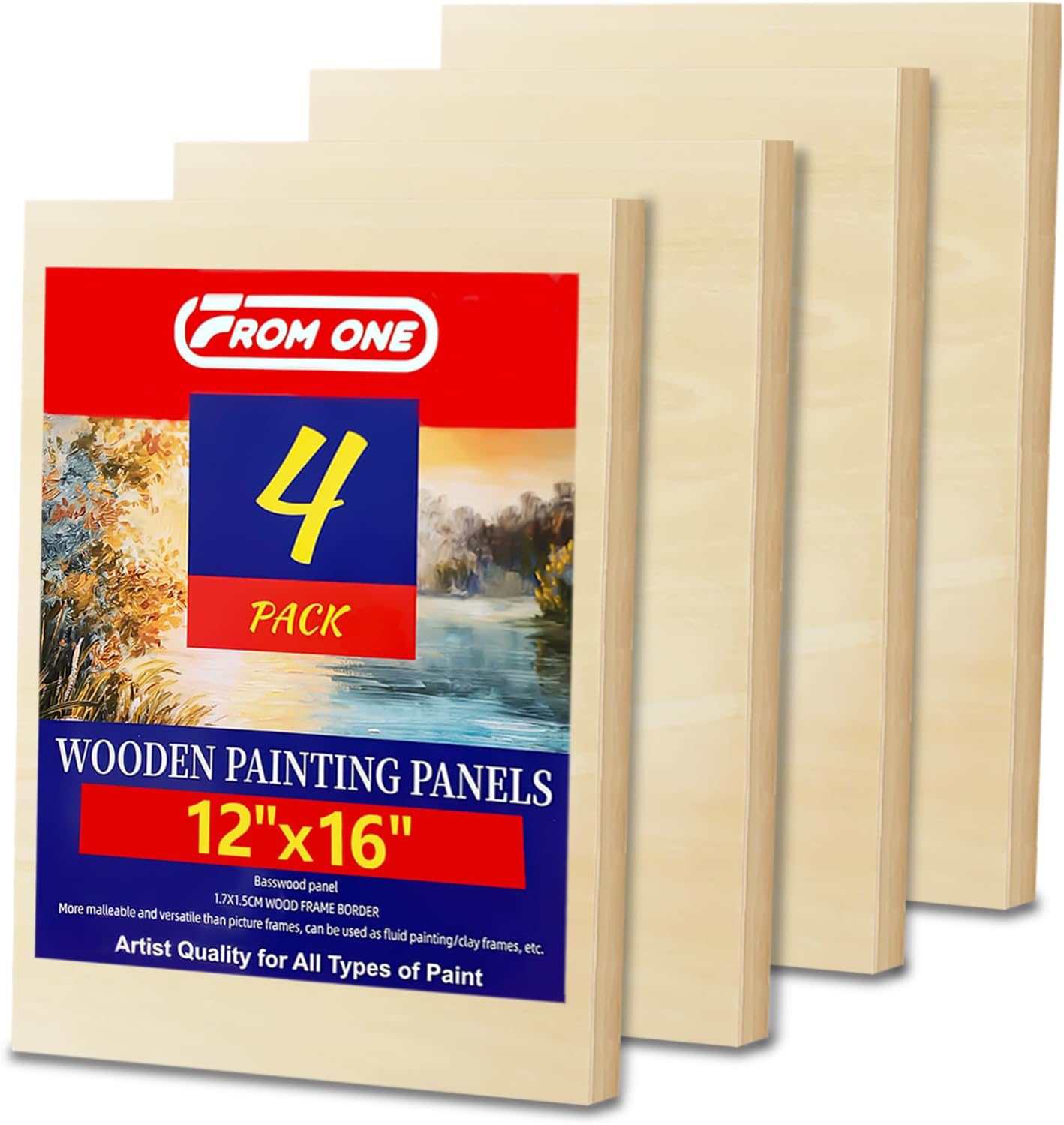
These four 12×16-inch cradled basswood panels have a 3/4-inch gallery depth, so they can hang without a frame. The listing describes a fine sanded finish and a cradled construction that resists warping, and lists compatibility with acrylic, oil, resin and gouache.
For oil, treat the “ready to paint” claim as meaning sanded and smooth. Seal and gesso the surface before applying oil paint.
Best suited for: Painters who want modern, frameless display and a rigid surface.
Key features:
- 4 panels, 12×16 in
- 3/4 in cradle
- Sanded basswood
Pros:
- Warp-resistant cradled design
- Hang without framing
- Mid price tier for four panels
Cons and limitations:
- Needs sealing and gesso for oil
- Basswood grain may show through thin grounds
Buying consideration: Apply three to four thin coats of gesso, sanding lightly between coats, for a smooth oil ground.
3. U.S. Art Supply White Gesso Primer 16.9 oz — Best for priming your own surfaces

This 500 ml acrylic gesso is designed to prime surfaces for acrylic and oil paints. The listing describes an opaque white finish with tooth for paint, smooth flowing consistency, quick drying and the ability to thin with water.
It is the workhorse product for anyone preparing wood, raw canvas or paper for oil.
Best suited for: Painters who prepare wood panels, re-prime old canvases or make their own boards.
Key features:
- 16.9 oz / 500 ml
- White acrylic gesso
- Thins with water
- Listed for canvas, paper, wood, board
Pros:
- Large volume
- Flexible film
- Low-mid price tier
Cons and limitations:
- Not a sealer against wood tannins on its own
- Requires multiple coats
Buying consideration: Thin the first coat slightly with water to soak into the surface, then apply thicker coats.
4. Strathmore 400 Series Oil Painting Pad — Best for studies and practice

Strathmore’s pad offers ten 9×12 sheets of 215 lb paper with a linen texture that mimics canvas. The listing positions it as an alternative to canvas or boards for oils and oil pastels.
Oil paper is the most cost-effective way to practice color mixing, value studies and quick sketches before committing to a panel.
Best suited for: Students, color studies and anyone working through a daily practice.
Key features:
- 10 sheets, 9×12 in
- 215 lb / 350 gsm
- Linen-texture surface
- Glue bound
Pros:
- Lowest cost per painting
- Easy to store
- No prep needed
Cons and limitations:
- Paper is not as durable as panel
- Needs mounting or framing behind glass for display
Buying consideration: Use it for studies, then move the best compositions to a rigid panel.
5. Liquitex Professional Gesso, Super Heavy — Best for textured, impasto-ready grounds

Liquitex Super Heavy is an impasto acrylic gesso for preparing surfaces for acrylic and oil. The listing describes it as lightweight, non-toxic, water resistant when dry and non-yellowing.
Its thickness lets you build texture into the ground itself, which some oil painters use for expressive, broken-color effects.
Best suited for: Painters who want texture under their oil paint or need to fill wood grain.
Key features:
- 8 oz impasto gesso
- Non-yellowing, water resistant
- ASTM D4236
Pros:
- Builds texture or fills grain
- Professional brand
- Mid price tier
Cons and limitations:
- Small volume for large panels
- Too thick for smooth detail grounds unless sanded
Buying consideration: Pair with a standard gesso: Super Heavy for texture areas, regular gesso for smooth ones.
6. FSWCCK 5 Pack 11×14 Wood Panel Boards — Best for value thick wood boards
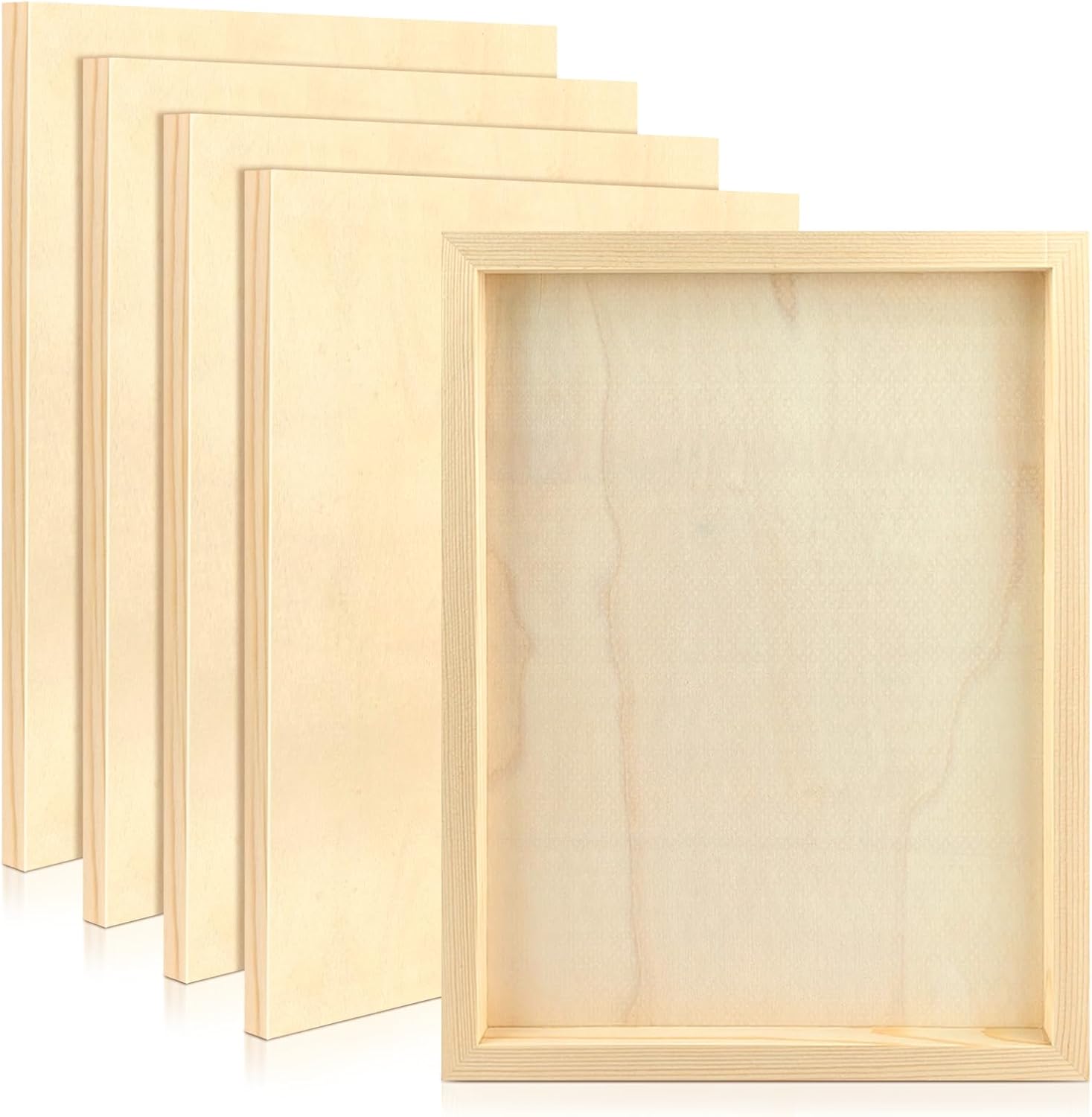
FSWCCK supplies five unfinished 11×14-inch wood panels, each 0.79 inches thick. The listing notes natural grain and that, unlike canvas, wood will not stretch or bend. It lists oils, acrylics, impasto and encaustic among compatible uses.
Thick, rigid boards are ideal for heavy knife work in oil, as long as you seal and prime them first.
Best suited for: Budget-minded painters who prepare their own grounds.
Key features:
- 5 panels, 11×14 in
- 0.79 in thick
- Unfinished wood with natural grain
Pros:
- Thick and rigid
- Good value per panel
- Standard frame size
Cons and limitations:
- Requires sealing and priming
- Grain varies board to board
Buying consideration: Sand lightly, seal, then apply three coats of gesso before oil.
7. Falling in Art 2 Pack 24×36 Birch Wood Panels — Best for large-format wood panels

Falling in Art includes two 24×36-inch cradle panels with 1-inch depth, birch on the front and pine on the back. The listing describes a smooth, sanded surface and lists oil and acrylic painting among uses.
Large rigid panels are hard to find, and these suit oil painters who want a statement piece without stretching canvas.
Best suited for: Painters working large who want a rigid support.
Key features:
- 2 cradled panels, 24×36 in
- 1 in depth
- Birch face, pine back
Pros:
- Large format
- Cradle allows frameless hanging
- Rigid support for big oil paintings
Cons and limitations:
- Highest price tier
- Heavy to ship and store
- Needs sealing and priming
Buying consideration: Prime both the face and sides; seal the back to help balance moisture changes.
Buying Guide: How to Choose an Oil Painting Surface
Rigid or flexible
Rigid panels offer long-term stability and suit detail and knife work. Flexible canvas is lighter for large pieces and gives a familiar bounce.
Primed or raw
Ready-primed surfaces save hours. Raw wood and canvas cost less per square inch but need sealing and several coats of gesso before oil.
Texture
Smooth hardboard suits glazing and portrait detail. Canvas weave and textured gesso break up strokes for a looser look.
Size and display
Flat panels need frames. Cradled panels with 3/4 to 1-inch depth can hang frameless.
Thickness and warping
Thin boards can bow in humidity. Cradled or thick panels resist warping.
Purpose
Use oil paper or canvas pads for studies, panels for finished small works, and canvas or large cradled panels for statement pieces.
Keep Learning
Surface choice affects drying and blending. If your oils stay wet too long on a heavily primed canvas, our guide to speeding up oil paint drying on canvas covers mediums and conditions, and our tutorial on blending oil paint on canvas shows how weave texture changes soft transitions.
Common Mistakes to Avoid
- Painting oil on raw wood or canvas. Always seal or prime first.
- One thick coat of gesso. Several thin coats dry flatter and stronger than one heavy coat.
- Using thin unbraced boards for large work. They warp. Choose cradled panels.
- Ignoring absorbency. A very absorbent ground makes oil colors look dull and sunken. A second coat of gesso helps.
- Framing oil paper without protection. Paper studies need mounting or glazing.
- Skipping the back and sides. Sealing all faces of a wood panel reduces warping.
FAQs
What is the best surface for oil painting?
For most painters, a primed rigid panel such as gesso-primed hardboard is the best all-round choice. Stretched canvas is better for large, lightweight work.
Can you oil paint on wood?
Yes. Seal the wood and apply several coats of gesso first. Unprimed wood absorbs oil and can affect the paint over time.
Do I need to gesso pre-primed canvas?
Not always. Many painters add one extra coat to reduce absorbency or adjust texture, but most ready-primed canvases can be used as is.
Can you use acrylic gesso under oil paint?
Yes. Acrylic gesso is the most common ground for oil painting today. Just never put acrylic over oil.
Is oil painting paper good for finished paintings?
It is best for studies and practice. For finished work meant to last, choose a panel or canvas.
What is better for oil, canvas or panel?
Panels are more stable and suit detail; canvas is lighter and suits larger work. Many painters use both for different purposes.
Final Recommendation
If you want to start painting in oil today, buy a few Ampersand Gessobord panels: they are stable, primed and ready. For a more personal ground or gallery-depth display, the FROM ONE cradled basswood panels paired with U.S. Art Supply gesso give you full control. Use the Strathmore oil pad for daily studies, add Liquitex Super Heavy gesso when you want texture built into the ground, and turn to the FSWCCK boards or large Falling in Art birch panels when value or scale matters most. The best surface is the one that matches how you paint, so try two or three before settling on a favorite.




