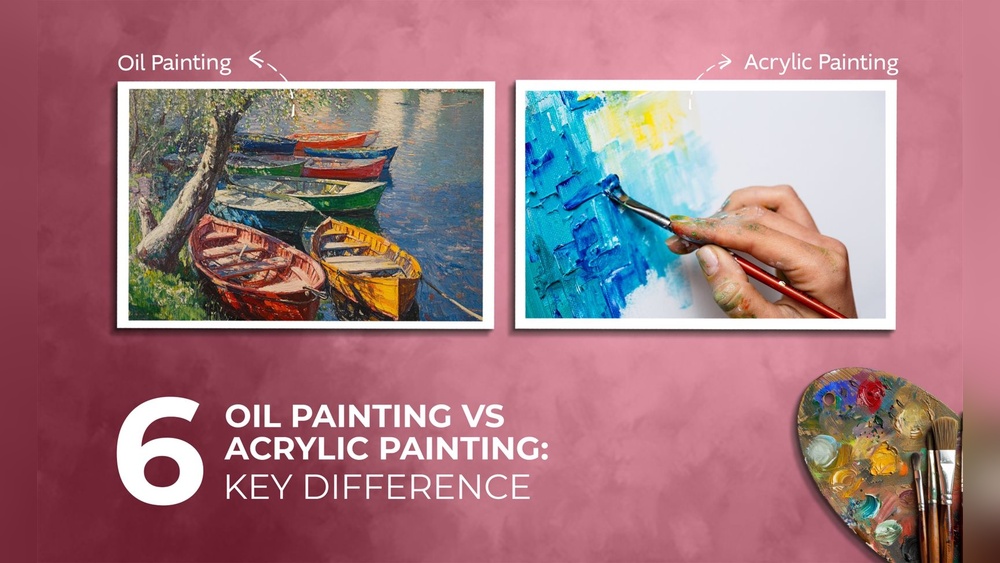
Are you trying to decide between oil painting and acrylic painting for your next masterpiece? Both types of paint offer unique qualities that can dramatically affect your creative process and the final look of your artwork. When considering oil vs acrylic painting, understanding their differences is crucial.
Understanding the key differences between oil and acrylic paints can help you choose the medium that best fits your style, technique, and goals. Whether you’re drawn to the rich, slow-drying texture of oils or the fast, versatile nature of acrylics, this guide will clear up the confusion and give you practical insights to make the right choice.
Keep reading to discover how each paint behaves, what tools you’ll need, and how your artistic journey can change depending on which one you pick.

Credit: craftico.in
Paint Composition
Understanding paint composition helps clarify the differences between oil and acrylic paints. Each type uses unique ingredients that impact texture, drying time, and finish. These materials shape how artists work and the final look of their paintings.
Oil Paint Ingredients
Oil paint consists mainly of pigment and drying oils. Linseed oil is the most common binder. It holds pigment particles together and slows drying. Other oils like walnut or poppy seed oil may be used for different effects.
Oil paints contain finely ground pigments. These provide rich, vibrant colors. The oil base allows for smooth blending and a glossy finish. Solvents like turpentine or mineral spirits thin the paint and clean brushes.
Acrylic Paint Ingredients
Acrylic paint uses pigment suspended in an acrylic polymer emulsion. This water-based binder dries fast by evaporation. It creates a flexible and durable paint film. Pigments in acrylics are similar to oils but mixed differently.
Acrylic paints can be thinned with water or acrylic mediums. They dry quickly to a matte or satin finish. Additives improve flow, drying time, and texture. This composition allows for layering and easy cleanup with water.
Drying Time
Drying time is a major factor that affects how artists work with oil and acrylic paints. It influences the techniques they use and how long they can spend on a painting. Understanding drying time helps artists choose the right paint for their style and pace.
Oil Paint Drying Process
Oil paint dries very slowly. It can take days or even weeks to fully dry. This slow drying allows artists to blend colors smoothly on the canvas. They can work wet-on-wet, mixing colors directly while the paint is still soft. The slow drying also lets artists fix mistakes or add details over time. However, this means artists must wait longer before adding new layers or finishing a painting.
Acrylic Paint Fast Drying
Acrylic paint dries quickly, often within minutes to an hour. This fast drying suits artists who like to work fast or in layers. They can paint over dried areas without waiting long. The quick drying, however, limits the time for blending colors on the canvas. Artists must work fast to mix colors before the paint sets. Acrylics dry to a matte or slightly shiny finish, which can differ from the look of oils.
Texture And Finish
Texture and finish play a big role in choosing between oil and acrylic paints. Both mediums offer unique tactile experiences and final looks. Understanding these differences helps artists pick the best option for their style and project.
Oil Paint Texture
Oil paint feels thick and smooth. It spreads easily and blends well on the canvas. The slow drying time lets artists work with the paint longer. This allows for soft transitions and rich texture. Oil paint can build up in layers, creating depth and dimension.
Acrylic Paint Texture
Acrylic paint has a lighter, more plastic feel. It dries fast, making thick textures harder to achieve. Artists can use additives to thicken acrylics, but it still feels less buttery than oil. Acrylics can create sharp e