PaintingProGuide is reader-supported. When you buy through links on this page we may earn an affiliate commission at no extra cost to you.
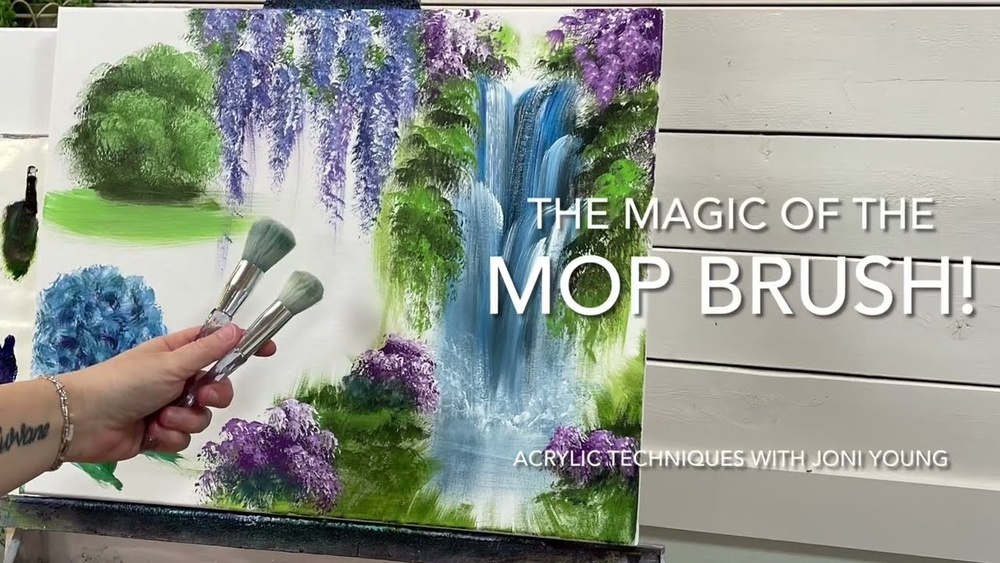
Ask most painters what a mop brush is for and they will say “watercolor washes,” which is true but incomplete. A mop is any large, soft, rounded brush with a dense head that holds a lot of liquid and touches the surface gently. That combination makes it useful in at least seven jobs across watercolor, acrylic, oil and decorative work: laying washes, wetting paper, softening edges, blending skies, glazing, applying varnish and lifting away loose gold leaf.
This mop brush uses in painting guide walks through each of those jobs with practical technique notes, explains how hair type and head shape change what a mop can do, and shows how to clean and store one so it keeps its shape. Toward the end we compare five mop brush sets currently listed on Amazon that cover blending, softening and gilding, so you can match a brush to the uses that matter to you.
Quick answer: A mop brush is used to lay large, even washes, pre-wet paper, soften and blend edges, glaze thin color without disturbing lower layers, apply varnish smoothly and brush away excess gold leaf. For blending and softening in acrylic and watercolor, the GACDR 1-Inch Oval Mop Set is a good all-round pick; for gilding and very soft blending, choose the GACDR Goat Hair Gilding Mop Set.
Our Top Picks at a Glance
- Washes and wet-in-wet — Best use for soft, high-capacity mops in watercolor
- Softening edges and blending — Best use for oval mops in acrylic and oil
- Glazing and varnishing — Best use for soft mops that do not lift underlayers
- Gilding — Best use for goat hair mops with gold leaf
- GACDR 1-Inch Oval Mop Set — Best mop set for blending and softening
- GACDR Goat Hair Gilding Mop Set — Best mop set for gold leaf and very soft blending
| Product | Best For | Key Spec | Key Strength | Price Tier |
|---|---|---|---|---|
| GACDR 1″ Oval Mop Set | Blending and softening | 6 oval mops, nylon and weasel hair | Double-crimped ferrules | $ |
| GACDR Gilding Mop Set | Gold leaf and soft blending | 7 goat hair mops | Very soft natural hair | $ |
| Nogeqi 10-Piece Goat Mops | Assorted sizes | 10 goat hair mops | Most sizes in one pack | $ |
| Giantree 9-Piece Oval Mops | Synthetic blending | 9 synthetic mops, 1.5 cm wide | Short plastic handles | $ |
| Royal & Langnickel Camel Mop 3-Pack | Cheap practice mops | 3 mops, 1/2 inch | Very low cost | $ |
How We Chose
The techniques in this guide reflect standard painting practice. The brush sets were selected from Amazon listings checked in October 2026, based on how clearly each listing describes hair type and construction, how well each set suits the mop uses covered here, and how widely each product is reviewed by Amazon buyers. We skipped two goat hair mop sets with very few buyer reviews in favor of better-established listings.
What we considered:
- Hair type: goat, squirrel-style, nylon blends and synthetics behave differently.
- Head shape: oval, domed or round mops suit different strokes.
- Size range: small mops for edges, large mops for skies and backgrounds.
- Ferrules: crimped ferrules that resist loosening when wet.
Seven Mop Brush Uses in Painting
1. Laying Large Washes
The classic mop job. Load the brush fully, tilt the paper slightly and lay horizontal strokes that each slightly overlap the wet bead of the stroke above. Because the mop carries so much, you can cover a sky in a few passes before any edge dries, which is the secret to a flat, streak-free wash. For a graded wash, add a little water to the mop between strokes so the color fades evenly.
2. Pre-Wetting Paper for Wet-in-Wet
Before dropping color into wet paper, use a clean mop loaded with clear water to wet the area evenly. A mop wets faster and more evenly than a round, and its softness does not rough up the paper surface. Wait until the sheen softens slightly before adding pigment for more control.
3. Softening Hard Edges
In acrylic and oil, a clean, dry mop drawn lightly across the boundary between two wet colors melts the edge into a soft transition. Use the lightest possible touch and wipe the mop on a rag between passes so you do not drag color across the painting.
4. Blending Skies and Backgrounds
Large, soft mops are ideal for blending gradients in skies, water and out-of-focus backgrounds. In acrylic, work quickly or add a retarder so the paint stays open long enough. In oil, a soft mop over freshly blended paint removes brush marks entirely.
5. Glazing Over Dry Layers
Glazes must go on without disturbing the paint underneath. A soft mop releases thin, transparent color in a single gentle pass, which is why watercolorists use mops for final glazes and acrylic painters use them with glazing medium.
6. Applying Varnish
A wide, soft mop or wash brush applies varnish evenly without streaks or bubbles. Keep a separate mop only for varnish, and always work in one direction with thin coats.
7. Gilding
In decorative painting and gilding, a very soft goat hair mop is used to gently press gold leaf onto size (adhesive) and brush away the loose excess, then to burnish lightly. Goat hair is soft enough not to scratch the leaf.
Hair Types and What They Change
- Goat hair: very soft, absorbent and inexpensive, excellent for washes, gilding and gentle blending, weaker point.
- Squirrel or synthetic squirrel: the softest and thirstiest, ideal for watercolor washes and glazes.
- Nylon blends: springier and more durable, good for acrylic blending and softening.
- Pure synthetic: durable and easy to clean, slightly less capacity than natural hair.
Mop Brush Uses by Medium
Watercolor: this is where a mop earns its keep. Washes, wet-in-wet skies, soft-edged foliage masses and final unifying glazes all rely on a brush that carries plenty of water and releases it evenly. A single large mop can replace several flats and rounds in the early stages of a painting.
Acrylic: fast drying makes mops most useful for softening and blending while the paint is still wet, and for laying glazes with medium. Keep a clean, dry mop beside the palette and use it within a minute or two of applying color.
Oil: because oil stays wet, a soft mop can blend for much longer. Portrait painters use it to soften transitions in skin; landscape painters use it to melt skies and distant hills into atmospheric gradients.
Mop Brush Sets Worth Considering
1. GACDR 1 Inch Oval Mop Brush Set, 6 Pieces — Best for Blending and Softening

These six 1-inch oval mops use a blend of synthetic nylon and weasel hair on birch handles with double-crimped aluminum ferrules. The listing positions them for blending and softening with acrylic or watercolor and for laying base color.
The nylon content gives a little more spring than pure goat or squirrel, which helps when softening acrylic edges. Six identical brushes means you can keep one clean for blending while others carry color.
Best suited for: acrylic and watercolor painters who soften edges and blend often.
Key features:
- Six 1-inch oval mops
- Nylon and weasel hair blend
- Double-crimped aluminum ferrules
- Birch handles
Pros:
- Good balance of softness and spring
- Six brushes for rotation
- Widely reviewed
Cons and limitations:
- Less capacity than goat or squirrel for big washes
- One size only
Buying consideration: keep at least one brush dedicated to dry blending so it is never loaded with old color.
2. GACDR Gilding Brush Set, 7 Goat Hair Blending Mops — Best for Gold Leaf and Soft Blending

GACDR’s gilding set includes seven natural goat hair mops with birch handles and double-crimped aluminum ferrules. The listing describes it for gilding techniques, color blending and softening, including applying rub-and-buff finishes and delicate gold leaf or flakes.
Goat hair’s softness makes these equally useful for gentle watercolor washes and glazing. The listing’s instructions are simple: apply adhesive, place the leaf and brush away the excess with a suitable size.
Best suited for: decorative painters, gilders and anyone who wants very soft mops for glazes.
Key features:
- Seven goat hair mops
- Birch wood handles
- Double-crimped aluminum ferrules
- For gilding, blending and softening
Pros:
- Very soft natural hair
- Multiple sizes
- Widely reviewed
Cons and limitations:
- Goat hair may shed slightly at first
- Weak point for detail
Buying consideration: rinse new goat hair brushes and gently pull out loose hairs before using them on a painting.
3. Nogeqi 10-Piece Assorted Mop Brushes, Goat Hair — Best for Many Sizes in One Pack

Nogeqi’s set gives ten goat hair mops in assorted sizes, handmade with double-crimped aluminum ferrules and wooden handles. The listing describes them for watercolor, oil and acrylic, plus pottery and face or body art.
Ten sizes make it easy to try mops for everything from small edge softening to large background washes. It has fewer buyer reviews than the GACDR sets.
Best suited for: painters who want to experiment with many mop sizes cheaply.
Key features:
- Ten goat hair mops, assorted sizes
- Double-crimped aluminum ferrules
- Wooden handles
Pros:
- Wide size range
- Low price tier
- Versatile
Cons and limitations:
- Fewer buyer reviews
- Natural hair may shed initially
Buying consideration: note which sizes you use most, then upgrade those to higher quality later.
4. Giantree 9-Piece Oval Mop Brushes, Synthetic, Short Handle — Best for Synthetic Blending

Giantree uses synthetic fibers for softness and control when blending and softening colors in acrylic or watercolor. The heads are about 1.5 cm wide on short plastic handles, with double-crimped metal ferrules.
Synthetic mops clean easily after acrylic and avoid the shedding sometimes seen with natural hair. The listing mentions both six and nine brushes, so check the photos to confirm the count.
Best suited for: acrylic painters and face painters who want easy-clean synthetic mops.
Key features:
- Synthetic fibers
- About 1.5 cm wide oval heads
- Short plastic handles
- Double-crimped ferrules
Pros:
- Easy to clean
- No natural-hair shedding
- Compact handles
Cons and limitations:
- Smaller heads, not for big washes
- Listing inconsistent on count
Buying consideration: use these for edges and small blends rather than full skies.
5. Royal & Langnickel Camel Mop Brush 3-Pack — Best for Cheap Practice Mops

This three-pack of half-inch mops is one of the most widely reviewed cheap mop options. The listing material field says synthetic, and the trade name “camel” traditionally describes a soft blended hair. Listing detail is minimal.
They are fine for practicing washes, wetting small areas, softening edges and applying varnish to small pieces, and inexpensive enough to keep one just for varnish or gilding size.
Best suited for: students, classrooms and anyone who wants cheap dedicated mops for messy jobs.
Key features:
- Three mops
- About 1/2 inch width
- Soft hair
Pros:
- Very low cost
- Widely reviewed
- Good dedicated varnish brush
Cons and limitations:
- Small size
- Minimal listing information
Buying consideration: label one as your varnish brush and never use it for paint.
Buying Guide: Choosing a Mop Brush for Your Uses
Match Hair to the Job
For watercolor washes and glazes, choose the softest, thirstiest hair: squirrel-style or goat. For acrylic blending, choose nylon blends or synthetics. For gilding, choose soft goat hair.
Choose Size by Area
Larger heads cover big areas before they dry; smaller heads soften edges precisely. A small and a large mop together cover most uses.
Pick the Shape
Oval mops lay soft, rounded strokes and blend well. Round or domed mops hold more liquid. Quill-style mops add a point for edges.
Check Construction
Double-crimped ferrules and good glue keep heads secure when wet. Natural hair may shed a few hairs at first; persistent shedding is a sign of poor construction.
Keep Separate Mops by Medium
Acrylic and varnish can ruin a soft watercolor mop. Dedicate brushes to each medium and to varnish.
Handle Length
Short handles suit tabletop watercolor and gilding. Longer handles suit easel blending in oil and acrylic.
Caring for a Mop Brush
- Rinse thoroughly in clean, lukewarm water after each use.
- For acrylic, wash with mild soap immediately; never let paint dry in the dense head.
- For oil, rinse in solvent or oil, then soap and water.
- Gently squeeze out water and reshape the dome with your fingers.
- Dry flat or hanging tip-down, never standing on the head.
- Store dry in a container that does not crush the hair.
Related Brush Techniques
Mops handle the big, soft passages; other brushes handle the details. See our guides to using a liner brush for detail work and choosing a brush size for detailed acrylic work, or try painting dots with a round brush.
Common Mistakes to Avoid
- Under-loading the mop so the wash dries before you finish.
- Pressing too hard when softening edges and smearing color.
- Using a dirty mop to blend, which drags old pigment into clean areas.
- Using the same mop for paint and varnish.
- Letting acrylic dry in the dense head.
- Drying mops tip-up so water rots the glue and loosens the ferrule.
FAQs
What is a mop brush used for?
Mop brushes are used to lay large washes, pre-wet paper, soften and blend edges, glaze over dry layers, apply varnish and brush away excess gold leaf. Their large, soft heads hold lots of liquid and touch the surface gently.
Can you use a mop brush with acrylic paint?
Yes, for blending, softening and glazing. Choose synthetic or nylon-blend mops for acrylic and clean them immediately after use.
Is a mop brush good for oil painting?
Yes. A soft, dry mop is excellent for softening edges and removing brush marks in oil, especially in skies and backgrounds.
What is the difference between a mop brush and a wash brush?
A mop is rounded or oval with a dense, domed head. A wash brush is usually a wide flat. Both lay large areas of color; the mop gives softer edges, the wash brush gives straighter edges.
What hair is best for a mop brush?
Squirrel or synthetic squirrel is the softest and thirstiest for watercolor. Goat hair is soft and affordable for washes and gilding. Nylon blends are better for acrylic blending.
How do you clean a mop brush?
Rinse in clean lukewarm water, use mild soap for acrylic or after oil solvent, gently squeeze out water, reshape and dry flat or tip-down.
Final Recommendation
Use a mop whenever you need to move a lot of liquid gently: washes, wet-in-wet, glazes, varnish and gold leaf, plus softening edges in acrylic and oil. For blending and softening, start with the GACDR 1-inch oval mop set. For the softest touch and gilding, choose the GACDR goat hair gilding set. The Nogeqi ten-piece pack is good for exploring sizes, Giantree’s synthetic mops clean up easily after acrylic, and the Royal & Langnickel three-pack makes cheap dedicated brushes for varnish and messy jobs.