PaintingProGuide is reader-supported. When you buy through links on this page we may earn an affiliate commission at no extra cost to you.
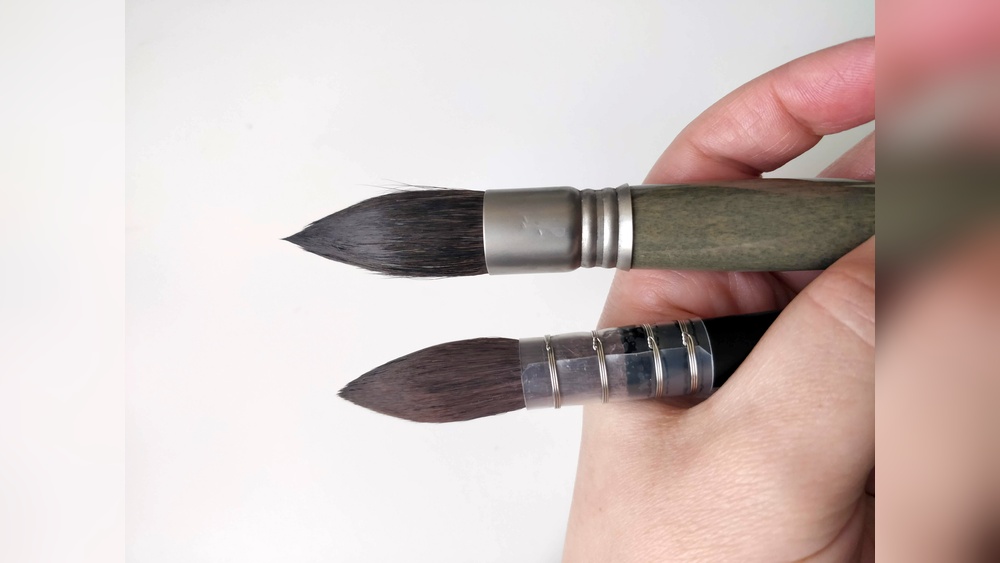
The natural vs synthetic paint brushes question used to have a simple answer: natural hair for oil and watercolor, synthetic for acrylic. Synthetic fibers have improved so much that the line has blurred, and many painters now use synthetics for everything. Still, natural hair and bristle behave differently in ways that matter, and knowing those differences helps you spend money on the right brushes for your medium.
In short: natural hog bristle remains the classic choice for oil and heavy-body acrylic texture; soft natural hair such as sable and squirrel holds the most water for watercolor; and synthetic brushes are the most versatile, durable and affordable option, ideal for acrylic and increasingly good for everything else. This comparison explains why, then looks at real brush sets on each side.
Quick answer: For acrylic and mixed-media work, choose synthetic; the Fuumuui 26-Piece Synthetic Set covers nearly every shape in one roll. For oil painting with texture, choose natural hog bristle; the ARTIFY 15-Piece Hog Bristle Set is a strong option. For soft, watery work on a budget, a natural “camel” blend such as the Princeton RealValue Natural Camel Set works. Most painters end up owning both types.
Our Top Picks at a Glance
- Fuumuui 26pcs Synthetic Paint Brush Set — Best synthetic set for acrylic and all-round use
- ARTIFY 15-Piece Natural Hog Bristle Set — Best natural bristle set for oil painting
- Princeton RealValue Natural Camel Set — Best budget soft natural-hair set
- Bates Natural Bristle Chip Brushes, 24 Pack — Best natural bristle utility brushes for gesso and varnish
- Natural Bristle Chalk and Wax Brushes, 2 Pack — Best natural bristle brushes for furniture and decor painting
Natural vs Synthetic Paint Brushes: Side-by-Side
| Factor | Natural Hair / Bristle | Synthetic |
|---|---|---|
| Materials | Hog bristle, sable, squirrel, goat, ox, pony, badger blends | Nylon, polyester (taklon), engineered fibers |
| Paint holding | Excellent, especially soft hair with water media | Good to very good; improving with newer fibers |
| Spring and snap | Sable: excellent; hog: stiff; squirrel: very soft | Consistent spring, varies by fiber |
| Texture marks | Hog bristle flags leave rich, broken texture | Smoother marks; stiff synthetics imitate bristle |
| Durability with acrylic | Can be damaged by acrylic and harsh cleaning | Very durable; resists acrylic |
| Solvent resistance | Good with oil solvents | Good; some fibers soften with harsh solvents |
| Price | Budget hog to very expensive sable | Generally affordable |
| Animal-free | No | Yes |
| Best for | Oil, watercolor washes, varnish | Acrylic, gouache, crafts, all-round |
| Product | Best For | Key Spec | Key Strength | Price Tier |
|---|---|---|---|---|
| Fuumuui 26pcs Synthetic Set | Acrylic and all-round | 26 shapes incl. fan, dagger, mop, comb | Canvas roll, double-crimped ferrules | $$ |
| ARTIFY 15-Piece Hog Set | Oil painting | 15 brushes, 6 shapes, hog bristle | Handmade, carrying case | $$ |
| Princeton RealValue Natural Camel | Soft watery work | 4 natural camel brushes | Budget natural hair | Varies |
| Bates Natural Chip Brushes | Gesso, varnish, crafts | 24 brushes, 0.5-2 in | Disposable-friendly bulk | $ |
| Chalk and Wax Brushes | Furniture and decor | 2.5 in oval + 1 in round, natural | High paint pick-up | $ |
How We Chose
We did not paint with these brushes for this comparison. The general comparison is based on well-established characteristics of brush fibers. Product picks are based on the Amazon listing details checked in October 2026, how clearly each set represents natural or synthetic construction for art and craft use, and how widely each product is reviewed by Amazon buyers. We excluded house-painting trim brushes from the results, since they target wall paint rather than art.
- Fiber type: clearly stated natural or synthetic construction.
- Intended medium: how well the fiber fits oil, acrylic, watercolor or craft work.
- Shapes included: range of flats, rounds, filberts and specialty shapes.
- Construction: ferrule crimping and handle quality.
- Value: cost relative to quantity and use.
Natural Brushes: Strengths and Weaknesses
Natural brushes fall into two very different families. Hog bristle is stiff and coarse, with natural split ends called flags that hold paint and leave textured strokes. It is the traditional oil painting brush for pushing thick paint, scumbling and impasto. Soft natural hair such as kolinsky sable, squirrel, goat and blends sold as “camel” are absorbent and flexible. Sable offers a fine point and snap for watercolor detail; squirrel holds enormous amounts of water for washes.
The trade-offs: natural hair can be damaged by acrylic paint that dries in the brush and by aggressive scrubbing, quality varies with the animal source, premium natural hair is expensive, and some painters prefer to avoid animal products entirely.
1. ARTIFY 15-Piece Professional Oil Paint Brush Set, Natural Hog Bristle — Best for oil painting

ARTIFY’s set is a clear example of natural bristle for oil painting. The listing describes 100% pure hog bristles in a blend of hog hairs, stiff for oil painting and crafted to prevent shedding, across six commonly used shapes in various sizes, 15 brushes in total.
Handles are natural wood from FSC-certified sources, ferrules are white copper, and the brushes are described as individually handmade. A recyclable carrying box keeps the set organized for travel. The listing names oil, acrylic, gouache and watercolor, but the stiff hog bristle is best matched to oil and heavy-body acrylic.
Best suited for: oil painters and heavy-body acrylic painters who want texture and paint-pushing power.
Key features:
- 15 brushes in six shapes
- Pure hog bristle blend
- White copper ferrules
- FSC-certified wood handles
- Carrying box
Pros:
- Classic oil painting bristle
- Range of shapes
- Travel-ready storage
Cons and limitations:
- Too stiff for watercolor washes
- Higher price tier than budget sets
Buying consideration: Break in new bristle brushes by rinsing out the sizing, and never let oil paint dry in the heel.
2. Princeton RealValue Brush Set, Natural Camel, 4 Piece — Best for budget soft natural hair

Princeton is one of the largest US art brush makers, and its RealValue line is designed for affordable, all-purpose brushes. This four-piece set uses natural camel hair, a soft natural blend, on red handles, according to the listing.
The listing positions RealValue brushes for acrylic, watercolor, oils and tempera, and notes the collection includes both natural and synthetic sets. Soft camel hair performs best with watery media such as watercolor and tempera.
Best suited for: students, classrooms and anyone who wants inexpensive soft natural brushes for watercolor and tempera.
Key features:
- 4 natural camel hair brushes
- Red handles
- Part of Princeton’s RealValue series
Pros:
- Low cost for natural hair
- Soft and absorbent
- Trusted brand
Cons and limitations:
- Less spring and point than sable
- Not suited to heavy paint
Buying consideration: Use soft natural brushes for washes and glazes, and switch to synthetic for acrylic to protect the hair.
3. Bates Natural Bristle Chip Brushes, Assorted, 24 Pack — Best for gesso, varnish and crafts

Chip brushes are inexpensive natural bristle brushes that every studio uses for jobs you would not want to ruin a good brush on: gesso, varnish, glue, stain and texture. Bates’ pack includes 24 brushes, six each of 0.5, 1, 1.5 and 2 inch widths, with natural wood handles and hanging holes, per the listing.
The listing states use with all paints, stains and varnishes and positions them for one-time or multiple uses.
Best suited for: priming canvases with gesso, applying varnish and mediums, crafts and texture effects.
Key features:
- 24 natural bristle chip brushes
- Six each of 0.5, 1, 1.5 and 2 inch
- Wood handles with hanging holes
- For paints, stains and varnishes
Pros:
- Very low cost per brush
- Good range of widths
- Saves your art brushes from gesso and glue
Cons and limitations:
- Utility quality; may shed
- Not for fine artwork
Buying consideration: Pull loose bristles before use by running the brush over your palm a few times.
4. Chalk and Wax Paint Brushes for Furniture, 2 Pack, Natural Bristles — Best for furniture and decor painting

Furniture painters often prefer natural bristle for chalk paint and wax because it picks up and releases a lot of thick paint and works wax into the surface. This pack includes a 2.5-inch oval brush and a 1-inch round brush with natural animal bristles, according to the listing.
Handles are beech wood with stainless steel ferrules. The listing names compatibility with many chalk paint, milk paint and furniture wax brands, including FolkArt and DecoArt Americana.
Best suited for: upcycling furniture, chalk-painted decor and waxing finishes.
Key features:
- 2.5 inch oval and 1 inch round
- Natural animal bristle
- Beech wood handles
- Stainless steel ferrules
Pros:
- High paint pick-up
- Oval shape covers large areas
- Round brush for details and wax
Cons and limitations:
- Specialized for furniture, not fine art
- Natural bristle may shed initially
Buying consideration: Keep one brush for paint and one for wax; mixing them contaminates the finish.
Synthetic Brushes: Strengths and Weaknesses
Synthetic brushes are made from nylon, polyester (often sold as taklon) and newer engineered fibers. Some are soft and silky for watercolor and gouache; others are stiff to imitate hog bristle for acrylic and oil. Their main advantages are durability, consistency and price. They resist damage from acrylic, clean easily, keep their shape and are animal-free.
The trade-offs: traditional synthetics hold less water than top natural hair, so watercolor washes may need more reloading, and they can lose their snap if exposed to heat or left in harsh solvents. Newer fibers are narrowing these gaps quickly.
5. Fuumuui 26pcs Professional Synthetic Nylon Paint Brush Set — Best for acrylic and all-round use

Fuumuui’s 26-piece set is a good illustration of how versatile synthetic brushes have become. The listing describes soft synthetic bristles with good load capacity, color control and shape retention, and a huge variety of shapes: large wide flat, pointed, liner, flat, brights, slant, dagger, filbert, fan, feather, coattails, comb, deerfoot, mop and scraper.
Construction includes hand-crafted, double-crimped copper ferrules and ergonomic birch handles, and the set comes in a portable canvas roll. The listing names landscape, acrylic, oil, watercolor and gouache painting.
Best suited for: acrylic painters, landscape painters who want specialty shapes, and beginners who want to explore many brush types.
Key features:
- 26 brushes in many shapes
- Synthetic nylon bristles
- Double-crimped copper ferrules
- Birch handles
- Canvas storage roll
Pros:
- Huge shape variety
- Durable with acrylic
- Travel-friendly roll
Cons and limitations:
- Many shapes may go unused
- Soft synthetics are not ideal for very heavy oil impasto
Buying consideration: Identify the five or six shapes you reach for most; those are the ones to upgrade later.
Blended and Imitation Brushes: The Middle Ground
Between pure natural and pure synthetic sits a growing category of blends and imitations. Synthetic-sable blends mix natural hair with synthetic fibers to combine water capacity with durability and a lower price. Imitation squirrel and imitation sable synthetics are engineered to mimic the absorbency and softness of natural hair, and many watercolorists now use them as their main brushes. Stiff “bristle-style” synthetics replicate hog bristle for oil and acrylic while resisting solvents and wear. If you are unsure which side to choose, a well-made blend or imitation brush is often the best compromise, especially for watercolor.
Head-to-Head by Medium
Oil painting
Hog bristle remains the classic choice for block-ins, texture and impasto. Stiff synthetics are a good alternative and last longer with solvents. For smooth blending and glazing, soft synthetics or soft natural hair work well.
Acrylic painting
Synthetic wins. Acrylic dries fast, and natural hair is easily ruined if paint dries in it. Synthetic brushes also tolerate the frequent water rinsing acrylic requires.
Watercolor
Soft natural hair (sable, squirrel) holds the most water and offers the best point, but quality synthetics and synthetic-natural blends are excellent and much cheaper. Budget natural “camel” brushes are fine for washes but lack snap.
Gouache
Soft synthetics are a great match, offering control and easy cleaning.
Varnishing and gesso
Natural bristle chip brushes are cheap and effective for gesso; soft natural or synthetic flat brushes give smoother varnish coats.
Crafts and furniture
Synthetic brushes for craft acrylic; natural bristle for chalk paint and wax.
Verdict by Use Case
- Acrylic painters: synthetic, almost exclusively.
- Oil painters: hog bristle for texture and block-in, synthetic or soft hair for blending.
- Watercolorists: natural or high-quality synthetic; blends offer a good middle ground.
- Students and classrooms: synthetic for durability, plus cheap natural chip brushes for gesso.
- Vegan or animal-free painters: synthetic across all media.
- Furniture painters: natural bristle for chalk paint and wax.
Buying Guide: Choosing Between Natural and Synthetic
Start with your main medium
Buy for the paint you use most. One good set matched to your medium beats a mixed collection of brushes that suit nothing in particular.
Check the label
Look for specific fiber names: hog, Chungking, sable, squirrel, taklon, nylon. Vague labels like “artist bristle” can mean anything.
Consider care requirements
Natural hair needs gentler cleaning and should never be left with acrylic drying in it. Synthetics are more forgiving.
Balance budget and quality
Spend more on the brushes you use daily and save on utility brushes for gesso, glue and varnish.
Watch for shedding
Budget natural brushes shed more. Our guide on keeping paint brushes from shedding explains how to reduce it.
Brush Care for Both Types
Rinse brushes frequently during painting and never leave them resting on their tips in water or solvent. Clean oil brushes with solvent or oil followed by soap; clean acrylic and watercolor brushes with water and mild soap. Reshape the head and dry flat or bristles-up. Our step-by-step guide to drying paint brushes correctly covers the details, and our guide to painting with large brushes shows how brush choice affects big, confident strokes.
Common Mistakes to Avoid
- Using expensive natural hair brushes with acrylic and letting paint dry in them.
- Using stiff hog bristle for delicate watercolor washes.
- Assuming all synthetics are the same; soft and stiff synthetics behave very differently.
- Cleaning brushes with hot water, which can loosen glue and damage synthetic fibers.
- Buying huge sets instead of a few quality brushes for your main medium.
- Using good art brushes for gesso and glue.
FAQs
Are natural or synthetic brushes better?
It depends on the medium. Synthetic is best for acrylic and very versatile overall. Hog bristle is classic for oil texture, and soft natural hair holds the most water for watercolor.
Can I use synthetic brushes for oil painting?
Yes. Stiff synthetics work well for oil and last longer with solvents. Many oil painters use a mix of synthetic and hog bristle brushes.
Why are natural brushes bad for acrylic?
Acrylic dries quickly and can harden in natural hair, damaging it. Frequent water exposure can also weaken some natural hair over time.
Are synthetic brushes good for watercolor?
Yes. Modern synthetic and synthetic-blend watercolor brushes hold water well and keep a good point, at a much lower price than sable.
What is the best brush for beginners?
A synthetic set is the most forgiving and versatile choice for beginners in most media.
Are synthetic brushes vegan?
Synthetic fibers are animal-free. Check that handles and glues are also described as vegan if that matters to you.
Final Recommendation
The natural vs synthetic paint brushes debate is really about matching fiber to medium. Choose synthetic for acrylic and all-round versatility, with the Fuumuui 26-piece set as a broad starting point. Choose natural hog bristle for oil texture, such as the ARTIFY 15-piece set, and soft natural hair like the Princeton RealValue camel set for budget watercolor and tempera washes. Keep cheap natural Bates chip brushes for gesso and varnish, and natural chalk and wax brushes for furniture projects.