Painting pumpkins instead of carving them has become a fall favorite for good reason. There are no sharp knives, no slimy insides and no sagging jack-o’-lanterns three days after Halloween. An uncarved painted pumpkin can often stay on the porch for weeks, and the designs range from simple metallic drips to detailed florals. Still, paint can bead up, peel or fade if the pumpkin isn’t prepared properly. These DIY painted pumpkins tips cover choosing the right pumpkin, prep, paint and sealing, plus design ideas for kids and adults.
Quick answer: For DIY painted pumpkins, choose a firm, blemish-free pumpkin with an intact stem, wash and dry it thoroughly, then apply a primer or white base coat if you want bright or light colors. Paint with acrylic craft paint, chalk-style paint or spray paint in thin coats, add details with paint pens, and finish with a clear acrylic sealer. Keep painted pumpkins out of direct sun, rain and frost to help them last longer.
Not every paint grips a pumpkin’s waxy skin equally well. Our guide to the best paint for DIY pumpkins explains which types offer good coverage and weather resistance for Halloween and fall decor.
Real vs Faux Pumpkins: Which Should You Paint?
| Factor | Real pumpkins | Craft (faux) pumpkins |
|---|---|---|
| Cost | Low, seasonal | Higher upfront, reusable |
| Lifespan | Often several weeks uncarved, depending on conditions | Years with care |
| Surface | Waxy, natural ridges | Smooth foam or plastic |
| Prep | Wash, dry, optional primer | Light sanding or primer for some materials |
| Best for | Porches, seasonal displays, kids’ activities | Heirloom designs, detailed art, indoor decor |
Real pumpkins offer authentic texture and are perfect for one-season displays. Faux pumpkins are worth the investment for detailed designs you want to keep and reuse year after year.
Choosing the Best Pumpkin for Painting
- Firm all over: press gently around the pumpkin. Soft spots mean early rot.
- Intact stem: a sturdy stem helps the pumpkin last longer. Never carry pumpkins by the stem, as it can snap.
- Smooth surface: fewer bumps and scars make painting easier, especially for lettering and fine details.
- Stable base: a pumpkin that sits flat won’t roll while you paint.
- Interesting varieties: white pumpkins give a ready-made light base, flattened “Cinderella” types look elegant, blue-gray varieties pair well with metallics, and mini pumpkins are ideal for kids and table settings.
Supplies for DIY Painted Pumpkins
- Pumpkins, real or faux
- Mild soap, water and a soft cloth
- Paper towels or a lint-free cloth
- Primer: spray primer or white acrylic paint
- Paint: acrylic craft paint, chalk-style paint or spray paint
- Paint pens for fine lines and lettering
- Brushes: flat brushes for base coats, small rounds for details, foam brushes for smooth coverage
- Painter’s tape, stencils, rubber bands and stickers
- Clear acrylic sealer, matte or gloss
- Embellishments: glitter, ribbon, faux flowers, googly eyes
- Drop cloth, disposable gloves and a lazy Susan or turntable (optional, but very handy)
Paint Types for Pumpkins
| Paint type | Coverage | Ease of use | Best for |
|---|---|---|---|
| Acrylic craft paint | Good with 2 to 3 coats | Easy | Most designs, kids’ projects, detailed work |
| Chalk-style paint | Very good, matte | Easy | Farmhouse looks, solid colors, distressing |
| Spray paint | Excellent, smooth | Moderate; requires ventilation | Solid base coats, metallics, multiple pumpkins |
| Paint pens | Opaque lines | Very easy | Lettering, outlines, doodles, patterns |
| Tempera | Fair | Easy for kids | Short-term, indoor displays |
Washable tempera can crack or rinse off outdoors. For porch pumpkins, acrylic or spray paint with a sealer generally holds up better.
How to Do DIY Painted Pumpkins: Step by Step
Step 1: Clean the Pumpkin
Wipe the pumpkin with a cloth dampened with mild soapy water to remove dirt and any farm residue. Some people also wipe pumpkins with a diluted vinegar or mild bleach solution to slow mold growth; if you try this, rinse and test on a small area first. Avoid soaking the pumpkin.
Step 2: Dry Completely
Dry the pumpkin thoroughly with a towel, then let it air-dry for an hour or more. Paint won’t stick well to a damp or waxy surface. Pay attention to the crevices around the stem and ridges.
Step 3: Prime (Optional but Helpful)
A pumpkin’s natural orange shows through light colors, making pastels look muddy and white look peachy. A coat of spray primer or white acrylic paint creates a neutral base so colors look true. Skip priming if you’re painting dark colors or want orange to peek through as part of the design.
Step 4: Paint the Base Coat
Apply thin, even coats, letting each dry before adding the next. Acrylic is often touch-dry in 15 to 30 minutes per thin coat, but humidity and cool weather slow drying. Paint the top half first, let it dry, then flip the pumpkin carefully onto a towel to paint the bottom if needed.
Step 5: Add Your Design
Use tape, stencils, freehand brushwork or paint pens to add patterns, faces or lettering. A turntable lets you rotate the pumpkin smoothly for stripes and wraparound designs.
Step 6: Paint the Stem (or Not)
Leaving the stem natural looks organic. Painting it gold, black or white adds a polished touch. Metallic leaf on the stem is a popular elegant accent.
Step 7: Seal
Once the paint has dried for several hours, apply a clear acrylic sealer, especially for outdoor pumpkins. Spray sealers give the smoothest coverage; use them outdoors or in a well-ventilated area. Two light coats are better than one heavy coat.
DIY Painted Pumpkins Tips for Longer-Lasting Displays
- Don’t carve. An intact pumpkin lasts much longer because its protective skin isn’t broken.
- Keep them out of direct sun. Sun warms the pumpkin and speeds decay, and it can also fade paint.
- Protect from frost. Freezing temperatures damage pumpkin flesh. Bring pumpkins inside or cover them on frosty nights.
- Avoid sitting in water. Place pumpkins on a mat, trivet or piece of cardboard so the bottom stays dry.
- Check regularly. Remove pumpkins showing soft spots or leaking to prevent mold from spreading to neighbors.
- Keep indoor pumpkins away from heat. Radiators and fireplaces accelerate softening.
Painted Pumpkin Design Ideas
Easy Ideas for Kids and Beginners
1. Polka dots. Stamp dots with a pencil eraser, a dowel or a cork dipped in paint. Mix dot sizes and colors for a playful look.
2. Silly faces. Paint big eyes, toothy grins or googly-eyed monsters. A no-carve face is safe for young children.
3. Painted stripes. Use rubber bands as guides for horizontal stripes, or follow the pumpkin’s natural ridges for vertical stripes.
4. Handprint art. Small handprints become spiders, ghosts or turkey feathers on larger pumpkins.
5. Mini pumpkin sets. Paint a set of mini pumpkins in coordinated colors for a table centerpiece.
Stylish Ideas for Home Decor
6. Metallic drip. Pour or squeeze slightly thinned metallic or contrasting paint around the stem, letting it drip naturally down the sides. Tilt the pumpkin to guide drips, and let it dry fully before moving.
7. Monochrome neutrals. Paint a group in cream, sage, blush and taupe for a soft, modern display. Chalk-style paint gives a velvety matte finish.
8. Buffalo check or plaid. Tape a grid over a light base, paint alternating squares, then add thin lines for plaid. A classic farmhouse look.
9. Monogram or family name. Paint an initial or name with a stencil or paint pen on a solid-colored pumpkin.
10. Chalkboard pumpkin. Paint the whole pumpkin in chalkboard paint and write seasonal messages, a countdown or a menu that can change.
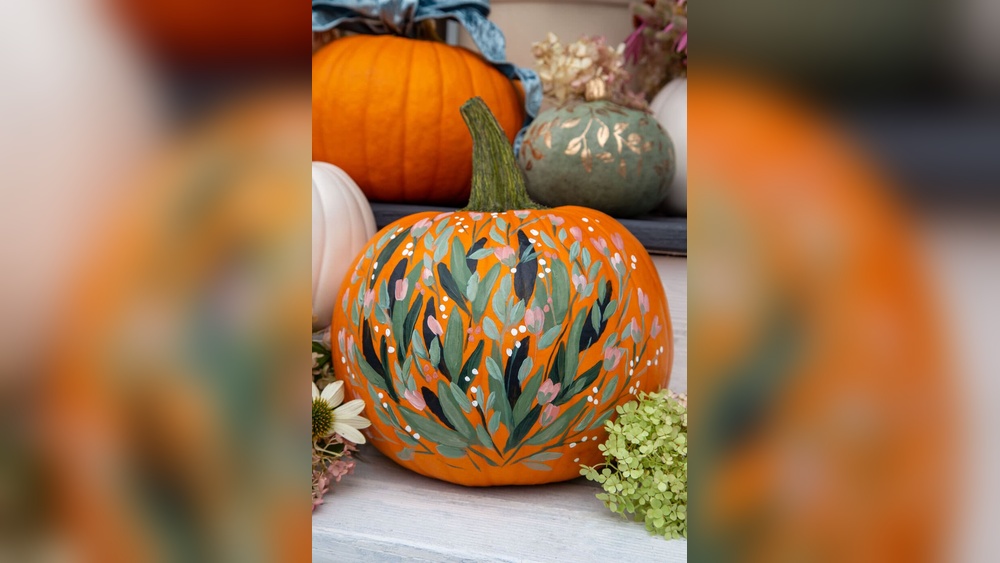
11. Floral pumpkins. Paint loose flowers and leaves freehand, or glue on faux flowers and greenery around the stem.
Spooky and Statement Ideas
12. Galaxy pumpkin. Sponge dark blue, purple and black over each other, then flick white paint for stars. Add a few larger stars with a paint pen.
13. Black lace stencil. Wrap lace fabric tightly around a white pumpkin and spray black paint through it. Remove the lace carefully while the paint is wet.
14. Mummy pumpkin. Paint the pumpkin black, then layer crisscrossing white strips of paint or tape for bandages, leaving a gap for googly eyes.
15. Glow-in-the-dark details. Add glow paint to faces, stars or patterns so the pumpkin lights up at night after absorbing light.
Painting Pumpkins with Kids
- Choose small or mini pumpkins that kids can hold and turn.
- Use washable paint for young children, or acrylic with smocks and close supervision.
- Pre-prime pumpkins white so colors look bright and kids feel successful.
- Offer stickers, foam shapes and paint pens alongside brushes.
- Set up an outdoor painting station or cover the table generously.
Troubleshooting Painted Pumpkins
| Problem | Likely cause | Fix |
|---|---|---|
| Paint beading or not sticking | Waxy or damp skin | Clean and dry thoroughly; use primer |
| Colors look dull or muddy | Orange showing through | Apply a white primer or base coat first |
| Paint peeling outdoors | Moisture and weather exposure | Seal with clear acrylic; keep pumpkin sheltered |
| Paint cracking | Thick coats or pumpkin skin shrinking as it ages | Use thin coats; expect some cracking on older pumpkins |
| Mold at base or stem | Moisture and warmth | Keep the bottom dry, avoid direct sun, discard affected pumpkins |
| Streaky spray paint | Spraying too close or too heavily | Hold the can 10 to 12 inches away and use light sweeping coats |
What to Do with Painted Pumpkins After the Season
Unpainted pumpkins are often composted or left for wildlife, but painted pumpkins are different. Paint and sealers can contain plastics and other ingredients you may not want in compost or in animals’ diets. Many sources suggest disposing of painted real pumpkins with household trash or checking local guidelines. If you want to compost pumpkins at the end of the season, consider painting faux pumpkins instead, or using only a few small painted accents and keeping the rest of your pumpkins natural.
Faux pumpkins can be stored in a cool, dry place wrapped in tissue paper. You can repaint them next year with a fresh design.
Common Mistakes to Avoid
- Painting a damp pumpkin. Paint struggles to grip moisture and wax.
- Skipping primer for light colors. White paint over orange can look peachy without a base.
- Applying thick paint. Thick coats dry slowly, crack and peel.
- Leaving pumpkins in full sun. Heat speeds decay and fades colors.
- Carrying pumpkins by the stem. A broken stem shortens lifespan.
Arranging a Painted Pumpkin Display
A group of painted pumpkins looks more striking than a single one. Try these styling tips:
- Vary sizes and shapes. Combine one large pumpkin, two medium and several minis.
- Stick to a palette. Three coordinated colors, such as white, gold and black, look cohesive.
- Mix painted and natural. Leaving a few pumpkins unpainted adds texture and contrast.
- Stack pumpkins. A tower of three pumpkins in graduated sizes makes a porch statement; flatten the bottoms slightly or use a dowel through the stems for stability.
- Add natural elements. Dried corn, hay bales, gourds and mums frame painted pumpkins nicely.
FAQs
What paint is best for painting pumpkins?
Acrylic craft paint is the most versatile choice. Chalk-style paint gives a smooth matte look, and spray paint is efficient for solid coats and metallics. Seal outdoor pumpkins with a clear acrylic sealer.
Do you need to prime a pumpkin before painting?
It’s not required, but priming helps light colors look true and improves coverage. A white spray primer or acrylic base coat works well.
How long do painted pumpkins last?
Uncarved real pumpkins can often last several weeks, sometimes longer, depending on freshness, temperature and moisture. Keeping them out of sun, rain and frost helps.
How do you keep painted pumpkins from rotting?
Start with a fresh, firm pumpkin, clean and dry it thoroughly, don’t carve it, keep the bottom dry and display it in a cool, shaded spot.
Should I seal my painted pumpkin?
Yes, especially outdoors. A clear acrylic sealer protects paint from moisture and scuffs and can help colors last through the season.
Can kids paint pumpkins safely?
Yes. No-carve painting is a great alternative to carving for children. Use washable or non-toxic paint and supervise younger kids.
Final Thoughts
The best DIY painted pumpkins tips come down to prep and protection: pick a firm pumpkin, clean and dry it well, prime for bright colors, paint in thin coats and seal before displaying. From simple polka dots to metallic drips and galaxy designs, there’s a style for every porch and every age. To choose paints that stick to pumpkin skin and stand up to fall weather, explore our picks for the top paints for Halloween pumpkin projects.