
PaintingProGuide is reader-supported. When you buy through links on this page we may earn an affiliate commission at no extra cost to you.
Amsterdam Standard is Royal Talens’ everyday acrylic range: a 100% acrylic resin paint sold in generous tubes, positioned between cheap craft acrylic and pricier professional lines. This Amsterdam Standard review looks at two ways to buy it on Amazon, the five-tube 120 ml primary set and the 36-tube 20 ml set, and asks who each one actually suits.
The short answer: Amsterdam Standard is a sensible step up for painters who have outgrown craft paint, especially if you paint large or mix a lot of your own colors. Its satin finish and fluid-leaning body are not for everyone, and we cover those trade-offs below.
Quick answer: For most painters, the Amsterdam Standard Series primary set (5 x 120 ml) is the smarter buy: large tubes of mixing colors with a durable 100% acrylic resin binder. Choose the 36 x 20 ml set if you want ready-made color variety for small works. If budget matters more than brand, the Artbreezing 48-color set offers more colors for less, and a large tube of Liquitex BASICS Titanium White is a cost-effective companion to either Amsterdam set.
Our Top Picks at a Glance
- Amsterdam Standard Series Primary Set, 5 x 120 ml — Best for color mixing and larger paintings
- Amsterdam Standard Series Set, 36 x 20 ml — Best for wide ready-made color range
- Artbreezing 48-Color Acrylic Set, 22 ml — Best budget alternative with many colors
- Liquitex BASICS Titanium White, 250 ml — Best companion white for any Amsterdam set
| Product | Best For | Key Spec | Key Strength | Price Tier |
|---|---|---|---|---|
| Amsterdam Primary Set | Mixing, large work | 5 x 120 ml, satin | Durable acrylic resin film | $$ |
| Amsterdam 36 x 20 ml | Color variety | 36 colors, 20 ml tubes | High pigment load claim | $$$ |
| Artbreezing 48 colors | Budget variety | 48 x 22 ml | Most colors per set | $$ |
| Liquitex BASICS White | Extra white | 250 ml tube, satin | Big white tube for mixing | $ |
How We Chose
We have not painted with these sets. Our assessment is based on the Amazon listing details and specifications checked in October 2026, on how well each product’s tube sizes, color selection and stated properties fit typical student and hobby acrylic painting, and on how widely each product is reviewed by Amazon buyers. Only four products in our data fit this comparison, so we focus on depth rather than a long list.
We looked at:
- Binder and durability: 100% acrylic resin is the standard for a durable, flexible film.
- Tube size: student painters use far more white and primaries than anything else.
- Color range versus mixing: big sets save mixing time; primary sets teach color.
- Drying and handling notes: drying time and thinning behavior stated in the listing.
- Value tier: grouped as $, $$ or $$$ instead of exact prices.
Amsterdam Standard Review: The Paint Itself
Both Amsterdam sets share the same Standard Series paint. Here is what the listings tell us, and what it means at the easel.
Binder and durability
The primary set listing states the binder consists of 100% acrylic resin and describes an exceptionally durable paint film. That matters: cheaper craft acrylics often use cheaper binders that can feel chalky or crack when flexed. A full acrylic resin binder gives a flexible film that stays put on stretched canvas.
The same listing calls the paint alkali resistant and suitable for wall paintings. That is unusual among art acrylics and makes Standard a genuine option for murals, as long as the wall is properly prepared.
Body and finish
Amsterdam Standard dries to a satin finish, according to the primary set listing. Compared with the heavy-body Amsterdam Expert line, which its own listing describes as suitable for brush and painting knife, Standard is the softer, easier-flowing paint. That makes it pleasant for blending, glazing with a little water and covering large areas, but it will not hold tall knife ridges the way a heavy-body paint does.
If you want sharp impasto texture, plan on a gel medium. If you want smooth, even coverage, Standard’s consistency is an advantage.
Drying and thinning
The listing says thin films dry within half an hour and that the paint thins easily with water. Thirty minutes is relaxed for an acrylic, giving you a short window to blend before it sets. Thicker layers take longer. As with any acrylic, thinning heavily with plain water weakens the film, so use an acrylic medium for big glazes.
Pigment load
The 36-color set listing describes a very high pigment load and fine grind and calls the paint artist level. We cannot verify that independently, and pigment content varies by color. In practice, expect strong, saturated color from many tubes, with some lighter, more transparent colors needing two coats over a dark ground.
How it compares with craft acrylic
Craft acrylics, the small bottles sold for decor projects, are formulated for opaque coverage on wood and paper at the lowest cost. They tend to contain less pigment and more filler, which is why mixed colors from craft paint often turn muddy or chalky. They are also rarely sold with any lightfastness information.
Amsterdam Standard is a step up on the points that matter for fine-art painting: a full acrylic resin binder, stronger color for mixing, and larger tubes from a maker with a long track record in artist materials. It is not a professional single-pigment paint, but it is far closer to one than craft acrylic.
Making the most of a five-color primary set
A limited palette feels restrictive for the first few paintings and then becomes freeing. Start by mixing a simple chart: each color against every other color, then each mix lightened with white. That one exercise shows you what the set can and cannot reach, and it takes an afternoon.
Next, pre-mix three values of the main color in your painting (dark, middle and light) before you begin. Standard’s half-hour drying time for thin films gives you enough time to work, but mixing on the fly as layers set leads to patchy color. A stay-wet palette or a light mist of water keeps mixes usable longer.
Finally, use the large tubes freely. One advantage of 120 ml tubes is that you can lay in a bold, opaque background without rationing paint, which is where many beginners hold back and end up with thin, streaky first layers.
Who should skip Amsterdam Standard
If you paint mostly with a palette knife and want thick, sculptural texture, a heavy-body paint will serve you better. If you need certified top-grade lightfastness for every color in commissioned work, the Expert line or another professional range gives more detail on each pigment. And if you only paint occasional small craft projects, a basic craft set may be all you need.
The Amsterdam Standard Sets Reviewed
1. Amsterdam Standard Series Primary Set, 5 x 120 ml — Best for Mixing and Larger Work

This is the version we would steer most buyers toward. Five 120 ml tubes is a lot of paint, and a primary set forces you to mix, which is the fastest way to learn color. Large tubes also suit bigger canvases, where 20 ml tubes vanish after one background.
Everything the listing says about the paint applies here: 100% acrylic resin binder, durable film, alkali resistance for walls, easy thinning with water and thin films drying within half an hour. The finish is listed as satin.
Best suited for: painters working at 16×20 and up, mural painters, and anyone learning to mix from primaries.
Key features:
- 5 tubes, 120 ml each
- 100% acrylic resin binder
- Alkali resistant, suitable for walls
- Thin films dry within about half an hour
- Satin finish
Pros:
- Generous volume per color
- Teaches mixing from a limited palette
- Suitable for murals as well as canvas
- Moderate price tier for the volume
Cons and limitations:
- Only five colors, so convenience colors must be mixed
- Satin finish, not matte
- Softer body is not ideal for thick impasto
Buying consideration: You will likely run out of white first. Pair the set with a large white tube rather than buying a second set.
2. Amsterdam Standard Series Paint Set, 36 x 20 ml — Best for Ready-Made Color Variety

The 36-tube set trades volume for range. You get 36 Standard Series colors in 20 ml tubes, made in Holland by Royal Talens. The listing calls these artist level acrylics with a very high pigment load and fine grind, waterproof when dry.
Thirty-six colors means less mixing for small paintings, sketches and studies, and it is a good way to discover which Amsterdam colors you like before buying them in 120 ml tubes.
Best suited for: small-format painters, sketchers and anyone who wants to sample the Standard color range.
Key features:
- 36 colors in 20 ml tubes
- Made in Holland by Royal Talens
- High pigment load and fine grind, per listing
- Waterproof when dry
Pros:
- Huge range of ready-made colors
- Helps you pick favorites before buying large tubes
- Same durable Standard paint
Cons and limitations:
- 20 ml tubes run out quickly on large work
- Highest price tier in this comparison
- You may never use some colors
Buying consideration: Buy it for variety on small canvases; for anything big, the 120 ml primary set is better value.
Alternatives Worth Comparing
3. Artbreezing 48-Color Professional Acrylic Paint Set — Best Budget Alternative
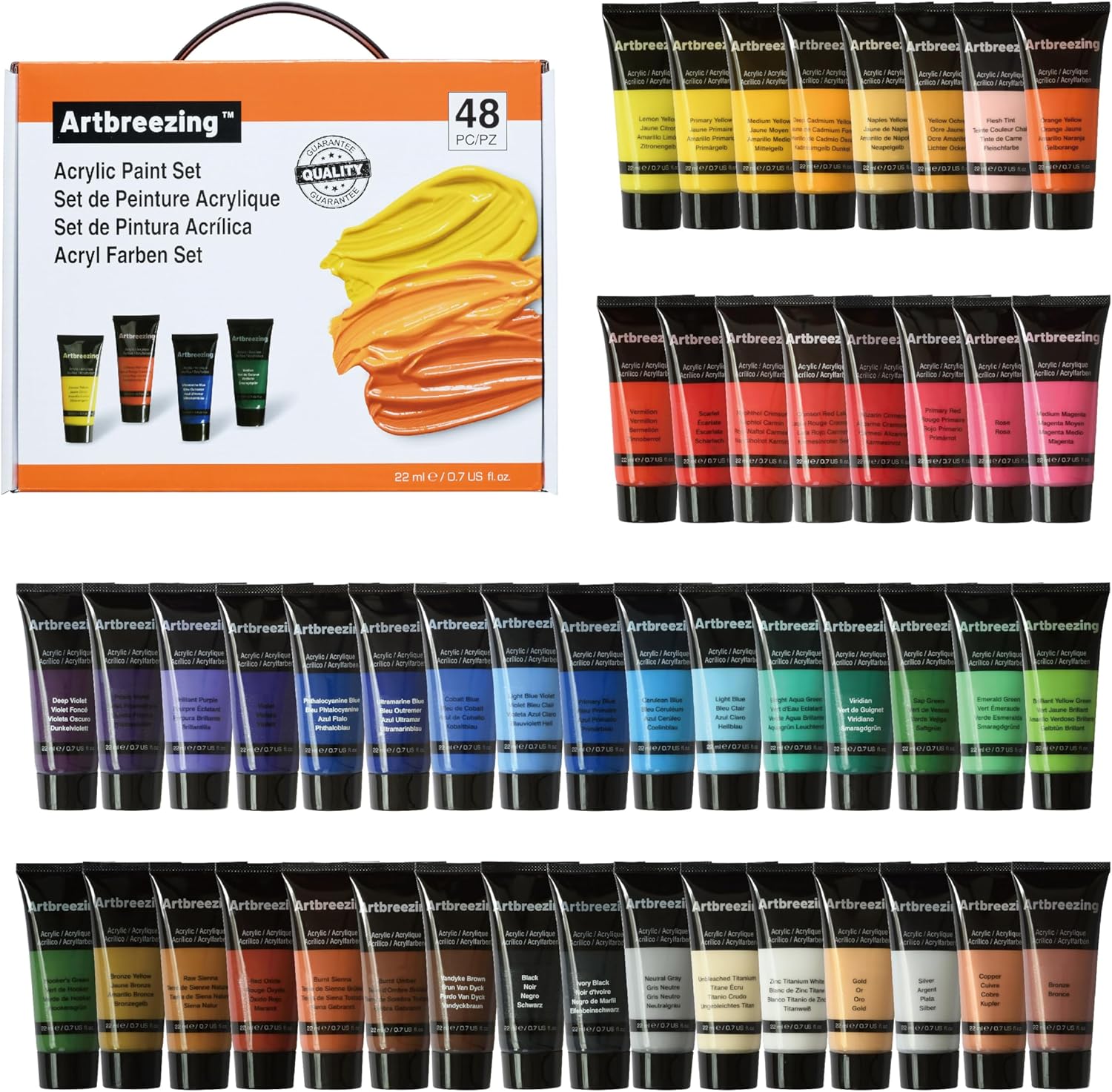
If you are drawn to the 36-color Amsterdam set mainly for variety, the Artbreezing set offers 48 colors in 22 ml tubes at a lower price tier. The listing describes a pigment-rich, smooth, quick-drying formula that is lightfast and water-resistant, for canvas, wood and paper.
What you give up is the established brand and the detail Royal Talens provides about binder and durability. The listing also notes a gloss finish, so it looks different from Amsterdam’s satin.
Best suited for: beginners and hobby painters who want maximum color variety for practice.
Key features:
- 48 colors, 22 ml each
- Lightfast and water-resistant claims
- Gloss finish per listing
- Works on canvas, wood and paper
Pros:
- More colors than the Amsterdam set
- Slightly larger tubes than 20 ml
- Good for experimenting
Cons and limitations:
- Less information on binder and pigments
- Gloss finish may not suit everyone
Buying consideration: A good practice set; move to Amsterdam or similar when you start selling or gifting work.
4. Liquitex BASICS Acrylic Paint, Titanium White, 250 ml — Best Companion White

Every acrylic painter goes through white faster than any other color, and this 250 ml Liquitex BASICS tube is a practical answer. The listing describes a thick, creamy paint with a satin finish and good pigment load that retains peaks and brush strokes.
Its satin finish matches Amsterdam Standard’s, so mixing the two will not create noticeable sheen differences, and its thicker body can add a little structure to Standard’s softer feel.
Best suited for: anyone who owns an Amsterdam set and needs far more white.
Key features:
- 250 ml tube
- Satin finish
- Thick, creamy body that holds peaks
- Conforms to ASTM D4236
Pros:
- Large volume of the most-used color
- Finish matches Amsterdam Standard
- Low price tier for the volume
Cons and limitations:
- Student-grade line
- Single color only
Buying consideration: Buy it alongside the Amsterdam primary set to stretch your mixing paint.
Buying Guide: How to Choose an Acrylic Set Like Amsterdam Standard
Decide on primaries or a full palette
A primary set teaches you color and is cheaper per milliliter. A large set saves time and gives instant variety. Many painters start with variety, realize they use eight or ten colors, and then buy those in large tubes.
Buy tube size for canvas size
For 8×10 studies, 20 ml tubes are fine. For 16×20 and larger, or for murals, 120 ml tubes and big whites prevent running out mid-painting.
Check the finish
Satin, matte and gloss affect how a painting looks under light and how it photographs. Amsterdam Standard is satin. Mixing finishes within one painting can create uneven sheen, which a final varnish can even out.
Think about body
Fluid and medium-body paints blend and cover easily; heavy-body paints hold texture. If you like knife work, budget for a gel medium or consider the heavier Expert line.
Look for binder information
A stated 100% acrylic binder is a good sign of a flexible, durable film. Listings that only say high quality formula tell you very little.
Plan for varnish
Acrylics dry with slightly different sheens by color. A final varnish protects the surface and evens the finish, which is especially helpful with satin paints like Standard.
Projects for Your Amsterdam Paints
Large 120 ml tubes are made for bigger, bolder pieces; our tutorial on how to make DIY wall art with acrylic is a good use of them.
Starting smaller? Try one of our simple acrylic painting ideas for beginners to get used to how Standard blends and dries.
Amsterdam Standard’s adhesion claims also make it worth testing on unusual surfaces; read whether you can use acrylic paint on glass jars before you try.
Common Mistakes to Avoid
- Buying a 36-color set of small tubes for large canvases and running out of white in a day.
- Thinning Standard with lots of plain water for glazes instead of using a medium.
- Expecting satin Standard paint to hold sharp knife ridges without a gel.
- Mixing gloss, satin and matte paints in one piece and skipping varnish.
- Painting murals on unprimed or dusty walls; alkali resistance does not replace prep.
- Leaving tubes uncapped; acrylic skins over quickly in the nozzle.
FAQs
Is Amsterdam Standard student or professional paint?
It sits in between. Royal Talens markets the Standard Series as artist-level acrylics at an accessible price, and the 36-color listing describes a high pigment load. Many professionals use it for underpainting and large work.
What is the difference between Amsterdam Standard and Amsterdam Expert?
Expert is the heavy-body professional line with top lightfastness ratings and many mono-pigment colors, according to its listing. Standard is softer-bodied with a satin finish and comes in larger, more economical tubes.
Can Amsterdam Standard be used for murals?
The primary set listing says it is alkali resistant and suitable for wall paintings. Prepare and prime the wall properly first.
How long does Amsterdam Standard take to dry?
The listing says thin films dry within about half an hour. Thicker layers and humid rooms take longer.
Is Amsterdam Standard matte or glossy?
The primary set listing describes a satin finish. Use a matte or gloss varnish if you want a different final look.
Which Amsterdam Standard set should a beginner buy?
If you want to learn mixing, the five-tube primary set. If you want lots of colors immediately for small works, the 36 x 20 ml set.
Final Recommendation
Amsterdam Standard is a solid, durable acrylic with a 100% acrylic resin binder, a satin finish and a forgiving drying time. The five-tube 120 ml primary set is the best way to buy it for most painters, especially if you work large or want to learn mixing. The 36 x 20 ml set makes sense for small-format painters who value ready-made variety.
If price is the main concern, the Artbreezing 48-color set gives more colors for less, with less detail about what is in the tube. Whichever set you choose, a big tube of Liquitex BASICS Titanium White is an easy way to make it last longer.




One Comment