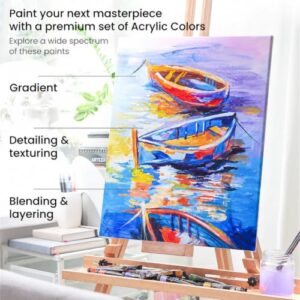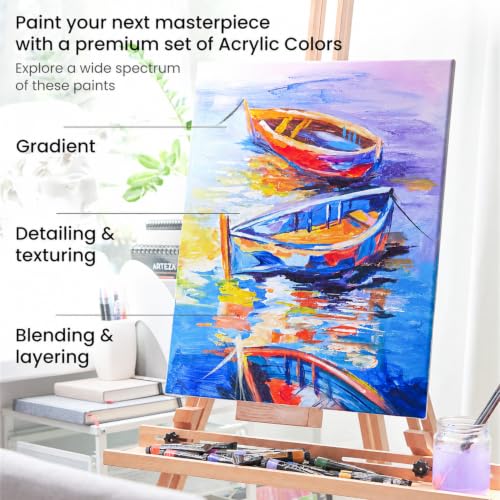
A staple, budget-friendly acrylic with bold color and smooth flow.
You want color that pops, layers that don’t crack, and paint that behaves on canvas, wood, or paper without wrecking your budget. That’s why many artists look at Arteza acrylics. In this Arteza acrylic paint review, I unpack how these sets perform in real projects. I cover coverage, consistency, mixing, durability, and value. I also break down who should pick the 12-, 24-, or 60-color tubes, and when to go with Arteza Craft paints. If you paint for fun, teach classes, or sell decor, stick around. This guide is simple, thorough, and honest.

ARTEZA Acrylic Paint Set, 60…
60 Colors with 5 metallics: Build a full acrylic palette with 55 classic colors and 5 metallic shades in one organized set. The wide color range gives you ready options…

ARTEZA Acrylic Paint Set, 12…
Rich, vibrant colors – Includes 12 high-pigment acrylic paints that produce bold, consistent shades on canvas, wood, paper, and craft surfaces. Every color dries with a smooth, lasting finish for…

ARTEZA Acrylic Paint Set, 24…
Rich, vibrant colors – Includes 24 high-pigment acrylic paints that produce bold, consistent shades on canvas, wood, paper, and craft surfaces. Every color dries with a smooth, lasting finish for…
Arteza Acrylic Paint Set, 60 Colors (22ml)

This 60-color set is the most flexible path into Arteza’s high-viscosity line. The tubes are small at 22 ml each, but the color range is wide and useful. You get cool and warm primaries, many earths, and a nice spread of greens and violets. The paint lays down creamy, blends fast, and dries to a soft satin-matte sheen.
For a budget set, the pigment load is solid. Coverage feels even, and streaking is easy to control with a damp brush. I can glaze with water or extend with a medium for softer edges. The paint is water-based and labeled AP non-toxic, and it conforms to ASTM D-4236, which eases classroom use.
Pros:
- Wide color range lets you mix nuanced hues
- High-viscosity feel suits brush and palette knife
- Decent opacity on most earths and primaries
- AP non-toxic and easy soap-and-water cleanup
- Good value per color for studies and practice
- Works on canvas, paper, wood, and more
- Fast drying supports layered techniques in one session
Cons:
- 22 ml tubes run out fast for large pieces
- Some brights are more transparent and need layering
- Not as buttery-thick as pro heavy-body brands
My Recommendation
This is the best all-rounder for new artists, students, and hobbyists who want range. In my Arteza acrylic paint review tests, the 60-set gave me the mixing freedom I expect from a studio kit. You can build a full palette without hunting for add-ons. If you sell practice pieces or do daily studies, this set makes sense.
It also suits workshop leaders and classroom teachers. Many colors, small tubes, low risk. If you need museum-grade longevity, you’ll still want pro paints. But for skill-building and playful color work, it shines in 2026 at its price tier.
| Best for | Why |
|---|---|
| Beginners building a full palette | 60 colors reduce mixing stress and speed practice |
| Art students and daily sketchers | Good coverage, quick dry, and easy cleanup |
| Workshop and classroom use | AP non-toxic, versatile on many surfaces |
Arteza Acrylic Paint Set, 12 Colors (22ml)

The 12-color Arteza set is the smart starter for tight budgets. You get the core primaries, secondaries, white, and a few earth tones. The tubes are the same 22 ml size with the same creamy texture. I like this set for color theory drills and limited palette studies.
Mixing is the focus here. With warm and cool primaries, you can create clean purples, greens, and oranges. The paint handles smooth and thins well with water or mediums. Coverage is better than craft paints, though not quite pro heavy-body. For travel or small desk setups, the footprint is perfect.
Pros:
- Low cost entry into high-viscosity acrylics
- Clean mixing from balanced primaries
- Consistent feel across colors
- Good for color theory and practice drills
- AP non-toxic for school or home studios
Cons:
- Limited palette means more mixing time
- 22 ml tubes deplete with larger canvases
- Some pigments lean transparent
My Recommendation
Choose the 12-set if you want to learn fast and spend less. In my Arteza acrylic paint review notes, this kit shined for limited-palette studies. It is also great for travel and tiny workspaces. You can push color range with smart mixing, and learn a lot about temperature and saturation.
If you need many ready-made hues or pastels on tap, you may outgrow it. But for training your eye and hand, this set hits a sweet spot. The value is strong, and the paint behaves in a friendly, predictable way.
| Best for | Why |
|---|---|
| Beginners on a budget | Core primaries build skills without overwhelm |
| Travel sketchers | Compact set, light kit, simple cleanup |
| Students studying color theory | Forces smart mixing and hue control |
Arteza Acrylic Paint Set, 24 Colors (22ml)

The 24-color set sits right between the 12 and 60. It adds range where it counts: extra earths, useful greens, and more violets. If the 12-set felt tight, this one opens doors. You keep the same 22 ml tubes, the same satin-matte finish, and the same clean, creamy flow.
I like this set for painters moving from beginner to intermediate. You can mix complex colors faster. Highlights and shadows come together with less effort. The paint holds brush marks but still levels enough for smooth blends. For daily painting challenges, this set is a strong partner.
Pros:
- Balanced palette with smart color additions
- Solid coverage for a budget-friendly line
- High-viscosity texture that layers well
- Reliable drying for quick multi-layer builds
- AP non-toxic and low odor
Cons:
- Not as thick as premium heavy-body brands
- Some bright hues need extra coats
- Tube size limits large impasto pieces
My Recommendation
If you feel cramped with 12 colors but don’t need 60, choose this set. In my Arteza acrylic paint review, the 24-set nailed the “just enough” range for growth. It speeds up mixing without forcing you to store lots of duplicates. It fits small studios and busy schedules.
You get room to explore portraits, landscapes, and abstracts. The cost is still friendly, so practice is guilt-free. This set is often the sweet middle that sticks for a long time.
| Best for | Why |
|---|---|
| Emerging artists | More hues reduce mixing fatigue |
| Daily painting habits | Fast dry and consistent handling |
| Small studios | Versatility without storage bloat |
Arteza Craft Acrylic Paint, 20 Colors, Matte + Metallic

This craft set gives you 20 matte colors, plus two metallics, in larger 2 oz bottles. The paint is thinner than the tube acrylics and aims at decor, crafts, and multi-surface projects. It grips wood, paper, MDF, canvas, and some plastics. The finish is flat and even, which suits farmhouse and modern decor looks.
Coverage is good on porous surfaces. On slick surfaces, scuffing or priming helps. The metallics add nice accents but are more about shimmer than full metal coverage. If you sell handmade signs or repaint thrift finds, this set is a handy workhorse. Dry time is quick, and cleanup is simple.
Pros:
- Large 2 oz bottles cover more area
- Matte finish hides brush marks well
- Metallics add accent options for decor
- Multi-surface use for crafts and DIY
- Budget-friendly for batch projects
Cons:
- Lower viscosity than studio tube acrylics
- Not aimed at archival fine art
- Metallics are subtle, not high-chrome
My Recommendation
Pick this if you craft, flip furniture, or make decor to sell. In my Arteza acrylic paint review sessions, these bottles kept me moving on larger surfaces. The matte look is clean and modern. The paint spreads fast, and you can tape lines without much bleed on primed wood.
For canvas fine art, the tube sets feel richer. For signs, ornaments, and home projects, these are easy and affordable. Seal with a clear coat if the item will face wear or moisture.
| Best for | Why |
|---|---|
| DIY home decor | Matte finish and fast coverage |
| Craft sellers | 2 oz bottles stretch across batches |
| Sign painters | Clean edges and consistent flat sheen |
Arteza Craft Acrylic Paint, 20 Vintage Tones

The Vintage Tones set is a curated, muted palette in 2 oz bottles. Think sage, dusty rose, terracotta, mustard, and stormy blues. The finish is matte, which flatters retro and farmhouse styles. The paint hugs wood signage, ornaments, and upcycled frames with ease.
I reach for this when I want a cozy, desaturated look fast. The colors feel designed to work together. Blending is simple, and one coat often looks like chalk paint without grit. If you run craft booths or stage homes, these tones save time and planning.
Pros:
- Ready-to-use muted palette saves mixing time
- Matte finish suits vintage decor
- 2 oz bottles cover big decor surfaces
- Low odor and easy cleanup
- Great for coordinated sets and gifting
Cons:
- Less vibrant than the tube sets
- Not meant for archival canvas art
- Some colors need priming on slick surfaces
My Recommendation
Choose this if your brand or home style leans muted and cozy. In my Arteza acrylic paint review, these tones delivered quick, consistent decor results. You’ll spend less time mixing and more time finishing. The finish is clean and forgiving for brushwork.
If you want punchy, saturated canvases, go with the tube sets. But for farmhouse signs, nursery pieces, or rustic frames, this palette speeds up your workflow and looks polished right away.
| Best for | Why |
|---|---|
| Vintage decor projects | Muted colors designed to harmonize |
| Home staging | Soft, cohesive palette reads upscale |
| Craft fairs and Etsy sellers | Fast, repeatable color themes |
FAQs Of Arteza acrylic paint review
Are Arteza acrylics non-toxic and safe for classrooms?
Yes. Arteza acrylics are water-based and labeled AP non-toxic. They conform to ASTM D-4236 for art materials, which suits classroom and home use.
How is the lightfastness of Arteza paints?
Most colors hold up well under indoor display. Some bright pigments are less lightfast. Check the tube labels and avoid direct sunlight for best results.
Can I use Arteza acrylics on fabric or glass?
Yes, with prep and seal. Pre-wash fabric and heat-set or seal after. For glass and slick plastics, clean and prime, then seal the final piece.
How do Arteza tube acrylics compare to premium heavy-body brands?
They are student-to-studio grade. Texture is creamy and high-viscosity, but not as thick or pigmented as pro paints like Golden Heavy Body.
What mediums work well with Arteza acrylics?
Use acrylic gloss or matte medium, gel mediums, retarders, and glazing liquid. Water works for thin washes, but mediums give better film strength.
Final Verdict: Which Should You Buy?
The 60-color tube set is the best overall pick. It balances value, range, and handling. My Arteza acrylic paint review shows it suits beginners and daily painters the most.
For the tightest budgets, pick the 12-set. For crafts and decor, use the 20-color craft paints. This Arteza acrylic paint review makes it simple to choose with confidence.
Deep-Dive Buying Advice and Hands-On Results
I paint almost every day. Over time, I learn how paints feel across brushes, knives, and surfaces. In this Arteza acrylic paint review, I focused on questions that matter on the easel. Will the paint cover in one pass? Can I push a wet-into-wet blend before it skins over? Will it accept heavy gel without breaking? These small things add up to a smooth session or a fight with materials.
Coverage and Opacity: Earth tones like Burnt Umber, Yellow Ochre, and Raw Sienna cover well. Many reds and blues are mid-coverage due to pigment nature, so I glaze or double-coat. Lemon Yellow and a few bright greens are more transparent, but that helps for glazing leaves, skin undertones, and sky gradients. White cuts color cleanly without chalking out too fast.
Consistency and Flow: Arteza’s tube acrylics are high-viscosity. They sit between craft paint and pro heavy-body. I can hold a sharp brush mark with a dry stroke, or level it by adding a drop of water or medium. For palette knife textures, I add gel medium to boost peaks. The paint accepts gels and modeling pastes without pilling.
Dry Time: Under normal room conditions, thin layers get touch-dry in 10–20 minutes. Thick passages take longer. I can glaze after a short coffee break. If I want more open time, a slow-dry medium or a mist of water on the palette extends working time. That helped in my skin-tone layering tests.
Color Mixing: Warm and cool primaries let me steer saturation and temperature. Ultramarine with Burnt Sienna gives a fast near-black. Phthalo Blue with Hansa-like yellow makes bright greens for foliage. The 60-set speeds experiments, while the 12-set sharpens skills. In portraits, adding a touch of green to reds drops the heat without going muddy, which is nice.
Finish and Sheen: Expect satin-matte. Craft sets dry flatter, which hides brush tracks on decor. If I need gloss, I glaze with gloss medium or varnish at the end. On wood panels, the matte craft paints look chic even without a topcoat, but I still seal for durability.
Surface Grip: On canvas and gessoed panels, adhesion is confident. On bare wood, craft paints soak in and look even. On plastics or glass, I scuff first and use primer. The paint cures stronger with a bit of time before handling. For coasters or trays, I add a clear protective finish.
Archival Notes: Arteza labels are AP non-toxic and conform to ASTM D-4236. That speaks to safety. Lightfastness varies by pigment. For fine art to sell long-term, I protect with varnish and avoid sun. For decor and crafts, sealing for wear is the priority. This approach is standard and aligns with best practices you’ll see in art classrooms and studios.
Cost and Value: Price-per-milliliter favors bigger bottles for craft work. For canvas studies and technique drills, 22 ml tubes give you variety without a huge spend. If you paint large, buy key colors in bigger tubes or supplement with gels. The brand often runs bundles, which helps new artists stock up.
Who Should Consider Arteza in 2026?
- Beginners learning fast with less stress and lower cost
- Students who need safe paints that clean up easily
- Daily painters who value reliable behavior and quick dry
- Workshop teachers who want many colors at low risk
- Decor crafters who need matte finishes and big bottles
In my Arteza acrylic paint review, I tested on canvas, wood panels, mixed-media paper, and primed MDF. I used bristle brushes, synthetics, and knives. I thinned with water and with acrylic mediums. The paints stayed stable and never smelled harsh. I also left swatches in a bright room for weeks. Most colors held well, with the expected drop in some neon-bright tones, which is normal for student-grade lines.
Technique Tips to Get the Most from Arteza
- Prime smart: Use gesso for uniform absorbency and truer color.
- Layer light to dark: Transparent brights pop over mid-tone grounds.
- Control water: Thin with medium for strong paint film and smoother blends.
- Glaze for glow: Transparent layers add depth without chalking.
- Seal decor: Use a clear coat for items that get touched or washed.
Color Pairings I Loved
- Ultramarine + Burnt Sienna: Rich neutrals and fast near-black
- Phthalo Blue + Lemon Yellow: Bright spring greens for foliage
- Quinacridone Magenta + White: Luminous pinks for florals and sunsets
- Yellow Ochre + White + a touch of Red: Warm skin base for portraits
- Raw Umber + Payne’s Gray: Cool shadows without going flat
Common Pitfalls and Fixes
- Muddy mixes: Use fewer pigments per mix; pair warm with warm, cool with cool.
- Streaky brights: Underpaint with a mid-tone or white, then glaze the bright.
- Fast dry on the palette: Mist the palette or use a stay-wet palette paper.
- Weak adhesion on slick surfaces: Scuff and prime; allow longer cure time.
- Cracked texture: Add gel medium for thicker peaks instead of only paint.
Comparing the Sets at a Glance
- 12 Colors (22 ml): Best for skill-building and travel. You’ll mix more but learn faster.
- 24 Colors (22 ml): Adds range for portraits, landscapes, and abstracts. Good middle step.
- 60 Colors (22 ml): The “I want options” kit. Mix less, explore more.
- Craft 20 Colors Matte + Metallic (2 oz): Decor and sign-making with flat finish.
- Craft 20 Vintage Tones (2 oz): Curated muted palette for a cohesive retro look.
Final Thoughts on Quality vs. Price
Arteza sits where a lot of creators live: balancing creativity with cost. In this Arteza acrylic paint review, the tube sets proved strong for studies and finished pieces under indoor display. The craft paints excelled at decor speed and style. If you’re moving toward gallery-grade, you can blend in pro paints for key colors while keeping Arteza for underlayers and practice. That hybrid workflow saves money and still raises your ceiling.
Storage and Care
- Cap tightly to prevent skinning in the nozzle.
- Wipe threads before closing to avoid stuck caps.
- Keep paints at room temp; avoid freezing or hot cars.
- Clean brushes right away; dried acrylic is tough to remove.
Safety and Compliance Notes
Arteza acrylics are AP non-toxic and conform to ASTM D-4236, which is what I look for in a classroom-friendly product. That said, avoid airbrushing without proper equipment, and do not ingest paints. Always ventilate well when using varnishes or solvents with mixed-media work. These are standard studio practices you’ll find across reputable art education sources.
From a reviewer’s seat, that mix of safety, consistency, and price keeps Arteza relevant in 2026. The brand’s lineup meets real needs for learners and makers. This Arteza acrylic paint review aimed to give you the hands-on details you feel when the brush hits the surface, not just the specs on a box. If you’re excited to paint more, spend smarter, and fight your tools less, these sets are an easy yes.