
PaintingProGuide is reader-supported. When you buy through links on this page we may earn an affiliate commission at no extra cost to you.
Quick answer: For a first art kit, pair chunky crayons with a contained paint activity. The Honeysticks beeswax crayons are shaped for a palm grip and hard to snap, and the Crayola Mess Free Finger Painting Station lets a one-year-old squish paint under a locked flexible cover. If you want ideas more than supplies, The Ultimate 1 Year Old Activity Book gives you 100 developmental and sensory activities to rotate through.
Arts and crafts for one year olds look nothing like crafts for older kids. At twelve to twenty-four months, a child is not making a picture; they are discovering that a hand movement leaves a mark, that paint feels cold and slippery, and that paper tears with a satisfying sound. The best activities are short, sensory and built around supplies that are safe to end up in a mouth now and then.
This guide covers seven products that suit that stage: two first-art supplies, a parent activity book and four simple scribble and coloring books. Below the reviews you will find a practical setup guide, activity ideas you can run with household items and the mistakes that turn a fun ten minutes into a meltdown.
Our Top Picks at a Glance
- Honeysticks 100% Pure Beeswax Crayons (12 Pack) — Best first crayons for a palm grip
- Crayola Mess Free Finger Painting Station — Best contained painting activity
- The Ultimate 1 Year Old Activity Book (Autumn McKay) — Best idea book for parents
- Baby’s First Coloring Book: Bold and Simple Designs — Best bold, simple pages
- I Am One: My First Scribble and Activity Book — Best mix of blank doodle and activity pages
- The Creative Toddler’s First Coloring Book Ages 1-3 — Best for naming everyday objects while coloring
- I’m One Watch Me Color — Best first-birthday gift book
| Product | Best For | Key Spec | Key Strength | Price Tier |
|---|---|---|---|---|
| Honeysticks Beeswax Crayons | First mark-making | 12 chunky beeswax crayons | Easy to hold, hard to break | $$ |
| Crayola Mess Free Finger Painting Station | Sensory painting | 3 washable paints, 10 coated sheets, locking case | Paint stays under the cover | $$ |
| The Ultimate 1 Year Old Activity Book | Activity ideas | 100 developmental and sensory ideas | Plans the week for you | $$ |
| Baby’s First Coloring Book | Bold outlines | 40 pages of simple designs | Large, uncluttered shapes | $ |
| I Am One Scribble Book | Free scribbling | Drawing, coloring and blank doodle pages | Blank pages suit pure scribble | $ |
| Creative Toddler’s First Coloring Book | Vocabulary building | 100 everyday things and animals | Grows with the child to age 3 | $ |
| I’m One Watch Me Color | First birthday gift | Big and easy pages | Made as a 1st birthday present | $ |
How We Chose
The picks are based on the Amazon listing details and specifications checked in October 2026, how well each product’s format fits the abilities of a child between one and two years old, and how widely each item is reviewed by Amazon buyers. We did not put these products in front of our own children; everything stated about each item comes from its listing or from well-established facts about toddler development and art materials.
- Grip: one-year-olds hold tools in a fist, so thick, short and sturdy beats slim and long.
- Containment: washable, low-mess or fully enclosed formats get used more often because cleanup is easy.
- Simplicity: books with big, bold outlines or blank space work better than detailed pictures.
- Material safety: products labeled for ages 1+ and marketed as non-toxic or washable.
- Parent value: at least one pick should help adults plan activities, not just supply them.
Best Arts and Crafts for One Year Olds Reviewed
1. Honeysticks 100% Pure Beeswax Crayons (12 Pack) — Best for First Mark-Making

Most first crayon failures come down to shape. Standard crayons are slim and snap the first time a toddler presses down, which ends the activity and creates a piece small enough to mouth. Honeysticks Originals are chunky and, according to the maker, made to be easy for small hands to hold but hard for them to break.
The listing says the crayons are handmade in New Zealand from natural beeswax and food-grade colors, without the paraffin wax used in many conventional crayons. Beeswax also has a mild natural scent, which some parents like and others do not notice. The twelve-color pack is plenty for this age, when a child usually grabs one color and uses it until something more interesting appears.
Best suited for: parents who want a durable first crayon that a fist grip can control, and anyone who prefers natural wax over paraffin.
Key features:
- 12 chunky crayons sized for babies 1+ and toddlers 1 to 3
- Made from beeswax with food-grade colors, per the listing
- Plastic-free, low-impact packaging
- Shape designed to resist breaking
Pros:
- Thick shape suits a palm grip
- Fewer broken pieces than slim crayons
- Natural wax formula
- Useful well past the first birthday
Cons and limitations:
- Costs more than a standard crayon box
- Beeswax marks are softer and less bold on some papers
- Still requires supervision: no crayon is designed to be eaten
Buying consideration: Tape a large sheet of paper to the high chair tray or table so it cannot slide. A moving page frustrates one-year-olds more than anything else.
2. Crayola Mess Free Finger Painting Station — Best for Contained Sensory Painting

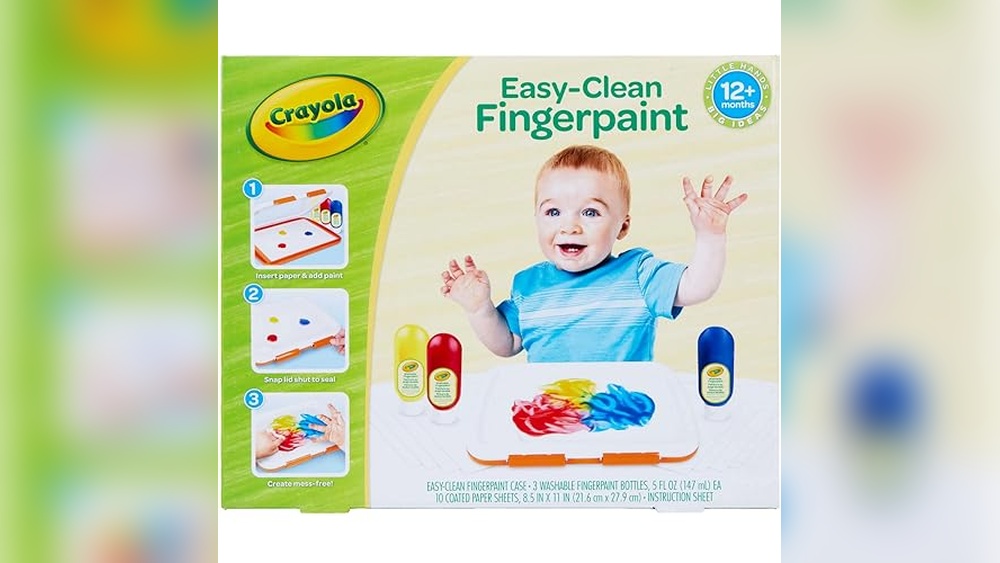
Finger painting is the classic first art activity, and it is also the one parents dread. This Crayola station solves the mess problem by keeping the paint and paper under a locked lid with a flexible cover. The child presses and swirls on the cover, and the paint moves underneath.
The kit includes the finger paint case, three 5 oz squeeze bottles of washable finger paint in red, blue and yellow, and 10 coated sheets of finger painting paper. The unit can go under the faucet or in the dishwasher, per the listing, and refills of the paint and a giant paper pad are sold separately. Three primary colors also make a nice first lesson: blue and yellow pushed together under the cover turn green.
Best suited for: parents who want painting without the bath afterward, travel, restaurants and grandparents’ houses.
Key features:
- Locking case with flexible finger-paint cover
- Three 5 oz bottles of washable paint: red, blue, yellow
- 10 coated finger painting sheets
- Dishwasher or faucet cleanup, per the listing
- Labeled for ages 1+
Pros:
- Paint stays enclosed during play
- Primary colors show color mixing
- Portable for travel
- Reusable with refills
Cons and limitations:
- Less direct texture than real hands-in paint
- Ten sheets go quickly; refills are extra
- Larger and pricier than a simple paint set
Buying consideration: Use it as the everyday option and save true hands-in finger painting for bath time, when cleanup is already built in.
3. The Ultimate 1 Year Old Activity Book (Autumn McKay) — Best for Planning Activities

Supplies are only half the equation. Most parents run out of ideas long before they run out of crayons, and this paperback is built for exactly that problem. Its title promises 100 fun developmental and sensory ideas for toddlers, part of the publisher’s Early Learning series.
An activity book like this works best as a menu. Flip through on Sunday, pick three ideas that use things you already own, and set them out during the week. Because the activities are not limited to art, it also helps you balance messy crafts with quieter sensory play on days when you do not want paint anywhere.
Best suited for: parents and caregivers who want a structured list of ideas rather than another box of supplies.
Key features:
- 100 developmental and sensory activity ideas
- Written for one-year-olds
- Paperback format
- Part of an Early Learning series
Pros:
- Saves planning time
- Covers more than art alone
- Ideas often use household items
- Useful for daycare and home
Cons and limitations:
- It is a book for adults, not a toy for the child
- Some activities will need supplies you do not have
- Pricier than the coloring books
Buying consideration: Pair it with one of the supply picks so you can start on the first idea the day it arrives.
4. Baby’s First Coloring Book: Bold and Simple Designs — Best for Bold, Simple Pages
A one-year-old cannot color inside lines and should not be asked to. What a simple coloring book offers is a large, clear shape that gives the scribble a target and gives you something to name out loud: ball, star, duck. This 40-page paperback is titled for bold and simple designs for 1-year-olds and doubles as a keepsake scribble book.
Keepsake is the important word. Dating a few pages as you go turns the book into a record of how marks change from random dots to deliberate circular strokes over the second year.
Best suited for: a first coloring book, keeping early scribbles together, and naming simple shapes.
Key features:
- 40 pages
- Bold and simple designs
- Marketed as a keepsake drawing and scribble book
- Paperback
Pros:
- Big shapes suit early scribbles
- Doubles as a keepsake
- Inexpensive
Cons and limitations:
- Listing gives little detail on paper weight
- Paperback pages can tear
- Titled toward girls, though designs suit any child
Buying consideration: Use crayons rather than markers, which can bleed through thin paperback pages.
5. I Am One: My First Scribble and Activity Book — Best for Free Scribbling

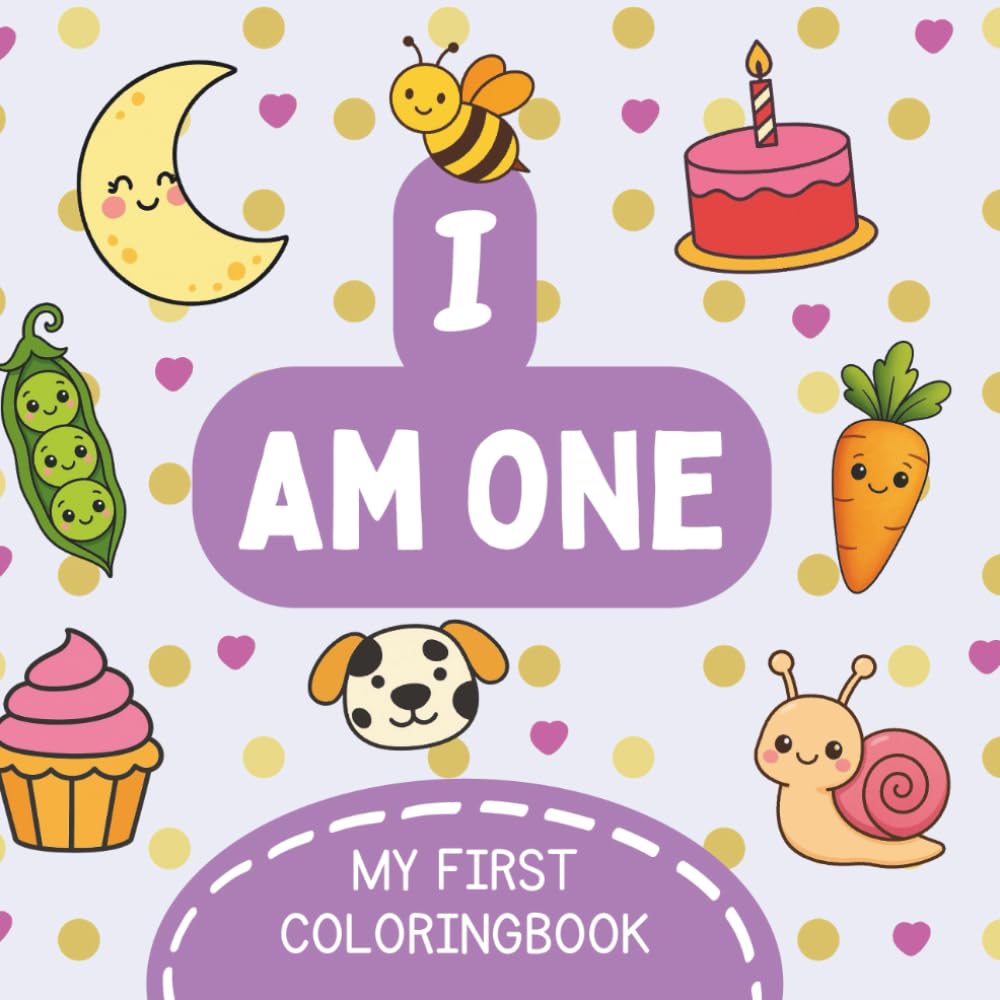
Blank paper is underrated at this age. Scribbling with no picture at all is how a child practices the arm movements that later become circles and lines, and this book mixes drawing, activity and coloring pages with blank doodle pages.
That mix makes it a good second book. When a child has lost interest in coloring a picture, the blank pages let them simply make marks, and you can start drawing a dot for them to cover or a big circle for them to fill.
Best suited for: children who love to scribble and parents who want a little variety from page to page.
Key features:
- Drawing, activity and coloring pages
- Blank doodle pages
- Marketed as a gift for 1-year-olds
- Paperback
Pros:
- Blank pages suit pure scribbling
- Variety keeps the book interesting
- Affordable gift
Cons and limitations:
- Activity pages may be advanced for a young one-year-old
- Paper quality not detailed in the listing
Buying consideration: Introduce it closer to 18 months, when a child starts making more intentional marks.
6. The Creative Toddler’s First Coloring Book Ages 1-3 — Best for Vocabulary While Coloring

This book is built around 100 everyday things and animals to color and learn, which makes it as much a word book as an art book. Each picture is a conversation prompt: point at the cat, say the word, then hand over the crayon.
Because it is labeled for ages 1 to 3, it is a book that grows with the child. A one-year-old will scribble over the page; a two-and-a-half-year-old may start to choose colors on purpose, and a three-year-old will tell you what the dog is doing.
Best suited for: parents who want coloring time to double as early vocabulary practice.
Key features:
- 100 everyday objects and animals
- Labeled for ages 1, 2 and 3
- US edition
- Paperback
Pros:
- Long useful life across three years
- Familiar subjects support naming
- Low cost per page
Cons and limitations:
- Pictures may be more detailed than a young one-year-old needs
- Single-sided printing not confirmed in the listing
Buying consideration: Keep this one on the shelf after the bold first book has been scribbled through.
7. I’m One Watch Me Color: My First Coloring Book — Best for First Birthday Gifts

Shopping for a first birthday is tricky when the guest of honor is more interested in the wrapping paper. This paperback is positioned exactly for that moment: a big and easy first coloring book sold as a 1st birthday or holiday present.
As a gift, it works best tucked in with crayons, so the child can use it straight away. On its own it is a simple coloring book with large, easy pictures, which is exactly what a one-year-old needs.
Best suited for: gift-givers who want an inexpensive, age-specific present.
Key features:
- Big and easy designs
- Marketed for 1-year-olds
- Gift positioning for birthdays and holidays
- Paperback
Pros:
- Age-specific title makes a fun gift
- Simple pages
- Low price
Cons and limitations:
- Listing gives few details on page count or paper
- Similar to the other first coloring books
Buying consideration: Bundle it with a pack of chunky crayons so the gift is ready to use.
Buying Guide: How to Choose Arts and Crafts for One Year Olds
Match the activity to the stage, not the label
A twelve-month-old and a twenty-month-old are very different artists. Early in the year, the activity is about sensation: touching paint, squeezing dough, banging a crayon on paper. Later in the second year, children start making repeated marks on purpose, scribbling back and forth and eventually attempting circular strokes. Buy sensory supplies first and add coloring books as intentional marks appear.
Chunky beats slim
One-year-olds use a palmar grasp, wrapping the whole fist around a tool. Thin crayons and pencils roll away, snap, and are hard to control. Look for chunky, short, egg-shaped or block-shaped crayons and large-handled brushes or sponges. A crayon that survives being pressed hard keeps the activity going.
Washable and non-toxic are minimums
Expect at least some art supplies to reach a mouth. Choose products labeled washable and marketed as non-toxic for ages 1 and up, and look for the AP seal on art materials where it applies. Even with safe labels, small pieces, caps and broken bits are choking hazards, so supervision is part of the setup, not an optional extra.
Plan for containment
The mess question decides how often you will actually do art. Enclosed options such as mess-free finger painting, paint in a sealed zip bag taped to a window, or crayons on paper taped to a high chair tray are easy to say yes to on a weekday. Save open paint for the bath or the backyard.
Paper size and anchoring
Big paper is better than small paper. A toddler’s arm movements are wide, and a small page means half the scribble lands on the table. Tape paper down at the corners, or use a large roll of craft paper on the floor. Coloring books are fine, but expect pages to tear.
Keep sessions short
Five to ten minutes is a successful art session at this age. Buy supplies you can set up in under a minute, because a long setup for a short session is the fastest way to stop doing art altogether.
Easy Craft Ideas for One-Year-Olds
You do not need a kit for most first crafts. These ideas use common household items and pair well with the products above.
- Paint in a bag: squeeze a few blobs of washable paint into a zip-top freezer bag, seal and tape the edges, then tape it to a table or window for squishing.
- Sticky wall collage: tape contact paper sticky-side out to a wall and offer large pieces of tissue paper, fabric scraps or paper shapes to press on.
- Crayon tray drawing: tape paper to the high chair tray and offer one chunky crayon at a time.
- Bath time finger paint: use washable finger paint on the tub wall and rinse it off at the end.
- Tearing basket: a basket of old magazines and tissue paper for supervised tearing, which builds hand strength.
- Handprint keepsake: one quick washable-paint handprint on card stock, dated, for the memory box.
More Ideas from Our Guides
If you care for a group of toddlers, our guide to easy daycare crafts for 1-year-olds covers activities that scale to a whole room. And when your scribbler is older, the ideas in painting ideas for 10-year-olds show where all this early mark-making leads.
Common Mistakes to Avoid
- Expecting a finished picture. The process is the point. Praise the effort and the colors, not the result.
- Offering too many choices. One or two crayons at a time keeps the focus on marking rather than dumping the box.
- Using small or detachable pieces. Pom-poms, googly eyes, beads and caps belong to older kids’ crafts.
- Skipping the smock. Even washable paint is easier to remove from an old T-shirt than from a favorite outfit.
- Letting paper slide. Taping it down prevents frustration and keeps marks on the page.
- Doing art when the child is tired or hungry. Pick a time after a nap and a snack.
FAQs
What arts and crafts can a one year old do?
Simple sensory activities: scribbling with chunky crayons, finger painting with washable paint, squishing paint in a sealed bag, pressing paper onto sticky contact paper and supervised paper tearing. The goal is exploring materials, not making a picture.
Can a 1 year old use crayons?
Yes, with supervision. Chunky crayons shaped for a fist grip, such as beeswax block or stick crayons labeled for ages 1+, are easier to control and harder to break than standard slim crayons.
Is finger paint safe for one year olds?
Choose washable finger paint labeled for ages 1 and up and marketed as non-toxic. Supervise closely, because toddlers will taste things, and wash hands afterward. Mess-free stations keep the paint under a cover for extra peace of mind.
How long should art time last for a 1 year old?
Five to ten minutes is typical. Stop when interest fades rather than pushing for a finished piece, and try again another day.
Are coloring books good for one year olds?
Simple ones are. Books with large bold shapes or blank doodle pages give scribbles a target and give you something to name together. Do not expect coloring within lines until much later.
What is a good art gift for a first birthday?
A set of chunky crayons with a simple first coloring book, or a mess-free finger painting kit. Both are age-appropriate and easy for parents to set up.
Final Recommendation
If you buy one art supply for a one-year-old, make it the Honeysticks beeswax crayons, because a durable, fist-friendly crayon is the tool children use most. Add the Crayola Mess Free Finger Painting Station if you want painting on ordinary weekdays without a full cleanup. Parents who need ideas more than materials should start with The Ultimate 1 Year Old Activity Book. For the paper side, Baby’s First Coloring Book and the I Am One scribble book suit the first months of mark-making, the Creative Toddler book carries on to age three, and I’m One Watch Me Color is the easy birthday gift.





One Comment