

PaintingProGuide is reader-supported. When you buy through links on this page we may earn an affiliate commission at no extra cost to you.
Acrylic paint and epoxy resin are an odd couple. Acrylic is water-based; resin cures by a chemical reaction that water interferes with. Yet acrylic paint for resin is one of the most common searches in the hobby, because it works well enough in small doses, it is cheap, and most people already own some. The trick is knowing when to use a few drops of acrylic to tint a pour, when to paint on top of cured resin instead, and when a purpose-made resin pigment is the smarter buy.
Below are six acrylic paint sets whose listings explicitly cover resin, plastic or multi-surface use, plus one dedicated resin pigment paste for comparison. Each one is matched to a job: tinting epoxy, painting cured resin pieces, backing geode and coaster projects, or adding fine detail to resin jewelry.
Quick answer: For tinting epoxy with acrylic, the Shuttle Art 30-Tube Acrylic Set is the most practical: 12 ml tubes give you dozens of colors in tiny amounts, which is exactly how acrylic should be added to resin. For painting on cured resin and for large coaster or tray projects, the Caliart 24-Color Set and the HissiCo 36-Color Set offer 2 oz bottles with wide surface coverage listed. If you pour resin regularly and want opaque, predictable color without any cure risk, skip acrylic and use the LET’S RESIN 8-Color Pigment Paste.
Our Top Picks at a Glance
- Shuttle Art Acrylic Paint Set, 30 x 12 ml Tubes — Best for tinting epoxy resin a few drops at a time
- Caliart Acrylic Paint Set of 24 Colors with 12 Brushes — Best for painting over cured resin pieces
- HissiCo 36-Color Acrylic Paint Set, 2 oz Bottles — Best color range for resin art backgrounds
- TMOL Acrylic Paint Set, 24 Colors, 2 oz — Best budget 2 oz set for coasters and trays
- Nicpro 14-Color Bulk Acrylic Set, 16.9 oz — Best for large resin-coated art and bulk projects
- KOLOR KINGDOM 24-Color Acrylic Set, 12 ml — Best cheap starter for resin jewelry detail
- LET’S RESIN 8-Color Resin Pigment Paste — Best purpose-made alternative to acrylic for coloring resin
| Product | Best For | Key Spec | Key Strength | Price Tier |
|---|---|---|---|---|
| Shuttle Art 30 Tubes | Tinting epoxy | 30 x 12 ml tubes; thick pigment | Small tubes suit drop-by-drop tinting | $ |
| Caliart 24 Colors | Painting cured resin | 24 x 2 oz; plastic and glass listed | Listing names plastic, glass, metal | $$ |
| HissiCo 36 Colors | Resin art backgrounds | 36 x 2 oz; flip-top bottles | Widest palette here | $$ |
| TMOL 24 Colors | Coasters, trays | 24 x 2 oz; 12 brushes | Low tier for 2 oz bottles | $$ |
| Nicpro 14 Bulk Colors | Large resin-coated pieces | 14 x 16.9 oz (500 ml) | Bulk volume, plastic and glass listed | $$ |
| KOLOR KINGDOM 24 Colors | Resin jewelry detail | 24 x 12 ml; 3 brushes | Cheapest way to get 24 colors | $ |
| LET’S RESIN Pigment Paste | Coloring resin directly | 8 colors; 2-5% dosing | No cure interference; opaque or translucent | $$ |
How We Chose
These picks are based on the Amazon listing details and specifications checked in October 2026, how well each set’s format fits the way acrylic is actually used with resin, and how widely each product is reviewed by Amazon buyers. We have not poured resin with these paints. Product facts come from the listings; the guidance on mixing ratios and cure behavior comes from well-established practice in epoxy resin crafting.
What we weighed:
- Container size — small tubes are better for tinting resin; 2 oz and larger bottles are better for painting cured pieces.
- Pigment load — listings that describe thick, highly pigmented paint tint resin with fewer drops, which keeps water content low.
- Surface list — whether the manufacturer names plastic, glass or resin as a compatible surface.
- Safety labeling — ASTM D-4236 or EN71 conformance.
- Color count versus waste — resin tinting uses tiny amounts, so a 36-color set of 2 oz bottles may outlast the hobby.
- Whether a non-acrylic option is simply better — hence the pigment paste at the end.
Best Acrylic Paint for Resin Reviewed
1. Shuttle Art Acrylic Paint Set, 30 x 12 ml Tubes — Best for tinting epoxy resin a few drops at a time

When you color epoxy with acrylic, you want the smallest possible amount of paint delivering the most color. Shuttle Art’s 12 ml tubes are made for exactly that. The listing describes a thick, rich pigment developed for coverage rather than a watery craft paint, and names clay, rocks, canvas and plastic among the surfaces.
Thirty colors in tubes also means you can tint thirty different pours without opening a 2 oz bottle you will never finish. The set is listed as ASTM D-4236 conforming, waterproof and fade-proof once dry, and comes with three bonus brushes.
Best suited for: Resin crafters who want a wide palette for tinting small pours, jewelry molds and keychains, without buying large bottles.
Key features:
- 30 assorted colors in 12 ml (0.4 oz) tubes
- Thick, high-pigment formula described for coverage
- Surfaces listed include canvas, ceramic, wood, fabric, clay, plastic
- Conforms to ASTM D-4236; non-toxic
- 3 brushes included
Pros:
- Tube format controls how much paint enters the resin
- High pigment means fewer drops per batch
- Low price tier for 30 colors
- Metallic-free palette keeps mixing predictable
Cons and limitations:
- 12 ml tubes run out quickly if you also paint on canvas
- Tubes can split if squeezed hard
- Not a substitute for pigment paste in large, deep pours
Buying consideration: Keep acrylic to roughly 5 to 10 percent of your mixed resin volume at most, and less for deep casts. Beyond that, water in the paint can leave the cure soft or cloudy.
2. Caliart Acrylic Paint Set of 24 Colors with 12 Brushes — Best for painting over cured resin pieces

Caliart’s set earns its place because the listing explicitly names plastic, glass, metal, ceramic and clay as recommended surfaces, which is the closest any general acrylic gets to saying “cured resin”. Once epoxy has fully cured it behaves like hard plastic, and a paint that grips plastic will grip resin after a light scuff.
The 24 colors are a proper artist palette: Lemon Yellow, Yellow Ochre, Burnt Sienna, Phthalo Blue, Cobalt Blue, Viridian and so on, rather than novelty names. The 2 oz bottles are the right size for painting figures, dice, resin flowers and coaster backs, and twelve brushes are included.
Best suited for: Anyone painting details onto cured resin castings, 3D-printed or resin miniatures, or backing resin coasters with a solid color.
Key features:
- 24 x 2 oz (59 ml) bottles in classic artist colors
- Surface recommendation includes plastic, glass, metal, ceramic, clay, stone
- 12 brushes included
- Water-based, non-toxic, listed as safe for all ages
- Matte finish type listed
Pros:
- Named artist colors make mixing predictable
- Explicit plastic and glass compatibility
- Enough volume to paint many pieces
- Brush set covers detail and broad coverage
Cons and limitations:
- Matte finish will need a resin or varnish top coat for shine
- Not ideal for tinting pours; 2 oz bottles encourage over-dosing
- Thin coats are needed on slick resin; thick coats can peel
Buying consideration: Sand cured resin lightly with 400-grit before painting so the acrylic has something to bite into, then seal with a thin flood coat of clear resin if you want gloss and durability.
3. HissiCo 36-Color Acrylic Paint Set, 2 oz Bottles — Best for resin art backgrounds and painted bases

HissiCo gives you 36 colors in 2 oz flip-top bottles plus 12 brushes and a palette. The flip-top matters for resin work: you can dispense a single drop into a mixing cup without unscrewing a cap with gloved, sticky hands. The listing describes a thick consistency that holds brush and spatula marks and names plastic, glass, ceramic, wood and craft foam among the surfaces.
For resin artists who paint a base layer on a wood panel or canvas and then flood it with clear resin, the wide palette is useful. It is also listed as ASTM D-4236 and EN71 conforming.
Best suited for: Mixed-media and resin artists who paint acrylic underlayers, then seal with resin; crafters who want the widest color choice.
Key features:
- 36 colors x 2 fl oz (60 ml) in flip-top squeeze bottles
- 12 brushes and 1 palette included
- Thick consistency described for texture and coverage
- Surfaces include canvas, wood, glass, plastic, craft foam, ceramic
- Conforms to ASTM D-4236 and EN71
Pros:
- Flip-top bottles dispense drops cleanly
- Largest palette in this group
- Sturdy flip-lid storage box
- Works for both underpainting and detail
Cons and limitations:
- 36 x 2 oz is more paint than most resin crafters will use
- Higher price tier than the 24-color sets
- Listing does not name resin specifically
Buying consideration: Let acrylic underpainting dry fully, ideally 24 hours, before flooding with resin. Trapped moisture is a common cause of cloudy spots under a clear coat.
4. TMOL Acrylic Paint Set, 24 Colors, 2 oz with 12 Brushes — Best for coasters, trays and budget 2 oz bottles
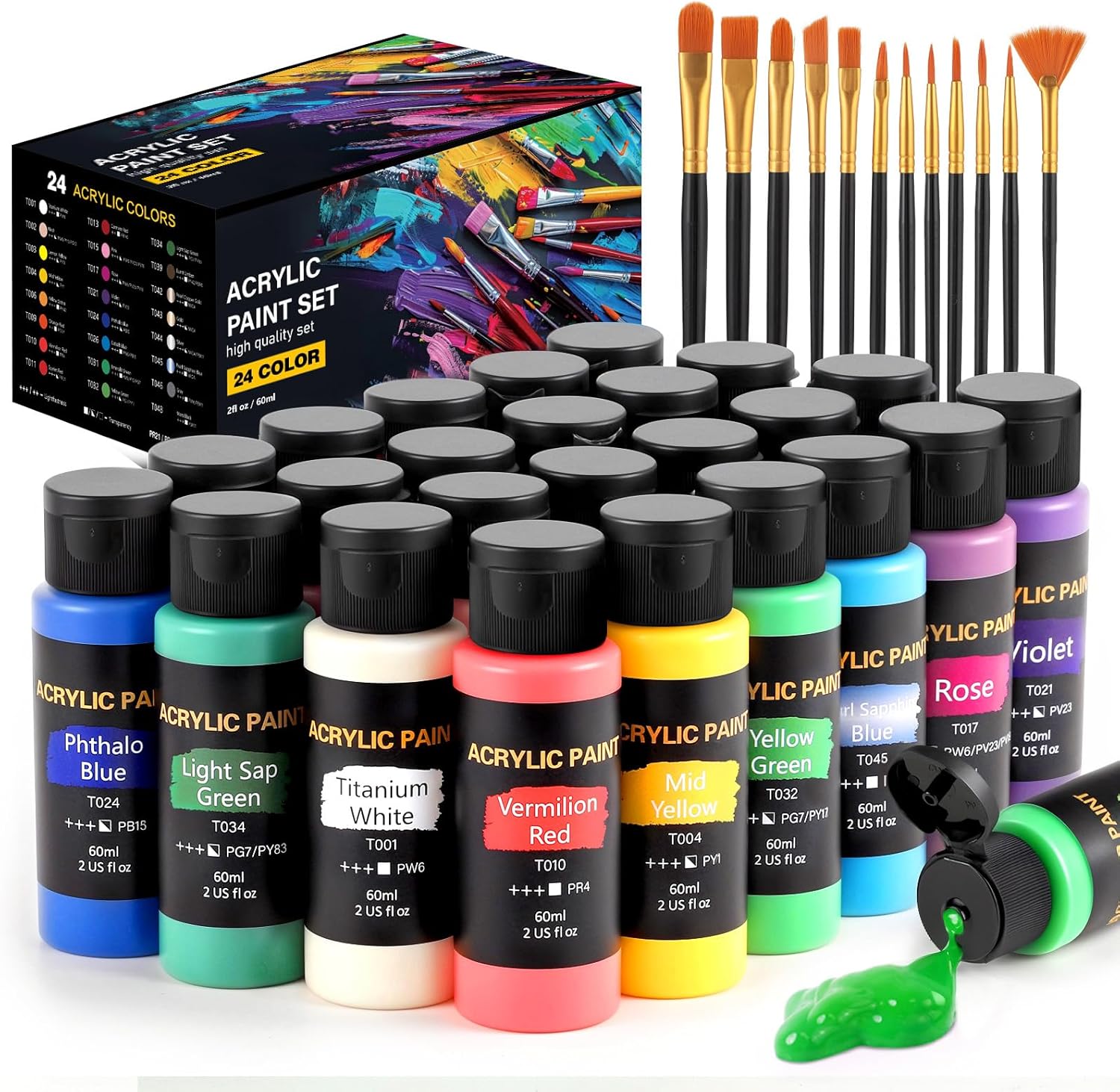
TMOL’s 24-color set sits in the same format as Caliart (2 oz bottles, 12 brushes) at a slightly lower listing price. The description emphasizes quick drying, fade resistance and ASTM D4236 conformance, and names canvas, wood, ceramic and fabric as surfaces.
It is a sensible pick for the coaster-and-tray crowd: paint a design on a wood or MDF blank, let it dry, then pour clear resin over it. The paint’s quick-dry claim is a plus here because you can get to the resin stage the same day for thin layers.
Best suited for: Beginners making resin-topped coasters, serving trays and wall hangings who want 2 oz bottles without paying for 36 colors.
Key features:
- 24 colors x 2 oz (60 ml) bottles
- 12 art brushes included
- Quick-drying, fade-resistant formula
- Non-toxic, conforms to ASTM D4236
- Water-resistant once dry
Pros:
- Good value for 24 x 2 oz plus brushes
- Quick drying suits layered projects
- Standard screw caps seal well between sessions
Cons and limitations:
- Listing does not mention plastic or glass as surfaces
- Screw caps are less convenient than flip-tops for drop dosing
- Less information on pigment load than Shuttle Art or HissiCo
Buying consideration: If you plan to tint resin with this set, pour a small puddle onto a palette and transfer with a toothpick rather than squeezing straight from the bottle.
5. Nicpro 14-Color Large Bulk Acrylic Paint Set, 16.9 oz — Best for large resin-coated art and bulk projects

Nicpro’s bulk set is for people who paint big before they pour. Fourteen essential colors (White, Mars Black, Red, Yellow, Blue, Green, Burnt Umber and others) come in 16.9 oz (500 ml) squeeze bottles with a palette knife and sponge. The listing names plastic, glass, metal, leather, clay and ceramic alongside canvas and wood.
The formula is described as fast-drying, fade-resistant and resistant to light and water, and as certified non-toxic. For a studio producing resin-topped tables, large panels or many coasters, buying color by the pint beats opening dozens of 2 oz bottles.
Best suited for: Production crafters, classrooms and anyone coating large surfaces with acrylic before a resin flood coat.
Key features:
- 14 colors x 16.9 oz (500 ml) easy-squeeze bottles
- Includes palette knife and art sponge
- Fast-drying, fade-resistant, water-resistant
- Surfaces include canvas, glass, ceramic, plastic, metal, leather, clay
- Certified non-toxic
Pros:
- Lowest cost per ounce in this group
- Essential palette mixes into most other colors
- Big bottles suit rollers and wide brushes
- Plastic listed as a surface
Cons and limitations:
- Highest up-front price tier
- Far too much paint for jewelry or small molds
- Fourteen colors only; no metallics
Buying consideration: Store bulk bottles upside down for a minute before dispensing so the paint, not air, reaches the nozzle, and decant working amounts into cups to keep the bottle clean.
6. KOLOR KINGDOM 24-Color Acrylic Paint Set, 12 ml — Best for resin jewelry detail on a tight budget

KOLOR KINGDOM offers 24 colors in 12 ml tubes with three brushes at the lowest price tier here. The listing describes a buttery consistency, strong covering power and ASTM D-4236 and EN71-3 certification. Surfaces named include canvas, wood, fabric, leather, cardboard, ceramic and MDF.
For resin jewelry, small tubes are what you want: a dot of color in a pendant mold or a painted highlight on a cured charm. Twenty-four tubes cover the basics without a large outlay, which makes this a good first set to find out whether you like coloring resin with acrylic at all.
Best suited for: First-time resin crafters, jewelry makers and anyone who wants to experiment cheaply before buying pigment paste.
Key features:
- 24 colors x 12 ml (0.41 oz) tubes
- 3 brushes included
- Buttery consistency, strong coverage described
- ASTM D-4236 and EN71-3 (CE) certified
- Fade-resistant, non-toxic
Pros:
- Lowest price tier in this group
- Tube format suits drop-by-drop tinting
- Certified to two safety standards
- Compact to store
Cons and limitations:
- Plastic and glass are not listed as surfaces
- Three thin brushes only
- Small tubes empty fast if used for canvas work
Buying consideration: Test each color in a small resin sample before committing to a project; some acrylic colors shift lighter or more translucent once suspended in clear epoxy.
7. LET’S RESIN 8-Color Resin Pigment Paste — Best for coloring resin without any cure risk

This is the one non-acrylic product on the page, and it is here because sometimes the honest answer to “which acrylic paint for resin” is “none”. LET’S RESIN’s pigment paste is a concentrated colorant formulated for epoxy. The listing recommends 2 to 5 percent of total resin volume and says a drop or two gives deep color, with translucent or opaque results depending on how much you add.
The bottles have fine tips for drop-by-drop control. The listing also notes that for UV resin you should use a toothpick-sized amount and roughly double the cure time, which is useful, specific guidance that acrylic paint listings never give.
Best suited for: Anyone pouring resin regularly, casting deep molds, or making ocean-wave and geode pieces where cure quality and color depth matter.
Key features:
- 8 colors: black, white, red, orange, green, yellow, blue, cyan
- Concentrated paste; 2 to 5 percent dosing recommended
- Translucent to opaque depending on quantity
- Fine-tip, leak-resistant squeeze bottles
- Compatible with epoxy resin; UV resin with reduced quantity
Pros:
- No water content, so no cure interference
- Tiny amounts go a long way
- Clear dosing instructions on the listing
- Opaque white and black are hard to achieve with acrylic
Cons and limitations:
- Only 8 colors; you mix the rest
- Cannot be used to paint on cured resin or canvas
- Higher cost per bottle than a tube of acrylic
Buying consideration: Buy this alongside a small acrylic tube set rather than instead of one: pigment paste for the pour, acrylic for painted details afterward.
Buying Guide: How to Choose Acrylic Paint for Resin
Decide whether you are tinting or painting
These are two different jobs. Tinting means mixing color into liquid resin before it cures; painting means applying color to a resin piece after it has hardened. Tinting rewards small tubes and highly pigmented paint. Painting rewards 2 oz bottles, a surface list that includes plastic, and a plan to seal the paint afterward.
Keep the ratio low when tinting
Acrylic paint is water-based, and epoxy does not like water. The widely followed rule is to keep paint under about 10 percent of the mixed resin by volume, and well under that for thick casts. More than that and the cure can turn soft, cloudy or tacky. A highly pigmented paint lets you hit the color you want with less volume, which is why the thick-pigment Shuttle Art and HissiCo formulas are better tinting candidates than watery craft paint.
Container format
Tubes (Shuttle Art, KOLOR KINGDOM) and flip-top bottles (HissiCo) let you dispense a single drop. Screw-cap 2 oz bottles (Caliart, TMOL) are better for painting. Bulk 16.9 oz bottles (Nicpro) only make sense if you coat large surfaces before pouring.
Surface compatibility
Cured resin is essentially hard plastic. If you intend to paint on it, favor a listing that names plastic or glass as a surface (Caliart, HissiCo, Nicpro). A light sanding before painting and a clear top coat afterward will do more for durability than the brand of paint.
Opacity and color shift
Acrylic suspended in clear resin looks lighter and more translucent than it does on paper, and colors can separate slightly in deep pours. Opaque white and black are especially hard to get right with acrylic. If you need solid, predictable color, pigment paste wins.
Safety labeling
Every acrylic set here cites ASTM D-4236; several add EN71. That covers the paint. It does not change the fact that resin itself needs gloves, ventilation and the manufacturer’s safety guidance.
Buy for the hobby you actually have
A jewelry maker who tints a few drops per week will never finish 36 bottles of 2 oz paint. A coaster maker who paints wood blanks will burn through 12 ml tubes in a weekend. Match the volume to your project size, not to the color count on the box.
Related Reading on the Site
Many resin artists start by painting a base and sealing it, so it helps to understand how acrylic behaves on slick surfaces first; this guide to using acrylic paint on glass jars covers the same adhesion issues you meet on cured resin. If you are planning a resin-coated panel, these DIY acrylic wall art ideas are a good starting point for the painted layer.
Common Mistakes to Avoid
- Adding paint until the resin “looks right” in the cup. Resin lightens as it cures and spreads; dose by percentage, not by eye.
- Using thin, watery craft paint for tinting. It takes more volume to reach the same color, which raises the water content and the cure risk.
- Painting on glossy cured resin without scuffing it first. The acrylic will peel at the edges.
- Skipping the dry time between an acrylic underlayer and a resin flood coat. Moisture under the resin shows up as haze.
- Expecting white acrylic to produce an opaque white pour. Use pigment paste or a dedicated opaque white for that.
- Storing opened 2 oz bottles cap-up with paint in the threads. They dry shut; wipe the threads and store upright.
FAQs
Can you mix acrylic paint into epoxy resin?
Yes, in small amounts. Most resin crafters keep acrylic paint below about 10 percent of the mixed resin volume, and much less for deep casts, because the water in acrylic can interfere with the cure. Highly pigmented paint lets you use fewer drops.
What happens if you add too much acrylic paint to resin?
The resin may cure soft, tacky or cloudy, and colors can separate in thick pours. If a project needs strong, opaque color, a concentrated resin pigment paste is safer than pushing the acrylic ratio higher.
Which acrylic paint is best for painting on cured resin?
Choose a paint whose listing names plastic or glass as a surface, such as the Caliart or HissiCo sets, lightly sand the resin first, apply thin coats and seal with varnish or a clear resin coat.
Is acrylic paint or resin pigment better for coloring resin?
Pigment paste is formulated for epoxy, has no water, and gives more predictable opaque or translucent results. Acrylic is cheaper, more widely available and fine for light tints and small pours. Many crafters use both: pigment for the pour, acrylic for painted detail afterward.
Does acrylic paint change color in resin?
It usually looks lighter and more translucent once suspended in clear resin, and some colors shift slightly as the resin cures. Always test a small sample before a large pour.
Do I need special acrylic paint for resin jewelry?
No. Small tubes of ordinary artist acrylic, like the Shuttle Art or KOLOR KINGDOM sets, work for tinting tiny molds and painting cured charms. The key is small quantities and a clear top coat on painted details.
Final Recommendation
If your main use is tinting resin, buy a tube set: the Shuttle Art 30 x 12 ml set for its thick pigment and broad palette, or the KOLOR KINGDOM 24 x 12 ml set if you want to spend as little as possible while you learn. For painting cured resin, the Caliart 24-Color Set is the strongest choice because its surface list includes plastic and glass and the colors are proper artist pigments.
Resin artists who paint large bases before pouring should look at the HissiCo 36-Color Set for range or the Nicpro 16.9 oz bulk set for volume, with TMOL as the budget 2 oz option. And if you pour resin every week, the LET’S RESIN Pigment Paste will give you cleaner cures and deeper color than any acrylic on this list.




